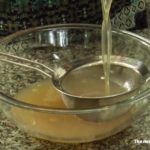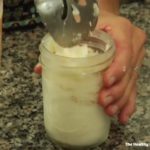

My Freezer is Usually Loaded with all Kinds of Homemade Stock
Chances are, you’ve probably used up most of the turkey meat from Thanksgiving by now and you are about ready to throw out those turkey bones.
WAIT!
Before you throw out those bones, did you realize that you can get about 2 gallons of delicious, nutrient rich, mineral loaded turkey stock by simmering them for a few hours with a bit of vinegar and a few chopped veggies in a big pot of filtered water?
Making stock should be a regular and hopefully weekly or at least biweekly part of your kitchen routine. If you are spending your limited kitchen time making bread or other baked goods, then re-prioritize some of this time into making stock. Dr. Francis Pottenger MD considered the stockpot the most important piece of equipment in the kitchen – it wasn’t the grain grinder or the bread pans!
This may seem a bit shocking at first, but homemade stock as a regular feature in your diet will improve your health much more than homemade bread will! Make sure the time you spend in the kitchen gets you the most bang for your buck health-wise.
Not all time spent in the kitchen is created equal!
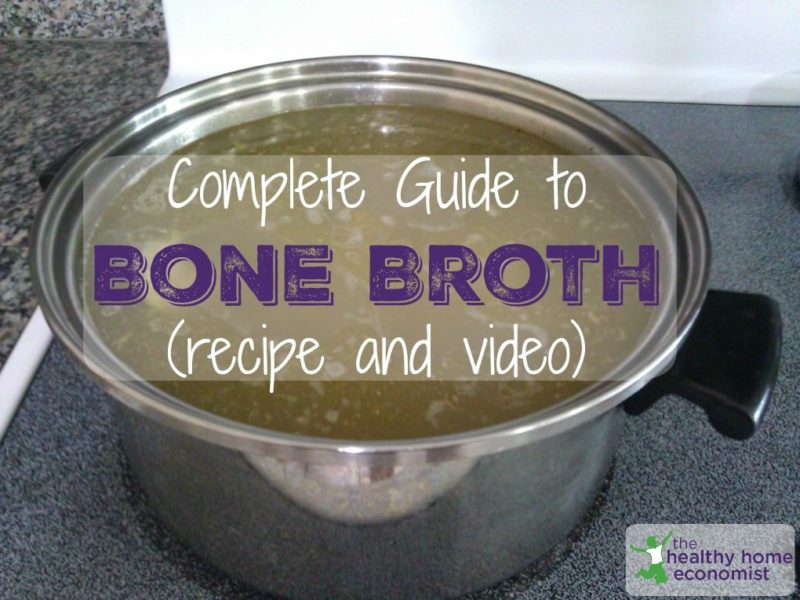
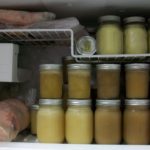
My family of 5 can easily go through 1/2 gallon – 1 gallon of homemade stock in a single week. The picture above is a picture of my freezer which is usually loaded to the brim with various kinds of stock from the usual fish, beef, and chicken to the occasional venison, buffalo, lamb, turkey, duck, or even goose!
Tip: Make sure you label your stock containers as they pretty much all look the same after freezing.
Today’s video is a detailed class into making stock – both chicken and beef. Turkey, duck, and goose stock is made just like chicken stock and venison, lamb, and buffalo stock is made just like beef, so this video can be used as a primer for making all types of stock with the exception of fish. To make fish stock, view my video by clicking here.
If you haven’t fully embraced stock making yet in your home, do so today! Throw out those soup and stock cans and tetra-packs which are nothing but water, MSG, and BPA anyway – even if organic and make some stocks and soups that will really and truly do the body good.
To view a complete transcript of this video, click here.
Sarah, The Healthy Home Economist
|
|


{ 121 comments… read them below or add one }
Video: Traditional Stocks and Soups — The Healthy Home Economist http://t.co/7lm0sfvj
Can you please give me the actual receipe for chicken and beef stock?
I can’t find yours in any of my cookbooks…
thank you!
Can you reuse coconut oil from frying shrimp in for another seafood use at a later date?
I am trying the coconut shrimp recipe from Monday Mania for my husband today for lunch!
Made our turkey stock yesterday and got 5 quarts! Awesome!
So, I have a question/thought. I have a hard time eating liver of any kind. This Thanksgiving I threw the giblets and the neck in along with the turkey carcass and the stock was delicious and rich. It also gelled excellently. I was wondering if you have ever tried adding beef liver to your beef stock pot? I’m worried it would get too strongly liver flavored but at the same time I would love to be able to get the nutrients from the liver in a way I could tolerate. Any thoughts?
Jessica-
I’m not a fan of liver either. Here’s what I’ve been doing… I will throw 2-4 chicken livers (almost, but not quite completely thawed) in my magic bullet. The bullet makes them almost liquid instantly. I then pour that into whatever ground beef I’m cooking, like I will do tonight in our tacos. You can’t taste it, I promise.
That’s a great idea. Organ meats isn’t something I’ve tried yet. But I think this sounds like a good first step.
Hello Sara, I am a little confused with the one video for making chicken, beef etc stock you state that you can let it cook 6-24 hours so is it necessary to go the whole 24 with the actual chicken in the pot? Thats the one I am doing today
Don’t throw out those turkey bones! Make nutrient dense homemade stock! http://t.co/uNzkWwoU
Just used some of my turkey stock in a vegetable soup and it was so good!
Just made pastured turkey breast broth yesterday is so delicious, today I used some to make turkey and sprouted noodle soup.
got 2 gallons from mine!
I’ve never kept the fat you skim from the top of the finished broth. If I keep it, how long would it keep in the refrigerator?
If there is only fat, no bits of meat or broth in the container, it will last pretty much indefinitely. Run it through a strainer or cheesecloth just to be sure. I have had beef tallow go moldy due to some meat accidentally in the jar. You can also freeze it. It is great for sauteeing potatoes, or the vegetables you will use to make your soup with.
Thanks!
Ive been making my chicken stock in my crockpot and sometimes it’s gelled and other times it’s not. Would it be better to do it on the stove instead? How much stock should I anticipate with a small bird? 3-4lbs? If I’m just covering the bones, it only seems to be 4-6 cups of water. Shoud I add more than 2 feet? Thanks for your help!
I made the Nourishing Traditions chicken stock recipe this past weekend in prep for Thanksgiving. Everything was so delicious!
I got about 5 quarts on Sunday from our bird bones.
Since I started making stocks bi-weekly a few years ago, it has been the best thing I’ve ever done for my family’s health, I agree.
bi weekly = every other week?
not sure why… but mine never gels… i even use the feet!!
Sarah, I could not help but notice the plastic containers with your stock in the freezer. I thought freezing in plastic was a no-no ??? Please comment.
Freezing in plastic is fine. Be sure the stock is thoroughly cooled down before putting in the plastic jugs. Also, always hand wash in warm (not hot) water with a mild dishsoap and hand dry. NEVER put in the dishwasher or use a metal utensil to scrape anything out of them which would compromise the plastic. I have had terrible luck using glass to freeze stock and simply will no longer do it. There are safe ways to use plastic.
Sarah, TheHealthyHomeEconomist\’s last post: Video: Traditional Stocks and Soups
This was a great post and I’m glad to know more about making stock. I am curious – if you let the stock simmer for 24 hours, do you top up with water periodically? My stove isn’t the easiest to control and I’m pretty sure that if I left it this long I would be dealing with dry-burn pretty quickly. Just curious! Thank you!
Rebecca\’s last post: Happy Thanksgiving from Paris
Yes, feel free to top up with water if necessary as it simmers.
Sarah, TheHealthyHomeEconomist\’s last post: Video: Traditional Stocks and Soups
Thank you!
Rebecca\’s last post: Happy Thanksgiving from Paris
@Rebecca, you do top up the stock with water but only to cover the bones.
Thank you! That’s very helpful.
Rebecca\’s last post: Happy Thanksgiving from Paris
Mine does not gel like the ones on the video either. But how do you keep your stocks going for 12-24/48 hours? I am not home for a straight 48 hours to do it that long….
you can also do stock in the crockpot which is easier to let simmer for long periods. Just keep the water level up.
Turkey for us is just a necessary means to an end–Gumbo!
Do you make stock even if you get the yucky GMO/corn-fed turkey from the supermarket? I threw out my carcass this year thinking it was not worth it until I got clean meat.
The bottom line is to make stock. If what’s in the budget is grocery store turkey, then so be it. Buy the best you can afford, of course. There will be A LOT of foam come to the top when you bring these conventional birds to a boil, so be sure to carefully skim it all off before turning down the heat to simmer.
Nutrition is more important than lack of toxins. If the best meat I could afford was SPAM, guess what? I would eat SPAM. You will get some good nutrition even from stock made from conventional bones. It won’t taste as good as good quality birds and the amount of scum that will come to the top will be kind of gross, but you need the conventional stock more than you can do without it.
I have seen methods of stock making that say to use the crock pot as an alternative to the stock pot on the stove, I don’t think you can get it to a boil as you show in your video. Would you recommend using this method as an alternative? Would love to get your thoughts.
Thanks!
Hi Aimee, I’ve always used a stockpot. I don’t even own a crockpot so I can’t really comment on that. You really need to bring it to a boil though so that the scum comes to the top and you can skim it off. The scum are impurities and off flavors. I don’t think I’d want to be eating stock where the scum wasn’t removed.
Sarah, TheHealthyHomeEconomist\’s last post: Video: Traditional Stocks and Soups
I was wondering the same thing. We have a gas stove so I wouldn’t feel save leaving it on overnight. Perhaps you could bring the stock to boil on the stove and then when it is good and hot transfer it to a crockpot set on high? I know that food can bubble in a crockpot in the later stages of cooking.
I have been using the crockpot more lately than the stockpot. I turn it on high first until the water boils, then turn down to simmer and let it go as long as I want. I’ve never had any trouble doing this and my stock turns out great every time. You can skim the stock after it boils and before you turn it to low.
I scrolled down specifically looking for this question because I had the scary experience of having a stock pot (left on an extremely low flame) boil over and cut the flame on my gas stove while I was not at home. I returned to find my carbon monoxide alarm beeping and found the flame out while the gas was still turned on. I was pretty embarrassed to call the fire dept as I was sure they would not understand why it was so vitally important for me to leave my bone broth simmering while I was out. They checked out my house and confirmed that it was safe to go inside…and they even unloaded my groceries for me:) But due to that experience, I proceeded to purchase not one, but TWO slow cookers in order to make my bone broth more safely. I have yet to actually try it though…not completely convinced it will work as well as the stock pot. SaraG – I think when I do try it I will follow your suggestion; boiling it first in the stock pot and then transferring it to the crock pot.
i thought you shouldn’t make stock out of leftover bones, only raw ones. can anyone explain what the difference is?
Yes you can. I do it all the time. After cooking a chicken for dinner, I cut off all the meat that is left and save the carcass for broth. I do add chicken feet as well. It comes out great.
@Tammy biweekly as in every other week
@Laura there are different ways to make stock. The video explains when to roast the bones first and when not to.
Thanks, one more question, have you ever re-used the bones to make a second batch of stock? I have also seen this mentioned on some other blogs.
No I have not done this. I simmer mine for a long time, so they are pretty much spent when I’m done.
Sarah, TheHealthyHomeEconomist\’s last post: Video: Traditional Stocks and Soups
i leave mine on the stove for 48 hours… even when i’m not at home. i leave it on the lowest setting.
Once I take out all the bones, I boil down the stock in a new pot for several hours until it’s thick and syrup-y. This concentrates the flavor and nutrients (it’s called a demi-glace or fumet; Sallon Fallon talks about it in Nourishing Traditions). Then I put it into a shallow glass dish and freeze it. I keep track of how much it boils down so that when I reconstitute it with more water, I know how much water to add. For example, if I started out with 8 cups and I boil it down to 1 cup, I know that I have a 1/8th concentration of stock, then I just need to add 8 times the amount of fumet I take out of the dish to reconstitute it (or I just eyeball it until the color is right). Three reasons why this is easier and better: 1- It’s easier to chip away some of the fumet with a spoon than having to thaw the whole thing. 2- It takes up less space in the freezer. 3- If you are simply putting it into a sauce, you don’t have to put in a whole cup of broth in just to let it boil down again; just chip away a tablespoon and throw it in to any stir-fry, curry dish, etc.
I recently bought few fish heads and the fish monger said they were from wild grouper.
When my fish stock started boiling the amount of scum coming to the top was way too GROSS!!!
After 15 min. of skimming I just gave up and thru out my stock
That wasn’t wild fish, was it?
Grouper makes nasty stock. Try for snapper next time. Grouper is pretty much all wild from what I understand, but I hear too many stories from local fisherman here in Florida about how deformed they all are now from the oil spill. I don’t buy grouper anymore.
Sarah, TheHealthyHomeEconomist\’s last post: Video: Traditional Stocks and Soups
All this talk of broth made me crave a cup of it!
Wow! Thanks for the recipes, will try out tomorrow.
helen\’s last post: Confinement Centre
We got 6 quarts of stock from a heritage carcass, but the amazing part was how gelled it was!
I noticed that you listed quite a long list of different animals to make stock from. I didn’t notice rabbit on the list. Is there a reason to avoid rabbit? If not, I’m assuming that you could use it to make stock with.
Rabbit – awesome! I just haven’t ever done it myself.
Sarah, TheHealthyHomeEconomist\’s last post: Video: Traditional Stocks and Soups
I am currently making stock from a store bought turkey (at least I’m fairly certain it is, my mother in law bought it). And while there was foam on the top (which I did skim off) there wasn’t as much as I was expecting. It has been on for about 24 hours now, so I’m thinking of turning it off so that it can cool. The only bad thing about letting it simmer for that long, is that I have been starving all day. Lol. It smells so wonderful! Anywho, I am thinking of making homemade turkey and dumplings out of some of the stock. I need to come up with something else too, as my DH isn’t much of a soup fan. Actually, he’s pretty picky about a lot of things. Lol. Any suggestions?
Cook rice in stock. It all gets absorbed and the rice is incredibly flavorful!
Sarah, TheHealthyHomeEconomist\’s last post: Video: Traditional Stocks and Soups
okay… just thot ’bout somethin’…. what about deer and other wild meat bones?? same nutrition and procedure?? YES!!! NO??? i would think so, but wanted to bounce it off ya’ll.
@Tammy I made a pot of venison stock recently and the flavor was out of this world! I would think that bones from wild sources would be most nutritious of all.
I know this post is old, so you may not see this comment or respond, but I wanted to throw this out there…
Wild animals are likely FAR from organic, depending on where you live. They are eating from conventionally farmed fields that are sprayed with chemicals. They are also drinking runoff from those fields. I would imagine there are far more toxins in “wild” meat than in conventional meat, but I have no concrete evidence
Just something to think about.
still learning here: so, the bones that should be roasted before making broth–e.g. beef, lamb, bison–can also be made into broth after cooking them in a different way? for instance, i made leg of lamb last night and slow-cooked it in a crock pot. could these bones be used to make broth?
Not with my turkey however, I do have a 2 huge puts on my stove right now. day 2… 1 chicken, 1 bee
This is great! I’m excited to have this video to share with my readers! I make stock two or three times a week. (We drink it before every meal, including breakfast.) I use the slow cook setting on my oven and put it in for 24 to 48 hours, covered. You can also do this by setting your oven to 190 degrees or so. The first time I did this, I worried it would boil dry if I didn’t check it all the time, but even at 48 hours, mine barely loses any liquid. It’s so easy and so wonderful. When it has cooked for 24 hours, we sometimes dip into it for our morning or afternoon cup of broth. After two days, I usually strain it all off and then boil it down to a thick concentrate, which we rehydrate by adding to a cup of hot water–like tea.
Sarah\’s last post: Raw Milk: Not a Threat to My Health, Certainly Not a Threat to the PUBLIC Health (And My KID LOVES it Too!!)
@ Laura, I have been taught that you can use roasted bones as well as raw. the roasted .. or ones that have been cooked in other ways such as fried or baked chicken supposedly have a better flavor for the broth… don’t throw away good bones!!!
I have been making stock – infrequently – for 20 years but I have never made it according to the manner described (adding vinegar, letting sit for proscribed period of time). My new stock pot (I needed a larger one, used this opportunity to indulge) is simmering a chicken.
I am intrigued by the idea of a cup of broth every morning. My daughter-in-law is from Russia and she does this each morning. Now that I understand the health benefits, I’m going to be adopting her practice. However, how to to convince her that bullion does not equal chicken broth is another matter.
Thank you.
How are you getting that much stock. My turkey bones gave me less than two quarts. Should I be adding way more water with just one carcass?
Thank you!
A bigger turkey makes more stock. You should use enough filtered water to cover the bones completely, which in my stockpot is about 6-8 quarts of water.
Sarah, TheHealthyHomeEconomist\’s last post: Premier’s Quantum High Vitamin Cod Liver Oil is BACK!
Do the bones need to be covered with water the entire time you are simmering? I read if you have a storage space problem (as I do) then boiling the stock down is a good idea. That’s what I did. I boiled it down, then simmered for 24 hours.
No, you keep the bones covered the entire time its simmering. AFter its done and you remove the bones, you can boil it down.
Sarah, TheHealthyHomeEconomist\’s last post: Premier’s Quantum High Vitamin Cod Liver Oil is BACK!
I love making stock and soup. This is SOOOOO awesome
I also do add the vinegar… the flavor is extended, in addition to health benefits.
Goats and Greens\’s last post: A Side Suitable for Holiday Fare, Headlining Turnips and Squash
My chicken stock does not seem to be gelatinous. I transferred it to 1/2 gallon glass jars in the fridge and it just looks like liquid. What am I doing wrong? I cooked a chicken for 8 hours in a 16 qt stock pot, then took the meat off and put the bones back in a crock pot completely covered with water for another 24 hours. We are on day 4 of intro GAPS so I’m concerned that our efforts are being wasted if my stock isn’t nutritious enough. I’ve also been using the liquid from the stock pot after the chicken is done cooking. In the E-book on how to eat for 30 days that I bought that is how she recommends to make the stock and doesn’t even mention bones. I’m so confused!
What kind of chicken are you using? If it’s not a high quality chicken, it may be dificult to exract a good ammount of gelatin. It may be possible that you diluted it a bit too much. How much water/stock did you end up with, and how big was the chicken?
It was a 4.5 pound or so chicken. I used the 16qt stock pot and filled to cover the chicken. Should I use my 12 qt instead? The quality of the chicken is not ideal, but not the worst either. My confusion is also this – my mother in law has used the same chicken sources and hers is jello-like. As far as I can tell we aren’t doing anything different from each other?
Hi Sarah!
I was wondering if you’d ever heard of or tried adding eggshells to your stock while it is making? I’ve heard of it before and think it would be a good way to use some of the farm-fresh eggshells that I have. What do you think?
Also, do you make stock with the lid fully on, partly on, or off? I tried making it with the lid off and the smell in the house was way TOO powerful.
My Mother in Law soaks crushed eggshells in water and some vinegar in a jar … not sure the proportions are .. then uses the water as a mineral loaded tincture. I will try to find out about that. I’ve never used eggshells in stock.
Sarah, TheHealthyHomeEconomist\’s last post: Cinnamon Sugar Sprouted Crackers
Is it safe to eat the cooked bones from the stock? I don’t want to cause or aggravate constipation but I love the taste of the soft melt-in-your-mouth bones with marrow in them (like chicken leg bones). Does anyone know? Thanks!
I would be cautious about that … I’m very concerned choking would be quite a risk.
Sarah, TheHealthyHomeEconomist\’s last post: Cinnamon Sugar Sprouted Crackers
My mom used to eat the bones because she cooked them so long that they weren’t hard at all and would just crumble so choking shouldn’t be a problem at that point but I wonder also is there a problem eating the bones esp if it’s not pastured chickens.
saph\’s last post: 12 Days of Christmas at Baby Gizmo
Hi
If u place the stock in the flask, how do you thaw them for use?
Is it ok to thaw the stock, pour off what you need then freeze it again repeatedly for each use?
Are there alternative methods for storing if my freezer does not have a lot of storage space for flasks?
Thanks
I have been making beef stock without roasting. Must the bones be roasted first or is that for increased flavor or rendering the fat?
Please dont think that this is a stupid question. In the event you don’t have grass fed meats to do the stocks (either there are no local places offering them or its just too expensive) is it still beneficial to make stocks if you don’t know the history of the meats origin? Thank you!
Yes, make the stock. That is the most important thing. Get the best meat/bones you can afford.
Sarah, TheHealthyHomeEconomist\’s last post: Baked Chips as Bad or Worse Than Fried
Thanks Megan for asking this. I was wondering it myself. We are low on meat/bones from our 1/2 grass-fed cow and low in funds, so I may need to head to the local butcher in the coming weeks.
becca g\’s last post: John 3:16
What about the stock in the pan after I have roasted a chicken?(I use this to make rice more flavorful) or even a meat like eye round and I’ll use this to make gravy but sometimes there is a lot of juice left in the pan even after I make gravy, can these be used in the stock pot as flavor enhancers as well or can they just be stored seperately? which is what I sometimes do and use them for other meals during the week.
Make this at home 2 keep U strong http://t.co/zK4Afa0I and have at least a serve / wk
I’m very new to all of the stock making and don’t own a good stock pot yet – any favorite brands? Or any kinds I should stay away from? Thanks!
I bought mine about 13 years ago at a local department store. It’s stainless steel,12 quarts and I believe was about $20 on sale. It came with a glass lid, something my mother warned me would break. She was right, I forgot to turn off a burner on the stovetop where the glass lid was resting above it–shattered. I found a replacement but it doesn’t fit as perfectly. Go for the metal lid ones if you can find one. Also, ones with riveted handles are sturdier than ones with welded handles. You can tell the difference in which rivets are two bumps on the ends of the handles as well as inside the pot. Welded handles are smooth and no bumps are visible inside the pot. I choose the welded ones because it was cheaper and slightly easier to clean. No problems with the handles on mine.
A side note to cleaning stainless steel. Over the years cooking in this pot I noticed a very thin discoloration/film developing on the inside of the pot. This was after plenty of elbow grease/soaking/scrubbing. What works like a charm is the mineral-based powdered cleaner “Bon Ami”. It looks like new. From what I understand of the powder is it made of ground-up rock to a very fine powder, doesn’t scratch and doesn’t have any chemical cleaners in it, so it is very safe to use. I also use it to clean sinks and bathtubs. Most grocery stores will have it.
I have been making stock ever since Dallas. It is quite good and I enjoy it as a beverage with a meal. My beef stock turns out the color of coffee. Is this normal? I brown the bones in the oven for an hour, or until they are brown, then put them in my crock pot along with coarsely chopped onion, celery, and cabbage, cold water with vinegar and salt and pepper, then let it simmer for about 72 hours. My body is coming down from an omega – 6 overload when, for three weeks I took a safflower oil laced vitamin D cap daily. One of the results of this was chicken gives me joint pain. Thus, I pretty much stick with beef.
The first time I made chicken stock I cooled it completely and then bagged them in one cup portions so I could easily take one out and heat it up for a quick meal. I see that you freeze yours in large pitchers, so my question is how do you remove smaller portions, or do you just thaw an entire pitcher at one time? Can you thaw and refreeze the same stock more than once? Thank you!
I’m also on the search for good stock freezer containers. We have ample freezer storage, so ease of use is my main priority.
I have my 1st ever beef stock simmering now. I had to use a dutch oven as I do not have a stock pot yet.
Can you use broccoli in the stock? I have some broccoli I want to use up, just wondering if this is okay to add in.
I just read an article about a woman who made stock from the bones three times. What’s your thought on this? Will the subsequent batches be as nutritious, or is it not worthwhile?
Thanks!
I am totally new at this concept so could you tell me in what ways you eat the stock?
Hi Sarah ,
I tried my hand at making chicken stock the very first time today.I by mistake added 1/2 cup of vinegar instaed of 1/4 cup.The stock has been simmering for 12 hrs now and the smell of vinegar is over powering.should i discrad the stock.is adding too much vinegar not good for health.Please reply
And also i see you are asking to use 1/4 cup of vinegar and sally asks to use 2 tablespoons.Is there a reason u use more ?
Hi guys ,
Can anyone respond to my above questions. Not sure of to keep the stock or discard it
Hi Susana, This is just my best guess but if it does not taste too strongly of vinegar keep it. I have not heard anything about their being any negative side effects of too much vinegar. I don’t know why the difference in amounts of vinegar between Sarah and Sally’s recipes. The thicker bone broth recipes call for more vinegar. I believe this is to extract more minerals etc. from the bones.
Just plain Sarah not Sarah the healthy home economist
Thanks Sarah… I will taste and broth and decide accordingly… Thanks
I love homemade stock, but I don’t have room to store much of it in my freezer. Do you think it would affect the nutritional value of the stock if I canned it?
Nice info. You can also pressure can the broth once it’s done. Ball canning book has guidelines for canning stock. I never freeze mine, just can it because I make lots at a time. It doesn’t take much time to process either, beicause it’s just liquid. In addition, there has been mention of bones of chickens. I want to explain something. Commercial chickens AND pasture raised alike, if they are cornishXrock, they will be immature when they are butchered and the bones will be small and soft, almost like they have osteoporosis. Regular “yard birds”, heritage breeds, whatever you like to call them, just regular standard breed heavy chickens, they will grow out much slower. Their bones will grow very dense, hard, and long. Not anything like those fast-growing broiler/roaster hybrids. Those cornishXrocks and the like, if they are allowed to grow past a certain point, if they don’t die from heart failure, they usually are unable to walk past a certain age. They get sores on their breastbone because they spend so much time resting because the meat grows way faster and larger than their bones can support. It’s frankenfood at its finest.
Hi
Just made the beef broth the other day using pastured beef marrow bones it tastes absolutely amazing, also tried the bone marrow for the first time cant beleive what ive been missing lol.
My question is. The fat that solidifies on top of the broth after setting in the fridge, what is it called, is it beef dripping, tallow? and is it good for frying meats aswell as you’ve already mentioned for sauteing vegetable and potatoes?
Thanks
can I make broth in a slow cooker?
Thank you
Roxana
At least one of the brands of stock you showed just before making the statement that they’re loaded with MSG and artificial flavors contains no MSG, and no artificial flavors.
I’ve made broth many times but never with vinegar, never let it rest, and never simmered it so long. Yesterday was my first try “your” way. I followed all of your instructions and simmered about 15 hours (up early to get it started). This is THE BEST homemade broth I’ve tasted in my life – and I’m 52 yrs old! I LOVE the taste and love knowing it’s healthy! My store-bought canned broths (including brand new jars of my previous favourite “Better than Bouillon”) will be tossed today – because of the unhealthy ingredients. I didn’t realize until very recently what is actually in these products, and so many more, that I have been buying regularly for years. I will be reading labels from now on.
I’ll be enjoying 1-2 cups of this homemade broth every day hoping it will help with my joint pain as I’ve read it has for many others. Going to give it to my dog as well, who also suffers from joint pain. I will make it often and stock my freezer – have a pot of beef bones simmering on my stove today.
I’m so happy to have found this website! Thank you so much for your recipes and the valuable information you share, Sarah!
After making chicken in the crockpot, the juices cool and gel indicating there is gelatin there. Could I just add water to this to make broth? Thanks Sarah. Love your blog just finished listening to your presentation on the Real Food Summit. Loved it very informative. Thanks
What do you think about adding eggshells to your stock?
If you make the chicken stock using a whole chicken, do you cook the meat the whole 24 to 48 hours? Seems like it would be cooked to death. Or do you remove the meat after a couple of hours and then keep cooking the carcass. The video seems to say that you cook it the whole time. Just can’t get my mind around that. Thanks!
I used buffalo bones to make stock once and it just didn’t have a good smell at all. No one in the house could tolerate it. I didn’t know about putting the vinegar in it though either. I really would like to use this as stock. What could I do to help the flavor? Thanks for any help.
Hi, I’m a newbie to making any kind of stock. My question is: I’ve purchased grass-fed beef Soup Bones from my local natural food store. Do these need to be roasted beforehand, or do they just go into the stock pot and I follow the video?
Also, I couldn’t find an answer to re-using Chicken Bones for stock – I am roasting a whole chicken tomorrow…can I then re-use those bones in a stock?
Thanks for all your great information!
What benefit if any is there in adding ample amounts of organ meat, such as hearts and livers, to make stock? Or could there be a detriment?
Thank you.
You said that lamb, buffalo and venison can be made the same as the beef. I am taking it that Elk and other big game can also be made the same? I am trying it out right now with that assumption. I had the butcher save and cut up our elk bones this year.
Hi Sarah, I noticed you didn’t make any mention of removing the wings and cutting them up (If using the whole chicken to make stock). However, the recipe in Nourishing Tradition instructed to do so (Which I didn’t). I was wondering why Sally Fallon included this step…does it make any difference whether you remove and cut the wings?
Also…My chicken keeps trying to float to the top! Is that okay? Thank you so much!
Hi Sarah, I noticed you didn’t make any mention of removing the wings and cutting them up (If using the whole chicken to make stock). However, the recipe in Nourishing Tradition instructed to do so (Which I didn’t). I was wondering why Sally Fallon included this step…does it make any difference whether you remove and cut the wings?
Also…My chicken keeps trying to float to the top! Is that okay? Thank you so much!
Also I accidentally made my e-mail address my name in the previous comment, could you please remove it? thanks!
Hi Sarah
Is the fat that is rendered after making oxtail soup, considered tallow?… and is it still worthy enough to use in body creams since the stock simmered for 24 hours?
Thanks
I’m unable to watch the video from my phone and I’m new to all off this do I cook the whole raw chicken in the water or am I supposed to cook it beforehand?
Cook the entire chicken raw in the water, Erica. You’re basically boiling it, but at a very low boil (confirm through youtube, type in “simmer” in their searchbar) and as long as it’s simmering, it is cooking over the 160 degree threshold for food safety (boiling water is around 210+) for an extended period of time. Rewatch the video when you get on a PC just to be 100% sure for yourself.
Your containers in the freezer look like they are plastic?? Wouldn’t it be better to freeze in glass? This is what I worry about and what prevents me from freezing my stocks, as I am unsure of the best, i.e., least toxic, way to freeze.
Any insights anyone?
Thank you!
Erin
Only the one I missed…..your reply stating the same as mine. Those very containers shown in the freezer I’ve tasted. Cannot believe for the life of me how I used to enjoy that plasticy taste. Try the sun trick, Erin and know that which you taste causes cancer and who knows what other side effects in us (second thought…..why poison yourself). Besides, tons of glass is made right here in the States by good old fashioned, middle-classed American factory workers. That’s a double win.
Don’t forget to save your stock in glass instead of plastics. There are no forms of safe plastic. Proof? Let your favorite plastic sit out in the sun filled with water. Some take longer then others, but all seem to carry a taste of plastic in the end. That taste? Oil. The extra bio-burden might not be a big deal to most, but since you’re following a health trend might as well see every angle you can. Cheers
Can I do this in a pressure cooker? I have read how delicious the broth is from a pressure cooker? I am not sure if all the minerals from the bones would be extracted. Thank you, Sue
maybe this question has been answered some where so i apologize if it’s a repeat. My stock doesn’t gel but it does look nice and tastes ok. When you reheat your stock or broth to drink do you water it down? I will drink mine more than use it in cooking. it seems a bit strong to drink it straight. And if it doesn’t gel does that mean it’s not as good for my health and healing?? I’m not a cook by any means–i actually hate to cook—lol
Thanks
What do you recommend to do with the left over bones, skin, etc.? I always toss my veggies out in the compost pile but not sure what to do with the bones. I’ve been throwing them away, but that feels disrespectful to the animal. Do you have any suggestions?
{ 12 trackbacks }