

Table of Contents[Hide][Show]
Easy homemade vanilla pudding recipe, the ultimate comfort food, using just a few whole food ingredients just like Grandma used to make on the stovetop. Includes how-to video!
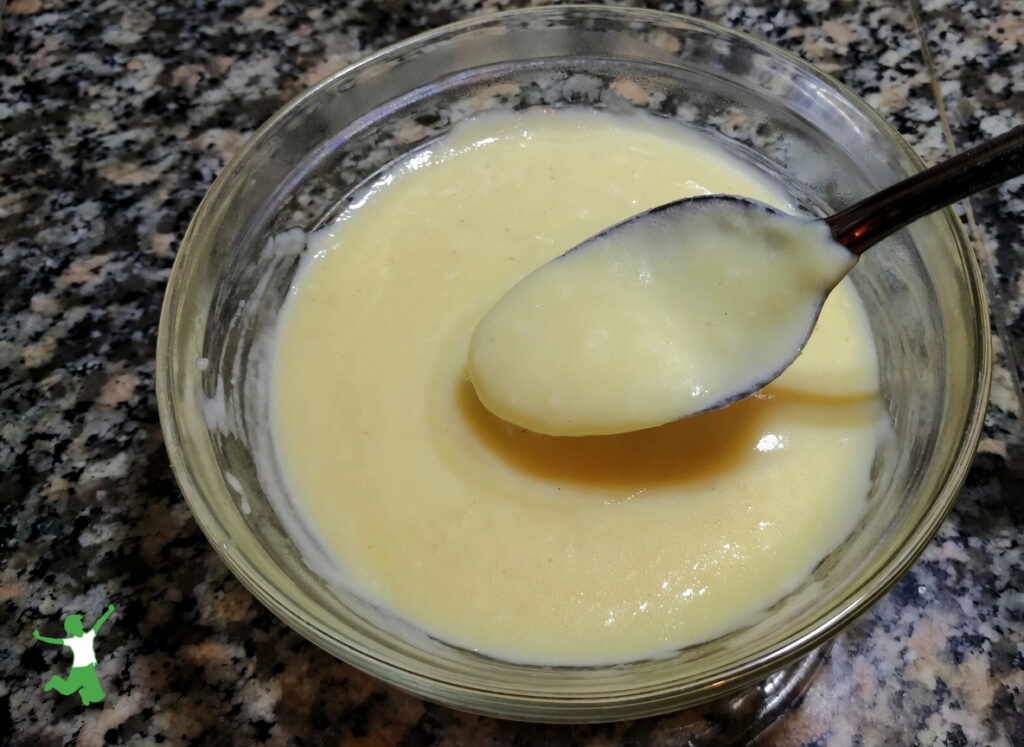
Ah, homemade vanilla pudding …. truly, one of the ultimate comfort foods.
Kids especially love pudding and a homemade pudding cup makes a wonderful healthy addition to the lunchbox if you make it yourself with wholesome ingredients.
Whatever you do, skip those pudding boxes from the supermarket. They are nothing but white sugar, GMO corn starch, artificial colors, and flavors plus preservatives.
Even if boxed pudding is made with good quality whole milk, the end result is not be something that would be of overall benefit. Kind of like raw milk served with a bowl of Fruit Loops, wouldn’t you agree?
It’s time to ditch the pudding boxes and processed pudding snack cups and learn how to make homemade vanilla pudding the old-fashioned way.
The stovetop recipe for vanilla pudding below uses only six, whole food ingredients.
Even the organic pudding boxes, while a much better choice, don’t compare nutritionally! The vanilla is not real vanilla extract, for example. It’s cheap vanilla flavoring. 🤮
Worse, only milk is required to make the boxed organic version, omitting the very important eggs and butter! These are critical ingredients to make the pudding very filling, which prevents overeating! The traditional inclusion of plentiful healthy fats also greatly slows the insulin response from consuming a sweet pudding treat.
Preparation and Serving Tips
In this video, I show you how my Grandma used to make vanilla pudding on the stovetop. She called it blancmange although she never bothered to set it in a mould as is sometimes done.
It serves up wonderfully warm straight from the pot with no need to refrigerate first unless you prefer your pudding served cold.
You may substitute whole coconut milk (where to find) for a dairy free version.
Organic cornstarch may be substituted for the flour. I don’t recommend arrowroot powder as the cooking of the pudding tends to reduce its thickening properties.
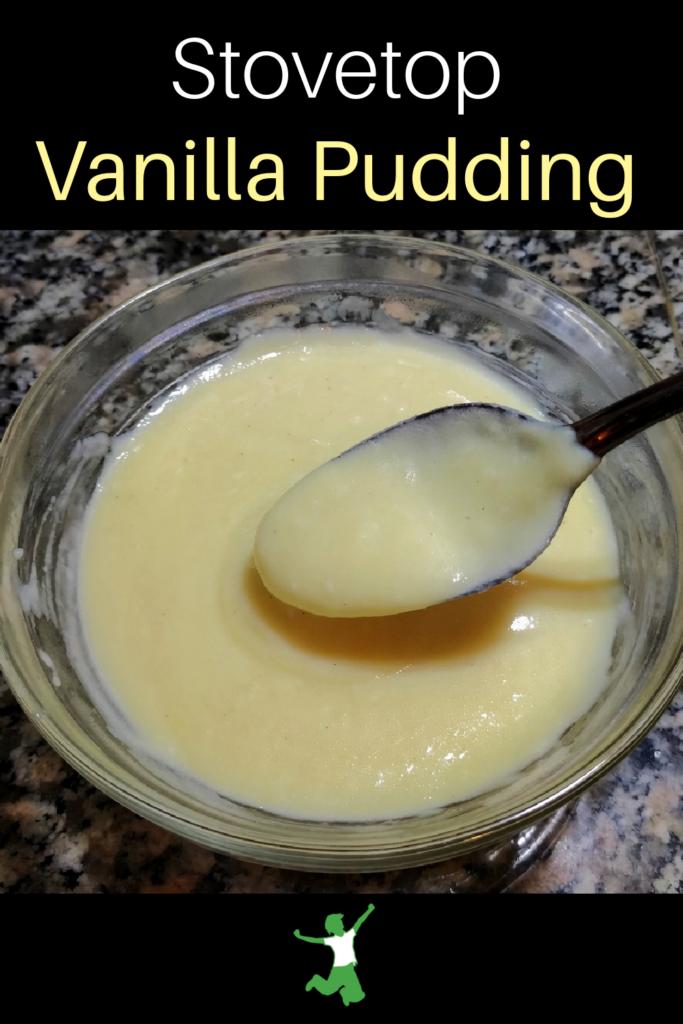
Stovetop Vanilla Pudding
Easy homemade vanilla pudding recipe, the ultimate comfort food, using only whole ingredients just like Grandma used to make.
Ingredients
- 3 cups whole milk
- 2 eggs extra large, preferably free range
- 1 Tbsp butter
- 1/3 cup flour preferably sprouted (wheat or gluten free)
- 1/2 cup evaporated cane sugar
- 2 tsp vanilla extract
- 1 dash sea salt
Instructions
-
Mix the flour and about a half cup of the milk in a small bowl and whisk until very smooth with no lumps.
-
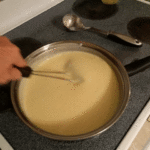
In a large saucepan, combine the flour/milk mixture, sugar and the rest of the milk. Cook and stir with a whisk over medium heat until the mixture starts to slightly bubble. Cook for 2 minutes more and remove saucepan from the heat.
-
In a small glass bowl, beat eggs and then gradually stir in about 1-2 cups of the cooked mixture all the while whisking vigorously. Pour egg mixture into the saucepan and return to medium heat. Cook/stir until nearly bubbly but not a boil. Reduce heat and cook/stir for 2 more minutes.
-
Remove pan of homemade vanilla pudding from heat. Stir in butter and vanilla.
-
Let vanilla pudding cool for 5-10 minutes on the counter to continue to thicken. Serve warm.
-
Refrigerate uneaten portion and use for homemade vanilla pudding cups for your children's lunches or for quick snacks. Pudding will thicken even more when cold.
Recipe Video
Love pudding? Try these other recipes!
Egg Custard Pudding
Bread and Butter Pudding
Jello Pudding
Macademia Nut Pudding
Thai Custard Pudding
Homemade Chocolate Pudding
Russian Custard
Coconut Milk Pudding



I just made this! Delicious! It won’t make it through the day~
I usually make a double batch and then after it cools immediately put it in little snack cups in the refrigerator. Then, it is so easy to just grab a few and throw them into the lunchbox when you are in a hurry in the morning packing up lunches for school.
Every time i see Jello i think about how Gelatin contains MSG.
Can’t wait to try this recipe! Thanks!
If you used palm sugar would you subsitute equal amounts?
Yes, palm sugar works great … very similar to coconut sugar in taste even if you use the syrupy palm sugar and not the granules.
Ok – that is good to know. I thought palm sugar and coconut sugar were the same. The palm sugar I have is in these pucks, so I just use a grater. Thanks!
never mind, just watched the video and you say coconut sugar in there 😀
Thank you!!!!
Ohhh I just tried a similar recipe last week for the first time, in chocolate, and hubby loved them in his lunches. I think your recipe will be a tad thicker, which we’d like, and I wondered about the arrowroot! Thanks for sharing – this is on my Sunday to-do list!
Make a nice big pot and it will last you all week long 🙂
I just made this and I used arrowroot. It kept wanting to sink to the bottom and gel up there so you have to keep stirring, and it took a long time to start thickening up. I didn’t really get much thickening until well after I added the tempered eggs. But keep going and it thickens up nicely. Enjoying some right now. Mmmmm. Thanks Sarah!
Altho organic just leaves out some toxins, it’s pastueurized etc. But still better than non-organic.
Wholesome ingredients I hope include organic or raw milk…with all the essential nutrients still intact to heal and energize!
This looks delicious! I bet you could even put in some carob powder and chocolate extract for a chocolate version!! Yum yum – thanks for sharing.
Yes … you can make it butterscotch flavored too. So many variations once you get the basic vanilla pudding down.
How do you get the butterscotch flavor? I have such good memories of eating (boxed) butterscotch pudding as a kid…but have no idea how to make it. Butter + scotch? Probably not :(. Thanks for the pudding recipe! Gonna make it tonight with some of my homemade butter which I made after your blog post. 🙂
Jennifer,
Make some brown butter and then whisk it into the pudding when you take it off the heat. This will give it that lovely butterscotchy flavor that you’re looking for. Be sure to use coconut sugar/sucanat as called for, though, as they add depth to the flavor as well.
These are the recipes we’ve been following for our pudding (vanilla, chocolate, butterscotch): http://heavenlyhomemakers.com/healthy-treat-for-today-creamy-pudding