
Why You Must Soak Your Beans

by Sarah, The Healthy Home Economist on June 14, 2011


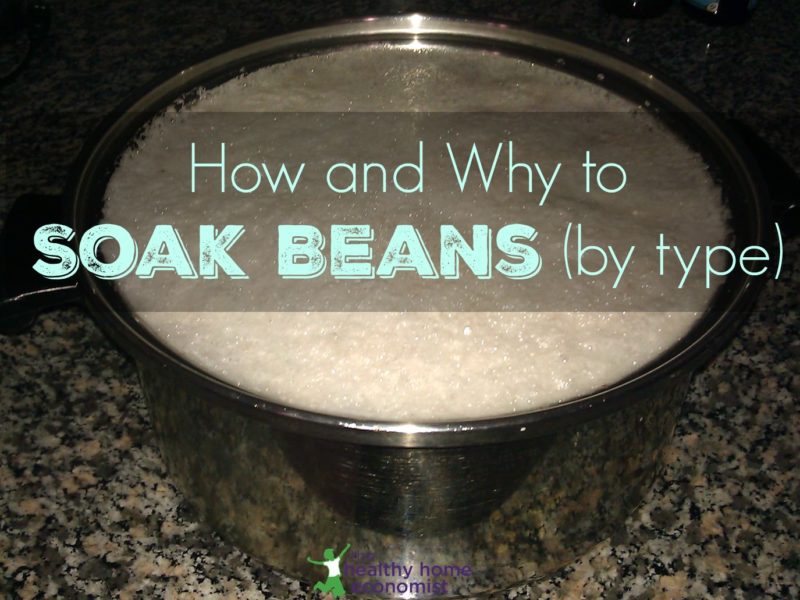
The Scum on This Pot of Soaking Beans is About 2-3 Inches Thick!

I went on a bean soaking binge this past weekend and the amount of scum that came to the top of the large pot of soaking kidney beans was so huge, I thought it deserved its own blog post.

Soaking beans for many hours before cooking them produces a lot of scum which is course, is rinsed and drained away when the soaking is complete.

What is all that scum anyway?  Anti-nutrients, that’s what!  And those anti-nutrients such as phytic acid and enzyme inhibitors are going to be in your gut causing you gas, heartburn, reflux and whatever other digestive ills beset you when you eat something that isn’t particularly digestible unless you soak your beans before cooking them.  Traditional cultures took great care to prepare their legumes with a long soak before cooking to enhance digestibility and nutrient absorption.

I love Mexican food but really try to avoid Mexican restaurants for this reason .. they don’t soak their beans before cooking them!   After a meal at a Mexican restaurant, I will typically feel very bloated where eating the same meal prepared at home where I soaked the beans properly before cooking results in no digestive upset whatsoever.

Take the Soaked Beans Challenge!

If you think unsoaked beans don’t cause you any trouble .. take this challenge. Soak your beans next time before cooking and notice the difference in your stomach after eating.  You may think that the unsoaked beans don’t cause you any trouble, but you just may find that soaked beans are infinitely more filling and that you eat less and enjoy the meal more as a result!

Traditional peoples were very wise in the preparation of their foods.  They not only selected nutritious foods but they prepared them for maximum digestibility and nutrition.   What good is eating nutritious legumes if the body is so whacked by the anti-nutrients that it can’t very easily extract and digest the nutrition?

So, the next time you make your beans, make sure you soak the beans first!  I soak large pots of various types of beans every month or so and then cook them – freezing for easy, quick meals when beans are required like homemade chili.

How To Prepare Beans Properly

If you’ve never soaked beans before, it’s so easy.  Simply take 2 cups of your favorite beans, put them in a pot and cover with filtered water.  Stir in 2 TBL liquid whey, apple cider vinegar, or lemon juice, cover and let sit on the counter for 12-24 hours.

I always soak my beans for the full 24 hours and sometimes even 36 hours if I get busy and just can’t get to it right when 24 hours is up.

After soaking, drain and rinse the beans until all the scum is washed away.   Fill the pot with fresh filtered water, bring to a boil, and skim away any additional foam that may come to the top at the start of the boil.   Turn down the heat to a simmer, add 4 crushed garlic cloves, and cook until the beans are soft (about 4 hours).

Drain beans and add to your favorite dish or let cool and freeze in large freezer bags for quick meals at a later date!

Bye bye Bean-o!  You won’t be needing it or any other over the counter gas med again after learning to soak your beans before cooking!

Sarah, TheHealthyHomeEconomist.com


The Healthy Home Economist by E-mail


{ 166 comments… read them below or add one }

AJ June 14, 2011 at 9:28 am

Very good reminder! I have always soaked my beans, simply because “that’s how granny did it”… she always said it “removed the poison”. Very smart lady! =)

I always add a pinch of baking soda to my soaking water (have never tried vinegar!), again because “that’s how granny did it”. And who am I to mess with the way someone who lived to 96 yrs old and was never on blood pressure or cholesterol meds cooked things!

Reply

Sarah, TheHealthyHomeEconomist June 14, 2011 at 10:21 am

Smart Grandma! She didn’t need a double blind study to observe the obvious! :)
Sarah, TheHealthyHomeEconomist\’s last post: The Weekly Comment Spotlight

Reply

Beth June 14, 2011 at 1:09 pm

Indeed — smart granny!

Also, I learned at the most recent Weston Price conference cooking class that the baking soda method is best for some types of beans, and the acidic medium of whey/lemon/vinegar is best for others. Lentils, garbanzos & black beans get acidic medium, and every other kidney shaped bean plus split peas get pinch of aluminum free baking soda. Rinse and refresh the water and neutralizer once or twice during the soaking period.

I think she said this is information that is updated since Nourishing Traditions was printed. Perhaps either would work, and we could all experiment.

Ha ha, I remember soaking beans at a friends house and everyone was aghast at the fact that there was nary a puff that evening! (Pun intended.)

Reply

Beth June 14, 2011 at 5:08 pm

Er, make that flabbergasted. :-)

Reply

Mikki June 15, 2011 at 9:31 am

Thanks Beth! Revisions are always good. Actually, I’ve found a few recipes in NT in the baking and meals that need revising. There are some errors and if I wasn’t an older, savvy cook, would not have noticed. I also chuckle at some of the spellings of Spanish named dishes and ingredients, for instance, page 438 should read Huevos, ot Heuvos. Also, page 437, a typo, yollks. You can tell, I really read this wonderful book! Everyone watch out for that Banana Bread recipe on page 483. Anyone else try it and not have it work?

Reply

noone November 25, 2012 at 5:53 pm

thank you for your post, I am commenting to help others keep from being confused : ). “aluminium free” only applies to baking POWDER. You are correct in saying add baking SODA but if you have anything that says “aluminium free” that is baking POWDER and is not correct. I agree that you always want to use “aluminium free” baking powder when ever a recipe calls for it and do the same myself. Here is a long quote on the difference between baking SODA vs. POWDER from About.com: “Both baking soda and baking powder are leavening agents, which means they are added to baked goods before cooking to produce carbon dioxide and cause them to ‘rise’. Baking powder contains baking soda, but the two substances are used under different conditions.
Baking Soda

Baking soda is pure sodium bicarbonate. When baking soda is combined with moisture and an acidic ingredient (e.g., yogurt, chocolate, buttermilk, honey), the resulting chemical reaction produces bubbles of carbon dioxide that expand under oven temperatures, causing baked goods to rise. The reaction begins immediately upon mixing the ingredients, so you need to bake recipes which call for baking soda immediately, or else they will fall flat!

Baking Powder

Baking powder contains sodium bicarbonate, but it includes the acidifying agent already (cream of tartar), and also a drying agent (usually starch). Baking powder is available as single-acting baking powder and as double-acting baking powder. Single-acting powders are activated by moisture, so you must bake recipes which include this product immediately after mixing. Double-acting powders react in two phases and can stand for a while before baking. With double-acting powder, some gas is released at room temperature when the powder is added to dough, but the majority of the gas is released after the temperature of the dough increases in the oven”
The intent here is to help someone – I hope this post has. thank you all for your comments – especially Crystal.

Reply

Kimberly S May 5, 2013 at 4:03 pm

Thanks for clarifying that! It kind of confused me.

Soaking my beans in cider vinegar didn’t seem to make enough difference…now I’m going to try baking soda!

Reply

Marillyn@just-making-noise June 15, 2011 at 3:07 am

AJ, I also put in baking soda when soaking my beans. I live in Central America where beans are the norm. I’ve tried soaking it with an acid medium and it didn’t work at all for us. A friend in Costa Rica suggested baking soda and I’ve been doing that with great success ever since!

Reply

Frances June 14, 2011 at 9:29 am

Before I got into traditional foods I always soaked my beans overnight in water only. When I started adding whey I was amazed by the difference. You are correct, the beans seem to sit better when you eat them and there are almost no after affects the next day. I never make beans or lentils without fermenting them now.

Reply

D. June 14, 2011 at 10:41 am

My Mom soaked navy beans overnight and then we knew we were going to be treated to her homemade bean soup! She didn’t soak them because of the “poisons” or the anti-nutrients either. She soaked them because if she hadn’t they would have been hard as little rocks and would never have made soup. I’m pretty sure that soaking beans was originally done for this reason and the removal of anything nasty was a by-product of the process. How many of our ancestors would have known about anti-nutrients?? When were anti-nutrients discovered? I mean I highly doubt that my great grandmother (from the mid to late 1800′s) would have known about them at all.

Nevertheless, whatever you think the reasoning was, soaking beans and other legumes first is the only way to go.

Reply

Crystal Palmer Bull June 14, 2011 at 1:01 pm

they soaked them because they could tell they felt better when they did. Hello.. why do we assume everyone before us now were stupid. Granny knew her kids thrived on it .. so they did it. They may not have known “names” we NOW give to things they have done for thousands of years.. but that doesn’t mean they don’t know why they did what they did. We could use a ton of that old fashioned common sense. Diet is one of those things we must look back in order to successfully move forward. Our lives have evolved much faster than our diets and bodies. We must realized..after all our ancestors were pretty good at getting us this far.

Reply

Pat October 13, 2011 at 8:51 pm

Cool the attitude. I can make out a stank face while reading your response.

Reply

Joe January 13, 2012 at 10:29 pm

“Attitude?” I found Crystal’s reply to be intuitive and thoughtful. The idea that we might value the wisdom of previous generations is both valuable and wise. And that’s no bull!

Reply

Kim February 13, 2012 at 5:18 pm

Definite attitude. I agree that trial and error was mostly the learning method of the day

Kris March 16, 2012 at 10:43 pm

Crystal, I couldn’t agree more. I think we have lost so much conventional wisdom. Case in point. My granny used to have little tubs of tomato seeds sitting out in the sun fermenting. I thought it was gross & wanted to throw them away one day while I was cleaning up. She told me no, those were her tomato seeds. I though it was weird. Fast forward a few decades & I read in a seed book that to save tomato seeds you need to ferment them to kill diseases. Now I had to read in a book what my granny just knew from experience dating back to the 1880′s.
I wish my granny was still around. There is so much I am ready to learn from her now. If it weren’t for the internet, much of this wisdom would be gone forever.

Reply

Ket May 8, 2012 at 4:19 pm

Crystal couldn’t agree more. Also whatever is supposedly ‘discovered’ now has been discovered by ancient peoples long long time ago. Infact, Ayurveda (traditional Indian medicine) has written about soaking beans to remove harmful nutrients as far back as 1500 bc. How would a country mainly surving on beans and pulses survive without knowledge like that?

Reply

Charlotte English November 26, 2012 at 11:30 am

I don’t have a web, but I agree to the soaking the beans with a little more than a pinch of baking soda. I learned a lot from the older generation. They are full of info. that most of us use today with out thinking about it. Just wish I had the forethought to write most of it down. Now I’m in my 60′s and now my daughter has finally taken up crochet after trying to teach her for years. . She is a super cook, she loves to make things from scratch. She got that part from her dad. Me I can’t make a decent biscuit. lol. Have tried but no go. Thanks so much for this site. Now the diffrence of opinion has been solved between me and hubby.

Melinda June 14, 2011 at 10:41 am

Is this necessary with canned beans? I buy cans of white/cannelini beans to make Gaida de Laurentis’ chicken and white bean chili -which is delicious. But I have never soaked the beans after taking them from the can ,,,
Melinda\’s last post: Read Melinda’s charming- funny- shocking memoir FREE!

Reply

Sarah, TheHealthyHomeEconomist June 14, 2011 at 11:52 am

Beans from a can were not previously soaked – only cooked. If they’ve been cooked already, soaking won’t do any good. Best to buy your beans and soak and then cook them yourself. Canned beans would have little to no nutritional value plus plenty of anti-nutrients to irritate the gut. Not to mention the BPA the cans are lined with which are hormonally disrupting.
Sarah, TheHealthyHomeEconomist\’s last post: The Weekly Comment Spotlight

Reply

Mary February 29, 2012 at 12:33 pm

Amen …

Reply

noone November 25, 2012 at 5:31 pm

just think of it like this: their time in the can is there soaking period (even though they were cooked first. So all you have to do is simply rinse them when you take them out of the can.

Reply

Sheril C February 7, 2013 at 11:06 am

I’m fairly certain that this is incorrect. I think the lack of the soak before the factory cooked them leaves them with the anti-nutrients intact and no way for you to remove them. But you could always do a comparison to see if soaking and cooking your own from organic dried beans leaves you feeling differently after a meal as compared to the same meal made with canned beans.

Reply

Lori@lorisfoodandotherstuff.com June 14, 2011 at 10:42 am

Beans must be on the mind because I just posted a chickpea recipe. I don’t usually get that much scum, though. Do you think the soaking agent affects the beans differently? I always use lemon juice.

Reply

Sarah, TheHealthyHomeEconomist June 14, 2011 at 11:54 am

I always use organic beans but different beans produce more or less scum. Kidney beans produce a lot I’ve found.
Sarah, TheHealthyHomeEconomist\’s last post: The Weekly Comment Spotlight

Reply

Christy June 14, 2011 at 10:45 am

Are you referring to canned and dry?

Reply

Sarah, TheHealthyHomeEconomist June 14, 2011 at 11:55 am

Definitely dry beans. Don’t buy canned if you can possibly help it.
Sarah, TheHealthyHomeEconomist\’s last post: The Weekly Comment Spotlight

Reply

tara June 14, 2011 at 11:02 am

Strange. I always soak my beans like that ,but never have a layer of scum. They soak and plump up, I rinse and cook – usually in broth.

Reply

Sarah, TheHealthyHomeEconomist June 14, 2011 at 11:56 am

Tara, do you add any lemon juice, apple cider vinegar or whey? Soaking just in water produces little to no scum from what I’ve been told.
Sarah, TheHealthyHomeEconomist\’s last post: The Weekly Comment Spotlight

Reply

tara June 14, 2011 at 1:27 pm

Yep, every time. Wonder what the difference is?

Reply

Mary February 29, 2012 at 12:37 pm

I don’t get much scum, practically none – using Apple Cider Vinegar – the black beans I soaked last night are organic – would that make them less scummy, the organic part???

Reply

Mary February 29, 2012 at 12:46 pm

Maybe the “warm” water and “warm” environment would make the scum – dehydrator in this cold weather? Love reading all the comments – thanks for the topic Sarah!

Mikki June 14, 2011 at 11:19 am

Sarah, I’m a little confused. I have always soaked my beans for about 12-24 hours in just water. They seem to digest well for us. After reading today’s post and using whey, I looked in NT and Sally Fallon’s recipes for beans don’t always call for whey or lemon juice or vinegar. Some do, some just say to soak in water. What is the difference or the reason do you think? I never get the scum either without the whey, so will try the whey. It would be nice to know I was ridding my beans of ant-inutrients!

Reply

Sarah, TheHealthyHomeEconomist June 14, 2011 at 11:58 am

Not sure the reasons, Mikki. My NT says to soak with whey, lemon juice, or cider vinegar (basic beans recipe).
Sarah, TheHealthyHomeEconomist\’s last post: The Weekly Comment Spotlight

Reply

Mikki June 14, 2011 at 7:05 pm

For instance, go to Baked Beans on page 497. She says, “Cover beans with warm water and leave in a warm place for 24 hours.” Nothing about whey or lemon juice. There are some other too like, French Bean Casserole and Beans and Rice Jamaican Style.

Reply

Beth June 14, 2011 at 1:13 pm

Please see the latest info on this in my comment at the top.

Reply

paula June 14, 2011 at 11:23 am

Hi Sara, thanks for the info on beans.

I would like to ask a question that is off topic. Concerning water systems. I have looked in your resourse section but can’t find any info on suggested water systems for your home. I see the add on the life ionzeers. Is this the one that you recomend? Where should I go to find the best one for my kitchen? Thanks in advance for your help.

Reply

Kris March 16, 2012 at 11:38 pm

We have a Berkey & after much research felt it was the best choice. We have been using it 3 years now & love it. You put all the money up front, but in the end it is the cheapest for the life of the filters & produces truly pure water. If you are concerned about fluoride as well, there is a second filter to purchase. It’s well worth the $. And if there is ever a situation where you have a disruption in water service, you can use almost any water in this system to purify, so it’s a great thing to have around.

Reply

Karin June 14, 2011 at 11:28 am

This is taken from the “Wild World of Bulk,” a little booklet about everything you buy in bulk offered for free from Wild Oats and Alfalfa’s Markets many moons ago…it is like a Bible in my kitchen:

………………………………………………………………..
Ogliosaccharides are the complex sugars in beans that cause gas. Humans cannot digest these sugars in their stomach, so they travel to the intestines where bacterial enzymes break them down, producing methane, hydrogen, and carbon dioxide. Presoaking and thorough cooking are vital for removing the majority of trouble bubbles.

Short Soak Method:::
This method reduces hard-to-digest complex sugars by 80%. The Long Soak Method does not remove the complex sugars as well as the Short Soak Method.

Boil beans n water for 3 minutes in a heavy-bottomed pot.
Cover and set aside for 2-4 hours {Soaking longer doesn’t help or hurt}.
Drain and discard water. Rinse beans. Proceed with cooking.

Many recipes call for baking soda to speed cooking and soften beans by reducing alkalinity. Use it only if you have extremely hard water. Baking soda will produce mushy beans and deplete minerals.

Add while cooking: Do your major seasoning 30-45 minutes before beans are due to be done. Spicing too early can cause flavors to break down.
*Chopped onion and garlic; digestive spices {bay leaf, cumin, epazote}; kombu

Do NOT add while cooking: Add only when soft: these ingredients will toughen uncooked beans and increase cooking time considerably.
*Unrefined sea salt, miso, tamari, soy sauce; sugars; acidic ingredients such as tomatoes, lemon juice, and wine.
……………………………………………………………………..
In answer to the canned bean questions: The need for soaking is with dry beans. It is still a good idea to rinse canned beans to remove the indigestible residues.

~~~~~ I am curious about soaking with whey, as I’ve yet to try it. What do you think about timing? I’m wondering whether to add the whey to the soaking water before it boils, add it after when the beans are soaking in it, or add to the cooking water….Hm..I sense an experiment coming on…

Reply

noone November 25, 2012 at 6:08 pm

thank you for your post. I did not know:
“The Long Soak Method does not remove the complex sugars as well as the Short Soak Method.

correction:
quote: “baking soda to speed cooking and soften beans by reducing alkalinity.”
baking soda IS alkaline so it will only ADD to “alkalinity” they must have meant it reduces ACIDITY.

the following is also helpful:
“Do NOT add while cooking: Add only when soft: these ingredients will toughen uncooked beans and increase cooking time considerably.
*Unrefined sea salt, miso, tamari, soy sauce; sugars; acidic ingredients such as tomatoes, lemon juice, and wine.”, as there have been some times when it took hours and hours longer than it “should” have to soften the beans. Thanks

also indirect comment: I too am going to try adding baking soda – we always just used water.

Reply

Kari June 14, 2011 at 11:37 am

I always soak my beans like that as well, and ive never had scum like that! I cook mine in the crockpot all day.

Reply

Sarah, TheHealthyHomeEconomist June 14, 2011 at 12:26 pm

Some beans produce more scum than others! :)
Sarah, TheHealthyHomeEconomist\’s last post: The Weekly Comment Spotlight

Reply

Mike Lieberman June 14, 2011 at 11:54 am

I usually soak mine for at least 12 hours, but have read that you should for at least 48 hours. Are there more benefits to soaking for a longer time?
Mike Lieberman\’s last post: Where Does Your Food Come From

Reply

Sarah, TheHealthyHomeEconomist June 14, 2011 at 12:20 pm

I have found that a longer soak does tend to reduce and gas from the beans should you eat a lot. I like to put tons of beans in my chili, so I opt for a longer soak.
Sarah, TheHealthyHomeEconomist\’s last post: The Weekly Comment Spotlight

Reply

Ashley Lippe Rozenberg via Facebook June 14, 2011 at 12:44 pm

My mother always soaked her beans. Said it would make you toot less. She always thought low fat dairy products and margarine were poison too. Smart mama.

Reply

Karen Hanshaw Dinsmore via Facebook June 14, 2011 at 12:48 pm

Soak believer here.

Reply

Anna@GreenTalk June 14, 2011 at 12:48 pm

Sarah, I soak for 24 hours but I heard that fermented beans were the best for you. I tried soaking black beans for 36 hours, changing the water every 12. Nothing happened. I could get them to grow sprouts. (I followed the directions to cover the beans with water.) Is this true about fermenting beans?

Also, I cook my beans in a pressure cooker with kombu. I also avoid kidney beans and use adzuki’s (small red beans) instead since they are easier for me to digest.

If you are lactose intolerant can you use whey?

Reply

Sarah, TheHealthyHomeEconomist June 14, 2011 at 12:58 pm

Raw whey is probably fine even if you are lactose intolerant. Apple cider vinegar or lemon juice works fine too. If you soak with just water, you may not get much scum at all when you soak.
Sarah, TheHealthyHomeEconomist\’s last post: The Weekly Comment Spotlight

Reply

Anna@GreenTalk June 14, 2011 at 12:49 pm

I meant could not get them to sprout.
Anna@GreenTalk\’s last post: AO Smith Hot Water Heaters- Where Being in Hot Water is a Good Thing

Reply

Sarah, TheHealthyHomeEconomist June 14, 2011 at 2:16 pm

Don’t you have to soak them and then drain them/just keep them moist to get them to sprout? I did not think they would sprout covered in water. When I sprout my wheat, I soak and then drain and keep moist and they sprout by the end of the day usually.
Sarah, TheHealthyHomeEconomist\’s last post: The Weekly Comment Spotlight

Reply

WordVixen June 14, 2011 at 3:22 pm

Yup- to sprout, you generally soak for about 12 hours (just plain water), then drain and keep damp, but ventilated. Rinse and drain every twelve hours until they’re sufficiently sprouted. According to SproutPeople.com, black beans are notorious for not sprouting well. According to them, even in good sprouting seed, you should only expect about a 50% turn out.

I read somewhere that black beans shouldn’t be sprouted for eating, but upon looking further, it seems that that’s only if you plan to eat them raw.
WordVixen\’s last post: Cost to Go To Disney World

Reply

Anna@GreenTalk June 14, 2011 at 8:08 pm

Actually, I used black beans (ones that I grew.) Nothing.

Sarah, what are you thoughts on fermenting beans? Overkill?

On another subject, how do you get posts from your facebook to show up here?
Anna@GreenTalk\’s last post: AO Smith Hot Water Heaters- Where Being in Hot Water is a Good Thing

Reply

Andrea Davis via Facebook June 14, 2011 at 1:06 pm

I never soak my beans because I feel like they’ll be less flavorfull soaking up water rather than the seasoned water. What about soaking them, letting them dry out again, then cooking them? Will they spoil if you do that?

Reply

Andrea Davis via Facebook June 14, 2011 at 1:07 pm

Anyway, I’d rather the benefits of soaking them….but it sure would be nice to keep that flavor too! =)

Reply

Naomi Snider June 14, 2011 at 2:58 pm

My soaked (in water only) beans are delicious, but every time I’ve soaked them using whey, the beans had no taste at all! I am from the south where beans (especially pinto beans) were a staple poor folks’ food in my growing up years – they were cheap and we ate a lot of them. We never had gas problems either! I’ve heard that when you eat them often enough your body adjusts somehow. Anyhow, I stopped soaking my beans in acidic water because of the resulting blandness.

As for sprouting, I soaked (in plain water), then drained and sprouted some chick peas (garbanzos) recently and they were the best chickpeas I EVER had! The skin on the beans was tender, the beans soft and very flavorful. I just cooked them with some coconut oil and salt. And another thing about seasoning beans with salt – I keep hearing about not salting until the beans are partially cooked, but I’ve always added my salt at the beginning of cook time and never have any problems. In fact, if I wait too long to salt them, it seems that the beans just don’t take the salt–they don’t taste salted.

I love beans and I want them to be nutritious, but not at the risk of good taste. We always just ate straight beans, seasoned only with salt and a little fat of some kind. If they’re bland you have to add herbs and seasonings and other things to try to add some flavor. Not me, I want the flavor of the bean. With nutrition if possible. Sigh . . .

Reply

Anna@GreenTalk June 14, 2011 at 8:10 pm

Naomi,

Do you follow the 12 hour rules noted above to get them to sprout? And then how long do you cook them?
Anna@GreenTalk\’s last post: AO Smith Hot Water Heaters- Where Being in Hot Water is a Good Thing

Reply

Michelle McGuffin via Facebook June 14, 2011 at 1:10 pm

Suggestions for realllly hard water? Tough beans and a sore tummy…

Reply

Michelle McGuffin via Facebook June 14, 2011 at 1:11 pm

Soaking in acid is NOT enough.

Reply

Ginny Flom Villers via Facebook June 14, 2011 at 1:14 pm

I always soak my beans at least overnight, but sometimes up to 3-4 days, if I have time.

Reply

Going Green Tampa via Facebook June 14, 2011 at 1:28 pm

Thanks, I always just soaked in water. Now I will do it your way!

Reply

Tanya June 14, 2011 at 1:40 pm

For the dairy-free among us, I’ve been using this method for legumes, it’s an alternate way to introduce bacteria to start the fermentation process. It seems to leave rice with a slightly sour flavor but I’ve never noticed the same with beans, I assume because the other seasonings with the beans overwhelm the sour.

http://wholehealthsource.blogspot.com/2009/04/new-way-to-soak-brown-rice.html

Reply

Bee October 5, 2012 at 2:54 pm

Tanya, can u clarify the method u use, especially for the 1st batch?

Do u just soak for 24hrs in plain water for the 1st batch….

then for the second batch, u use some of the previous batch’s soak water to ferment the beans? How much do u use?

And how do u ferment the 1st batch? Do u use the ACV or lemon juice?

Can miso, soy yogurt, or sauerkraut or probiotic be used as a fermenting starter to ferment beans? (which is best)?

Reply

Christine Pool via Facebook June 14, 2011 at 1:41 pm

The perfect beans are alway soaked and boiled with garlic.

Reply

Sunny Olfert June 14, 2011 at 1:43 pm

Hi Sarah,

I so appreciate your insights and am wondering about canning the beans. I’m trying to ‘lighten the load’ in the freezer. I’ve canned beans in the past, but ended up with little or no water when they were done. I still use them, but wonder if I’m doing something wrong??

Blessings,
Sunny

Reply

Sarah, TheHealthyHomeEconomist June 14, 2011 at 2:12 pm

Hi Sunny, I have never canned beans. Freezing would preserve more nutrition so perhaps getting a small extra freezer for an outside garage or shed might help? I have just a small one in the garage and it is perfect for my family of five. Got it on Craig’s List for $25. What a deal!
Sarah, TheHealthyHomeEconomist\’s last post: The Weekly Comment Spotlight

Reply

Sunny Olfert June 14, 2011 at 8:25 pm

LOL! We’ve already done that, Sarah. I was thinking of trying to have things that are canned in the event of a long power outage.

Reply

Billie June 14, 2011 at 1:59 pm

After I started soaking my beans they don’t get soft. Also, they tend to fall apart. I read somewhere that adding a pinch of baking soda helps soften them. I did this the last time I cooked beans and it did help. But, one of the comments above says it will deplete minerals. Anyone know if this is true and/or if there is another way to soften the beans?

My MIL said she thought the beans were falling apart cause I was cooking them at too high a temperature so I’ll try lowering it next time.

Absolutely love your blog! Thank you!

Reply

Jeanmarie June 15, 2011 at 11:49 pm

Cooking at too high a temperature definitely makes the beans fall apart. My new favorite way to cook beans is in the crock pot on low. I usually use a combination of stock and water. You can leave them in all day or all night and they come out perfect, and they don’t fall apart. Salt them after they’re soft.

I’ve always soaked my beans, and since reading NT I add apple cider vinegar or whey. I’ve never used baking soda because I read ages ago that it depletes vitamins, but I think that was if you cook beans with baking soda. I am going to try soaking them with it and see what difference it makes.

I’ve also always read not to salt the beans until they’re soft, or else they’ll never soften. True, but there is a caveat to that: Cook’s Illustrated had an article about soaking beans overnight in salted water, then rinsing off all the salt, then cooking as usual. I tried that several times and liked it, but you get pretty much the same effect by cooking them in the crock pot on low.

In Japan I learned to soak beans with kombu. Some people cook the beans with it, as it adds minerals and may help the beans to soften and be more digestible.

Great post and comments!

Reply

Kari June 14, 2011 at 2:02 pm

I also soak for 24 hours.Mine has plenty of flavor i add spices after they have been in the crockpot a bit ,so i dont dry them out.I use cumin,garlic,onion powder yummy! Mine have NEVER produced scum so that pic was shocking to me!

Reply

Sarah, TheHealthyHomeEconomist June 14, 2011 at 2:14 pm

I must say that I am surprised that so many of you don’t get any scum. I have always gotten scum soaking my beans and I buy organic ones too.
Sarah, TheHealthyHomeEconomist\’s last post: The Weekly Comment Spotlight

Reply

Sarah, TheHealthyHomeEconomist June 14, 2011 at 2:26 pm

Ok, I’m thinking about this some more. Maybe the fact that our house has really really hard well water has something to do with the amount of scum I get off my soaking beans??? Any one else get as much scum as me?
Sarah, TheHealthyHomeEconomist\’s last post: The Weekly Comment Spotlight

Reply

minu June 15, 2011 at 2:42 am

Sarah – I think the white stuff which you are referrring to as ‘scum’ does appear if you dont change the water for more than a 24-30 hrs. Not sure how long you keep them. I do get these when i forget to change the water (because i dont like when it stinks). Also if i keep them too long without changing the water the beans/lentils become a bit har the taste and texture change, which i s not great.
On an other note – I have recently read that soaking with warm water (120-140 degree) will help reduce phytic acid as much or more than soaking in an acidic base. I go by the reule – do what works for you.

Reply

teresa clifford January 20, 2012 at 10:22 am

I looked this up because I got something i usually don’t get. I didn’t know what it was. I’m fairly new, I’ve only been cooking this way for 2 years. before I’d only soak in water, then i read the NT and started soaking with lemon juice or whey when i had it, but never had this “Scum”. The other day I didn’t have any lemon juice, so i sliced up a lemon and squeezed it in with the lemon. It was a large bag of pinto beans, covered with filtered water (we are in the city,soft water) in a 6.4qt stock pot. 24 hours later, bubbles and a gel like substance was rising to the top. as I was removing it I noticed it was comming from the belly button of the bean. I asked my hubby and he thinks it was fat the lemon was digesting like a marinade. However after reading this I was wondering if this is the scum you were talking about? It was a clear gel like geliten (sorry sp?)

Reply

Keren Self Barbina via Facebook June 14, 2011 at 2:13 pm

Julia Child always said to soak beans to get out the “rooty-toots!” LOL

Reply

thehealthyhomeeconomist via Facebook June 14, 2011 at 2:18 pm

Hi Michelle, we have well water at our house and it is REALLY hard water. Try adding a pinch of baking soda to the soaking water to soften them a bit.

Reply

thehealthyhomeeconomist via Facebook June 14, 2011 at 2:20 pm

Hi Andrea, I know someone who soaks and then dries and then freezes. Then she just cooks when she needs them. It seems to work well for her. I prefer to soak, cook and then freeze. Then I just throw the beans in whatever dish I’m preparing. They work great straight out of the freezer.

Reply

Beth June 14, 2011 at 5:14 pm

So many great ideas, Sarah. Thanks for sharing, as always!

Reply

Kallie June 14, 2011 at 2:31 pm

I have switched from canned to dry beans a few years back and have been trying to add more beans and whole grains to our menus. I have yet to find a good cookbook that isn’t vegan. I’m sorry, but I need a little ham in my split pea soup and veggie broth isn’t the same as a good chicken stock. Does anyone have a omnivores bean and whole grain cookbook for a person who was raised on white rice and potatoes as the only side dishes available?

Reply

Kate @ Modern Alternative Mama June 15, 2011 at 3:38 pm

Kitchen Stewardship has an entire book on beans, for traditional cooks.
Kate @ Modern Alternative Mama\’s last post: How to Purchase a Whole Animal

Reply

Jessica Moore July 20, 2011 at 3:14 pm

She (Kitchen Stewardship) also has a grains book: “Is Your Flour Wet?”

Reply

Rachel June 14, 2011 at 2:34 pm

Michelle, you could try sprouting your beans after soaking. That might help. Or making sure you use baking soda instead of something acidic for kidney-shaped beans, as mentioned.

Reply

Michelle McGuffin via Facebook June 14, 2011 at 2:45 pm

So, baking soda AND acid or just baking soda?

Reply

Sarah, TheHealthyHomeEconomist June 14, 2011 at 3:52 pm

I’ve used apple cider vinegar, but apparently the newer and perhaps better way to do it is with a pinch of baking soda for kidney shaped beans. Still use acid soak for lentils, black beans, and chickpeas.
Sarah, TheHealthyHomeEconomist\’s last post: The Weekly Comment Spotlight

Reply

Ashton October 29, 2012 at 11:25 am

What about pinto?

Reply

Kaitlyn February 20, 2013 at 9:55 am

Sarah,
I, too, am wondering the best way to prepare pinto beans.
Thanks :)

Reply

Michelle McGuffin via Facebook June 14, 2011 at 2:52 pm

Calgary water: ~161-206 mg/L CaCO3 (depending on N or S Calgary). I think part of the issue is our altitude (1049m)? …or it is just my sensitive gut. :P

Reply

Frances June 14, 2011 at 3:04 pm

How do the soaked beans stand up to having been frozen? Is the taste and texture the same?

Reply

thehealthyhomeeconomist via Facebook June 14, 2011 at 3:54 pm

Apparently, the newer and perhaps even better way is to soak them with a pinch of baking soda and no acid (kidney shaped beans only). Lentils, chickpeas, and black beans still soak in water plus cider vinegar, lemon juice, or whey.

Reply

Beth June 14, 2011 at 5:19 pm

Split peas in addition to kidney shaped beans for the baking soda. This includes navy beans, my favorite.

Reply

Bee October 5, 2012 at 3:00 pm

What would aduki beans, mung beans, and anasazi be soaked in? ACV or baking soda?

Can u use the brine from pickles or sauerkraut instead of ACV or lemon in the soak water to ferment the beans? Miso? Soy yogurt? Which works best?

Reply

thehealthyhomeeconomist via Facebook June 14, 2011 at 3:54 pm

Try soaking longer too. This may help with the indigestion.

Reply

Jill June 14, 2011 at 4:05 pm

I am so glad I read this article, I love beans but can’t eat them because ALL beans except for green beans give me a migraine! I only have tried canned beans and didn’t kn0w they weren’t prepared right. Could this be the reason for the migraines after eating beans? Oh this goes for lima beans too, should those be soaked as well?
One more question, I don’t have access to raw milk and from reading your other articles I need that to make whey. Can I soak them with out it, will it still work?

Reply

Beth June 14, 2011 at 5:25 pm

Jill, you could make whey using storebought organic whole fat plain yogurt and straining it through a cloth-lined mesh strainer over a bowl. The liquid in the bowl is whey. And I think lima beans also need soaking. Please leave a further comment on this post if your migraines improve by soaking your beans!

Reply

Patrice June 14, 2011 at 4:08 pm

Could you tell me about soaking beans in warn/hot weather? We don’t have an air conditioner & it gets up to 80 degrees plus in the house. I’ve been told that the beans can sour & become very toxic. Any thoughts on this?

Reply

Sarah, TheHealthyHomeEconomist June 14, 2011 at 4:13 pm

Hi Patrice, I have not heard about this. I am sure a shorter soak would be fine though .. 12 hours over overnight only when the house isn’t so warm.
Sarah, TheHealthyHomeEconomist\’s last post: The Weekly Comment Spotlight

Reply

Fola June 14, 2011 at 4:10 pm

I’ve wondered about fermenting- what other foods are beneficial by this processes? My grandmother use to do this with fruit for her yearly christmas fruit cakes. I’ve also read that ” real” tofu is fermented and the Western tofu isn’t fermented. I’ve avoided all soy foods as they always seemed to make me feel really sick. I’ve read a blog about a young woman who struggled with several horrible cancers and she blamed her ” healthy foods of soy” for causing it. Do you have any thoughts on this? I’d appreciate any feedback!
Sincerely
Fola

Reply

Sarah, TheHealthyHomeEconomist June 14, 2011 at 4:15 pm

Soy is quite estrogenic and can indeed encourage cancerous growth. I myself only consume small amounts of fermented soy in the form of miso (natto and tempeh are fine too). I would suggest reading The Whole Soy Story by Dr. Daniel. Excellent read on the subject.
Sarah, TheHealthyHomeEconomist\’s last post: The Weekly Comment Spotlight

Reply

Anna@GreenTalk June 14, 2011 at 8:16 pm

Sarah, I know this off the subject a little. My hubby is a diabetic 2 but a vegetarian. He was told to stay away from grains and carbs which leaves not much but soy. I generally only eat tempeh and love miso. He eats organic sprouted tofu. Any suggestions or this another post?
Anna@GreenTalk\’s last post: AO Smith Hot Water Heaters- Where Being in Hot Water is a Good Thing

Reply

Bee October 5, 2012 at 3:02 pm

Eat a diet high in fruits, veggies, legumes, and small amounts of nuts/seeds. Read Dr. Fuhrman’s Eat to Live and Eat for Health books.

New research shows tat 3-5 servings of soy a day will not raise IGF levels.

Reply

Candy June 14, 2011 at 5:39 pm

This is a TED video. It’s talks about what’s allowed in our food supply. Totally stunning and Terrible. I thought I was pretty well informed but there are surprises …unpleasant ones.

http://articles.mercola.com/sites/articles/archive/2011/06/14/why-are-there-so-many-food-allergies-now.aspx

Reply

jan June 14, 2011 at 5:47 pm

i love beans and i always soak them overnight . but i didnt know that they could be put in the freezer after cooking them. that would be great if i can do that with kidney beans and garbanzo beans. sometimes, i decide last minute to make something for a meal. and then i will get a can of beans out, which i hate to do, but when i didnt plan it ahead of time, that is the only choice. it will be great just to grab a bag of cooked frozen ones! thank you.

Reply

Kate @ Modern Alternative Mama June 15, 2011 at 3:35 pm

If you had a pressure canner, you could also home-can properly soaked, cooked beans…even faster. I am considering this.
Kate @ Modern Alternative Mama\’s last post: How to Purchase a Whole Animal

Reply

Sarah Smith June 14, 2011 at 6:11 pm

Hi Sarah,
I’ve been soaking beans with whey for years (usually pinto beans, and I don’t get nearly as much scum off them). Never had any problem with it until we started eating white navy beans for GAPS. But with the white navy beans, adding whey to the soak water seems to make the beans get hard and then they stay hard even if I cook them all day. The last time I made them, I left out the whey and they were great (they did soften nicely). Do you know why the whey would make the beans get hard, and is it really detrimental to leave it out? I can’t stand hard beans…
Sarah Smith\’s last post: Grape Vanilla Water Kefir Soda GAPS-legal- gluten-free

Reply

Sarah, TheHealthyHomeEconomist June 14, 2011 at 7:30 pm

HI Sarah, it seems that kidney shaped beans even small ones like navy beans may do better with a soak in plain water with a pinch of baking soda (see Beth’s comment above on this).
Sarah, TheHealthyHomeEconomist\’s last post: The Weekly Comment Spotlight

Reply

Vesna Vuynovich Kovach via Facebook June 14, 2011 at 6:55 pm

Baking soda depends on your water. If you use baking soda and your water is already soft, your beans will be mush!

Reply

Meagan June 14, 2011 at 8:42 pm

I do this with peanuts, soak for 24 hours and then boil. But since you make nut butters out of peanuts, I roast them after I boil them and then grind them into nut butters… do you think this is a good technique for peanuts or no?
Meagan\’s last post: Nut Mix

Reply

Sarah, TheHealthyHomeEconomist June 14, 2011 at 10:56 pm

Nuts are treated differently .. they should be soaked in salt water according to NT. Then dry them in a warm oven to retain the rawness.
Sarah, TheHealthyHomeEconomist\’s last post: The Weekly Comment Spotlight

Reply

Katie Henry via Facebook June 14, 2011 at 9:25 pm

I soak mine, too. But this picture made me want to puke! Thanks for the reminder if I should ever think to skip this step! :)

Reply

Angela June 15, 2011 at 8:59 am

I have never had scum of any kind when I soak pinto beans. Am I doing something wrong? I’m looking at a batch right now that I soaked last night in water with lemon juice.

Reply

Kate @ Modern Alternative Mama June 15, 2011 at 3:34 pm

I did not know to add anything to the water. But we have no issues as long as I soak the beans at least 18 hours. Shorter soaking does not go well. I have also never noted that sort of scum at the top…. Hmm…must consider.
Kate @ Modern Alternative Mama\’s last post: How to Purchase a Whole Animal

Reply

Rachel June 15, 2011 at 7:58 pm

I never knew that anyone cooked beans without soaking them…I was taught that they always have to be soaked first! I’ve never heard of using the acid, though. I’ll do that when I soak my black beans tonight!

Reply

Jane June 16, 2011 at 12:02 pm

I have always had a bad tummy ache after eating beans. But I tried lentils and had no problem :) I keep trying, I have also found the white navy beans stayed hard and crunchy even when I cooked them all day, so I’ll try the baking soda. Does the cider vinegar need to be raw?

Reply

Paula June 16, 2011 at 2:14 pm

Hi Sarah,

Is there any added benefit to sprouting them first? Will that further reduce phytic acid or is it an unneeded step?

Thanks!
Paula\’s last post: Gluten Free Soaked Granola – Cereal

Reply

Sarah, The Healthy Home Economist June 17, 2011 at 9:10 am

Hi Paula, you don’t need to sprout them first unless you want to. Sprouting will add some extra nutrition especially B vitamins and vitamin C but I am thinking the vitamin C would not survive the long cooking. Most of the vitamin C in raw milk is destroyed by pasteurization for example.

Reply

Sheila June 16, 2011 at 2:40 pm

I have tried pretty much every bean soaking method there is: short-soak, long-soak, acid medium, baking soda, boil for two minutes and soak for 24 hours. They all soften up nice, release tons of scum — but I still have terrible gas! I also get gas from eggs, onions, all kinds of things. Is there something wrong with my bean method, or with me?

P.S. The gas doesn’t really bother me any … but it drives my husband to want to sleep on the couch! It’s that bad.
Sheila\’s last post: Blue flowers- opinions- and a toddler

Reply

Sarah, The Healthy Home Economist June 16, 2011 at 9:36 pm

Sheila, you may just have ultra sensitive digestion. There is no food even if whole that works for everyone 100% of the time. If it bothers you, try eating just the amount that gives you no symptoms. If it still bothers you, then beans just may not be for you.

Reply

Scott February 14, 2012 at 2:28 am

Don’t eat those foods you listed. Eat meat, non starchy vegetables, fruit,…

Reply

Angela June 17, 2011 at 8:27 am

Update on my pinto beans: I decided to soak them longer to see if it would make a difference “scum-wise”. Going into day three (with a water change halfway through), and we have scum! I’ve never soaked them this long before, so maybe thats why there wasn’t any scum before. Not sure how the extra long soaking time will affect the cooking/texture in the end, but I’ll know tonight.

Reply

Nickole June 17, 2011 at 9:53 am

I now realize what I have been doing wrong with my beans. I have been soaking but apparently not long enough. So beans were indeed causing me to have a heavy and bloated feeling. I have been soaking overnight, but that has obviously not been long enough. Thanks for this article! We buy beans in major bulk from a food coop so I am excited to start cooking them again.

Nickole @ http://www.savvyteasandherbs.com

Reply

Nadia June 21, 2011 at 12:13 pm

Do you know by any chance a website that lists minimum times to soak various nuts? I saw it once but lost track of it. I tend to overdo it. Thanks.

Reply

Sabrina June 22, 2011 at 1:07 pm

I’ve been soaking my beans, but I use plain yogurt and leave the beans overnight in the crockpot. I’ve recently began soaking my oatmeal and brown rice as well (you don’t rinse, so it doesn’t get “bad” stuff off, but it does make the nutrients absorb into your body better!

Reply

Bee October 5, 2012 at 3:06 pm

How much yogurt do u use to soak a batch of beans? (how many cups of beans do u use too?)

Do u soak in water first, then soak again for another 24hrs with the yogurt? And can soy yogurt be used?

Reply

Frank Rizzo June 27, 2011 at 10:47 am

I fully agree with a nice long soak. Though I disagree with the addition of the acidic element. Here is my logic. Forget the soaking part. What happens when you cook beans in a pot with tomatoes or anything else acidic? The acid prevents the bean from softening and keeps it closer to it’s original state. I’ve cooked black eye peas with tomatoes added at the start of cooking and no matter how long you cook them the peas keep a sort of granular unappealing texture and seem to not be fully cooked. When you soak in acid you’re not letting them do what their intended to do. You are holding them back. In nature can you imagine a seed or a bean ever falling into an acidulated pool of water. In my opinion you should trust your senses and go with what is natural and feels and tastes good. I think you should just soak beans and seeds in salt water like the Indians in Central America would do.

Reply

Helena July 8, 2011 at 6:05 pm

I have a question. Do you need to soak fresh beans? I do soak dried beans, but my roommate will also buy fresh beans at the farmer’s market. She tried to get me to eat some, but I was uncertain of the effects, and so I refused.
I didn’t realize kidney shaped beans needed to be soaked in a more basic pH. I soaked some red kidney beans with vinegar (the skins broke open). I also soaked rice (in vinegar and water, again), and then I made beans and risotto, which was very good. Did the skins break open because of the vinegary water? And how should I soak rice?

Reply

Mark July 23, 2011 at 4:20 am

I go through a package of Hurst Hambeens soup once a week, and I stopped soaking my beans about 2 months ago as part of an experiment. I have not soaked them since. I rinse them to get excess dirt off the surface, but that is all. I have actually had fewer problems with gas and digestion since I stopped soaking my beans. Plus, I find they retain more flavor and have more of an al dente texture.

I’m not sure if your experiment varies by the beans you use, but I have never had film on my beans after a soaking period of 24 hours. The only time film appeared was during the initial boiling phase. When I soaked my beans for 12-24 hours, my beans would emit about 2-3 inches of film during the boiling process. When I did not soak them at all, there was less than an inch of film during the boiling process, and the film wasn’t as thick.

I make sure I eat a lot of fiber at every meal to keep my digestive system running smoothly. I found that when I started skimping on my daily fiber, I had a more challenging time digesting fiber-rich foods. If you eat low fiber most of the time and then hit your body with a big shot of fiber, digestion problems will be inevitable.

Perhaps this varies from person-to-person. I suggest that everyone reading this should try eating beans that haven’t been soaked. Do it for a week or two and see if your body adapts to the change. Also, try exceeding 100% of your daily fiber requirements. It might make your digestive system less susceptible to gas and digestive problems overtime. Finally, exercise more often, even if it isn’t a moderate or heavy pace . Just walk more. Exercise will help to keep your system moving at a steady pace.

Reply

Elizabeth March 30, 2012 at 1:35 pm

After my experiment I completely agree with this post!

Reply

Annabelle August 5, 2011 at 4:39 pm

I covered my beans with water, added some vinegar, and the next morning the water had been soaked up and the beans were sprouted, I was delightfully surprised, but not exactly the results I was looking for, help?

Reply

Elizabeth March 30, 2012 at 1:33 pm

I think that’s what happened in my case. I went ahead and cooked them but then experienced the worst gas ever!!

Reply

ashley.roz October 5, 2011 at 3:21 pm

I know this is an old post but do you know about boiling beans to remove lectins? I soak my beans for 24 hours in water with whey but I usually just thrown them in to a crock pot with a meaty bone, stock, and water afterwards. I recently found out that it should be boiled for 10 minutes before slow cooking. Have you ever heard this? Would slow cooking overnight destroy lectins too?

Reply

Bridget December 15, 2011 at 7:36 pm

Hi Sarah and everyone,
What about that bean broth that’s leftover? I’m so tempted to put that back in my chili after cooking those beans or perhaps freezing it. I can’t find any info online about if it’s nutritious or not – keep it or throw it out? Thanks!

Reply

Scott February 14, 2012 at 2:22 am

Hi All,
Being that Native Americans added ashes(an alkali) to their corn in preparing the corn for eating in order to make the corn healthy to eat as a primary staple(Niacin being made available by the processing), what about adding Baking Powder to grains, whether Oatmeal, Kamut/Wheat/Spelt, Brown Rice, and so forth….
Does that improve the quality for human nutrition as compared to without, especially in grain preparations that aren’t yeast cultured?

Btw, it seems I usually do best healthwise with whole grain products, than with ‘white/refined/fractionated’ grain products, as long as they’ve been adequately prepared with grinding, cooking, and culturing, as appropriate. ‘Refined whites’ tend to reduce my ‘libodo’ in a way that doesn’t seem healthy. If refined whites are substantial in ones diet, one must be sure to get adequate nutrition from animal and/or bean products, and leafy greens/vegetables, in order for the isolated starch to be a healthy part of the diet.

Reply

Rebecca Gallo March 5, 2012 at 2:16 am

Well, we’ve been following GAPS, so this past week I soaked both limas and split red lentils overnight, then rinsed and covered with water and whey and let ferment for 5 days (limas and lentils separately). I’ve been cooking them for hours (and hours, really) and they are HARD. Pre-GAPS we soaked overnight in water and they cooked happily. I am very curious that others have soaked with whey and/or lemon juice and have not had this problem. ????

Reply

Leah March 6, 2012 at 3:15 pm

ok, this post made me feel sooo good..because…i hate to say this: but if i left my beans soaking for more than 12 hours i would throw them away because i worried they would go bad! (can you tell i’m new to cooking with whole foods??) so it’s WONDERFUL to know that soaking 24-36 hours is actually better! by the way, can you soak beans and THEN freeze them without cooking? sometimes i fully intend to throw them in the crockpot but then something distracts me and i forget to..so can they be frozen post-soaking, pre-cooking?
Leah\’s last post: Overheard in our house lately

Reply

Sandi March 16, 2012 at 4:41 pm

Sarah, or anyone who remembers…I’ve been trying to find the video where you add what I think was kombu to a pot. I thought maybe it was for your beans… How do you use your kombu in cooking and what does it add?

Reply

Kris March 17, 2012 at 1:14 am

I prepared a large batch of black beans tonight. I soaked for about 22 hours. I had read on a different website that buttermilk is also a good acidic medium so that is what I used. My beans produced very little “scum” or foam on top. I rinsed and filled pot with purified water & put on the stove top to start a boil. When the boil started, tons of foam came up to the top!! I scooped off as much as I could.

Maybe next time I will try ACV as a medium to see if it works better.

Here’s something for everyone to think about. I read on another website a tip about cooking beans in the oven instead of on the stove top which is supposed to drastically reduce cooking time. Now this person was saying you don’t have to soak the beans with this method & was cooking in 1.5 hours with no soaking. He obviously did not see the value of soaking, but the method works great. I decided to try it with soaking. So I soaked the 22 hours, started the boil on the stove, removed the additional scum that came to the top & then placed my dutch oven in the oven at 250 degrees.
My full pot of black beans were done to perfection in just 65 minutes! The time on the package for black beans said 1 1/2 – 2 hours after soaking. So I cooked them in about 1/2 the time!
I was so happy because they were so perfect. I have always had a problem ending up with mushy beans, but cooking them in the oven produced perfectly cooked beans, and in such little cooking time!
Am I correct in thinking that the less cooking time the more nutrients the beans retain? If so this oven method is great for a more nutritious end product!

Reply

Kris March 17, 2012 at 1:32 am

Has anyone ever created “instant beans” by dehydrating the ones they have cooked for long term storage or quick cooking later?
I’m about to try that. I’ve done it with brown rice & it comes out great. Add a little boiling water & it reconstitutes in a few minutes.
I want to make some dehydrated homemade soup & stew mixes using the veggies from my garden, but would like to include rice & beans as well. Dried pasta is easy enough to add as well, so with the beans, the possibilities would be endless!

Reply

Elizabeth March 30, 2012 at 1:31 pm

I did this and it gave me terrible gas! It was better before when I didn’t soak them!

Reply

Gori May 5, 2012 at 3:07 pm

I tried something different, since I have type 2 diabetes, my blood sugar rises from eating pasta, I tried soaking my pasta in some apple cider vinegar and water. Cooked it for a few minutes because it becomes soft while the soaking. I noticed my blood sugar did not shoot up this time compared to just cooking it straight. I believe the starch and sugars were removed during soaking the pasta which made it easier to digest. I can now eat pasta! :) Mind you I do not eat it often, maybe once in a week, since my diet is SCD. I can eat bread now too, that is a Sourdough Rye bread and my blood sugar does not go up then too. Lately I have also added greek yogurt to my diet (which I make at home, its cheaper) I eat about 6 to 8 oz a day. I always use to get bloated all the time and now I do not bloat at all, in fact I have lost some weight. I also do the same with lentils and beans I always soak them over night before cooking it.
For the pasta soaking (regular white pasta) 1 portion, I use 1/2 cup of pasta, 1 tablespoon of ACV and 1 cup of water, soak it for 3-4 hours then drain, rinse and cook in a fresh pot of water for 5 minutes. The taste of the pasta was not affected from the vinegar soak. Thanks for your blogging on soaking, it was great information, it has helped me alot. I suggest trying it!

Reply

Carrie May 22, 2012 at 1:29 pm

I am in the process of taking out as much processed foods as possible for my family. Soaking beans as I type! I was wondering what the “NT” that keeps getting referred to is? Seems like something I need to get my hands on! Thanks

Reply

Belinda August 12, 2012 at 4:28 pm

In case nobody answered you it’s Nourishing Traditions by Sally Fallon and YES you definitely need to get your hands on a copy. Pretty inexpensive on Amazon but your library might carry it too if you want to review it first.

Reply

Susan July 4, 2012 at 11:40 pm

On Lord. I just soaked dried chickpeas for the first time. It was closed to 36 hours and it is HOT here with no a/c (temps in the upper 90s the last few days). Anyway, that scum was absolutely disgusting…smelled weird. I’m going to cook them overnight in the crockpot on low but is the weird smell normal?

Reply

Anastasia August 2, 2012 at 12:38 am

So, the GAPS book I have said I should soak my beans in whey for a week… Its day 2 and starting to smell. Is this normal? Everyone else seems to soak their beans for a much shorter period of time. Did you have success with a one week bean soak when you did GAPS Sarah?

Reply

Theresa August 7, 2012 at 5:02 pm

Does anyone use a pressure cooker for cooking beans? It is no problem to start off by boiling with the lid off so that scum can be skimmed off.

Beans are great and having them ready ahead of time is so convenient, especially in summer. I am just no a fan of steaming up the kitchen in the summer and the pressure cooker is so much faster!

Reply

Please Help with Soaking August 11, 2012 at 9:40 am

Hi Sara,
Thank you for your article.
I realize your entry is over a year old but wonder if you can help me. (I could read through the comments, but I don’t normally as comments mostly produce contemptuous threads.)

I soaked Kidney Beans for the first time ever last night. Apparently, I did not use enough filtered water as there was no water left this AM. Consequently there was no scum to be removed either. I filled it up some more this morning but I’m not confident that I’ll have the desired results.
What do you think?
Some notes on what I did:
I used a plastic bowl, instead of a pot;
I used four cups of beans (I wanted more than two cups);
I “covered” the beans with water meaning I only went two inches over the top of beans.
Anything you can offer will be appreciated.

Reply

white kidney bean extract side effects September 9, 2012 at 2:30 pm

Hi there colleagues, its enormous piece of writing on the topic of
tutoringand completely defined, keep it up all the
time.
white kidney bean extract side effects\’s last post: white kidney bean extract side effects

Reply

bee November 26, 2012 at 12:23 pm

This post is a bit old, so what is the updated consensus on the best method for prepping lentils and beans?

Acid or baking soda medium???

Where do mung, aduki, and anasazi and blackeyed peas fall into the acid or baking soda soak methods?

How much of the soak medium is used for Xcups of beans?

How long should they be soaked and how often is the water/medium changed?

Please clarify, cuz im confused!

Thanks!

Ps- how does electric pressure cooking (like with the Instant Pot) do with digestion?

Reply

Inga_O December 11, 2012 at 10:59 am

So, what’s the maximum amount of time one should soak bean and does it matter if you just use filtered water with out the lemon juice or vinegar? I have a batch soaking for about 5 days. Should I throw it out and start over?

Reply

Jenna Cole January 3, 2013 at 12:08 pm

Hi, Sarah!!! I’ve had some red kidney beans and some white great northern on my counter just as you’ve said and I’ve got zero scum….have I done something wrong??? Hmmm….I feel like it’s just not working! I got organic dried beans in bulk from our new local Whole Foods in Northdale…..thank you for your time & help :) )) haven’t spoken to you in such a long time but I sure hope you and the family are well and had an amazing holiday and also here’s wishing you a Happiest, Most Blessed New Year 2013 <3 God bless you and all you do!!!!

Reply

Theresa H January 3, 2013 at 12:55 pm

Hi Jenna,

You will not always get a lot of scum. I soak my beans for 24-36 hours, and sometimes I have almost none, too. Sometimes just in the last few hours a few bubbles start to rise to the top.

It is not important that you get scum, but it is important to soak and to skim off any scum that rises on your batch.

Reply

Jenna January 3, 2013 at 1:03 pm

Hi, Theresa!!! God bless you, I appreciate your time and thank you so much for replying!!! The kidney beans do have a verrrrrry small amount of bubbles around the outside rim of the pot and if I get any more I will certainly skim them off when I’m done soaking…..I am only going to have enough time for about a 16-hr soak….as I’ll be away for the weekend and want to leave the beans/soup prepared for my family before I go….I hope this is enough time to make somewhat of a different…..we have been predominantly grain/legume free here while on a lower carb/candida diet and so I’m hoping we’ll be able to tolerate them. Thank you again and A BLESSED & HAPPY NEW YEAR TO YOU!!!!

With love & gratitude!!!!

Reply

Heirloom Beans January 4, 2013 at 2:07 am

Heirloom beans from Rancho Gordo never produce scum from soaking. They soak in 6 to 24 hours and cook any where between 45 minutes to an hour or more depending on the type. You would never need to cook them for 4 hours unless you want bean soup stock.

Reply

Bob January 21, 2013 at 12:47 am

I’m a little late to this thread but I discovered an rather interesting fact ….
complete with the data & charts!

check it out…
http://www.rebuild-from-depression.com/soaking-beans/
Beans “soak” quickest in water at 140F…. water that is cooler or warm is less effective at reducing phytates. Water at 140F reduced phytates to the approximately the same level as an 18 hr room temperature soak.

Bean hardness & hardening is huge problem that has been studied extensively and a number of theories have been developed.

Simple solution to hard to cook beans…use a pressure cooker!

If you want the heavy science check this out
http://horttech.ashspublications.org/content/2/3/370.full.pdf

Reply

Wendi Wilkins January 23, 2013 at 11:33 am

My navy beans have been soaking for 18 hours now and I covered them with Berkey filtered water (fluoride and arsenic reduction filters included), and added adequate Bragg’s ACV, but there is still no foam floating at the top. I worry that the anti-nutrients are not being released for some reason. Can someone please help me?

Reply

Theresa H January 23, 2013 at 2:45 pm

Hi Wendi,

Jenna asked the same question just a few days ago. Just look back a few posts above yours.

Reply

Wendi February 20, 2013 at 11:19 am

Thank you! Got it!

Reply

Susan February 27, 2013 at 12:04 pm

What do you do with split peas?

Are pinto beans to be soaked in baking soda, like kidney beans are? I heard any kidney shaped bean should be.

Reply

Melissa March 6, 2013 at 11:23 pm

I too am a little late to this thread but have just started soaking pinto beans (for about 24 hours) in baking soda and we are having more problems with bloating now than when I just buy canned, which is not preferable to us. Trying to figure out what I am doing wrong! I am not getting any scum during the soak or the cooking. I do not use the soak water or the cooking water… should I not cook the beans in a crock pot? Any suggestions???

Reply

Melissa March 6, 2013 at 11:24 pm

To clarify, I am not using the water the beans were soaked in to cook the beans in nor am I using the water the beans are cooked in…

Reply

Shiva March 29, 2013 at 7:13 pm

I’d suggest to do research before posting opinions.

First of all, only soaked/sprouted seeds have enzyme inhibitors from the sprouting process and many lentils are poisonous when sprouted and cannot be eaten raw. And nearly all seeds have small amounts of yeast just as many different fruits do on the outside of their skin. When you soak seeds with this yeast, it grows and produces what you call, “scum”.

Now I am not saying soaking is bad, it is good as you mentioned most of our ancestors did soak all grains and beans before cooking. But you should realize that lemon and apple cider vinegar doesn’t allow the seeds to sprout and through the sprouting process, nutrients become more bioavailable for the body. So when soaking any seed, you should use the purest of all water, water from a fresh spring or distiller water and mix a little Himalayan salt or black salt to add some minerals to the water, which the seeds will in return absorb and make them even more nutritious.

It’s funny to note that you know our ancestors were very knowledgable as they were, but you still don’t follow their wisdom of sprouting from using apple cider vinegar.

I hope you learned something, I’m for proper knowledge rather than opinions. It’s satanic to speak opinions as if they are facts because most of the time opinions aren’t right and therefore, it’s a lie. And it’s the lack of proper knowledge which leads the world to destruction (what is happening now).

Reply

Bob March 30, 2013 at 3:20 am

@Shiva-

To whom was your post directed?
The author of the article or one of the commenters?
>>>I’d suggest to do research before posting opinions.<<>>>First of all, only soaked/sprouted seeds have enzyme inhibitors from the sprouting process and many lentils are poisonous when sprouted and cannot be eaten raw.<<<<

Perhaps you could clarify the contents by breaking the sentence up & expanding on the elements?

Could you also provide some authoritative cites for the claim:
"many lentils are poisonous when sprouted"

and "cannot be eaten raw" refers to…..sprouted or unsprouted lentils?

Reply

kristi stogsdill April 21, 2013 at 12:48 pm

Hello,

I started soaking beans last night for our missions group. I didn’t use filtered water and this morning there’s NO nasty film on top. It’s been over 12 hours. Do you think that the process won’t work since I used tap water? What should I do? Did i just pickle my beans??

Reply

Nick Campbell April 25, 2013 at 8:12 pm

Phytic Acid is GOOD FOR YOU!!!!!!!!!

“Emerging scientific evidences reveal that phytic acid has several positive effects on human health. The antioxidant and type 2 diabetes related enzyme inhibition properties of phytic acid extract prepared from raw and traditionally processed local grains and vegetables collected from Kenya were evaluated. Phytic acid content of raw grains and vegetables ranged between 2.81–3.01 and 0.29–3.23 g/100 g DM, respectively. The phytic acid extract from raw samples revealed 59%–89% of DPPH radical scavenging capacity, 27–3,526 mmol Fe(II)/g extract of reducing power, 20%–72% of α-amylase inhibition activity and 8%–91% of α-glucosidase inhibition activity. Cooking and roasting improved the antioxidant and health relevant functionality of phytic acid extracts obtained from Kenyan local vegetables and grains, respectively.”
http://thatpaleoguy.com/2011/10/06/phytic-acid-and-digestive-enzyme-blockade/

Reply

clayton ross April 26, 2013 at 8:24 pm

The bicarbonate tip
Adding bicarbonate of soda, to both soaking and cooking liquids, makes the beans more tender although it does destroy part of the thiamine, making the amino acids less digestible. In other words, nutritional value is negatively affected.

Reply

Ann May 9, 2013 at 9:09 pm

In 1947 edition of Let’s Cook It Right, nutritionist Adelle Davis says “Soda, which appears to harm a number of B vitamins, should not be used in cooking legumes.

In 1962 edition she says, “Soda, which destroys a number of the B vitamins, should not be used in cooking legumes.”

Reply

sherry May 23, 2013 at 7:21 am

I’ve always soaked my beans and added a little baking soda..but my daughter sais to use Apple Cidar Vinegar.. I love making beans this way instead of out of the jar just to warm up…These are so much better for you..

Reply

Pei June 10, 2013 at 12:05 pm

We like sprouted mung bean and often buy them from Asian Storse. I’ve heard that commercial mung bean sprouts often use chemical to help with growing and sterilization but I have not been able to find out any info online. Do you know if commercial mung bean sprouts are safe?
Thank you!

Reply

rc June 18, 2013 at 2:48 am

I thought I had read that beans shpuld be soaked even longer til they sprout. Well I soaked a big batch of chickpeas, in water only, changing the water and rinsing only once at night for 3 to 4 days. Every time I change the water the chickpeas smell really gross, I rinse them well and add new filtered water. Are they safe to cook or ready for the bin? I didnt know I needed a a soaking medium. My mom, in middle eastern cooking, always added a bit of baking soda to chickpeas only, not while soaking, but towards the very end of cooking time and it instantly softened them. Thoughts?

Reply

Leave a Comment

CommentLuv badge

{ 10 trackbacks }

Previous post:

Next post: