

How to make nutritious Russian Custard, an easy-to-make, nourishing substitute for dairy cream for all your savory and sweet recipes.
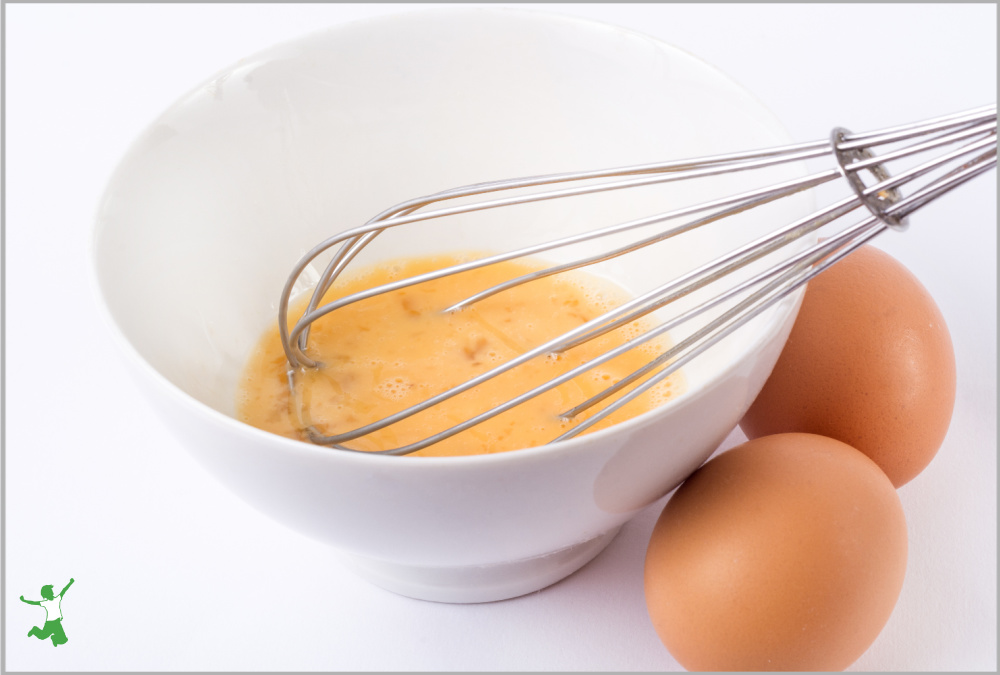
Russian custard is an excellent alternative to dairy cream. It can be enjoyed on its own with nuts or fruit or as a substitute in any recipe that calls for cream.
Coconut cream and cashew cream are other good alternatives to dairy cream for those who do not tolerate eggs.
Why would you consider using egg yolks instead of dairy cream?
If you recall, fresh cream even if raw is not permitted on the GAPS autoimmunity protocol as it contains lactose (milk sugar).
This natural sweetener is a disaccharide (double sugar). This molecule is not easily digested in a compromised gut environment. By comparison, honey and fruit are permitted as they are monosaccharide sugars.
Once the gut heals, lactose can be metabolized quite easily. Thus, avoidance of dairy cream is only a temporary measure on the GAPS diet.
Yolk Quality is Key
The key to Russian Custard is the quality of the eggs you use.
Deep yellow and orange yolks are one of the highest food sources of choline. This critical nutrient protects the liver from overconsumption of sugar, refined carbohydrates, and processed seed oils.
The best egg yolks are from your own backyard chickens. Second best is unwashed eggs from a neighbor or farmer’s market.
Coming in a distant third would be eggs from the store. Washed eggs even if organic are best avoided if you can get fresh, unwashed versions in your community.
Good quality egg yolks in the diet are a very wise investment of your food budget dollars.
Serving Suggestions
In addition to fruit, Russian Custard is delicious topped with a handful of chopped nuts.
The raw nuts should be soaked in brine overnight and then dehydrated before eating. This method vastly improves digestibility.
You can also use sprouted nuts if you are short on time. This is the brand I use.
What to Do with Leftover Egg Whites
There are a number of creative ways to use up the egg whites leftover from making Russian custard.
Tip: Separated egg whites will stay fresh for several days in a glass container with a lid in the refrigerator, so don’t feel pressured to use them immediately.
Two of my favorite methods to use a lot of egg whites at once are these delicious protein cookies or grain-free angel food cake!
**This recipe is adapted from Gut and Psychology Syndrome by Dr. Natasha Campbell-McBride MD, who herself is of Russian heritage.

Russian Custard Recipe
How to make nutritious Russian Custard, an easy-to-make, traditional substitute for dairy cream for all your savory and sweet recipes.
Ingredients
- 8 egg yolks preferably pastured
- 4 tsp raw honey preferably local
- sprouted nuts optional, chopped
- fresh fruit optional, chopped
Instructions
-
Wash eggs gently in warm, soapy water and then dry.
-
Separate egg whites from yolks and set whites aside. In a medium-sized bowl, add the honey to the egg yolks and whip with a whisk until the mixture thickens and the color lightens to a pale yellow.
-
Serve immediately with fruit or nuts or add to recipe of choice in place of cream.
-
Refrigerate leftovers, which will last several days in a glass bowl with a tight-fitting lid.
Recipe Notes
If keto or ultra low carb, reduce or substitute the honey with a few drops of stevia extract or a pinch of monkfruit.
More Healthy Pudding Recipes
Egg Custard Pudding
Vanilla Pudding Recipe
Bread and Butter Pudding
Jello Pudding
Macadamia Nut Pudding
Coconut Milk Pudding
Thai Custard
Homemade Chocolate Pudding



Raw egg?
What about the food poisoning we are hearing about?
I don’t have chickens in my yard; I buy the best eggs I can find at the store.
Anyone have experience with this?
The problem with most commercial eggs is that the chickens in CAFOs are miserably unhealthy. Their immune systems are compromised, and the chicken actually produces a protective layer that dries on the egg shell after laying. If the chicken is sick, it will likely have salmonella poisoning itself. This is why American CAFO produced eggs are always washed on site. The problem with washing, however, is that the protective layer, now compromised by the chicken being sick, allows the salmonella to rest on the surface of the shell. Once the consumer gets the egg home and cracks it, the salmonella then contaminates the egg. If you buy organic eggs from locally farm-raised chickens, more than likely the chickens are happy and healthy, and aren’t living in a state of salmonella poisoning. The washing of the eggs just sanitizes them completely on the outside to prevent any bacterial contamination of any kind. Fun Fact: Other countries treat their chickens so well, they can leave the eggs unrefrigerated up to a month, and Americans are the only ones who need to wash eggs. That was two fun facts for one!
EXACTLY! Well said.
This website has talked about how to get good eggs. They even shared a website that grades eggs based on many factors. Sounds like you need to do some research. I found a co-op nearby that sells very highly ranked eggs.
cornucopia.org/scorecard/eggs/
Thanks for this Sarah, I am going to try this!
did not know that egg yolks could be used this way!
This is great! Thanks.
If you make a batch of this, how long can you store it in the fridge? Can you just re-whip it the next day to fluff it again?
I Love how you summarized the soaking of nuts in 4 simple sentences. This is very much needed since I am overwhelmed sometimes with work and home and cannot bring myself to re-read nourishing traditions. Thanks for summing it up simply! I am going to try soaking nuts for the first time!
Hi Sarah! Thanks for this recipe. My family just enjoyed some tonight, and it is perfect for the GAPS diet. I was wondering, what did you do with all your egg whites while you were on the GAPS diet since the two recipes you mention call for ingredients not permitted on the GAPS diet? Thanks so much.
When I have egg whites left over, I make macaroons. You can google GAPS macaroons. You could also make a merengue topping for something else, maybe a clafoutis?
I know that this is an older post, but had to reply as I only stumbled across it the other day and I have just tried it. I was out of cream to have on my baked apples (and can’t source any raw cream anyway, so always feel like pasteurised cream is such a huge compromise!) so I tried your Russian Custard and LOVED IT! Been eating WAP style for nearly a year now and your website has made it so easy! Thankyou so much!!
So glad you like it on baked apples! That’s what I was thinking of using it for. Growing up my grandmother always served baked apples with ‘custard’, but it was the Birds’ mix which is basically cornstarch and sugar mixed with warmed milk. I can imagine that this would be a pretty good substitute, except that the Birds’ is served *warm* — do you think this mixture could be warmed a bit to go over the hot apples, or is it just as good cold? Thanks!
Thanks a lot for the link on how to use leftover eggwhites!!! It’s very helpfull. And tasty 🙂