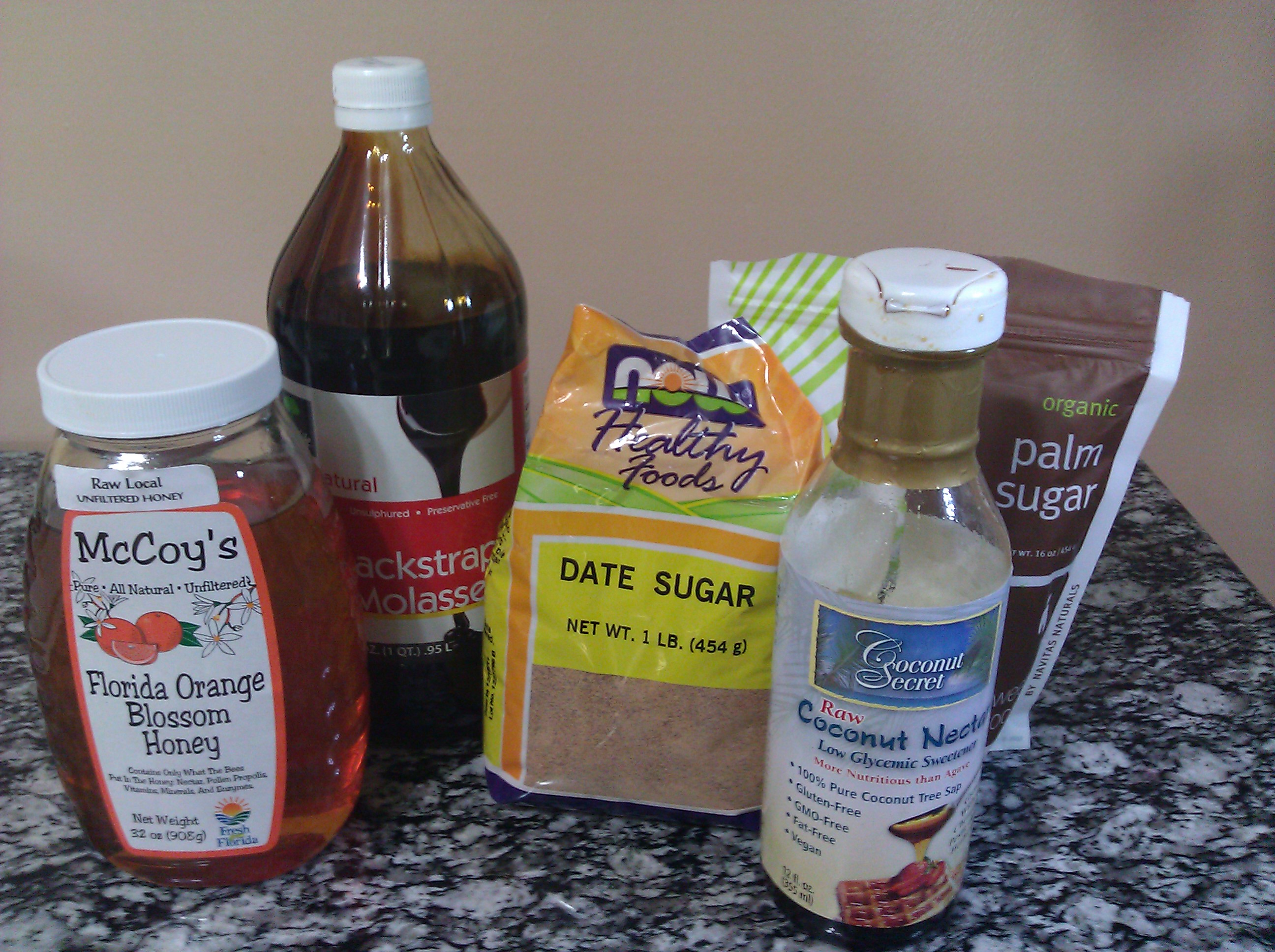

In the post Slay the Sugar Monster in Four Doable Steps, the recommended first step is to replace all refined sweeteners with natural, wholesome sweeteners.
Which natural sweeteners are best? Which ones are optimal for those with blood sugar problems?
In this latest video filmed for the Weston A. Price Foundation, I catalog the list of wholesome sweeteners and discuss which ones to avoid and which ones to use and for what purpose.
Where to Find Wholesome Sweeteners
Be sure to check out my Resources page for places to source quality, wholesome sweeteners – even the hard to find, low glycemic ones mentioned in the video.
For a complete transcript of this video lesson in any language, click here.
Sarah, TheHealthyHomeEconomist.com
|
|

{ 70 comments… read them below or add one }
Hi Sarah,
Thanks for this great video! I just love this WAPF series that you are doing. I found the section on stevia very interesting. Can you tell me why the liquid stevia is not good? I understand that it processed so does that mean it is no longer nutritious? I am going to miss the liquid. It’s so easy to use…and the green powder just does not dissolve well.
Any tips?
Thanks so much!
Love,
Mary
Hi Mary, the liquid is highly processed with undesirable ingredients typically added like alcohol or glycerin. When the stevia is highly processed, the whole and nutritious aspects of it are removed. A bit of the liquid stevia used on occasion is fine, but try not to make a daily habit of it.
I don’t use stevia, but what if you wanted to grow the leaves and make your own extract? Would that be preferable? My dad is an aspartame addict who is willing to switch to Stevia now and I’m trying to make this easy on him…and obviously ANY stevia’s going to be better than aspartame! He really wants calorie-free for whatever reason (but he’s replaced his diet pop with freshly brewed tea, so I’m not arguing with him right now, baby steps) so stevia seemed like the best answer….
I’ve been using the powdered Sweet Leaf Stevia for several years. It incorporates itself into foods pretty well most of the time, although sometimes it will bunch up. Then I just take a fork and smash it into smaller hunks and it works fine. A little of the stuff goes a long way and I buy a box of 70 packets. Lasts me for a year or more. If I want to use stevia for baking, I buy it in bulk at the health food store or online. Sweet Leaf is a common brand so it shouldn’t be difficult to find. Here’s one good online place:
https://www.shoporganic.com/product/sweetleaf-stevia-plus-fiber-packets-100/brand_sweet_leaf
Has FOS inulin in it, too.
Hi D. … Is Sweet Leaf the natural green Stevia that Sarah speaks of?
Love,
Mary
Is the sweet leaf stevia a white powder or green?
I have some growing in my herb garden this summer. By the looks of the plant, you’d have to plant a row of them to get enough leaves to dry and use.
Sarah,
Where do you order the green stevia that you showed on the video? I would like to switch to that because the liquid i use does contain glycerin. Thank You for all the informative info.
Also while i am asking, what kind of deodrant is good when trying to come off alumimun anti perspirants? My dh has agreed that we should get off them.
Frontier.
I don’t use antiperspirants myself. There isn’t a good option once you come off them. Sweating is normal and shouldn’t be “stopped” with chemicals. If you eat well and exercise, sweating won’t be profuse and won’t smell.
I should say sweating won’t be profuse under normal circumstances. It’s fine to sweat a lot if working hard in the yard or exercising though!
Thanks Sarah for the info on sweeteners. What about Xylitol? Some alternative Dr’s recommend it.
As for antiperspirants, I quit using them a few years ago and tried all kinds of weird stuff. What I’ve come up with that works best, for me, is aluminum free baking soda (Bob’s Red Mill brand). That is all. I just put a little on in the morning after showering. I will sweat when I’m out walking or doing something, which is natural, but there’s no smell like there used to be. (and it was a problem for me.)
Hi Carol, skip the xylitol. Sugar alcohols are not a great idea for regular use. Here’s a good link with detailed info for you:
http://westonaprice.org/modern-foods/sugar-free-blues-everything-you-wanted-to-know-about-artificial-sweeteners#sugaralcohols
Thanks!
This is so true especially if you eliminate coffee from your diet. Your breath is sweeter too! My husband and I no longer have any “BO” since getting off the bean and on to green tea, even after workouts at the gym and rounds of tennis and golf.
There are homemade deodorants you can make, there are recipes on some blogs (not mine). They’re usually a mix of coconut oil, baking soda, and essential oils. Although I do not personally use anything either, nor do I feel that I ever really need it. Luckily my mom was allergic so she raised me not to even use them and just take a shower instead…lol.
Video: Which Natural Sweeteners are Best? — The Healthy Home Economist http://t.co/dvL4MA5
raw sugar and raw honey
Thanks again Sarah for all your great info! I hope to maybe meet you at the conference in Dallas!
Thanks so much for the helpful video. I have many health problems so I’ve been on a journey learning about nutrition. I love your blog and Dr. Price and Mrs. Fallon’s books, etc. I wanted to say that when I switched from agave nectar (which my Dr. had recommended) to stevia, raw honey, and coconut sugar my inflammation issues were greatly reduced. Also, my reactive hypoglycemia is pretty much not a problem. I think I’ll try the date sugar next. Are the enzymes in raw honey destroyed if used in coffee? Thanks.
Stevia
Video: Which Natural Sweeteners are Best? — The Healthy Home Economist: In the post Slay the Sugar Monster in Fo… http://bit.ly/roTt6I
In response to the deodorant comment, I have something funny going on and have for years since I went natural (weird, huh? Maybe a years long detox!) and deodorants only make it worse. I’ve discovered baking soda. I don’t stop sweating, which I don’t want to do anyways, but I NEVER smell, and I used to reek.
I went to my local amish store and they had Demerara sugar. Can you tell me more about it and If it is a safer alternative.
It is my understanding is that demerara sugar is just another name for brown sugar. Demerara (brown sugar) is less processed than white sugar but sucanat (also called rapadura) is a better option as it is whole and unprocessed as mentioned in the video.
Manufacturers are always trying to confuse the consumer with different names for the same things!
I really appreciated this video as it was full of so much good information. I do have a question about why xylitol made from non GMO birch trees was not on the list? I know the corn ones are not good as they come from GMO corn but how about the other?
Be careful with the raw sugar. This is a misleading name frequently used by sugar manufacturers. Raw sugar (turbinado) is processed and should be avoided (this is discussed in the video).
the one I get “sugar in the raw” I do not believe is processed, is it?
Yes (though I love it!). Anything crystallized has been processed.
Sarah, thanks for the excellent article. I don’t bake, or add sugar to anything with one exception. Water Kefir. For that I usually use sucanat. Occasionally I use organic “B” maple syrup, as that seems to help grow the grains. I have also used a sugar you may be familiar with – Florida Crystals organic pure cane sugar, that I can buy at my local grocery store. The ingredient list is only organic evaporated cane juice. Any opinion on that product? BTW, I do sometimes add some organic blackstrap molasses to the kefir, and I make another drink that mom always used. Blackstrap molasses, apple cidar vinegar, water and local honey. Great stuff.
Don’t buy Florida Crystals .. they are processed just like turbinado sugar. Misleading advertising for sure! Florida Crystals are not pure cane sugar at all as much of the molasses has been removed.
Gotcha, thanks. Only used it as a backup if I ran out of sucanat. I guess I’ll have to look for those 50lb buckets
Agave Syrup – it appears to be a real deception. It’s 100% fructose. It is processed like HFCS, but HFCS is 70% fructose (poison in refined sugar). It sells off the shelves at Costco, health food stores, etc. The irony is that it says “Low Glycemic Index” – yes, refined white sugar is 50-50 glucose/fructose. Fructose is the poison that is carried out in the fruit’s fiber when eaten in it’s natural state. Do I have this right – just trying to connect the dots.
Yeah. We should have all known the claims were too good to be true! I saw red flags when so much was produced and had the ol’ USDA label and from Mexico to boot. I think we were and are still being hood winked by all this USDA stuff coming out of Mexico and China. Sorry, there just aren’t that many USDA agents going around the world checking all the products coming here that claim to be organic. I’m such a skeptic any more!
http://www.uctv.tv/search-details.aspx?showID=16717 This video explains fructose and ill health.
I cannot do sugars in any form. I use stevia, lo han guo, and monkfruit, but all three rarely. If I’m invited to a pitch-in picnic, I’ll make a sugar-free, grain-free cheesecake on a nut/butter crust in order to be able to pass up the brownies and pies, which would be really terrible for me to eat (worse than for others). I use stevia then. I also use it in homemade barbecue sauce, along with a little blackstrap molasses, again so I pass up stuff that would cause havoc immediately in my endocrine system.
Jane, what brand is the raw sugar you are using?
It is called Sugar in the Raw. Here is a link: .
By the way, during the filming of this video, my back was KILLING me! I had foolishly gone roller skating with my kids the day before and had fallen on my bottom several times, really hard too. The show must go on though, right????
Hi Jane, Sugar in the Raw is turbinado sugar and it is processed. I would suggest using sucanat instead. I don’t know how these manufacturers get away with this misleading advertising that they so boldly put on their labels.
It’s true about sweat not smelling bad on a natural diet! I only have to wear deodorant (or baking soda, or lavender oil, or carry a spray bottle of hydrogen peroxide in my purse) now if I know there’s a chance I’ll be eating or drinking something processed (at a party, for example).
Wow thanks SO much for that info! I was just about to go and buy some today — good timing
We’ve all been fooled at one time or another with the games food manufacturers play. I used to buy Florida Crystals back in the day when I thought it was truly raw and unprocessed. Been using sucanat now for many years .. the fact that Florida Crystals is advertised on TV should have been my tip off. Only processed foods are advertised on TV!!! Real Food never is (at least I’ve never seen it advertised!)
great info! I had never heard of Sucanat. I will definitely be looking for this! I cannot wait to try it!
I was so excited to find “organic raw sugar” at Costco a few months ago! The label says “made from freshly squeezed cane juice that is evaporated and crystallized on the same day it is harvested. No chemicals, pesticides or herbicides. In accordance with strict organic standards.” Do you still think this is bad too? The color is somewhere between white and brown sugar.
Unfortunately, I have no doubt some molasses has been removed (the same day of course).
It’s amazing how tricky words can be used to fool the consumer.
If it was TRULY cane juice with NOTHING removed, it would be dark brown with the consistency of sucanat as this is what sucanat is.
i usr\e sorghum syrup alot…not available everywhere…i ordered mine from a family farm in tenn..similar to mollasses but milder…supposed to have a higher mineral content..
I was certainly interested in this video. I just saw Florida crystals in the grocery store and wondered about it. I’m glad someone asked about it. I’ve been cutting back on the sugar/sweetener called for in some recipes. Since I have changed our diet here at home I find all that sugar is just too much now. Since you mentioned stevia I have to say I just bought the liquid recently, thinking it was ok. I am so glad you put the info out there because it is confusing. I have a question. I am wanting to make kombucha and I am supposed to use white sugar. I have never seen organic white sugar. Is it ok to use regular white? How do I know if it is gmo or not? Also, I made your angel food cake recipe, but only used 1 cup sugar (see, cutting back) and it was so good! I’ve been wanting to tell you that. Thanks, Sarah.
Hi Linda, you can use regular white sugar for kombucha if you can’t find organic white sugar. The sugar is used up when you ferment for the proper amount of time (no less than 7-8 days). I usually ferment for 10 days or so to make sure all the sugar is gone. If it gets too strong, you can dilute with seltzer or mix with a flavored tea or fruit juice to soften the vinegar-y taste if necessary.
So glad the angel food cake turned out well!
Sarah, do you know anything about lucuma? I’m talking about the powder available in health food stores and online. It seems that it’s only dried fruit (similar to date sugar) and it’s ‘raw’ which I assume means dried at low temps. I haven’t found out yet if it’s legal on GAPS or not – it’s more than half glucose, with fructose and a tiny bit of sucrose.
Magda,
I’m curious about lucuma too. Sarah, I hope you find some time to address this sweetener. I am also curious about momordica or Luo Han Guo.
Video: Which Natural Sweeteners are Best? — The Healthy Home Economist http://t.co/4J3jCl4
Thanks again for another great video Sarah. I encourage our local WAPF members to watch them and use your very helpful website too! Keep up the good work!
As far as sweeteners go, I’d suggest people trying to get off them and save them for special occasions. If people want to reduce them in their diets but find they are addicted then read Eat Fat Lose Fat. If you are traditionally nourished, eat lots of the right fats, you can eliminate the cravings. I have a kitchen full of those good sweeteners and some not so good and rarely find myself ever using them, as I have no craving. Fortunately, they have a very long shelf life!
Hi Sarah,
All this sugar business is so confusing! I was just reading recently that perhaps coconut sugar is not a great option since it contains a high level of fructose.
So with all these alternatives to sugar, how is one to know which is the best? I don’t do a lot of baking, every now and then I make crepes/pancakes and have been using agave syrup which I now have come to realise is BAD! So threw that one out oops! Would you recommend using Grade B maple syrup instead in the pancakes? Also I do make smoothies all the time so what would the best sweetener to use for that?
Thanks
The fructose in coconut sugar is not like the fructose in HFCS or other processed forms of fructose like in agave. Natural fructose is L-fructose which is the primary fructose molecule in fruit or honey and coconut sugar. Processed fructose (the one to avoid) is D-fructose which is a reverse isomer with reverse polarity to the small amounts of natural D-fructose found in fruits. The unnatural form of D-fructose in agave and HFCS primarily raises triglyceride levels and increases adipose (fat) tissue. Natural L-fructose does not do this.
I don’t use any sweetener in my smoothies. I think they are sweet enough.
Hi Sarah,
Do you have any tips on picking truly raw honey? I’ve been buying one labeled raw, but just found out that they heat the honey to 140 degrees during processing. Much like the “raw” cheese issue you wrote about. So frustrating! How do I pick a truly raw honey??? Some honey is solid at room temp–is that a better bet than the liquid ones?
Talking to the beekeeper directly helps to get the true story. Try to find honey that is labeled “unheated” and “unfiltered” as raw is not always reliable as you have discovered.
Should this: http://www.tropicaltraditions.com/coconut_palm_sugar.htm influence our thinking about the coconut sugar, or is it just their own little scare tactic?
There are ways to harvest coconut sugar sustainably which this article does not cover. I wrote a post awhile back called Coconut Sugar: Healthy Alternative to Agave that covers this.
@Kate:: Regarding your earlier post asking about stevia leaf…This is how I first used stevia, bought as dried leaves in Thailand. I would make a pot of ginger tea in one of those big things like they have on buffet tables or something…maybe a half gallon? In to that pot, I would use fresh ginger and only a few stevia leaves and it was plenty sweet!!
Living where I do, I do not have some of the choices that you in North America do. I do the best we can with what we have! I have been on quest to find sucanat type sugar but have probably just ended up with the processed stuff you mentioned. I do have access to some exotic choices like Kitul Teacle from Sri Lanka and Date Honey Topping (just dates) from Saudi Arabia and jaggery (not sure what kind) from India. The jaggery and date honey tooping are a bit tricky to use because of taste a texture. Jaggery comes in big chunks that need to be shredded, producing a sticky mass of sweetness. Any suggestions?? Currently I substitute the treacle for maple syrup.
Check out iherb.com. It ships internationally and has very low shipping rates.
There you can find different kinds of coconut sugar, rapadura (Rapunzel brand), maple sugar and syrup.
I have not been able to find the difference between “evaporated cane juice” and “dehydrated cane juice”. Is there a difference?
Thank you for the video, but I am still confused re: turbinado vs. sucanat. I have been using
Trad** Jo** Organic Turbinado Raw Cane Sugar. The ingredients listed are only organic evaporated cane juice. Is this the type of product that is processed and to be avoided?
Turbinado has been processed with some of the molasses removed. If you compare it to sucanat which has had nothing removed, they look and taste quite different.
What is the skinny on “Just Like Sugar” products that are quite new? I personally only heard of it today. I like to order rapadura in bulk also but we use raw honey and maple syrup too.
Ukrane Chernigow flowers sun flowers
sarah,
what brand of molasses do you use…i can only get the Wholesome Sweeteners brand in my area but it is in plastic…
thanks!
Hi Sarah,
I make a lot of drinks at home and was wondering what kind of sweeteners will be better to use. There is so many of them on the market now, it is hard to know what to go with. I am looking for something healthy.
Thanks a bunch!
{ 1 trackback }