

Table of Contents[Hide][Show]
How to make a delicious batch of shrimp stock with the leftover shells, heads, and tails removed from the wild shrimp you buy from local fishermen or seafood shop. Ready in only 30 minutes to enjoy sipping on its own or as a base for gumbo and chowder.
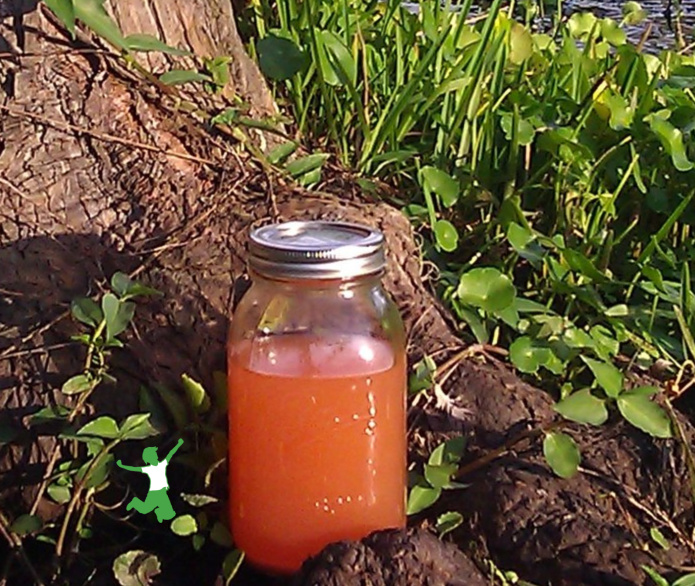
One of the best things about shrimp stock is that it is ready in only 30 minutes!
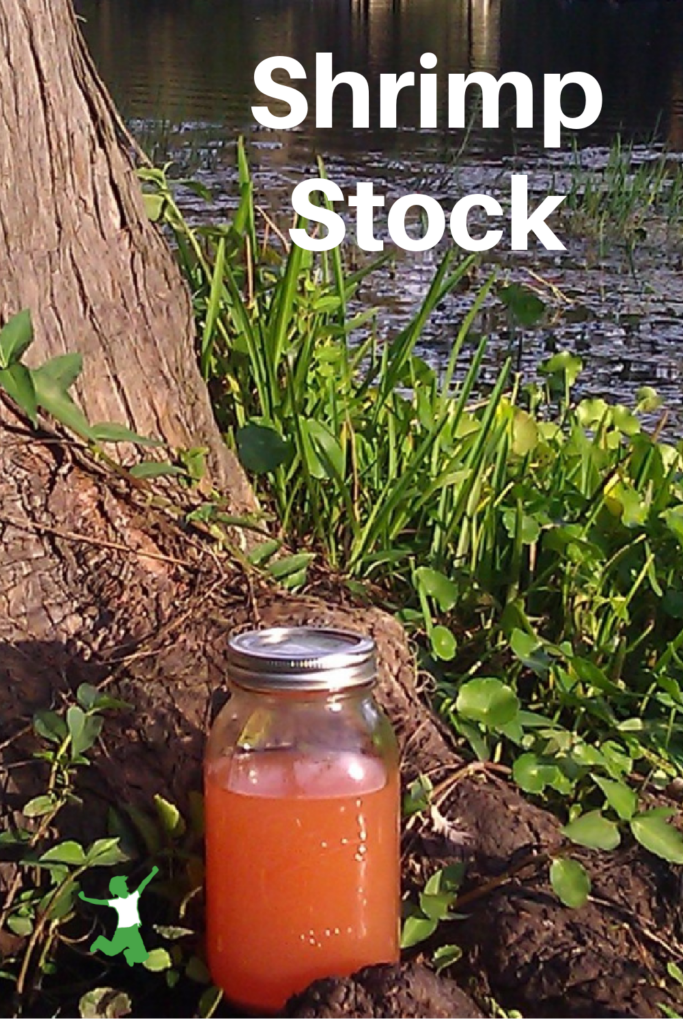
Shrimp stock also called shrimp broth is not only fast, but it also is amazingly flavorful and as you can see from the photo. It often turns out a very rich orange-pink color as well.
In fact, the batch I made shown in the photo is the exact color of fresh-squeezed guava juice!
If making a seafood-based stock has not been something you’ve been able to bring yourself to try, start with shrimp broth as it is a more agreeable task to many. Lobster stock or crawfish broth are other delicious option.
Here is a snippet of me skimming a pot of shrimp stock to give you some idea. A longer, detailed how-to video is provided below along with the written recipe.
Shrimp Sourcing Tips
It is important to source only wild shrimp (we buy our jumbo pink shrimp directly from the fisherman right off the boat!). This is actually far easier in some locations than non-oily fish heads for fish stock. It can be easier than sourcing bonito flakes for a basic bonito broth recipe too.
Whatever you do, always avoid the farmed shrimp and pay extra for the truly wild ones. Beware of deceptive language too…“sustainable” seafood emblazoned on the label is usually lingo for farm-raised.
The conditions of farmed shrimp are nothing short of horrific in many instances. Much of it comes from third-world countries with little to no regulations of any kind. One Florida shrimp fisherman told me that farmed shrimp in Asia often swim in polluted, toxic pools with “free range” chickens walking on open-air platforms above them. The chicken droppings fall directly into the water as “feed” for the shrimp!
Once you have a quart of homemade shrimp stock ready, use it to make this delicious island-style conch chowder recipe.
Wild Shrimp Stock
How to make a delicious batch of shrimp stock with the leftover shells, heads, and tails removed from the wild shrimp you buy from local fishermen or seafood shop. Ready in only 30 minutes to enjoy sipping on its own or as a base for gumbo and chowder.
Ingredients
- 1-2 pounds wild shrimp heads, shells, tails only
- 2 quarts filtered water
- 1/8 cup white wine vinegar or ACV
- 1 carrot optional
Instructions
-
Remove heads, shells, and tails from the wild shrimp and place in a 1-gallon pot. *If you've never removed the head of a shrimp before, it's easy. Simply place your index finger and thumb on the crease between the bottom of the shrimp head and the top of its abdomen and twist.
-
Add filtered water and optional chopped carrots. Stir in vinegar.
-
Bring the pot to a boil on the stovetop, skimming off any white foam as it rises to the top.
-
Once the stock is boiling, turn down to a very low simmer for a minimum of 30 minutes. Simmer the stock longer to improve the flavor if desired – up to 3 hours.
-
Strain the stock, cool and use immediately or store for several days in the refrigerator in a glass jar. Freeze what you will not use in a few days.
Recipe Video
Recipe Notes
Crawfish may be substituted for the shrimp.
Homemade apple cider vinegar or commercial ACV packaged in glass bottles may be substituted for the white wine vinegar.
More Information
My Youtube playlist of over ten videos on all aspects of making stock and bone broth
Turkey Broth
The Healthiest Bone Broth
How to Make Duck Stock
Homemade Beef Bone Broth Recipe (chicken broth recipe too)
5 Reasons Why Your Stock Won’t Gel
Stock versus Bone Broth
Meat Stock Recipe
The Perfect Simmer on Your Broth



Pacific North West, but then you got to worry about radiation coming from Japan 🙁
But where can you get healthy shrimp from at this point? The Gulf of Mexico is hopelessly polluted after the BP spill and all the chemicals that were used to make the oil “disappear”, and there were a ton of stories out last week about shrimp farmers in Asia using pig feces to feed their shrimp because their normal feed sources have become too expensive.
We started doing shrimp stock awhile back and love it. Our freezer has so many jars of different stocks that we never worry about running out (all bones are saved in this house).
I think the trick to not having jars breaking during freezing is leave head room in each jar and leave the lid off till the stock is frozen. With most stocks we condense them down, and use one cup jars for the most part.
Another quick fish stock is the bonito flakes the Japanese use.
As always Sarah your video is wonderful. Thanks
I’m going to do this today!
I live in a land locked area and have a really hard time finding wild shrimp. Are there any places you could recommend that sells dehydrated whole wild shrimp? I have seen this at the Asian markets but I am nervous about buying a package I cannot read.
Thanks for the info on quick broth, hoping I can find something to use to make it.
Thanks for this video! The last time we had shrimp I had thought about making some stock but ended up not having to much (no heads, just shells and tails). I think my husband thinks I’m crazy. I made rabbit stock a couple of weeks ago–really good!
Anyone with a young daughter should make it with her .. she will LOVE the beautiful pinkish color of the stock!
Funny that you say that. My 4-year-old does love anything pink. Including pink fish (salmon) and shrimp. She does not like stock but I *might* be able to talk her into eating it if I made pink stock! Just have to find something to do with it. A sauce for a stir-fry, perhaps? Use some to cook the rice for the stir-fry? (I get stock into kids better if I hide it that way.)
Can I just substitute shirmp stock for any other stock? Can you recommend some recipes ideas to compliment the flavor. I had this exact delimmea the other day! I have yet to figure out a way to freeze larger amounts of stock without the jars breaking 🙁 so I never have stock handy.
I substitute stocks all the time in my recipes .. it definitely brings a different flavor to the final dish but if you are ok with that then this strategy works well.
Val – re jars breaking, first, and foremost, use canning jars and you have to give a good inch or more of airspace at the top of the jar for expansion as the broth freezes. If the broth has no place to go in the jar as it expands, then it pushes outwards and the jar breaks. I’ve also found that if I first cool the broth a bit and then place it in the refrigerator overnight so it is pretty cold, and then put the jars in the freezer, they don’t break. I have to compensate a bit as each quart jar has only 3 1/4 cups of broth, but it is worth it to not lose the broth, and the jar, to breakage.
There’s a new size and shape of Ball jar called Pint & Half, which are tall, slender and perfect for freezing broth since the insides are completely smooth and vertical with no “shoulders” or ridges whatsoever. I’ve found them at Ace Hardware. The label says freezer safe and they have a fill line for freezing.
Val–
I also had a hard time with with my quart jars breaking while freezing, but I then I saw on the side of the box that the quart jars are not recommended for freezing. Now I freeze all of my stock in wide mouth pint jars that are approved for freezing. Plus, now I am more willing to defrost a jar full when my recipe calls for less than a cup. Hope that helps.
Hi Val,
Refrigerating the jars overnight before putting them in the freezer works! I have found that if I do that, breaking isn’t a problem, even if I accidentally fill the jar too full and it over flows.
Tamara
Val,
I, too, used to have jars of stock break. I read somewhere to use pyrex containers, so I invested in them. Works great! Way easier to get the stock out of, even when still pretty much frozen. I also sometimes first refrigerate the stock to cool it, and then measure it out in 2 cup portions into freezer bags, and freeze the bags laying down flat on a cookie sheet. Once the bags are frozen, remove them from the cookie sheet and stack. What you have then is a thin bag of stock that is easily used by cutting the bag off the frozen block of stock.
This sounds yummy!!
Hi Sarah, thank you for this post. Just one question: Why you need to buy shrimp with the head on if later you will remove it?. Thank you.
The shrimp stock is made from the heads, tail and shells of the shrimp so if you buy shrimp wtih no heads, you can’t make shrimp stock that is as nutritious or nearly as flavorful.