
Video: Fermented Potatoes

by Sarah, The Healthy Home Economist on November 4, 2010


Is there anything quite as satisfying as potatoes with dinner?    I just love all forms of potatoes – baked, fried, mashed, even boiled!

Unfortunately, the starch in potatoes is really not all that easy to digest for many folks.   Especially these days with so many people suffering from digestive complaints of all kinds, starch can be a real pain  – literally!

The problem is with the starch molecule itself.    Each starch molecule is comprised of hundreds of monosugars connected in long, branch-like strands.   It takes much digestive work to break down the starch molecule and, as a result, much of it goes undigested in most cases.    For those with an imbalanced gut, the undigested starch is the perfect food for pathogens and they grow and produce toxins which cause a variety of unpleasant symptoms in susceptible individuals.

If you enjoy potatoes but find that they trigger digestive or autoimmune symptoms, it might be worth it for you to try your hand at fermenting them.

In addition, if you are coming off the GAPS or SCD diets and reintroducing starch in your diet after a period of gut healing, fermented potatoes would be a great first step.

We like fermented potatoes in our home to simply add that probiotic element to a meal of primarily cooked foods.   Adding enzyme rich, live food to your meals is nothing short of miraculous for boosting immunity and improving nutrient absorption.

If you’ve been wanting to make a fermented dish at home for the first time, this would be an easy one to start with!

Fermented Potatoes (adapted from Nourishing Traditions)

Ingredients

4 cups cooked, peeled, organic, Yukon Gold or sweet potatoes
2 cups plain yogurt or kefir
1 Tbl sea salt

Instructions


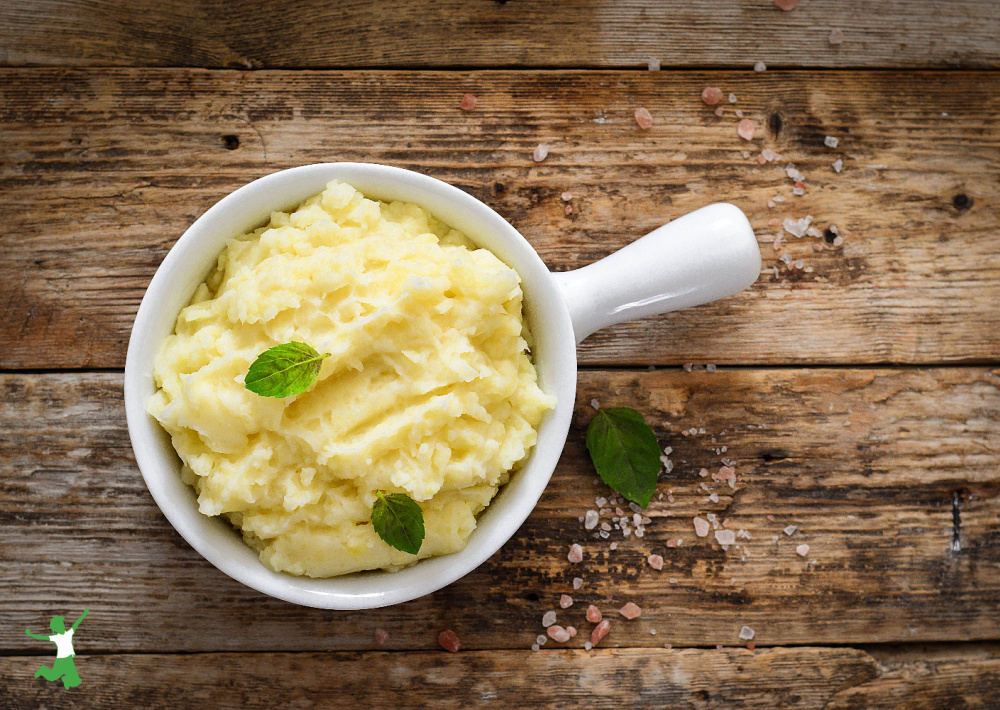
Bake or boil potatoes and then mash them in a large glass bowl.   Do not microwave.  With a handheld mixer or food processor, blend well with yogurt and sea salt.     Cover with a clean, cotton cloth and secure with a rubber band.   Leave the covered bowl on the counter for 2 days and then refrigerate.  Fermented potatoes will last about a month in the refrigerator.

Serve with steak as an enzyme rich side dish or with any meal where potatoes work well.   Fermented potatoes may be slightly warmed on the stove before serving, but take care not to warm them too much or enzymes and probiotics will be lost.

Sarah, The Healthy Home Economist

*This post is shared at Fight Back Friday.


The Healthy Home Economist by E-mail


{ 48 comments… read them below or add one }

Katie Riddle November 4, 2010 at 3:10 am

THANK YOU! This is amazingly helpful. I love your videos.

Reply

Barbara November 4, 2010 at 4:23 am

Sarah, is it necessary to peel the potatoes? I usually make my mashed potatoes with the skin on as well as adding an onion…. can I do the same with the fermented potatoes?

I'm definitely going to be serving these at Thanksgiving instead of traditional potatoes!

Reply

Sarah, the Healthy Home Economist November 4, 2010 at 11:52 am

Hi Barbara, I don't see why not. I've always peeled them first, but give it a go. It would probably be fine.

Reply

Carla November 4, 2010 at 1:11 pm

Wow, I never ever thought that potatoes could be fermented. Of course I'm still new to most of this but wow, learn something new everyday! I will have to give this a whirl when I have more yogurt.

Reply

Nance November 4, 2010 at 1:38 pm

Just wondering…could/should this be done with winter squash? They have a similar profile, don't they?

Reply

Sarah, the Healthy Home Economist November 4, 2010 at 2:12 pm

Hi Nance, squash is not as starchy as potatoes or even sweet potatoes, but it should work fine.

Reply

newhomeeconomics November 4, 2010 at 2:12 pm

I'm having a hard time understanding how cooked foods ferment. I read Wild Fermentation and all, but it just seems like the natural enzymes, etc. in raw food are lost when it is cooked. Is that the reason for the yogurt?

Reply

Sarah, the Healthy Home Economist November 4, 2010 at 2:14 pm

Hi newhomeeconomics, yes – the yogurt is live and full of probiotics/enzymes and these beneficial bacteria feed on the starch in the potatoes and the food is fermented in this manner.

Reply

Sarah, the Healthy Home Economist November 4, 2010 at 2:16 pm

I would also add that pasteurized milk can still be cultured back to life with a yogurt or kefir culture. The process is similar – the yogurt/kefir culture feeds on the lactose in the milk and the milk ferments into yogurt or kefir depending on what starter culture you used.

Reply

Jennifer November 4, 2010 at 2:37 pm

Yup! I haven't gotten to the "switching to raw milk" thing yet, so I make stuff with pasteurized milk all the time. Fortunately I have access to what I consider to be the second-best thing to raw milk: Cedar Summit Farms near the Twin Cities has non-homogenized whole milk from grass-fed cows which they pasteurize (NOT ultra-pasteurize) right on the farm. It works great in every NT-related thing I make.

I made fermented beets this summer, and it seemed odd to cook them first, and since they were tiny I just fermented them raw. As it turns out, they are quite tasty thinly sliced on top of a salad. I love that there are multiple right answers to this stuff.

Reply

Anonymous November 4, 2010 at 3:03 pm

I wonder if sauerkraut juice would ferment the potatoes as well since we don't do dairy.

Reply

Anonymous November 4, 2010 at 3:05 pm

Is starch the reason sweet potatoes, white potatoes, yams and parsnips aren't allowed on GAPS and SCD?

Tina

Reply

Sally November 4, 2010 at 3:08 pm

Great recipe! Can't wait to try this. Can I do it without peeling the potatoes? Or is there a reason for the peeling?

Reply

hobby baker November 4, 2010 at 5:11 pm

Would it be okay to add something like garlic and chives to the potatoes or would that affect the fermentation? Maybe adding them in at serving time would be better. What does the flavor on this dish end up like?

Reply

Corinne November 4, 2010 at 5:44 pm

Along with hobby baker, I too wonder what fermented potatoes taste like? My fist thought was that they don't sound appetizing at all. I love sauerkraut, beets, etc. but fermented potatoes is new to me. Thanks!

Reply

Sarah, the Healthy Home Economist November 4, 2010 at 6:41 pm

Hi Tina, yes – it's the starch that is a no no on GAPS and SCD. Starch is extremely difficult for a compromised gut to digest.

Reply

Sarah, the Healthy Home Economist November 4, 2010 at 6:43 pm

Hi Anonymous, try 2 cups water plus 2 TBL raw apple cider vinegar to ferment the potatoes instead. It wouldn't hurt to add the contents of a probiotic capsule to the liquid before mixing in as well.

Reply

Sarah, the Healthy Home Economist November 4, 2010 at 6:44 pm

Hi Sally, I've never done it without peeling the potatoes, but if you wash them really well and mash it up really well it should be fine. My only concern is that the skin would add a mold risk to the recipe that is not there otherwise.

Reply

Sarah, the Healthy Home Economist November 4, 2010 at 6:45 pm

Hi Corrine, the fermented potatoes taste like mashed potatoes with a bit of zing from the enzyme/fermentation.

Reply

Sarah, the Healthy Home Economist November 4, 2010 at 9:14 pm

Hi Hobby, garlic and chives would be absolutely fine to add! Creativity is so awesome once you get comfortable with the basic tenets of fermentation.

Reply

WordVixen November 4, 2010 at 10:08 pm

Since I don't make raw yogurt, do you think I could use a cup of store bought yogurt and a cup of raw milk? Or even just two cups of store bought yogurt?

Reply

Sarah, the Healthy Home Economist November 4, 2010 at 10:19 pm

Hi Wordvixen, 2 cups of plain store yogurt would be fine. Try to find Seven Stars brand at the healthfood store – this is the best store bought brand to be had.

Reply

Anonymous November 5, 2010 at 2:22 am

Hi sarah
I went to the store and bought sweet potatos to try the fermented recipe. We have not been eating them because of gaps diet so this is a great new idea for us to try for some variety! I just love this blog, you are so imaginative!
Thanks so much!
Jean

Reply

Josh November 5, 2010 at 4:13 am

By the way Whole Health Source did a 3 part article on potatoes and Stephen concluded that potatoes should be preferably peeled before eating because of the glucoalkaloids being mostly in the skin.

http://wholehealthsource.blogspot.com/2010/10/potatoes-and-human-health-part-iii.html

Reply

K @ Prudent and Practical November 5, 2010 at 4:15 am

Just whipped up a batch right now. I left the skins on so we'll see how it goes. They look just like homestyle mashed potatoes. Thanks for sharing the recipe!

Reply

Sarah, the Healthy Home Economist November 5, 2010 at 11:54 am

Hi Jean, be careful of the sweet potatoes if you are on gaps. Even if fermented, they may cause a flare up of symptoms unless you are healing really well. If they cause a problem, be sure to re-eliminate them and wait until you come off GAPS to try them again.

Reply

Dorsey November 5, 2010 at 6:02 pm

I just tried this as well. Sounded so fascinating, I couldn't resist. I had an organic potato that was new to me…. called Natural Beauty. It says sweet on the little label but it is the color of the gold yukons. I made it with kefir as that is what I had. I am now waiting for the "brewing" process to complete but licking the beaters was a tasty experience.
Thanks for the unique recipe.

Reply

WordVixen November 5, 2010 at 8:28 pm

Thanks Sarah! I've never heard of that brand before, but I'll look for it. There's a local company that uses VAT pasteurized grassfed Jersey milk that's amazing, but I haven't seen plain from them yet, so I've been using Stonyfield. If I can find better, I'll grab it!

Reply

Elizabeth Walling November 5, 2010 at 9:07 pm

Yum! This looks amazing. I love, love, love potatoes. I eat them every day. But I never thought to ferment them! That's something I'll have to try. Right now I'm on a hashbrowns-fried-in-coconut-oil streak, but this might persuade me to try something new…

Reply

Sarah, the Healthy Home Economist November 5, 2010 at 9:55 pm

Oh, I just LOVE hash browns fried up in coconut oil!!!

Reply

WordVixen November 7, 2010 at 3:51 am

I stand corrected- a local Amish natural foods store DOES have Seven Stars yogurt! They also have the plain of our local grassfed VAT yogurt. They're cash only, so I have to work it into our budget, but I can definitely get it. Even better, a lady I met there told me where to get Jersey raw milk- and it's the farm that already makes the raw cheese that I buy at the Amish store. Total score today!

Reply

K @ Prudent and Practical November 8, 2010 at 1:42 am

Maybe you can help with troubleshooting? I made mine and let it "brew" for 48 hours. I took off the cloth and my potatoes were grayish on top and fuzzy. I'm assuming it's mold and wondering what I might have done wrong? I kept the skins on the potatoes and used russets.

Reply

Sarah, the Healthy Home Economist November 8, 2010 at 1:20 pm

Hi K,

I made a comment above that the leaving the skins on would be a mold risk. Try it again without the skins. I've never gotten mold with peeled potatoes.

Reply

Elizabeth November 8, 2010 at 6:28 pm

I am interested in hearing a taste review from any of the visitors to the site who have made the potatoes.. Thanks so much!

Reply

Janetlynda November 9, 2010 at 4:48 pm

Sarah, After you have made these fermented potatoes – how do you serve them? Can you HEAT the potatoes and cover them with butter and gravy? Or because of the 'ferments' do you have to eat them cold?

Reply

Sarah, the Healthy Home Economist November 10, 2010 at 2:07 am

Hi Janetlynda, you can warm them but don't warm them to the point where they are hot (above 118F) else you will destroy the enzymes/probiotics.

Reply

K @ Prudent and Practical November 15, 2010 at 11:41 pm

Ok, round two. 24 hours after making they were fine. At 6 hours before the 48 hour mark, I was going to have some with lunch and about half is covered with a faint fuzz. I'm chalking this one up to non-organic russets on sale. I do think there is a reason why a 10 pound bag of potatoes is only $2…

Reply

Asta G December 3, 2011 at 11:49 pm

Hi Sarah!

Can you use ANY probiotic dairy? Could I for example use sour cream?

Reply

kelly January 4, 2011 at 10:53 pm

I’ve never been able to get my husband and pregnant daughter to try any of the fermented foods I’ve made or bought. I made the potatos and I LOVE them. Do you think I could add them to potato dishes such as potato salad in order to sneak them into my families diet???

You’d be surprised how often I can sneak traditional foods into my families diet!

Reply

Sarah, The Healthy Home Economist January 4, 2011 at 11:49 pm

Yes, of course! What a creative idea! Glad you are enjoying the recipe. :)
Sarah, The Healthy Home Economist\’s last post: Why Vaccines Are Scientific Fraud

Reply

Noelle February 27, 2011 at 8:01 pm

Sarah,

Do you eat these potatoes cold or do you have a different way you like to eat them? Do you ever add any toppings or use them in another dish? Thanks!

Reply

Di April 4, 2011 at 2:48 pm

Is this the Potatoe Cheese recipe? and if so do I drain the “cheese off ” and serve the potatoes? or keep everything together and serve as you mentioned in the video! I am excited to try this one because starch is a problem for me:)

Reply

Martine June 8, 2011 at 2:15 pm

Hi Sarah,

Why don’t you ferment the patatoes before cooking them like for French fries?

Reply

Jason January 19, 2012 at 4:09 am

Hi Sarah,

I love your videos, thank you for providing so many of them!

I want to use these fermented potatoes for backpacking meals. If I dehydrate them, will there be any problem with storage (I am thinking 2-4 weeks storage)? Such as, because of the live cultures, will they continue to ferment if stored dehydrated at ambient/room temps (assuming dehydrating under 118F)?

FYI, I fermented my batch (first and only so far) leaving the skins on organic Yukons, no mold issues. I am in the Pacific NW, where it is humid, but not nearly as so as Florida.

Reply

Zack January 27, 2012 at 12:11 pm

Do you know if this can be done with water kefir? Thanks

Reply

Nancy May 5, 2012 at 10:33 am

was so looking forward to making this until I heard you had to use raw products, we can’t get anything Raw in Oklahoma,

Reply

Trevor Sullivan February 21, 2013 at 7:43 pm

How do you get “raw yogurt?” Can you buy this at the store?
Trevor Sullivan\’s last post: ConfigMgr 2012: Ccmeval.exe causing client corruption

Reply

Christine May 10, 2013 at 1:23 pm

I made these and they were so delicious. I don’t know how I could ever live without preparing potatoes this way. When done I fry them in coconut oil with onions and season to taste.

Reply

Leave a Comment

CommentLuv badge

{ 2 trackbacks }

Previous post:

Next post: