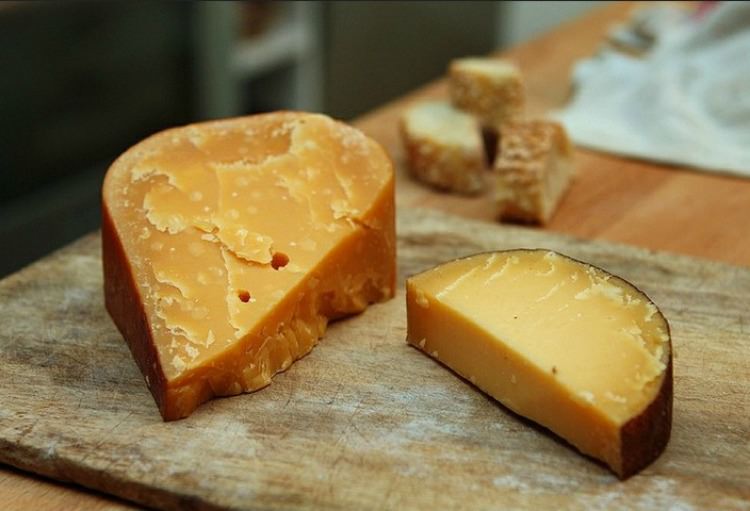

Gouda: The Nutrient Dense Cheese of Choice

by Sarah, The Healthy Home Economist on December 28, 2011


If I was forced to choose a single cheese to eat for the rest of my life that would best maintain my health, it would be Gouda.

Is Gouda my favorite cheese?

Not really.

While I certainly like Gouda and don’t mind eating it, my taste buds consistently rank several other cheeses quite a bit higher on the enjoyment scale.

Why Gouda then?

The answer might surprise you.

You might be shocked to learn, as I was, that Gouda cheese is higher than most liver, grassfed butter, and even pastured egg yolks in the critical nutrient Vitamin K2, identified by Dr. Weston A. Price as the elusive “Activator X”.

Vitamin K2 along with the other fat soluble activators A and D are synergistically responsible for the vibrant health and extremely high resistance to aging and degenerative disease as experienced by Traditional Cultures and as described in Dr. Price’s groundbreaking book Nutrition and Physical Degeneration.

Vitamin K2 is extremely difficult to get sufficient quantities of in the diet even if one consumes grassfed meats and dairy on a very regular basis.  The reason is the worrisome depletion of our soils which grassfed farmers are valiantly turning the tide on, but which will still take several decades if not even a century or two to reverse on a widespread basis.

On top of this, many families are currently struggling to afford any grassfed meat and dairy at all.  I receive emails all the time from readers who wonder how to maintain health on the very tight budget of about $75-100/week for a family of 4 or even more!

The sad state of the economy which is likely to continue for the foreseeable future, requires creative and practical solutions to ensure that this critical and elusive nutrient is in the diet in the quantities necessary to ensure freedom from tooth decay and high immunity to degenerative diseases like osteoporosis, cardiovascular disease, periodontal disease, cancer, and diabetes among many others such as what Traditional Societies experienced.

Vitamin K2 has no known toxicity even at high intake levels, but is most effective when consumed in the presence of the other fat soluble activators Vitamin A and D.   Therefore, getting Vitamin K2 from food is always the best way to go if at all possible.

This is where Gouda comes in.

You see, the food that is highest in Vitamin K2 is natto, which is very difficult to find and even more difficult to consume due to its very horrible taste and texture.  If you are game, you can usually find it at Asian specialty stores in the freezer section for about $3 for a small container. Natto contains a whopping 1,103 mcg of K2 per 3 1/2 ounce portion which blows away every other food by a country mile.

The second highest food in Vitamin K2 is goose liver pate which has 369 mcg per 3 1/2 ounce portion.  While highly delicious and wonderful to eat, goose liver pate is very hard to find in most places.  It is also a very high end, gourmet food which makes the price out of reach for most.

Rounding out the top 3 foods highest in Vitamin K2 is none other than the humble Gouda cheese, which boasts 75 mcg per 3 1/2 ounce serving!  This compares to pastured egg yolks and butter, which each have about 15 mcg of K2 per 3 1/2 ounce portion.

Here’s the really excellent news:  Gouda cheese is extremely high in Vitamin K2 even if the milk it’s made from was not grassfed. This is due to the bacterial cultures used to ferment milk into Gouda cheese.   Bacteria produce a special type of Vitamin K2 (MK-7) which according to current research is as effective as the animal form of Vitamin K2 (MK-4) at preserving human health when combined in the diet with the other fat soluble activators A and D.

Of course, grassfed Gouda would be best as Gouda made from this highest quality milk would be high not only in MK-7  but also MK-4, the animal form of K2.

For some, however, supermarket Gouda is all they can find or afford!

In other words, Gouda cheese is high in Vitamin K2 regardless of how the milk was produced.  Gouda even if made from the milk of the average grainfed, conventionally raised cow, is still very much worth it to buy from a nutritional standpoint!

Other hard cheeses would also be high in Vitamin K2, but Gouda is the highest of them all.   Perhaps this is a reason why cheese is the #1 most stolen item in the world!


Sarah, The Healthy Home Economist

Source: Vitamin K2 and the Calcium Paradox, by Dr. Kate Rheaume-Bleue ND


The Healthy Home Economist by E-mail


{ 179 comments… read them below or add one }

iniQuity December 28, 2011 at 9:54 am

I’m not sure if I’ve ever had Gouda, but it’s going on the list.

As a “supplement” how often would you recommend it? I’m not big on cheese, but I am big on food as medicine so if possible, I would appreciate maybe a weekly average to shoot for? I probably wouldn’t eat it everyday (because I’d forget) so I’d probably add a big chunk of it to a steak or something like that. For what it’s worth I’m a 5’7, 152lbs, 26 year old active male… I am also not currently partaking in grass-fed or pastured anything, unfortunately. Chances are I’m low in this “Activator X” which sounds too cool to be missing out on.

Reply

Sarah, TheHealthyHomeEconomist December 28, 2011 at 12:16 pm

My personal goal for K2 is 100-200 mcg per day. The current thinking is that around 120mcg or so is necessary to achieve the levels obtained by traditional cultures.
Sarah, TheHealthyHomeEconomist\’s last post: Gouda: The Nutrient Dense Cheese of Choice

Reply

annie January 10, 2013 at 4:17 am

When you mention Gouda cheese for K2, What we should know is, “Age Gouda Cheese” has more K2 MK-4..you might want to know, that K2 MK-4 takes the calcium to your bones and Not your Arteries. That is why we need it.

Also you can buy at Amazon, Thorne, K2 MK4..I have nothing to do with Thorne.
Just want to mention it.

I do not believe we can eat enough Pasture butter to get enough K2 MK4..
annie\’s last post: HealThy Mouth FREE World Summit Starts THIS Weekend!

Reply

Jennifer December 28, 2011 at 10:27 am

Yay! Gouda is my favorite!

Reply

dani December 28, 2011 at 11:09 am

Awesome news. I don’t generally eat too much cheese, but I love me some gouda.
dani\’s last post: meatza and almond flour biscuit

Reply

Sheila December 28, 2011 at 11:13 am

Mmm, I love Gouda and just bought a big hunk of it as my “indulgent treat” from Costco! Who knew it was actually my nutritional powerhouse, too?
Sheila\’s last post: Why so anti-child?

Reply

Andrea @ Frugally Sustainable December 28, 2011 at 11:29 am

You just made my husband’s day!!! He LOVES gouda:)
Andrea @ Frugally Sustainable\’s last post: Frugal Days, Sustainable Ways #7

Reply

Julie December 28, 2011 at 11:38 am

Thank you for this good news about Gouda! No wonder they call it Gouda.

Reply

Vicki Brooks December 28, 2011 at 11:41 am

Fortunately I love Gouda, it’s one of my favorites.

BTW, I found I can swallow some natto without chewing or tasting it much. it’s easy to make, and is VERY inexpensive to make. I was a little nervous about eating soy, though and still haven’t made peace with the soy issue. Thoughts?

Reply

Sarah, TheHealthyHomeEconomist December 28, 2011 at 12:14 pm

You only need small amounts of natto to get plenty of K2. Small amounts of fermented soy in the diet is fine if you have no thyroid issues and consume plenty of iodine rich foods which you certainly would consuming traditional foods.
Sarah, TheHealthyHomeEconomist\’s last post: Gouda: The Nutrient Dense Cheese of Choice

Reply

Sally December 28, 2011 at 12:18 pm

Can you please post your natto recipe? I also am nervous about soy but you can buy it organic and non GMO if you look. Any natto coming from Japan would be non GMO.

Reply

Gavin July 30, 2012 at 5:58 pm

I haven’t made or even tried natto myself, but I am planning to order some of the spores responsible for fermenting natto from cultures for health. After doing some research online, you are supposed to be able to make natto from black beans, kidney beans, azuki beans, and lentils instead of soy. Since I try to consume as little soy as possible, but want to partake of this super-food, I’m planning to try this. :)

Reply

Jill Nienhiser (@farmfoodblog) (@farmfoodblog) December 28, 2011 at 11:41 am

Gouda: The Nutrient Dense Cheese of Choice http://t.co/uYBCHImh #realfood Check out the Healthy Home Economist for more great articles!

Reply

Trish December 28, 2011 at 11:45 am

I’m not sure if I have ever had Gouda before but now I will have to grab some next time I go shopping. How do you enjoy yours?
Trish\’s last post: Interesting article…

Reply

Sarah, TheHealthyHomeEconomist December 28, 2011 at 12:15 pm

I like it sliced over a salad or just to munch as a snack. Grilled cheese gouda on sourdough bread and fried up in grassfed butter is a K2 one two punch!
Sarah, TheHealthyHomeEconomist\’s last post: Gouda: The Nutrient Dense Cheese of Choice

Reply

susan December 29, 2011 at 3:50 am

is sourdough bread from the store better for you than whole wheat or whole grain bread? i haven’t started making my own healthy bread, but have used nature’s own whole wheat bread for many, many years.

Reply

Melissa December 30, 2011 at 6:36 pm

Grocery store sourdough is NOT real sourdough. Check the label- if it has yeast, it is not a true sourdough. The best sourdough is homemade :)
Melissa\’s last post: French Roast Chicken

Reply

Olivia November 15, 2012 at 7:32 pm

My coop makes a true sourdough daily that does not contain yeast.

Annie 995 December 17, 2012 at 10:16 pm

Olivia,

Would you please Share a recipe for Real Sour Dough Bread without Yeast -o)
I have heard of that type of sour dough, and people that have to eat gluten free can eat it with out any wheat side effects.

Organic or any wheat, also Whole wheat/sprouted wheat, robs your bones of Calcium.
What is wonderful about Gouda cheese is, It is K2 MK4 which takes the calcium to your bones, and Not your arteries, or soft tissue.

For people that cannot eat dairy. You can get k2 mk4 from a liquid form. I think the best one is, Throne liquid k2 mk4 (amazon-pricy but worth it)..Also mk4 has a short shelf life in the body, maybe only 6 , hours..Mk7 has a much longer shelf life in the body. about 2 to 3 days..Take too much Mk7 and you can get a fast heart beat.

You can not buy goose liver pate in the Usa anymore. It is In-human how it is fed into the Goose.
Annie 995\’s last post: Why More Than Half of New Year’s Resolutions Go Nowhere (and How to Actually Succeed this Year)

SJ December 28, 2011 at 1:14 pm

My Dutch friend buys the aged (black rind) gouda, grates it finely and fills thin pancakes with it. Divine!

Reply

Brianne November 14, 2012 at 3:42 pm

My favorite way to enjoy gouda is with some apple slices. It’s better than apples and cheddar in my opinion!

Reply

ChattaMama December 28, 2011 at 11:53 am

I love gouda, although usually we buy aged gouda (1-5 years) which is a harder and saltier cheese that what you typically find in supermarkets where the gouda is softer. Do you know if the aged gouda also has the same level of K2?

Reply

Sarah, TheHealthyHomeEconomist December 28, 2011 at 12:17 pm

Aged gouda would have more K2 as it would be fermented for a longer period of time.
Sarah, TheHealthyHomeEconomist\’s last post: Gouda: The Nutrient Dense Cheese of Choice

Reply

Beth December 28, 2011 at 11:55 am

Thanks for digging up and sharing this fascinating news, Sarah. We’re fortunate to have a source for gouda here in Minnesota (Sunny Road cheese) that is local, raw AND grassfed!

Reply

Chris Schilke December 28, 2011 at 11:58 am

I’m like iniQuity above and would like to know just how much K2 a person needs to stay healthy. I’m mostly vegetarian and rarely consume meat or cheese, however I do enjoy raw egg yolk. I may eat a dozen raw egg yolk per week, sometimes more. I do this mainly for the B12 egg yolk contains. I used to have trouble with my fingers locking up at night and would have to go through a painful process in the morning of breaking them lose, that is until I started eating raw egg yolk and now I don’t have that problem anymore.

Reply

Peggy December 28, 2011 at 12:01 pm

My family will be thrilled to hear this! We are cheese eaters in a big way, but at $15 a pound for grassfed, I’ve been cutting back. I still don’t like cheese made from industrialized cows due to the content of the milk, and would really rather not put my money toward that system, but maybe a little Gouda now and then wouldn’t hurt! Thanks!
Peggy\’s last post: Liver Pâté for One

Reply

Grace December 28, 2011 at 12:36 pm

Our Whole Foods had one type of grass-fed organic cheese on sale for 3.99/8oz. A few of them of them even had $1 off coupons. The regular price is 4.99/8 oz. I can’t remember the brand, but it’s from a farm in CA, I think. It came in mozzarella, sharp cheddar and monterey jack blocks.

Reply

Annie April 28, 2013 at 9:07 pm

Grace,
Soft cheeses are not as healthy as hard cheese is. Too much fat for the arteries etc.
Although if its grass fed, I’ll have to check that out..
I also live in Ca.

Trader Joe’s sell 1000 day aged Gouda cheese..It is wonderful.
Does not taste anything like the regular gouda from the markets, and T.J’s 1000 day Gouda is a hard cheese.

I think it should be mentioned here, that is a difference in K2 MK-4, then K2 MK-7.
Mk-2 takes the calcium to your Bones, and Not your Arteries. You do not need as much Mk-7, as it also can cause a rapid heart beat. Which Mk-2 does not..
Mk-2 leaves the body in about 5 hours, so it needs to be taken more often.
Mk-7 maybe take every 3 days..Has a longer shelve life in the body.
Annie\’s last post: CPS Takes Baby After Parents Seek Second Medical Opinion

Reply

Yolanda December 28, 2011 at 12:02 pm

Do you know where I could purchase the MK-7 cheese culture?
Yolanda\’s last post: Homemade "breakfast cereal"

Reply

Sarah December 28, 2011 at 12:05 pm

Sarah, I don’t know how you find all of this fascinating information but thank you for sharing it!

Reply

Sarah, TheHealthyHomeEconomist December 28, 2011 at 12:19 pm

I like to solve problems, Sarah. This is my strong suit and always has been :)

Staying healthy in this day and age is a real challenge for those on a budget. Gouda offers a way to get that elusive K2 and not break the bank.
Sarah, TheHealthyHomeEconomist\’s last post: Gouda: The Nutrient Dense Cheese of Choice

Reply

jason and lisa December 28, 2011 at 12:14 pm

any specific brand you would go for sarah??

-jason and lisa-

Reply

Sarah, TheHealthyHomeEconomist December 28, 2011 at 12:20 pm

Just buy the best you can afford. Grassfed gouda from a small, local farm would be ideal (in other words, no brand at all)
Sarah, TheHealthyHomeEconomist\’s last post: Gouda: The Nutrient Dense Cheese of Choice

Reply

Olivia November 15, 2012 at 7:40 pm

Great info Sarah, I will be purchasing the 2-year aged gouda from the co-op more often. I knew there was a reason the last time I got it I could barely put it down.

Though, at 75mcg per 3.5 ounce serving, that’s a lot of cheese to eat and it still doesn’t meet optimal amounts of K-2, (as you said it’s best to get 100-200mcg) and if you were to eat that much gouda a day, it certainly would get expensive. I think my next project will be to make natto from kidney beans as the gentleman suggested earlier.

Is there something different about the culture used to ferment gouda as opposed to other cheeses? I’m curious of the details as to why it has so much more K2.

Reply

Tammy December 28, 2011 at 12:24 pm

Vitamin K2 is very important for women who are taking calcium supplements to prevent osteoporosis, along with vitamin D3. The K2 instructs the body to place the calcium where it is needed in the bones, teeth, nails instead of the lining of arteries where the calcium can cause problems like arteriosclerosis. Dr. Mercola has interesting articles on this vitamin.

Reply

Candy December 28, 2011 at 12:25 pm

We can even find goat gouda which we both enjoy. I’m assuming it would have the same benefits.
Per natto…check out some youtube videos on how to eat it. Surprising how many people love it.

Reply

Sarah, The Healthy Home Economist December 28, 2011 at 12:35 pm

The smell of natto is what I just can’t handle. Sooooo bad! The stringy texture I can’t deal with either! If you can eat it, though, go for it! It’s not that expensive, so dropping $3 at the local Asian store to give it a go is worth it even if you discover you can’t quite choke it down!

Reply

Stanley Fishman December 28, 2011 at 9:41 pm

Hard to believe something SO disgusting as natto could be good for you. I am not questioning your nutritional information, which I trust, since it comes form you, but I wonder why my senses find natto SO utterly repulsive.

Gouda is not my favorite cheese either, but I will happily eat more of it, I prefer it to natto by a ratio of millions to one.
Stanley Fishman\’s last post: Using the Whole Goose, the Traditional Way

Reply

Kendahl @ Our Nourishing Roots December 29, 2011 at 12:49 am

I think it is simply because we are not “used” to the flavor and texture of natto. I am sure many Asian people are more than happy to eat it. In fact, my two sons LOVE it because I have bought it on and off since they were small. They’re used to it, and they ask for it like it’s a treat!
Kendahl @ Our Nourishing Roots\’s last post: 30 Day GAPS Challenge (starting January 15)

Reply

Olivia November 15, 2012 at 7:45 pm

I’ve never tried natto, but I feel that way about organ meats. Mostly I’ve just tried liver, but when I do eat it, it makes me depressed because I hate the taste and texture so much it repulses me and I feel like an inferior human being for only being able to eat a small bit of this superfood. I watch my boyfriend and cat chomp it down. After I eat a bit though, I do feel good and sometimes I get small hankerings for the taste. I feel like it’s so strong and powerful it should be given in homeopathic doses! :)

I mean, have you seeeen how much vitamin A is in liver? 3.5 ounces of turkey liver has 75,000 IU’s of A! (According to the book Cure Tooth Decay) And other animal livers are very high like 30,000 IU’s and on down.

Reply

Kristin Gideon via Facebook December 28, 2011 at 12:26 pm

Oh good, I LOVE Gouda!

Reply

Vicki Huckabee Dixon via Facebook December 28, 2011 at 12:27 pm

My fave!

Reply

Lisa Houde Stice via Facebook December 28, 2011 at 12:27 pm

my girls LOVE gouda!

Reply

Laurie Neverman via Facebook December 28, 2011 at 12:29 pm

There’s a raw gouda with fenugreek made by a Wisconsin dairy that is fabulous that I get at a local cheese store.

Reply

Stephen 'Aegis' Landry via Facebook December 28, 2011 at 12:31 pm

I was under the understanding that many of the harder cheeses have even more K2?

Reply

Bonnie Oja via Facebook December 28, 2011 at 12:32 pm

I love Gouda haven’t bought it for a long time….. Now I have a good reason. Thanks for sharing!

Reply

Sara Jo Poff via Facebook December 28, 2011 at 12:32 pm

Good to know!

Reply

Grace December 28, 2011 at 12:33 pm

Thanks for this post. I’m going to add this to my grocery list.
What do you think of alfalfa for a vitamin K source?

Reply

Sarah, The Healthy Home Economist December 28, 2011 at 12:38 pm

Alfalfa is not a good source of vitamin K2 as it has none it it at all. Alfalfa would have K1 in it which is completely different than K2.

K1 is easy to get in the diet and deficiency is rare and obvious if there is one at all.

Do not mistake K1 for K2. They are completely different in the body.

Reply

Olivia November 15, 2012 at 7:48 pm

I found it interesting that Sally Fallon does not recommend eating any type of alfalfa at all. (see Nourishing Traditions).

Or tea leaves because of the high amount of fluoride they accumulate. I’d love to see more on that.

And what’s up with tannins? Are they bad, good, what’s the deal?

Reply

Bree December 28, 2011 at 12:33 pm

The farm we get milk from sells cheese made on site and gouda there is so creamy and wonderful — glad to hear it is highly nutritious too!

Do you know if smoked gouda is similar in health benefits? or any smoked cheese for that matter?

Reply

Julie Sharpe via Facebook December 28, 2011 at 12:43 pm

I just bought some for the first time a few days ago.Yay !

Reply

Patsy Miz Bee Brekke via Facebook December 28, 2011 at 12:48 pm

Gouda is sooooo good-ah!

Reply

Melanie Hoffman via Facebook December 28, 2011 at 12:55 pm

My 9 yo will be happy to hear this. Gouda is his favorite cheese!

Reply

Tina R Fairlamb via Facebook December 28, 2011 at 1:01 pm

i had no idea, thank yuo so much for sharing!

Reply

Lori December 28, 2011 at 1:07 pm

My husband loves Gouda too, and I’m glad to hear that even the non-grass fed is good because I don’t think I’ve seen grass-fed Gouda.

I find eating grass fed and pastured meats to be very expensive. We do it, at the expense of other things, but it gets frustrating, and I think that a lot of people miss out on it because of the expense. Not everyone can handle $5 plus dollars a pound for hamburger meat. In fact, people would die if they found out what my monthly grocery bill is!!!

Reply

Jen January 4, 2012 at 2:21 pm

Lori, the best way, by far, is to buy grass fed, pastured meats in bulk! Yes, it is more expense up front, but overall the cost is greatly reduced. We can buy a quarter grass fed, pastured beef for about $3.50 per pound hanging weight (before cutting and trimming). I also ask for all the bones for making stock. You customize the cuts, and this price is for every cut of beef from filet mingon all the way down to ground beef. It’s an excellent value, and a great way to support local, grass fed farmers.

Reply

Crystal Levin via Facebook December 28, 2011 at 1:07 pm

you have no idea how happy that makes me…..it is my FAVE. cheese now I need to go get some!!!!

Reply

Andrea (@FrSeed2Stomach) December 28, 2011 at 1:09 pm

I love gouda, so this is great to know! I wonder how the length of aging impacts the nutritional profile of cheeses.
Andrea (@FrSeed2Stomach)\’s last post: Top From Seed to Stomach Recipes of 2011

Reply

AmandaLP @ NourishedYear.com December 28, 2011 at 1:18 pm

I LOVE Gouda! I once had an aged gouda over two years, that was almost sweet and caramel tasting!

Would Goats Milk Gouda be as beneficial, or should I seek out cows milk specifically?
AmandaLP @ NourishedYear.com\’s last post: Pre-Year thoughts

Reply

Sarah, TheHealthyHomeEconomist December 28, 2011 at 1:21 pm

It’s the gouda bacterial culture that produces the K2 so goat milk gouda is fine too.
Sarah, TheHealthyHomeEconomist\’s last post: Gouda: The Nutrient Dense Cheese of Choice

Reply

Dorothy December 28, 2011 at 1:21 pm

We’re looking up Gouda online and finding that you can get a decent price on imported Gouda cheeses if you look for it. Zabars.com was one of them. You’d have to pay overnight shipping unless you buy a certain amount. We haven’t compared what non-imported or imported costs in the store, but it seems that cheese from Holland would have a better possibility of being GMO free, as well as having less or no antibiotics and other hormones. Would a mild Gouda be aged less and have less K2?

Reply

Kelli December 28, 2011 at 1:21 pm

I’ll have to try it at some point! Normally, I buy my raw white cheddar or colby cheese at the health food store as these are high in vitamin A and other concentrated nutrients. Cheese is definitely cheaper than grass-fed meat.

Reply

joe December 28, 2011 at 1:22 pm

thanks for this! looks like Gouda is the cheese for me! (however, my fav is Port Wine!)

Reply

michelle waite December 28, 2011 at 1:22 pm

I lived in Japan and could never bring myself to eat natto. I am a cheese junkie and love Gouda. It is going on my next grocery list.

Reply

Laurie December 28, 2011 at 1:25 pm

The gouda with fenugreek made by this cheese factory is amazing: http://www.jsonline.com/news/wisconsin/41352337.html

I am in no way associated with them, I just tried their cheese at a local formagerie and it is lovely. Rich and buttery, velvety smooth, and the fenugreek adds just a hint of sweetness. If you can find it – try.
Laurie\’s last post: Living Well Blog Hop #21

Reply

Dea Warskow via Facebook December 28, 2011 at 1:40 pm

I use Gouda in my Mac and Cheese! I love it.

Reply

Jami @ Eat Nourishing December 28, 2011 at 1:41 pm

Thanks for this research, Sarah! The high cost of butter oil deters so many people. It’s good to know that sufficient levels of K2 can be found in the Gouda, and if it’s grass-fed, I would imagine it would make a good chaser for your cod liver oil. Of course butter oil is best, but most budgets can’t fit it in.

Reply

Linda Dickerson via Facebook December 28, 2011 at 1:47 pm

That’s great! We eat smoked gouda quite a bit, it’s one of our faves!

Reply

Tammy Lee Rodriguez via Facebook December 28, 2011 at 2:10 pm

i just happen to have a bunch of it in my fridge.. me likes gouda!

Reply

Jessica @ Delcious Obsessions December 28, 2011 at 2:15 pm

AWESOME!! I love, love, love Gouda! As a matter of fact, I’m working my way through a block that I got at Costco that was imported from Europe. Since I can’t easily get raw milk/grass-fed cheese locally or at the grocery store, I love that I can get imported European cheeses at Costco (for quite an affordable price) because they tend to be much higher quality. This just gives me MORE reason to eat Gouda! Woooooo hoooooooo!
Jessica @ Delcious Obsessions\’s last post: Vegan Diets Are Healthy For Growing Children, as Well as Pregnant and Nursing Mothers

Reply

Jessica Bennett Espinoza via Facebook December 28, 2011 at 2:20 pm

Love, love, love Gouda! This is the best news ever! :)

Reply

Laura Genton via Facebook December 28, 2011 at 2:28 pm

oh, yay!!! love me some smoked gouda!!!

Reply

Danyell December 28, 2011 at 2:30 pm

I am curious about butter oil. My family eats large amounts of butter. Would we still need to takes butter oil in order to get the benefits? If I were to use ghee would that help as well?

Reply

Sarah, The Healthy Home Economist December 28, 2011 at 3:06 pm

Yes, get that K2 from wherever you can. You are most likely not getting enough even if you think you are.

Reply

Laurie Neverman via Facebook December 28, 2011 at 2:31 pm

Here’s the link to that gouda with fenugreek I was talking about: https://www.hollandsfamilycheese.com//onlinestore.aspx

Reply

Tara Firma Farms (@TaraFirmaFarms) (@TaraFirmaFarms) December 28, 2011 at 2:48 pm

what’s the most nutrient-dense cheese?? It’s a-gouda for you… http://t.co/XDMLIvSD

Reply

Sara December 28, 2011 at 3:27 pm

How interesting. Guess I will try to eat more Gouda! It’s never been my favorite, either, but maybe it will taste better knowing what I now know!

Reply

Tammy Lee Rodriguez via Facebook December 28, 2011 at 3:45 pm

thanks!

Reply

missy December 28, 2011 at 3:49 pm

What about smoked gouda? We get that at COSTCO.

Reply

Paula Hofhansl via Facebook December 28, 2011 at 4:02 pm

Yay! That’s my kids’ favorite cheese.

Reply

Sara James via Facebook December 28, 2011 at 4:17 pm

Sara, I tried Burger Monger today- pretty good! I did like how much the management seemed to care about our satisfaction. Friendly and good food overall! Thx for the tip!

Reply

Amy December 28, 2011 at 5:03 pm

I especially love tips for healthy eating which are EASY! And I have just been trying to think of ways to make my packed lunches for work as I return after my maternity leave ends next week!
Th anks!
Amy\’s last post: 2011

Reply

Cathelijne vdBercken (@CathelijneX) December 28, 2011 at 5:38 pm

@MoniquevdKamp Heb je de link gezien? http://t.co/lswbeg2R

Reply

Mikki December 28, 2011 at 7:33 pm

Thank you so much for that info Sarah. I’m passing this on to our local WAPF chapter.

Reply

Laurie Neverman (@CommonSenseIdea) (@CommonSenseIdea) December 28, 2011 at 8:25 pm

Personally, I’m a fan of gouda, especially gouda with fenugreek from this cheesemaking place over in Thorp -… http://t.co/GObxRb0I

Reply

Jennifer Spinner via Facebook December 28, 2011 at 9:42 pm

but we like gruyere so much more! ;(

Reply

Misty December 28, 2011 at 10:08 pm

I love to make fried cheese with Gouda. Just put small chunks into a nicely seasoned skillet and let bubble then turn and fry the other side. Makes a lovely snack or grain free chip.
Misty\’s last post: Dec 21, Bone Broth

Reply

Martha December 29, 2011 at 4:48 pm

What a great idea! After reading Sarah’s post, I will be picking up some gouda and I LOVE melted cheese. :)

Reply

Janet Rowan December 28, 2011 at 10:50 pm

I’ve never had gouda before, I’m an aged cheddar lover but I’m willing to give it a go for the k2. I just checked my raw milk delivery site and not only do they offer 13 month aged gouda but it’s naturally smoked – awww yeah. I can’t give an awww yeah for the price though… $17 a pound :-/
Thanks for all of your great info Sarah

Reply

Jennifer Strauss (@consciousmomma) December 28, 2011 at 11:14 pm

Gouda: The Nutrient Dense Cheese of Choice http://t.co/GV0W0gc8

Reply

Gabriella December 29, 2011 at 12:14 am

Gouda is one of my favorites!

Reply

Aagaard Farms (@aagaardfarms) December 29, 2011 at 12:50 am

Who knew? #Gouda #cheese is the best cheese for your health! http://t.co/LwemZk0n

Reply

Kendahl @ Our Nourishing Roots December 29, 2011 at 12:53 am

Like so many others who have commented, this is the best news ever! We love gouda, both cow and goat. I need to go and get some more!

(I am fortunate that I have a good source for grass-fed raw blue cheese AND cheddar already and they aren’t too steeply priced. If I could round it out with finding a grass-fed gouda I would just die!)
Kendahl @ Our Nourishing Roots\’s last post: 30 Day GAPS Challenge (starting January 15)

Reply

Kim Murphey (@kimmurphey) December 29, 2011 at 3:25 am

Gouda: The Nutrient Dense Cheese of Choice http://t.co/s2njZ6nX

Reply

Kris Peterson (@Krisinsight) December 29, 2011 at 7:38 am

Gouda: The Nutrient Dense Cheese of Choice http://t.co/8x9jlEDu

Reply

Heleen December 29, 2011 at 8:22 am

Hi Sarah,

Being that I’m from Holland and Gouda is, well, a Dutch brand you can guess my surprise to hear that Gouda is such a nutrient dense food! My kids love cheese and i grate it on top of everything, but because of my husbands preference we eat a lot of cheddar (he’s English) or raw milk cheese. But would you say that all Gouda is alike? I thought it made quite a difference from farm to farm. Gouda is just the place here in Holland where it’s made and Goudse cheese comes in all forms and sizes. I don’t think i’ve seen natto around either.

So could you give me some more information about Gouda cheese or the culture it’s made from so that I can make a good choice next time I visit my local supermarktet.

Thanks a million!
Heleen

Reply

Kathy December 29, 2011 at 10:59 am

How do I add up my mcg Vit k per day amount? Is there a known quantity of Vit K for butter oil and for a pastured egg? Can you refer me to a Vit k food source list? Thank you!

Reply

Kendahl (@NourishingRoots) (@NourishingRoots) December 29, 2011 at 12:08 pm

Gouda: The Nutrient Dense Cheese of Choice — The Healthy Home Economist http://t.co/QQrN1GkO
#wapf #realfood #activatorX

Reply

Raine December 29, 2011 at 2:21 pm

Everyone in our family adores cheese, and we eat a great deal of it every week. I usually buy 4-6 8 ounce packages a week, and most of what I buy is Kerrygold Cheese. Kerrygold has a Gouda – Blarney Castle, which finds its way into our refrigerator pretty often. I also buy their other cheeses and try to have a variety of them around. This last week, I bought a cow gouda from the cheese counter at the health food store too, and it’s delicious. Thanks for pointing this out though, what a great way to get some or more K2 in our diets!
Raine\’s last post: Super Sale from Real Food Media Bloggers through January 1st!

Reply

Raine December 29, 2011 at 2:22 pm

Oh, and the Kerrygold cheese is from grass-fed cows…I didn’t read all the comments, but thought I’d mention that in case no one else had yet. :)
Raine\’s last post: Super Sale from Real Food Media Bloggers through January 1st!

Reply

Octavian December 29, 2011 at 3:50 pm

The cheese itself isn’t pasteurized. The milk is pasteurized and then re-cultured. It is this culturing that leads to the production of K2 by the bacteria that are used.

Reply

Melissa Naasko (@DynomomBlog) (@DynomomBlog) December 29, 2011 at 4:09 pm

Can’t afford raw grass-fed cheese? Then buy gouda: The Nutrient Dense Cheese of Choice http://t.co/L0efr9L6

Reply

Martha December 29, 2011 at 4:50 pm

How interesting, Sarah. Thank you. I’ll be keeping my eye out for gouda.

Reply

Ann Marie @ CHEESESLAVE December 29, 2011 at 5:06 pm

Great post!

I love Gouda. We bring lots back from Holland every time we go and we always have some in the fridge.

I suggest you reword this statement: “You see, the food that is highest in Vitamin K2 is natto, which is very difficult to find and even more difficult to consume due to it’s very horrible taste and texture.”

Natto is NOT horrible! I actually like the taste. I’ve introduced it to several friends and they liked it, too.

Have you tried it? I love natto with brown or white rice, soy sauce or fermented fish sauce, and raw egg yolk. Oh, and some Japanese pickles or kimchi. YUM!

Maybe you could say that many people aren’t used to the taste or texture. I don’t think it’s fair to say that it’s horrible, as if that were a statement of fact. An acquired taste, sure, but not categorically horrible.

And FYI there is a typo: “it’s very horrible” should be “its very horrible”.
Ann Marie @ CHEESESLAVE\’s last post: Chiles en Nogada

Reply

Sarah, TheHealthyHomeEconomist December 29, 2011 at 5:39 pm

I can’t even bear the smell of natto let alone the taste. You are the first person I know who actually likes it! LOL.

Thanks for noticing the typ-o. I wrote this post at 6am so was still a bit bleary eyed :)
Sarah, TheHealthyHomeEconomist\’s last post: Video: Money and Time Saving Tips for the New Year

Reply

Beth December 30, 2011 at 9:22 am

Okay, I have to admit I’m a freak as well who actually enjoys it. I make my own sauce, which helps a lot. Try Red Boat Fish Sauce and a little mustard. Yum.

Reply

Beth December 30, 2011 at 9:24 am

Sarah, how did you like the rest of the Vit K2 book?

Reply

Kaye January 16, 2012 at 2:18 pm

Growing up in the tropics where natto grows – the old folks would always have a fermented bottle of the stuff to add to food.
In fact the colour is so beautifully vibrant, that unbeknowing to most of us, it is a top secret additive to many world-known sauces – HP tomato sauce being one of them.
Also my old Nannie who is a brilliant cook says when added to soups and stews, sauces etc it gives great flavour and now we know – provides great nutrients.
I will try some from the Asian store.
Thanks for reminding me.

Reply

Kaye January 16, 2012 at 3:33 pm

Oops!
Sorry folks. If natto is fermented soybeans then I am talking about something completely different – “anatto”.
Sorry again.

Reply

Joanna February 13, 2012 at 5:36 pm

There’s a sushi restaurant near me that sells natto maki rolls and I swear my fiance and I are the only ones who ever order them! We sat at the sushi bar one night and the owner came out and pointed at me and said, “YOU ordered natto??” When I said yes he looked amazed! He was so impressed he gave me several shots of Sake free!

Reply

kristin konvolinka December 29, 2011 at 5:44 pm

I’m with you…gouda isn’t my favorite, but I’ve put much less palatable things in my mouth for the sake of my health. Up until pretty recently, I didn’t give much thought to the nutrient differences between various cheeses. Gouda is now on my ‘must try again’ list.

Reply

kristin konvolinka (@kkonvo) (@kkonvo) December 29, 2011 at 5:46 pm

I’m getting myself some gouda today! http://t.co/laGoKslA

Reply

Tracey Stirling December 29, 2011 at 9:57 pm

What is natto? Does the ingrdients list on the back of the cheese have to say it has Natto in it? One Gouda I looked at had Annato colorng in it but all the others did not list natto in it. Is this the same? We have dairy goats so I would love to try and make it as it is delicious!

Reply

Sarah, TheHealthyHomeEconomist December 29, 2011 at 11:12 pm

Natto is not a cheese. It is fermented soybeans.
Sarah, TheHealthyHomeEconomist\’s last post: Video: Money and Time Saving Tips for the New Year

Reply

Tracey Stirling December 30, 2011 at 1:58 am

I meant to say I would love to try and make “Gouda”, not natto. But back to my original question…does all Gouda cheese contain natto even if it is not listed in the ingrdients?

Reply

jocelyn357 December 30, 2011 at 3:48 am

Tracey – the two are unrelated. Natto is not an ingredient in Gouda. Sarah was merely saying Natto and Gouda are both excellent sources of K2. You will not find Gouda w/ natto as an ingredient. Hope this helps. :)

Reply

Jamie December 30, 2011 at 12:13 am

Sarah, my husband is Japanese; he and my three children LOVE natto. He and the kids eat it several times a week over white rice as it’s the only thing he can “cook”. So it’s not completely inedible–for them. But, confession: even with the above going on in my house and 10 years of living in Japan under my belt, I NEVER eat natto.

Guess this is my sign that I really should start eating natto! But I’ve given up grains and without rice it would be even worse to choke down… maybe I’ll just buy some Gouda at Costco. Anyway, thanks for the great information!
Jamie\’s last post: Chicago Brauhaus

Reply

Olivia November 15, 2012 at 7:56 pm

A little bit of white rice is not going to hurt you, especially if it helps you get down a nourishing food. It doesn’t have the antinutrients in whole grains and it does have some mood boosting amino acids. Nothing wrong with consuming a little every now and then.

Reply

Jeff December 30, 2011 at 11:07 am

I bought some Gouda cheese and i noticed it contained Annatto. Should i be looking for Gouda without Annatto?

Reply

Sarah, TheHealthyHomeEconomist December 30, 2011 at 3:24 pm

Annatto is a natural coloring. Get it without if you can but it shouldn’t be harmful just misleading as to the true color of the cheese.
Sarah, TheHealthyHomeEconomist\’s last post: New Study: Vegetarians Have More Tooth Decay

Reply

FitFluential (@FitFluential) December 30, 2011 at 11:20 am

Gouda: The Nutrient Dense Cheese of Choice http://t.co/yB22Izs7 #FitFluential #food

Reply

Rachel December 30, 2011 at 11:20 am

I’m dutch and we eat a lot of Gouda! This is fantastic to hear :) Anyone who hasn’t tried it yet, should, it’s so delicious – especially if you get the old Gouda – tons of great flavour!

Reply

Monica December 30, 2011 at 1:25 pm

Would smoked Gouda be acceptable? That happens to be what I have in the house, and I agree that grassfed is hard to afford as is raw milk in an illegal state. We are doing our best at least on the meat.

Reply

Charlotte Gigi O'Brien Robles via Facebook December 31, 2011 at 9:16 am

I noticed that some of the gouda in my local Whole Foods and Trader Joes have added starches. Are they all like this?

Reply

Roxanne Bell (@RoxanneBDesigns) (@RoxanneBDesigns) December 31, 2011 at 7:52 pm

Gouda: The Nutrient Dense Cheese of Choice http://t.co/TtHo1AWI

Reply

Em January 1, 2012 at 2:18 am

Does it need to be raw cheese to have the goodness you were talking about Sarah?

Reply

Sarah, The Healthy Home Economist January 1, 2012 at 10:20 am

Pasteurized gouda is still a good buy for nutrient density! Raw, grassfed is best, but get the best you can find and afford.

Reply

Sandy January 1, 2012 at 7:01 pm

Shame on you for disparaging Natto!

Natto is readily available at Japanese food stores for about $0.50/40 gram serving.

It looks like baked beans and tastes like whatever sauce you choose to put on it – mustard, bonito, picante, etc.

I love Gouda as well. Maybe I’ll try putting some shredded Gouda on my Natto :)

Reply

Carlos January 2, 2012 at 11:52 pm

I would like to recommend Gouda cheese from Boar’s Head. It’s imported from Holland and it has a very balanced flavor like artisan cheese. ( I live in Florida and Publix stores carries it in the Deli section ) It’s absolutely delicious! Thank you for your wonderful site. Have a Blessed New Year! =)

Reply

Dorothy January 3, 2012 at 12:29 pm

Do we need to be concerned about possible rbst in regular gouda cheese, as well as other undesirables that are in conventional milk?

Reply

Denis January 3, 2012 at 5:02 pm

We have been making cheese for over 10 years from our pastured cow’s milk. We make many different varieties and gouda is one. However the one thing that confuses me about this is that although the ‘method’ of making these different cheeses; cheddar, havarti, gouda, colby etc is different the bacterial culture used in them is basically the same strains of meso culture. How can gouda be that different? Also I would really like to know where I could find the research about this. thanks

Reply

Sarah, TheHealthyHomeEconomist January 3, 2012 at 5:20 pm

The source for this article is the recently published book on K2 and the Calcium Paradox (see link above).
Sarah, TheHealthyHomeEconomist\’s last post: Video: Reading Food Labels

Reply

Lisa Armstrong (@LocalRootsFood) (@LocalRootsFood) January 3, 2012 at 5:10 pm

Gouda, gouda, gouda…..love this cheese!!! Gouda: The Nutrient Dense Cheese of Choice http://t.co/6bHWtsxw

Reply

Denis January 3, 2012 at 6:12 pm

Sorry Sarah, I just can’t buy it. I understand the biochemistry of milk, how to make cheese and this doesn’t make sense to me. First of all if the milk is pasteurized prior to making the cheese the vitamins and enzymes in the raw milk are killed, milk that is pasteurized is dead. Unlike what was expressed by one follower, adding the bacteria doesn’t produce vitamins or enzymes to pasteurized milk but rather adds the lactic bacteria that the milk requires in order to make the cheese. As I said anyone who does make cheese, and many of us do, understands, the bacterial culture to make all of these various cheeses could be the same, methods differ. I cannot imagine that K2 is a product of the addition of lactic bacteria, but that it does exist in cheeses made with pastured grass fed milk.

Reply

Sarah, TheHealthyHomeEconomist January 3, 2012 at 9:16 pm

Sounds like you need to read the book as it goes into this in detail. Even in pastured raw cheese, there is very little MK-4 (the animal form of K2) compared with MK-7 from the fermentation bacteria. Most of the K2 in cheese is from bacteria which is why even pasteurized cheese is a good source of this nutrient.
Sarah, TheHealthyHomeEconomist\’s last post: Video: Reading Food Labels

Reply

Sarah, TheHealthyHomeEconomist January 3, 2012 at 9:19 pm

I should also add that I have changed my cheese buying habits because of this information focusing much more on the hard, aged cheeses than before. Soft cheeses are much lower in K2. Gouda is the king of K2 in cheese however.
Sarah, TheHealthyHomeEconomist\’s last post: Video: Reading Food Labels

Reply

Sarah, TheHealthyHomeEconomist January 3, 2012 at 9:39 pm

Just to double check, I opened the book and looked at the chart of foods highest in K2 again. Hard cheeses (Gouda) is #3 and 94% of the K2 in Gouda comes from bacteria (MK-7 and other MKs) while only 6% comes from animal form of K2 (MK-4). It doesn’t say if the milk was grassfed or not, but I’m presuming it must be else there would be little to no MK-4 in there at all.
Sarah, TheHealthyHomeEconomist\’s last post: Video: Reading Food Labels

Reply

Denis January 5, 2012 at 6:55 pm

Ok even giving the fact that we agree fermentation produces K2 and not the milk itself, although having been a big proponent of pastured cows and raw milk for over a decade I still have issues with that, the fact is that the method for making Edam for instance, is the same as Gouda. Also there are other hard cheeses that are made with a similar method and temperature range, havarti for instance. And cheese that is aged 60 days, fermentation is complete at that point, can really all made with the same bacteria, (Debra Amrein- Boyes 200 Easy homemade cheese recipes) why is gouda different? One pot of milk makes cheddar and one makes gouda, the milk comes from the same cows, both are inoculated with the same lactic bacteria and the aging (fermentation) is the same before you eat them, actually because of the mesophilic bacteria they both have very similar temperature ranges too…. Incidentally I picked two cheeses that are different methods, one washed curd and one cooked curd, but really there are only 5 or 6 ways to make every cheese in the world… and then the recipes are tweaked just a bit or they come from another country and are called something else….. do you see why this doesn’t make sense to me?

nyc primal foodie January 3, 2012 at 9:54 pm

Great article. After reading Kate Rheaume-Bleue’s book and reading this, I’ve come to the anecdote that being from the Netherlands, Gouda may have helped make the Dutch the tallest people in the world. As K2 is critical in the management of calcium transport and distribution to bones, it seems that a nation that has an abundant supply of K2 in their diets can grow so tall. All anecodotal but the puzzle pieces do seem to fit. Now, off to Trader Joe’s for some Gouda for my kids!

Reply

CMMOM January 5, 2012 at 9:12 am

When I looked at the book on Amazon there was a link to Jarrow’s Mk-7 derived from Natto. What is your opinion on this?

Reply

Erin January 5, 2012 at 7:42 pm

My husband is a huge cheese fanatic! He grew up in Wisconsin. What can I say? :-) We buy lots of raw cheese at a local dairy, but they don’t have Gouda. So we picked some up at Sam’s Club today and YUM! I don’t think I’ve eaten it before. I’m pregnant, so I’m glad to see it’s considered safe for pregnancy. I’m also taking CLO, so I’m getting that A&D as well. Thanks for all the info you post!

Reply

Monica Ford (@RealFoodDevotee) (@RealFoodDevotee) January 7, 2012 at 2:33 pm

Wow! Did not know this! How cool! Gouda: The Nutrient Dense Cheese of Choice http://t.co/71ubbsdn #FatHeals #fb

Reply

Sylvain January 9, 2012 at 6:45 pm

Hi Sarah !

Nice post !

I wonder if the colour of old-aged Gouda has something to do with his vitamin K2 content. Look, for example : http://www.fromageriehamel.com/images/selections/gouda4ans.jpg ; and cheddar is often cited as an example on comments.

For your information, in the north of France (near Lille) a french version of Gouda is made, called Mimolette ( http://upload.wikimedia.org/wikipedia/commons/thumb/f/fc/Mimolette_vieille_etuvee.jpg/280px-Mimolette_vieille_etuvee.jpg ) and it’s still orange (never seen a yellow one) ! I wonder if mimolette gets the same high content (in K2 vitamin) as Gouda does.
Sylvain\’s last post: Me contacter par email

Reply

Janelle January 16, 2012 at 1:15 pm

I would like to see your research that suggests MK-7 is just as good as MK-4 as an ‘activator-x’. I am speaking of the form that will give children wide faces and straight teeth. Stephan Guyenet says that MK-7 might only be partially converted to MK-4. And one of his readers makes this statement:

“I would be willing to believe that bacterial menaquinones have unique benefits, but I haven’t seen any evidence to support that so far. Many of our organs seem to have a distinct preference for MK-4. It doesn’t last very long in the bloodstream, presumably because our starved organs pump it up immediately. MK-7 has a longer serum half-life. This is a benefit according to its proponents, but I’m skeptical. MK-4 is the form mammals synthesize for their own use and for feeding to their youngsters by way of milk and eggs.”

From my own research I would agree. Here is Stephan’s article on maloclusion and the role of K2: http://wholehealthsource.blogspot.com/2009/11/malocclusion-disease-of-civilization.html

“Certain organs (brain, pancreas, salivary gland, arteries) preferentially accumulate K2 MK-4, and certain cellular processes are also selective for K2 MK-4 (MGP activation, PKA-dependent transcriptional effects).”
“Other menaquinones such as MK-7 (found in natto) may contribute to K2 status as well, but this question has not been resolved.”

I am taking it safe this pregnancy and using butter oil, dairy, pastured eggs, and I also bought the supplement by Thorne Research K2 MK-4 (very pricey compared to the MK-7).

Reply

Nickole@savvyteasandherbs.com January 24, 2012 at 8:25 am

Wow, I am now so excited to start buying gouda! Thanks for this amazing post!

Nickole
Nickole@savvyteasandherbs.com\’s last post: Muscle Mend Oil Herbal Blend

Reply

Joe August 9, 2012 at 10:59 am

I was just wondering, would mature gouda be higher in K2 than the regular mild kind. I’m not too clued up about how cheese is made but I figured that maybe the mature kind would have been fermented for longer so would have more K2 in it…any idea? Thanks.

Reply

Yeh Tung August 13, 2012 at 4:48 pm

Boerenkaas raw milk mature Gouda is selling at Trader Joe’s for $7.99 a lb!!!

Reply

Aron September 13, 2012 at 5:29 am

Gouda, Swiss and Munster are my favorite cheeses. I LOVE Gouda so much!

Reply

Cynthia Winter via Facebook November 14, 2012 at 1:05 pm

Good to know. My family loves cheese and it is expensive.

Reply

Nancy LaFontaine via Facebook November 14, 2012 at 1:07 pm

Good to know

Reply

Sasha Garcia Degn via Facebook November 14, 2012 at 1:07 pm

Nice and Gouda tastes wonderful too.

Reply

Jennifer Bacaro via Facebook November 14, 2012 at 1:09 pm

I LOVE Gouda!!!!! I couldn’t find any raw gouda at whole goods this week. :-/

Reply

Christie Polaski Riopelle via Facebook November 14, 2012 at 1:13 pm

Ty for posting!

Reply

Jessica Klieman via Facebook November 14, 2012 at 1:13 pm

Can you find it raw?

Reply

Mishelle Mango Tallent via Facebook November 14, 2012 at 1:21 pm

it doesn’t hurt that it taste AAH-mazing!

Reply

April Kenison Richard via Facebook November 14, 2012 at 1:22 pm

They sell it raw at trader joes (if you have one nearby)

Reply

Theresa Lesaca via Facebook November 14, 2012 at 1:23 pm

@april- Is it from grass fed cows?

Reply

Candi Scott via Facebook November 14, 2012 at 1:26 pm

If you had to choose between raw organic and organic grass-fed, which would you choose? Our dairy sells raw/grassfed, but it sells out fast and the rest of the year, I’m stuck with Trader Joe’s or Earthfare. Neither have raw/grassfed. I usually go for the grass-fed, but am curious as to which you would do.

Reply

Lisa Carpenter via Facebook November 14, 2012 at 1:30 pm

This brings up a very good point…how to feed the family on a limited budget. I’ve been playing with this and using veggie and bone soup, which is extremely affordable… Wonder, what other tips people might have? Was there a blog post for that?

Reply

Laura November 14, 2012 at 1:33 pm

Hey, I have an Arla milk supplier right by my house!

Ah, Wisconsin!

Reply

Lindsey November 14, 2012 at 1:39 pm

Thank-you so much for posting this. As a stay at home mom of four kids, our food budget is stretched to the maximum because we all depend on one salary. I love that you presented gouda as an affordable and healthy choice for those of us who can’t afford to eat grassfed at every meal. I hope you can do more of these budget conscious articles in the future.

Reply

Jill Cruz via Facebook November 14, 2012 at 2:01 pm

Thanks for this very practical and interesting post!

Reply

Lindsey Morrison via Facebook November 14, 2012 at 2:12 pm

3.5 oz sounds like an awfully large serving. Although maybe that was just for comparison to the other foods mentioned. I guess about 1.5 would provide the 100-200 mcg you mentioned in the comments.

Reply

Bert Grosman November 14, 2012 at 2:32 pm

This is Gouda to know !

Reply

Chi Chi Anyanwu via Facebook November 14, 2012 at 3:03 pm

I was really hoping for Brie with honey and toasted pecans on top, but I’ll take Gouda too. :)

Reply

Annemarie Scolari via Facebook November 14, 2012 at 3:23 pm

Does it have to be raw? We eat a lot of smoked Gouda. Is that healthy?

Reply

Chi Chi Anyanwu via Facebook November 14, 2012 at 3:27 pm

Annemarie, there is no mention of it having to be raw in the article–I wondered this myself from reading the comments. Nor is there any mention of smoked versus regular. My understanding from reading the post is that it is the cultures used to ferment the cheese that make it such a powerhouse. Likewise, the harder the Gouda, the longer it has been fermented and therefore it will have more of the vitamin K2.

Reply

Amy Gault via Facebook November 14, 2012 at 3:34 pm

That is Gouda news!!!! :P I love Gouda.

Reply

Ellen Mclaughlin V. Dijk via Facebook November 14, 2012 at 3:42 pm

See ?! All the good comes from Holland ;-)

Reply

Michelle Marino via Facebook November 14, 2012 at 6:50 pm

My favorite cheese!

Reply

Keren Fishman via Facebook November 14, 2012 at 7:50 pm

Since you recommended this cheese before, we often eat this cheese for snacks. Thanks!

Reply

Upstater December 8, 2012 at 2:11 pm

I am very late to this discussion, but I would suggest that if one does not like gouda to try aged gouda. It is a little more pricey, but is delicious. I buy an 18-month version from Wegmans supermarkets that is outstanding. There is also a five year old version, but that is very expensive and only for special occassions.

Reply

star December 15, 2012 at 9:58 pm

is guada richer in k2 then edem ?

Reply

Michele January 9, 2013 at 12:41 pm

Hi Sarah,
Does Lactose-free Gouda also have high amounts of vitamin K2? I have problems digest sugar in milk and as I love and eat Gouda often, it’s normally lactose free.

Thank you,
Michele

Reply

Todd March 11, 2013 at 12:56 pm

I gotta say, I tend to agree with the commenter Denis above. Why, after all, would Gouda be so specially high in K2 when it is produced in the pretty much the same way as dozens of other cheeses, Edam and Havarti, etc.?

Doesn’t seem to add up

Reply

annie March 12, 2013 at 12:52 am

Todd,
You might want to scroll up, there are some very good explanations for the K2 in Gouda .
Its the fermentations that makes it K2 MK-4..That does not happen with the other cheese unfortunately
I buy at Trader Joe’s, there 1000day old Gouda..Fabulous.
annie\’s last post: The Healthy Life Summit: Sally Fallon Morell, Joel Salatin and 33 More Speakers in 7 Days

Reply

Lisa April 7, 2013 at 4:39 pm

I see you can buy Natto in a pill form on Amazon. Will it do the same thing?

Reply

Chris@Cat Diabetes April 28, 2013 at 10:23 am

Great discussion. Where am I! Thanks for sharing about gouda. I am inspired. Hope, I will buy it soon.

Reply

Leave a Comment

CommentLuv badge

{ 7 trackbacks }

Previous post:

Next post: