

Table of Contents[Hide][Show]
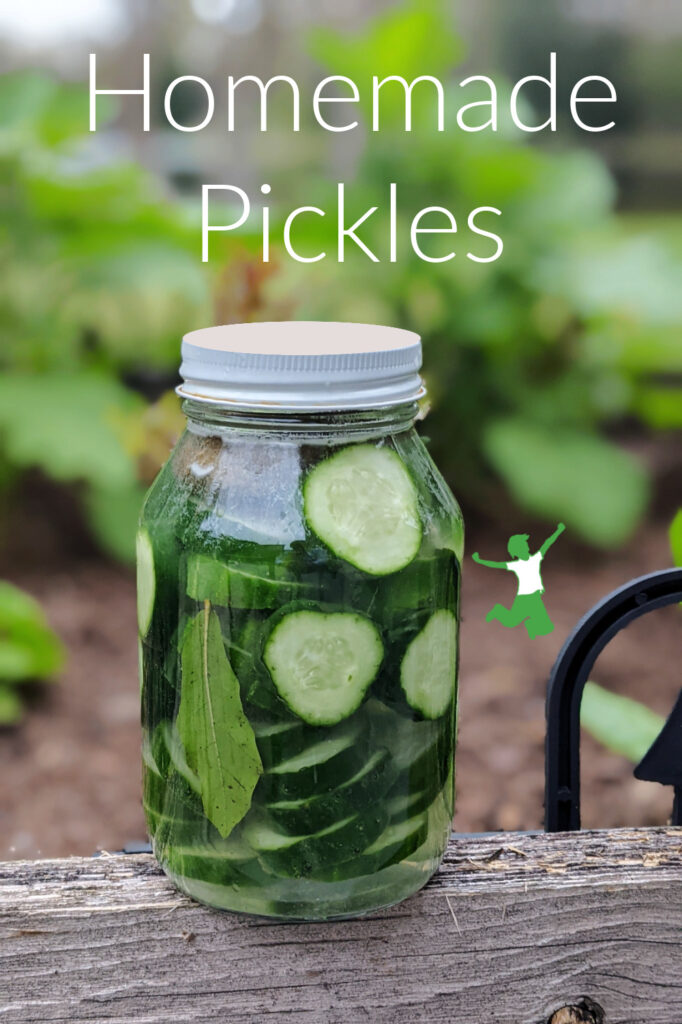
How to make healthy probiotic pickles with a delightful crunch the old-fashioned way by fermenting sliced cucumbers in water, sea salt, and starter culture of choice.
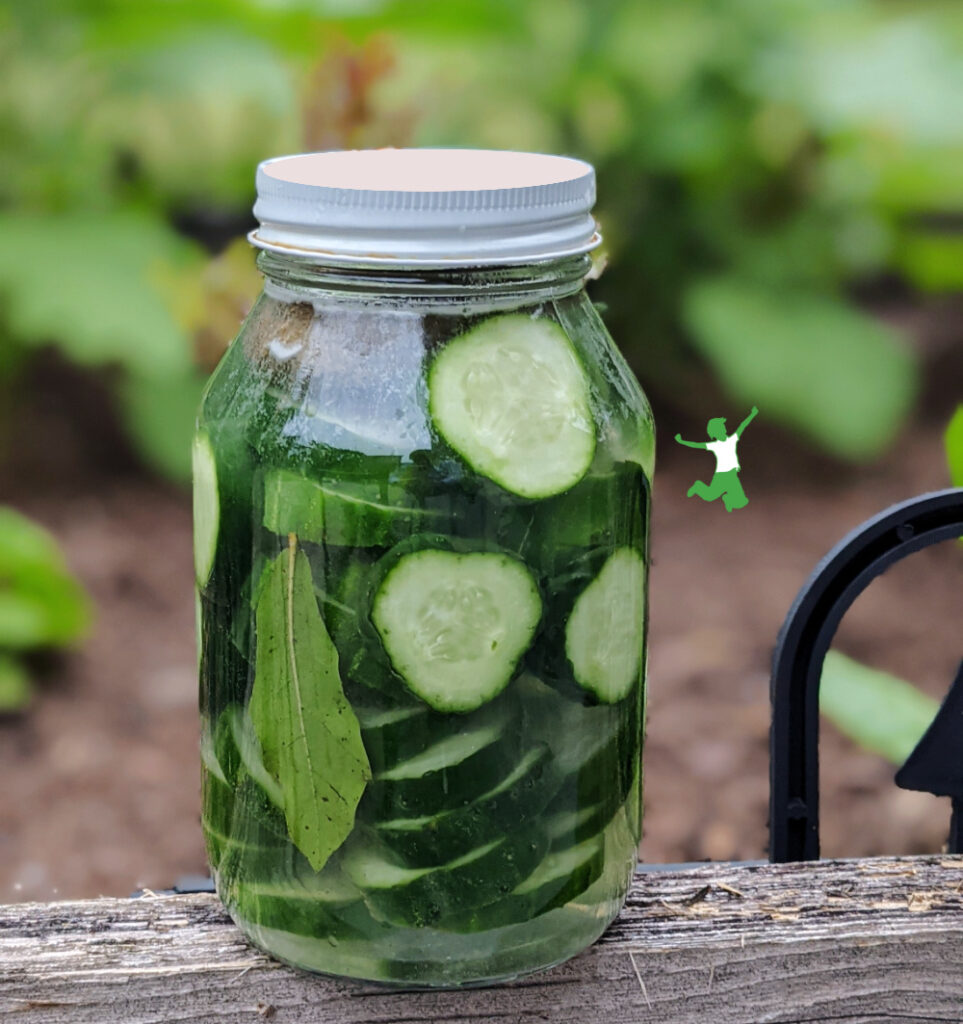
When my Australian husband first moved to the United States in the 1990s, he commented that Americans must really love pickles. No matter where you go in the United States, deli sandwiches are almost invariably served with some sort of pickle on the side.
It’s true. Americans do love pickles.
Sweet pickles, sour pickles, dill pickles, it doesn’t seem to really matter what type. Americans consider them an essential condiment, and the wide variety of pickles at the supermarket is a strong testament to this fact.
The problem with store pickles is that they are for the most part a nutritionless addition to a meal.
The heat required to can pickles or seal and sterilize them in jars that can sit for months or even years on the supermarket shelf or in your pantry without going bad clinches that deal.
In short, these commercialized concoctions are pickled but not fermented.
Fermentation is the process whereby cucumbers are pickled without heat which adds beneficial enzymes, probiotics, and sometimes additional nutrients.
The traditional principles of fermentation can be applied to cucumbers just the same as it can to other foods like beets, apricots, tomatoes, and cabbage all of which have been the subject of previous recipes and/or video lessons.
Given their tremendous popularity of pickles as a condiment, you would think they would have been one of the very first fermentation videos I filmed back in 2009.
True all around, with one very big problem. I’ve never been very good at fermented cucumbers. They always turned out soggy when I’ve made them in the past.
Who wants to eat soggy pickles?
But then, my friend Alex Lewin sent me a copy of his book Real Food Fermentation, and at last I learned the secret for keeping my fermented cucumbers nice and crisp as they transform into enzyme and probiotic packed pickles.
Alex graciously gave permission for me to film his fermented cucumber recipe, which is included with the written recipe below.
Preparation Tips
If you wish a commercial taste to your healthy pickle creation, substitute 1 pint of filtered water combined with 1 pint organic raw apple cider vinegar that has been boiled and cooled instead of the quart of filtered water.
This brand of raw sauerkraut is recommended as a source for the liquid starter if you don’t have homemade sauerkraut on hand. Alternatively, 1/2 cup liquid whey may be substituted for the raw sauerkraut juice. Hint: Kefir whey is the most probiotically active.
Fresh bay or grape leaves may be substituted for the fresh oak leaves.
Fermented Cucumbers (Probiotic Pickles!)
Easy recipe to culture sliced cucumbers into probiotic fermented pickles that are crisp, tasty, and healthy.
Ingredients
- 2 lbs cucumbers preferably organic, sliced across into 1/4″ pieces, cut off and discard the blossom end
- 1 quart filtered water
- 1/2 cup sauerkraut juice
- 2 Tbsp sea salt
- 3-4 fresh oak leaves
- 3-5 garlic cloves optional
- 3-5 dried bay leaves optional
Instructions
-
Slice cucumbers and set aside. Be sure to discard the slice with the blossom end as this is where enzymes are located that can contribute to soggy pickles.
-
Place peeled garlic cloves, dried bay leaves, and either fresh oak, bay or grape leaves at the bottom of a clean 1/2 gallon mason jar.
-
Place sliced cucumbers on top of seasonings. Mix sea salt, liquid whey or sauerkraut juice with the quart of water (or a water/vinegar mixture if you prefer a more vinegar flavor to your pickles) into the fermentation brine water and carefully pour over the top of the cucumbers.
-
Leave about an inch at the top of the jar and screw on the lid. Add optional fermentation weight to keep cucumbers beneath the surface of the water. This will help prevent mold. I just use a smooth stone from my yard that I sterilized in boiling water.
-
Leave fermented cucumbers on the counter for 2 days. After 2 days, remove one cucumber slice with a clean fork and taste. If it is crunchy and pleasantly sour, then refrigerate. Your pickles are done. If not, leave on the counter for another day, tasting each additional day to determine when the pickles taste pleasantly sour and are yet are still crunchy.
-
If a small bit of of foamy bubbles is on top of the brine water, it’s not a problem. Just remove it and refrigerate. If there is a lot of mold with long tendrils down into the water, the batch has not taken properly. Discard and try again using more starter and/or vinegar with your next batch and/or a fermentation weight as a preventative.
-
Properly cultured cucumbers, aka probiotic pickles, will last several months in the refrigerator.
Recipe Video
Source
Real Food Fermentation by Alex Lewin
More Fermentation Recipes
How to Make Fermented Lemonade
How to Make Probiotic Sauerkraut



“A top New York Chef teams up with Harvard Scientists to explore the role of bacteria in fermentation. He hopes to better understand and tweak the process in an effort to create new and unique flavours to entice the palette.” https://www.youtube.com/watch?v=9WWAMe-1fIg
I am so making these! They sound wonderful!
Very informative. Thank you so much for presenting the procedures on how to pickle cucumbers. Pickles are my favorite. By the way I would love to try this at home.
Hello,
Very informative blog, with so much info out there its hard to know whats healthy, as a college student trying to eat healthy I was reading that oatmeal and grains are not totally healthy. Do you have any suggestions for healthy filler foods?
Thanks
Check out my recipes and videos section for snackie foods. Up in the header there is a pulldown menu for each topic.
Does anyone know if all oak leaves are safe to use? I have several California Oak trees in our yard but they are so different from the oak trees I grew up with in the midwest. The leaves are very hard with sharp points like a Holly leaf. I know the Native Americans used to use the acorns from them for flour so I’m guessing the leaves would be safe too but if anyone knows anything about them I’d appreciate your insight!
The leaves I used in my video had sharp points … from our Live Oak tree (I think it’s Live Oak anyway 🙂
Thank you Sarah. I did some research on Live Oaks and it looks like the California Oak is a type of Live Oak. Your leaves in the video look a lot like the ones here. I’m going to give it a try!
I really appreciate your other anti-soggy pickle ideas! Just yesterday I told my husband that I’ve been craving pickled cucumbers and felt sad because I live in sub-tropical Australia, so no oaks or currants grow here. Haven’t had any luck with grape leaves, do they need to be fresh? I might be able to find them brined. But apple cider vinegar is very doable.
Yes, the leaves really do need to be fresh. I would try the ACV.
Raspberries leaves work as well
Can I use the same process to make whole pickles? Or do they have to be sliced to ferment properly? I love your site!
You can use whole cucumbers if you like. Same recipe but you may have to do something to keep the cucumbers submerged which wasn’t a problem with the slices.
Sarah, I want to make my pickles Whole. instead of sliced. Do I still have to remove the blossom end? Thanks! Love the video!
Yes, remove the blossom end.
Hi Sarah.
A few years ago when I started down the road of reading labels in the grocery store and changing my pantry over to more healthy foods, ti was a bit of a tug of war with my husband and sons. Now everyone is on board and everyone reads labels.
The one item that my youngest son has missed a lot is sweet salad pickles. I have not been able to find an affordable alternative that does not have high fructose corn syrup in it.
What would I have to add to your recipe that you demonstrated in the video in order to change it from a dill (sour) pickle to a sweet pickle?
Vivian Maddox
I am also interested in sweet pickles! I haven’t been able to find any recipes that don’t involve boiling and vinegar… any thoughts?
What a great video! 🙂 just wanted to say thank you! Without your blog, I would have never heard about WAPF/GAPS and all the great stuff that goes along with it. It has really helped my family so much, especially my husband’s health and his crohn’s (which is incredibly wonderful since medication has never helped him and it is such a dangerous disease!).
So thank you a million times!
Can’t wait to try these! I usually make ‘sunshine pickles’–just cucumbers, salt, water, garlic/dill, and a some vinegar (not a lot). Put them in the sun on my porch for 2-3 days, and the result is crunchy, yummy pickles. I’m excited to try a non-vinegar pickle. You can also use currant leaves in lieu of the grape/oak leaves. The currant leaves supposedly give a slightly smoky flavor to the pickles in addition to helping them to stay crunchy.
Oh my. Will have to try this. We get lovely sun in the afternoon on my front porch.