

Table of Contents[Hide][Show]
How to make healthy probiotic pickles with a delightful crunch the old-fashioned way by fermenting sliced cucumbers in water, sea salt, and starter culture of choice.
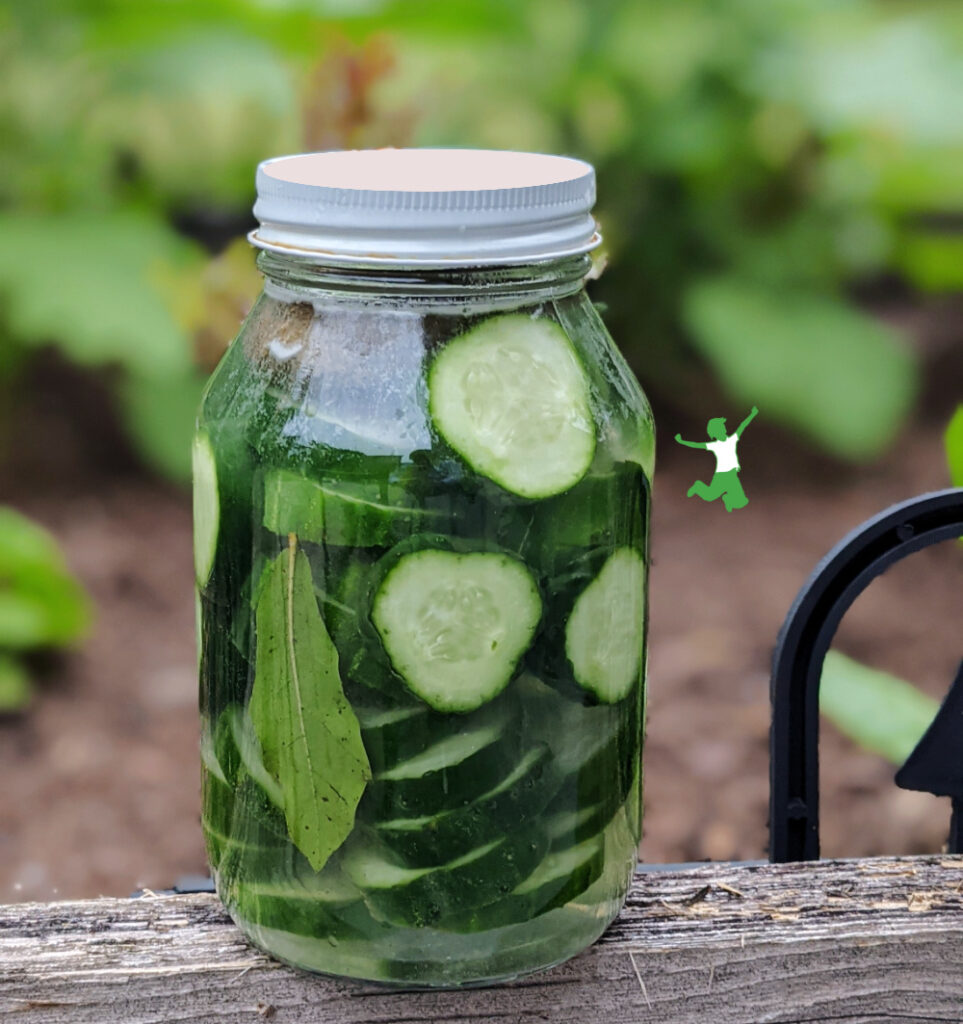
When my Australian husband first moved to the United States in the 1990s, he commented that Americans must really love pickles. No matter where you go in the United States, deli sandwiches are almost invariably served with some sort of pickle on the side.
It’s true. Americans do love pickles.
Sweet pickles, sour pickles, dill pickles, it doesn’t seem to really matter what type. Americans consider them an essential condiment, and the wide variety of pickles at the supermarket is a strong testament to this fact.
The problem with store pickles is that they are for the most part a nutritionless addition to a meal.
The heat required to can pickles or seal and sterilize them in jars that can sit for months or even years on the supermarket shelf or in your pantry without going bad clinches that deal.
In short, these commercialized concoctions are pickled but not fermented.
Fermentation is the process whereby cucumbers are pickled without heat which adds beneficial enzymes, probiotics, and sometimes additional nutrients.
The traditional principles of fermentation can be applied to cucumbers just the same as it can to other foods like beets, apricots, tomatoes, and cabbage all of which have been the subject of previous recipes and/or video lessons.
Given their tremendous popularity of pickles as a condiment, you would think they would have been one of the very first fermentation videos I filmed back in 2009.
True all around, with one very big problem. I’ve never been very good at fermented cucumbers. They always turned out soggy when I’ve made them in the past.
Who wants to eat soggy pickles?
But then, my friend Alex Lewin sent me a copy of his book Real Food Fermentation, and at last I learned the secret for keeping my fermented cucumbers nice and crisp as they transform into enzyme and probiotic packed pickles.
Alex graciously gave permission for me to film his fermented cucumber recipe, which is included with the written recipe below.
Preparation Tips
If you wish a commercial taste to your healthy pickle creation, substitute 1 pint of filtered water combined with 1 pint organic raw apple cider vinegar that has been boiled and cooled instead of the quart of filtered water.
This brand of raw sauerkraut is recommended as a source for the liquid starter if you don’t have homemade sauerkraut on hand. Alternatively, 1/2 cup liquid whey may be substituted for the raw sauerkraut juice. Hint: Kefir whey is the most probiotically active.
Fresh bay or grape leaves may be substituted for the fresh oak leaves.
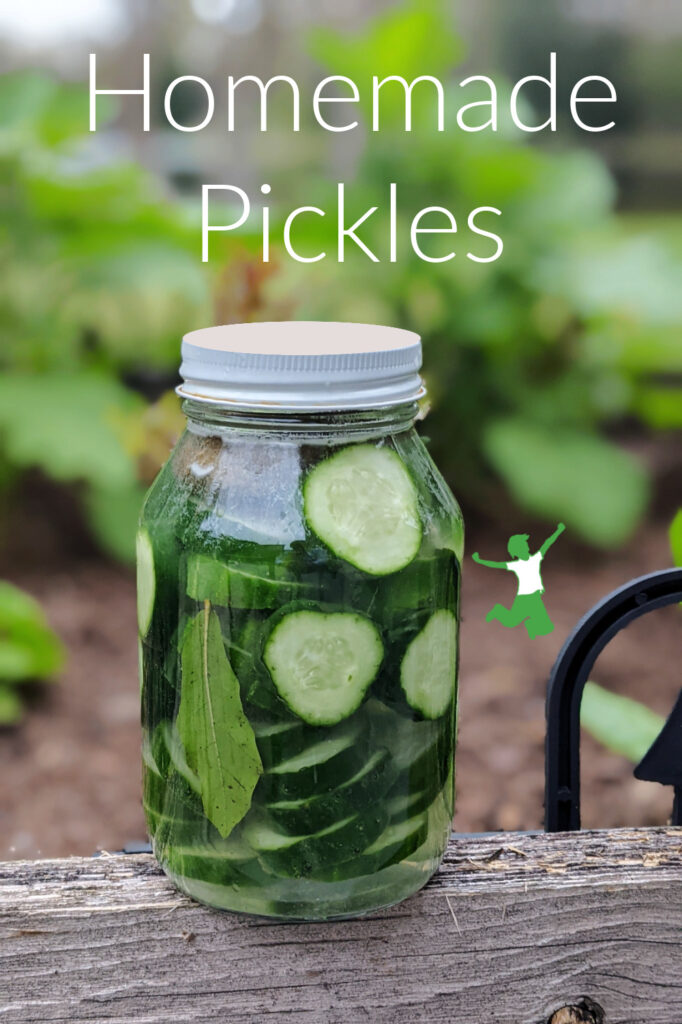
Fermented Cucumbers (Probiotic Pickles!)
Easy recipe to culture sliced cucumbers into probiotic fermented pickles that are crisp, tasty, and healthy.
Ingredients
- 2 lbs cucumbers preferably organic, sliced across into 1/4″ pieces, cut off and discard the blossom end
- 1 quart filtered water
- 1/2 cup sauerkraut juice
- 2 Tbsp sea salt
- 3-4 fresh oak leaves
- 3-5 garlic cloves optional
- 3-5 dried bay leaves optional
Instructions
-
Slice cucumbers and set aside. Be sure to discard the slice with the blossom end as this is where enzymes are located that can contribute to soggy pickles.
-
Place peeled garlic cloves, dried bay leaves, and either fresh oak, bay or grape leaves at the bottom of a clean 1/2 gallon mason jar.
-
Place sliced cucumbers on top of seasonings. Mix sea salt, liquid whey or sauerkraut juice with the quart of water (or a water/vinegar mixture if you prefer a more vinegar flavor to your pickles) into the fermentation brine water and carefully pour over the top of the cucumbers.
-
Leave about an inch at the top of the jar and screw on the lid. Add optional fermentation weight to keep cucumbers beneath the surface of the water. This will help prevent mold. I just use a smooth stone from my yard that I sterilized in boiling water.
-
Leave fermented cucumbers on the counter for 2 days. After 2 days, remove one cucumber slice with a clean fork and taste. If it is crunchy and pleasantly sour, then refrigerate. Your pickles are done. If not, leave on the counter for another day, tasting each additional day to determine when the pickles taste pleasantly sour and are yet are still crunchy.
-
If a small bit of of foamy bubbles is on top of the brine water, it’s not a problem. Just remove it and refrigerate. If there is a lot of mold with long tendrils down into the water, the batch has not taken properly. Discard and try again using more starter and/or vinegar with your next batch and/or a fermentation weight as a preventative.
-
Properly cultured cucumbers, aka probiotic pickles, will last several months in the refrigerator.
Recipe Video
Source
Real Food Fermentation by Alex Lewin
More Fermentation Recipes
How to Make Fermented Lemonade
How to Make Probiotic Sauerkraut



I made these. But only used a small amount to fill a spaghetti jar. I used several muscadine leaves (wild southern grape). These turned out great!! Making more tonight.
I am making my pickles today. I am using Bubbie’s saurkraut juice as a starter and the apple cider vinegar. I wonder why the vinegar needs to be boiled? I use Bragg’s, but I boiled it and it is currently cooling.
Can you reuse the brine? Or do you need to start over each time you make a batch?
I cannot find Bubbies brand pickles… does anyone have know of another brand that can be used in place?
Thanks for the recipe! Gonna have to try this out myself. It’s ironic that I found this article after trying out a friend’s pickled watermelon rine. I was a bit skeptical, but was really delicious!
I doing this at the weekend! I can’t wait!
I had the same problem of soggy pickles, until I read that cherry leaves make crunchy pickles. We happen to have a bush cherry in our yard, and it worked! I think I read it in Wild Fermentation.
Ok, I just tried these. I don’t have oak leaves since it’s winter, but I did find fresh bay leaves. I used about 6 fresh bay leaves and the pickles were totally soggy. The flavor was delicious, though! I wonder if the ratio needs to be different with fresh bay leaves – obviously something needs to be different. If anyone has any tips let me know! I ordered the Real Food Fermentation book you mentioned and look forward to doing some more experimenting. I’ve heard that fermenting is not an exact science, so guess I’ll keep plugging away.
Last summer I dried the last of the fresh grape leaves and dill in my dehydrator, since fresh cucumbers are still coming in later than grape leaves. I keep them sealed in a vacuum sealed jar. The dried leaves worked fine in my last few batches of pickles when cucumbers were still abundant but dill was hard to find and grape leaves were done.
I can’t wait for “pickle season” to begin again.
This looks awesome. And I also had no idea that pickles were a predominantly American thing. I really hadn’t given it much thought, but that’s interesting.