

Recipe plus video for making duck broth (and roasting the bird) that is perfect for main meals, gravy, soups, and special occasions.
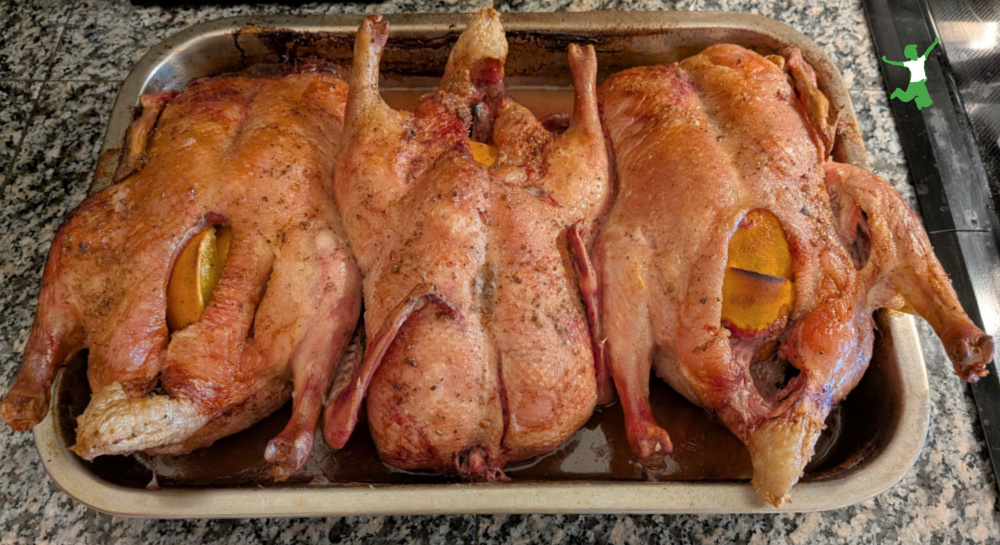
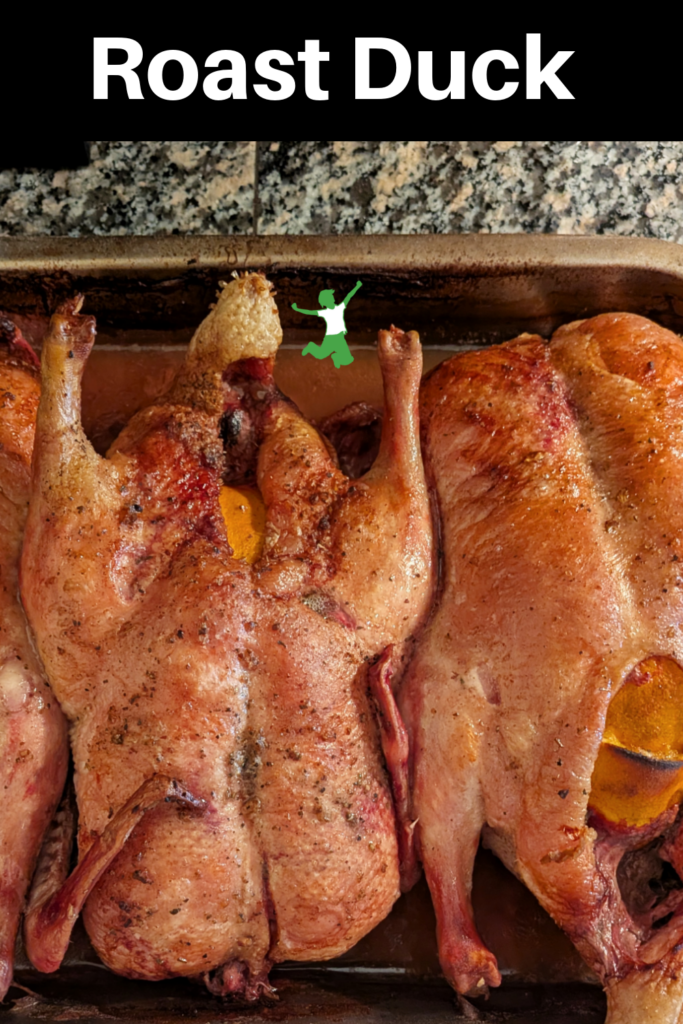
We enjoyed roasting three pastured ducks for Christmas dinner this year, and after we picked them clean, I made a ton of homemade bone broth too.
As luck would have it, I was able to source the ducks for a fantastic price (less than $20 each!) from a small family farm in Iowa. If you reach out via the purple chatbox, I am happy to share this farm…to ensure privacy…I won’t provide the details here.
For such a gourmet dinner choice plus the duck broth, they turned out less expensive than the local chickens I buy!
Duck is a much fattier bird than turkey or chicken. One great benefit of roasting a fatty bird like duck or goose is that you can cook it at a higher temperature, so the meal is ready faster, yet there is little risk of dried out meat.
We baste our duck while it is cooking. This glazes the bird beautifully, resulting in the most out-of-this-world, crispy duck skin you’ve ever tasted.
There is much less meat to be had on a duck versus a turkey, but you get a ton of duck fat in return.
I save this wonderfully healthy, nutritious, tasty, traditional fat in a glass container in the fridge and use it for weeks…even a couple of months…to roast vegetables.
Need a stuffing recipe that blends well with the richness of duck meat? Try this healthy roast duck stuffing that is perfect for this type of poultry.
Below is my recipe for making broth from roast duck. I skim most of the fat off while it is cooling (reserving in a glass container for later use), which results in clarified stock.
Note that commercial brands of duck stock are largely diluted (not to mention the toxic packaging in cartons), which is why my homemade version is significantly higher in protein.
Homemade Duck Broth
Recipe for homemade duck broth made from roasting the bird that serves as a rich and nourishing base for soups, sauces, and gravy.
Ingredients
- 2-3 roasted ducks meat removed
- filtered water
- apple cider vinegar
- giblets optional
- chopped onion, celery, carrots optional
Instructions
-
Place duck carcasses in a large stockpot. Break up the bones into pieces if necessary to fit the pot.
-
Add enough cold filtered water to cover.
-
Add a small amount of store bought or homemade apple cider vinegar. 1/4 cup works well. Stir. *If you only have a stainless steel stockpot, leave out the ACV as it can potentially leach nickel from the pot. Ceramic or clay stockpots are best for broth.
-
Leave on the counter for 30 minutes per French culinary practice.
-
Place stockpot on the heat and bring to a boil. Skim off and discard any foam (off flavors and impurities) that rise to the top just before boiling is reached.
-
Add optional cooked giblets with juices and chopped veggies, and then turn the heat down to low, cover, and let simmer for 3 hours for low-glutamate stock and 8-24 hours for more flavorful bone broth.
-
Remove from heat, cool, and strain into large 1/2 gallon mason jars or containers of choice. Place the strained fat in a separate glass container with a tight-fitting lid.
-
Refrigerate clarified duck broth for up to 5 days and use as desired for sipping or as a base for soups/sauces. Freeze what you will not use during that time.
Refrigerate strained duck fat for several weeks to a month or two. Recommended use is for roasting vegetables or making healthy duck fat, French fries.
Recipe Video
More Information



Naturally I have a noob question: What does the vinegar do?
Ciao,
Pavil
It draws out the minerals from the bones into the water.
I’ve never had duck before and now I want to try it! I’ve always heard it was very greasy but I suppose it would be to people who are used to dry chicken breasts, lol! This looks very good and thank you for sharing!
I adore duck and have always wanted to try cooking it myself but have been a bit intimidated! Maybe I’ll give it a shot soon!
Hi Sarah,
Thanks for the informative video. I have a sort of a dumb question.
I make chicken stock regularly from bones I buy from the butcher (can’t get them for free). I have seen here and elsewhere people talking about roasting a chicken and using the bones for stock, however, when I roast chicken, I serve pieces of chicken with the bones. Once the bones have been on someone’s plate (and possibly in someone’s mouth) I’m not going to use them for stock. How did you end up with the that duck skeleton? How did you serve the duck? How can I do this for chicken?
Now that I’ve seen your video, I’m going to have a look to see if I can find duck in my vicinity.
Hi Ruth, if the bones have been in someone’s mouth you can still add it to the stock as the stock will be at a low boil for hours so any bacteria would be eliminated. For the duck, we sliced it onto a plate and served it at the table that way although our kids enjoy getting an entire duck leg on their plate.
As chance would have it, my local supermarket had duck available for the first time and I got a whole one. I plan to make it on Friday, possibly with stuffing. Any advice on how best to roast it and, as someone asked below, maybe you could do a post on how you roast vegetables in duck fat.
Thanks!
Hi Ruth, keep in mind that you can’t stuff a duck with anything except fruit .. bread stuffing turns to mush from all the fat that comes off it when it is roasting.
Thanks for the advice. I actually had been planning of stuffing it with a rice based stuffing. In the end I stuffed it with mushrooms and leeks and fresh thyme. It came out great. Thanks for the help.
Also, do you add any salt or pepper to your stocks?
Sometimes I add some sea salt at the end but usually the stock is flavorful enough on its own.
Hi Sara, how do you find sources for your duck.
Hi Paula, contact your local WAPF Chapter Leader for his/her local sources list.
westonaprice.org/chapters
Hi Sarah,
Your duck looks wonderful! Do you have a local source? I would have to get mine at the store. Even if it’s organic I’m not sure of the quality. Do you think it would be ok at Whole Foods? And I’m still learning about the plastic. I better go check mine.
I get mine from a local co-op.
Very informative video. I was thinking about cooking a duck or goose for New Year’s so I will be coming back to your blog if my family wants that for dinner.
Hi Magda, I just made it public. Thanks!
Sarah,
Just wanted to let you know the video is marked private… can’t view it.