

Recipe plus video for making duck broth (and roasting the bird) that is perfect for main meals, gravy, soups, and special occasions.
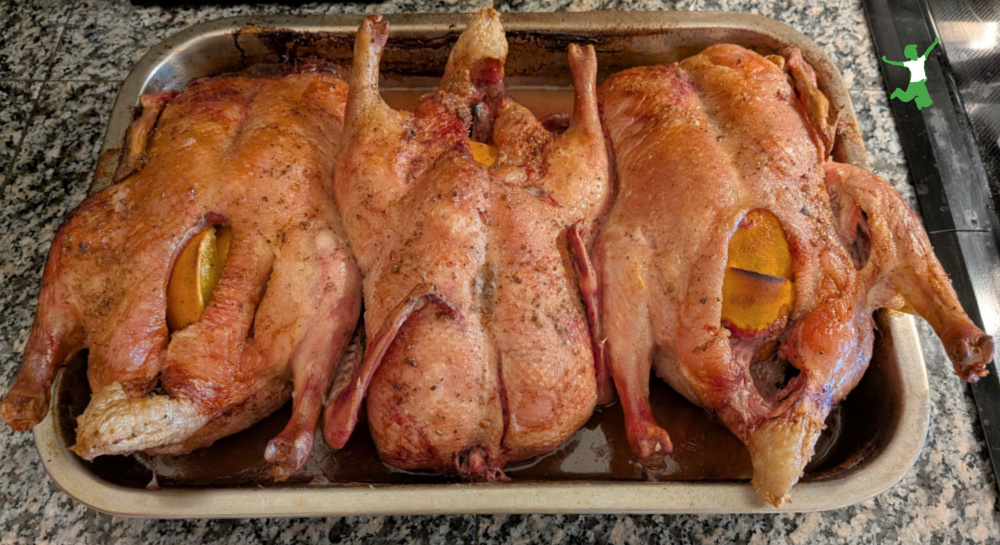
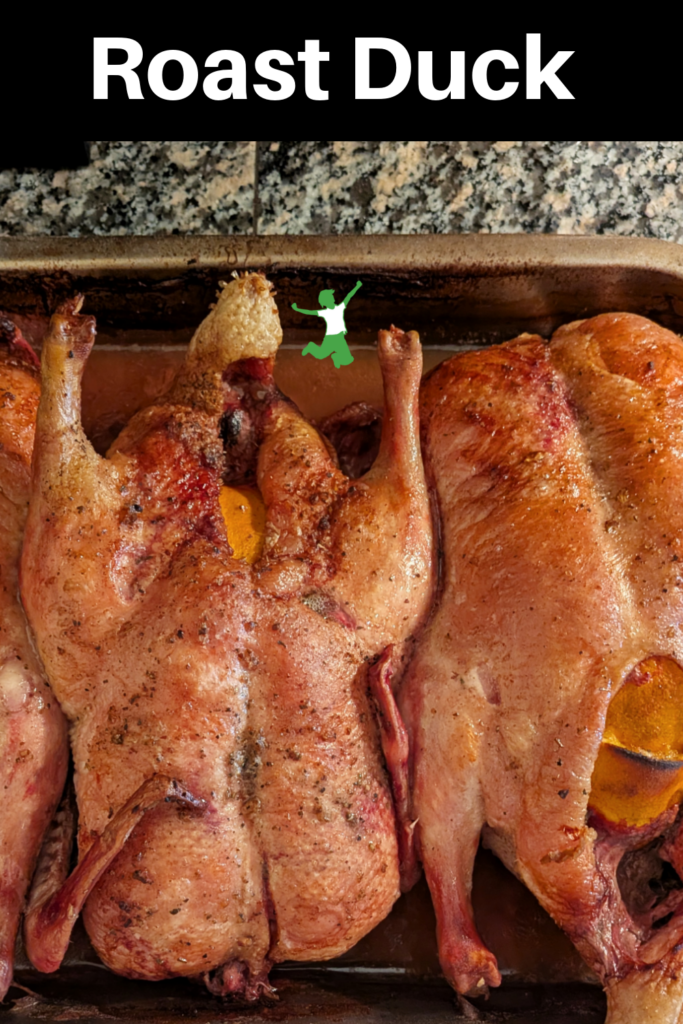
We enjoyed roasting three pastured ducks for Christmas dinner this year, and after we picked them clean, I made a ton of homemade bone broth too.
As luck would have it, I was able to source the ducks for a fantastic price (less than $20 each!) from a small family farm in Iowa. If you reach out via the purple chatbox, I am happy to share this farm…to ensure privacy…I won’t provide the details here.
For such a gourmet dinner choice plus the duck broth, they turned out less expensive than the local chickens I buy!
Duck is a much fattier bird than turkey or chicken. One great benefit of roasting a fatty bird like duck or goose is that you can cook it at a higher temperature, so the meal is ready faster, yet there is little risk of dried out meat.
We baste our duck while it is cooking. This glazes the bird beautifully, resulting in the most out-of-this-world, crispy duck skin you’ve ever tasted.
There is much less meat to be had on a duck versus a turkey, but you get a ton of duck fat in return.
I save this wonderfully healthy, nutritious, tasty, traditional fat in a glass container in the fridge and use it for weeks…even a couple of months…to roast vegetables.
Need a stuffing recipe that blends well with the richness of duck meat? Try this healthy roast duck stuffing that is perfect for this type of poultry.
Below is my recipe for making broth from roast duck. I skim most of the fat off while it is cooling (reserving in a glass container for later use), which results in clarified stock.
Note that commercial brands of duck stock are largely diluted (not to mention the toxic packaging in cartons), which is why my homemade version is significantly higher in protein.
Homemade Duck Broth
Recipe for homemade duck broth made from roasting the bird that serves as a rich and nourishing base for soups, sauces, and gravy.
Ingredients
- 2-3 roasted ducks meat removed
- filtered water
- apple cider vinegar
- giblets optional
- chopped onion, celery, carrots optional
Instructions
-
Place duck carcasses in a large stockpot. Break up the bones into pieces if necessary to fit the pot.
-
Add enough cold filtered water to cover.
-
Add a small amount of store bought or homemade apple cider vinegar. 1/4 cup works well. Stir. *If you only have a stainless steel stockpot, leave out the ACV as it can potentially leach nickel from the pot. Ceramic or clay stockpots are best for broth.
-
Leave on the counter for 30 minutes per French culinary practice.
-
Place stockpot on the heat and bring to a boil. Skim off and discard any foam (off flavors and impurities) that rise to the top just before boiling is reached.
-
Add optional cooked giblets with juices and chopped veggies, and then turn the heat down to low, cover, and let simmer for 3 hours for low-glutamate stock and 8-24 hours for more flavorful bone broth.
-
Remove from heat, cool, and strain into large 1/2 gallon mason jars or containers of choice. Place the strained fat in a separate glass container with a tight-fitting lid.
-
Refrigerate clarified duck broth for up to 5 days and use as desired for sipping or as a base for soups/sauces. Freeze what you will not use during that time.
Refrigerate strained duck fat for several weeks to a month or two. Recommended use is for roasting vegetables or making healthy duck fat, French fries.
Recipe Video
More Information



Would you please let me know what farm you purchased the ducks from? Thank you!
I don’t post names of small family farms here for privacy reasons (I don’t have their permission). Please use the purple chatbox.
The stuff that was at the bottom of the pan after roasting the duck was added to my pot. Are you supposed to add it for duck stock? I normally put it in all my other stocks.
You can if you like! It has lots of flavor.
Can I also use the bones that we chewed the meat from? Just not sure if our saliva would contaminate the stock.
I also made stock from free-range chickens. Similar amount of scum to the Tyson’s.
Yes!!
I have made stock from Tyson’s all-natural chickens from the regular grocery store and I hardly had any scum.
I love your videos – they’re so informative! I make both chicken and beef stock all the time. I usually freeze my stock in muffin tins then transfer the frozen blocks to a larger container. I find this gives me the flexibility of using small or large quantities. Again thanks for the great post and video!
Can I also use the bones that we chewed the meat off from? Just not sure if our saliva would contaminate the stock.
I love this vid. My 12 year old loves duck and the rest of us really like it as well. We have not bought it often in the past and I have yet to source it through a really high quality operation, although I have been trying. I’m sure eventually the local Weston Price group in my area will meet again and I will get a chance to join up and get involved. But since they went from last June up until the night we had nutcracker tickets this year with nothing I have to be patient. Hopefully either they will pan out as a resource or I will find some new idea to help get myself a duck. Luckily I did source a great goose for this Christmas so will have goose grease soon! 🙂
Have you ever cooked muscovy duck? The farmer I am getting the goose from also raises Muscovies, but since I understand they are far less fatty than other ducks I decided to try his goose and keep looking for duck sources at other farms.
Merry Christmas to you and yours!!!