
Xylitol is truly the darling of sugar substitutes today. The American Dietetic Association touts use of xylitol as offering health benefits such as reduced glycemic response as compared with sucrose, increased absorption of B vitamins and calcium, and even a reduction in dental caries risk.
Consequently, people with blood sugar issues are flocking to processed foods containing xylitol as a way to satisfy that sweet tooth without the downside of exacerbating the risk factors for Metabolic Syndrome: heart disease, stroke, and type 2 diabetes.
Even within the healthfood community, xylitol is almost universally considered a healthy substitute for sugar in particular because it doesn’t directly contribute toward the growth of intestinal yeasts aka Candida.
Have you noticed that the check out aisles at healthfood stores are typically loaded with chocolates and other sweets containing at least some xylitol? The truth is that I have yet to talk with any healthy conscious person who suggests to me any downside to using xylitol other than the potential for intestinal cramps if you get too much.
Xylitol is Naturally Found in Nature
Xylitol is, after all, a naturally occurring substance. Manufacturers of xylitol market it as derived from xylan, which is found in the fibers of many plants including berries, oats, beets, sugar cane and birch. Sounds pretty harmless.
The FDA has even granted xylitol GRAS (Generally Recognized As Safe) status. You can’t get any safer than that, right?
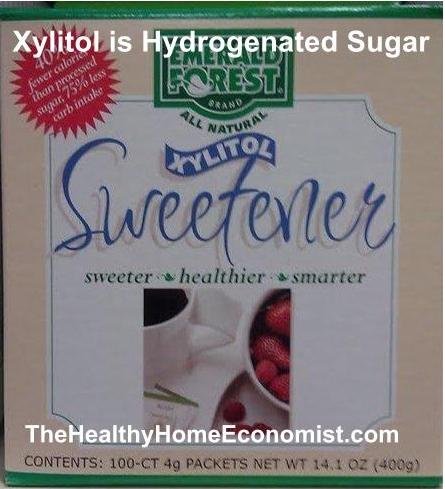
While it is true that xylitol is a naturally occurring substance, manufactured xylitol is another matter entirely. Commercially available xylitol is produced by the industrialized process of sugar hydrogenation. In order to hydrogenate anything, a catalyst is needed, and in the case of xylitol, Raney nickel is used which is a powdered nickel-aluminum alloy.
Can we say heavy metal residue? Xylitol doesn’t seem quite so warm and fuzzy anymore, does it?
While there is currently no literature on any detrimental health effects of consuming hydrogenated sugar, it is important to note that hydrogenated fats and oils were used for many years before the very damaging effects to health became widely known.
Given the violent industrialized process that is required to produce a hydrogenated sugar like xylitol, it would seem wise to avoid it based on the very poor track record of hydrogenated foods in general!
Most Xylitol Comes from GMO Corn
While it is true that xylitol can be derived from the xylan of birch trees, xylan is also found in corn cobs. It is much cheaper to use corn instead of birch bark to derive xylitol and so what do you think manufacturers prefer? Corn of course.
Therefore, unless the label of a xylitol containing product specifically notes that it is from birch, beets or some other non GMO source, run of the mill corn derived xylitol is very likely from genetically modified corn. This is the same problem as high fructose corn syrup (HFCS) widely used in sodas and sports drinks.
You get a dose of GMOs with every sip!
Xylitol Contributes to Gut Imbalance
Sugar alcohols like xylitol are not broken down in the stomach like other sweeteners. Rather, they arrive intact into the intestines.
At that point, a process called “passive diffusion” takes place whereby the xylitol draws water into the bowels. This results in only partial breakdown of the xylitol. The unmetabolized portion ferments; the perfect environment for undesirable bacteria to grow.
And, while it is true that xylitol itself does not feed candida directly like sugar does and is even promoted as a useful part of the Candida Diet, the fermentation of undigested xylitol in the gut most definitely can exacerbate yeast problems, so don’t be fooled by that argument!
This is exactly why consuming xylitol can make some folks so gassy and even trigger cramping and diarrhea. Gut pathogens having a heyday in your intestines give off a lot of smelly toxins!
Other Little Known Problems with Xylitol
Xylitol can contribute to acid reflux problems so those who have issues in this area should avoid it for that reason alone. Chronic acid reflux is a serious problem that can lead to cancer of the esophagus and larynx.
In addition, those who suffer from seizures of any kind should stay away from xylitol as it has been known to increase the frequency of epileptic attacks.
Enough Xylitol in Two Pieces of Gum to Kill a Rat
According to lab tests, a 100 gram rat can be killed by approximately 1.65 grams of xylitol about half the time.
Two little pieces of xylitol gum contain about .7 – 1 gram of xylitol – enough to probably kill your child’s pet rat.
Do you want your child chewing xylitol gum on a frequent basis even if preliminary research indicates that it may help prevent cavities?
Rami Nagel, author of Cure Tooth Decay, doesn’t even recommend xylitol gum for this purpose. His research for any long term safety data on xylitol turned up the following:
“Epidemiology: No information found
Teratogenicity: No information found
Reproductive Effects: No information found
Mutagenicity: No information found
Neurotoxicity: No information found”
When Might Xylitol be Helpful?
Given all the problems that consumption of xylitol can trigger, it seems best to bypass use of this sugar substitute on a regular basis.
Can xylitol ever be helpful, however?
Potentially so. The only time I personally would ever consider using xylitol is to help resolve a childhood ear or sinus infection in order to prevent the use of antibiotics.
There is evidence that xylitol can indeed help encourage a healthy balance of beneficial bacteria found in the ear canal and sinus cavities and that a therapeutic dose of xylitol can help resolve an infection in these areas quickly with no medication required.
One caveat: If you are going to use xylitol sparingly and therapeutically (not as a food), make sure it does not come from a GMO source like corn!
Sarah, The Healthy Home Economist
Sources: Sugar Free Blues: Everything You Wanted to Know about Artificial Sweeteners
Xylitol: Is it Safe or Effective?
|
|


{ 196 comments… read them below or add one }
Oy, scary stuff. We’ve been using a toothpaste containing xylitol, and it has definitely helped our mouths, seeming to help maintain a healthy balance of bacteria. No more waking up with a nasty taste in the mouth, and healthier gums. Mind you, at the same time we switched toothpastes, we took to making and eating fermented foods especially sauerkraut, and that, too had a profound effect.
Read the label before you hit the panic button. And don’t worry. I use Spry cinnamon gum with Xylitol. Supposed to use in combination with Spry toothpaste and dental care products. Manufacturers do not use hydrogenated anything: vegetable glycerin (humectant), non-GMO soy lecithin (emulsifier) and only flavored with natural cinnamon oil. If this product or accompanying toothpaste caused gut problems or contributed to candida / Small Intestine Bacterial Overgrowth, I would know immediately. I suffer Gulf War Illness, which means military vaccine destroyed my gut 23 years ago. I suffer pancreatitis from Hep B vaccine, plus a host of small intestine viral and bacterial infections from too many vaccines administered too close together, too many at a time, at much higher than “booster” serum amounts. I had to get away from High Fructose Corn Syrup (HFCS) intoxicating everything at the grocery store. I was forced to start cooking from scratch because HFCS put on 25 pounds of fluids my heart and liver could not process (Congestive Heart Failure). It took almost a year to take it off, start feeling like a chronically ill human again, rather than walking dead.
Do we know why the lab rats died? It usually says on bags of xylitol to not feed it to pets. Is that similar to the recommendation for not giving them chocolate?
Some animals do not seem to handle xylitol well – it’s not clearly understood and needs further study, but dogs are particularly affected (also probably recognized more in dogs because they are most common table food thieves). The gist is, the dog’s body mistakes the xylitol for regular sugar, at least initially (within hours), and releases a large amount of insulin. Since there isn’t enough sugar there for all the insulin that is released, the blood sugar drops precipitously and hypoglycemic episodes occur. Later on (days), there appears to be a toxic effect on the liver and some dogs may go into liver failure. Unfortunately, it doesn’t take much xylitol to affect pets, especially small breed dogs, and many people are unaware that it is harmful or may not even know that xylitol was in the food. If you think your pet may have eaten some, call your local emergency vet or Pet Poison Control right away.
That being said, I don’t know anything about xylitol having any of those effects in humans.
Locally, xylitol is used by landowners to poison coyotes. It dosn’t take much. I don’t keep any of it in my home (gum, candy…) out of fear that my dog should find it. A stick of xylitol gum could kill a dog.
Mary Beth – just wondering if you keep raisins, grapes, and chocolate out of your home b/c they can kill dogs as well. I don’t mean this to be caustic – I am really curious. I think a lot of folks get really upset about xylitol but don’t think that there are other things that we eat that will kill dogs or make them seriously sick.
Adrienne\’s last post: Dairy Free Pumpkin Cheesecake, GF SF Thumbprint Cookies, BBQ Veggie Chips, Vegan Mayo and More!
Chocolate and raisins won’t necessarily kill your dog, but xylitol will since it poisons them rather quickly. With “chocolate” these days, there’s so much variation, and it’s often so diluted with emulsifiers and other stuff (especially cheaper chocolate) that a dog wouldn’t likely get enough to die unless it’s pure dark chocolate. When I once spoke to a vet about feeding my dog fruits and veggies (or maybe we just discussed veggies), her main concern was the onion family. Also, problem wth xylitol and dogs is that many people do not realize it’s harmful since it hasn’t been listed for years on lists of things to avoid. So people don’t worry or realize until it’s too late.
I think it’s important to look into food products, but dogs die from raisins and grapes and chocolate but of course we don’t think we shouldn’t eating those as a result. Animals metabolize things differently than humans.
Adrienne\’s last post: Easiest Pie Crust Recipe (gluten free, whole grain)
My husband and I both get the most horrific headaches after eating ANY sugar alcohol, even in small amounts. And it’s not a normal headache, it’s a tightening at the base of my neck that goes up the side of my head, as if the sugar is actually affecting my spine and nervous system directly.
It seems that anything Wall Street touches turns to crap.
Sarah,
I never trust anything that is pure white, especially when it comes to sweeteners! Even a small amount of xylitol gives myself and my son violent intestinal distress. I had no idea it was helpful for ear infections. I wonder if ear drops made using warm water and xylitol would be helpful. Any idea?
Alison\’s last post: Portuguese Milk Mayonnaise
Is stevia okay?
Yes, use the whole green stevia leaf. The extracts are highly processed. And don’t overdo … I’ve talked to folks who are absolutely addicted to stevia which is a problem just like being addicted to sugar or being addicted to anything. Nothing wrong with satisfying the natural sweet tooth, but moderation is always key and use whole, unprocessed sweeteners.
Sarah, TheHealthyHomeEconomist\’s last post: Xylitol: Not as Sweet As It’s Cracked Up to Be
What is moderation? I use the stevita liquid in my green tea, a few drops, a few times a day.
People’s definition of moderation varies, but to me, using something every single day multiple times a day is not moderation. Moderation is where you use it once in awhile maybe once or twice a week at most. Every day is a habit.
Sarah, TheHealthyHomeEconomist\’s last post: Xylitol: Not as Sweet As It’s Cracked Up to Be
I agree.
I agree
If you don’t mind DNA damage.
I’ve always been leery of xylitol. The name makes me think of prescription meds, not a sweetener. Also remembering how agave nectar was all the rage. I almost bought some but glad I thought it was too expensive… then finding out how bad it really was. I hate wasting money. Thank you for bringing xylitol to light!
Many people are giving xylitol to their children on a very frequent basis for the cavity prevention properties. This is concerning to me.
Sarah, TheHealthyHomeEconomist\’s last post: Xylitol: Not as Sweet As It’s Cracked Up to Be
I am really torn about this.. I have been giving my 2 year old the mints for a couple months after the dentist found cavities. The xylitol has been really helpful in stopping the cavity growth. I have also been giving her CLO and I have tried a couple different ways to give her butter oil but she does not like it. I am hesitant to give up the xylitol mints until she is older and until she is done breastfeeding ( I guess that can contribute to the cavities) Do you have any good ideas for sneaking butter oil into her diet?
Lisa
Don’t worry about breastfeeding and cavities. I have had this debunked so many times (Dr. Jack Newman, La Leche League…). In my own life, the child who nursed the longest has had the best teeth. Not exactly a scientific survey…He had a bad round about the age of two, when I was told to stop nursing. I was once a lactation consultant so I did the research…it is a rare child who actually has dental problems that can be tracked only to breastfeeding. Anyway, we persisted and his teeth remained nice and healthy after that first blip (which was probably an in-utero issue anyway).
now that you mentioned it… the one who breastfed the longest had the least cavities – also my thumb sucker was the only one who had no need for braces! So much for the usual claims
Hi Lisa,
You are not alone in your concerns. Two of my four children have had serious tooth decay and all were breastfed on cue and at night as long as they desired. I have read Cure Tooth Decay and tried unsuccessfully to promote healthy teeth through diet, even putting our family on GAPS. I have come to the conclusion that, though the cause of tooth decay is multi-faceted, it is of paramount importance to brush teeth before bed and not nurse until morning. The mouth does not produce saliva during sleep and if there are cavity-causing bacteria in the mouth, they will have hours and hours to feed on the teeth. Daytime nursing is very different from nighttime nursing. I did not follow this advice and now, though I followed every bit of natural advice and researched ad nauseum, including the experts listed in JP’s response, my toddler’s top four teeth have crumbled to the gumline, the infection has spread to the roots, an abscess has developed to drain the puss, and three new cavities have taken hold of her molars.
If what you are doing is not working, follow your instincts and use western medicine to save your child’s teeth and your sanity. Don’t take the advice from someone without personal experience to, “Don’t worry…” If you are worried, that is your inner wisdom telling you something needs to be done.
Hi Elise I was in the plan to buy the book of Cure Tooth decay,but after your post I’m not sure ,what you think
maggie,
I still think Cure Tooth Decay is an amazing book, however if your baby already has dental caries/cavities, a diet change alone is not sufficient to save her teeth. I have learned this twice the hard way. Reading the book will teach you a lot, but in addition to what you learn through the book, you might need to consider night weaning and a trip to the dentist. A book I wish I had read is called, Kiss Your Dentist Goodbye http://www.drellie.com/
Fascinating post! Like others, I’ve been very skeptical of xylitol and had this instinctive aversion to it although I couldn’t say why and hadn’t researched it yet. Now I’m glad I was skeptical!
Thanks for the info. I use stevia. Tried to grow it, but couldn’t keep it well enough for using. I get Green Leaf clear drops. A little goes a long way.
Thanks again, very helpful. I enjoy your posts!
Linda
Instead of xylitol what do you recommend be used for baking for people with diabetes or candida problems? Is coconut sugar good? I know honey is healthy but I’ve heard it’s not the best for people suffering from candida issues. I personally don’t like stevia because it tastes like artificial sweetener to me.
I know! I cant have Stevia either because I think its disgusting! Sucks
Coconut sugar is not sustainable. It’s continued use is going to do damage to the coconut oil business. Tropical Traditions has a great article on this.
I make homemade toothpaste. Xylitol combats the bitterness of essential oils and baking soda used. So its no safe fir toothpaste either?
We make our own toothpaste too, and use xylo for it’s antimicrobial effect along with coconut oil. I’m not ready to chuck my recipe in the bin yet…Grrrr!
My liitle ones do ingest it because they haven’t gotten the whole brush-then-spit thing down yet. Now I’m worried. Somebody hit us with some hard facts about toothpaste please?!
Megan of RojerThat.com\’s last post: Homeschool of Fish – Year 6, Part 5 – Knocked Off Track
Instead of using the xylitol or any other sweetener for toothpaste for it’s antibacterial properties, try adding a few drops of tea tree oil to your homemade toothpaste. It has the same antibacterial properties with no side effects.
Hi Enny how do yu do the homemade toothpaste
oops ,means How do you…
What if it is in toothpaste and we aren’t ingesting it? Is it still that bad?
We use xylitol toothpaste, so were not swallowing it, what do you think about that? Is it still bad that we use it 3 times a day? If so, would you recommend a different tooth paste?
THE best, best toothpaste out there…BAR NONE…made by a company in Australia called miessence…no chemicals used in any of their products what-so-ever…not even in the processing of any of the ingredients. Their toothpastes (some) are sweetened slightly with stevia. Many of their products are certified food grade organic. You will not find better quality products anywhere in the world if you are concerned about keeping toxic chemicals out of you and your kids. See my website…
cleanandsimple.mionegroup.com
Oh ,I just notice the name of the toothpaste from australia,thanks , I will check it up your website,
Hi Kim, I use weleda sea salt toothpaste,which is your brand I would like to try it,thanks maggie
Thank you for doing the research on this, Sarah. I’ve been giving my kids non-GMO xylitol gum every day for several years now, in addition to using xylitol toothpaste. I stopped using xylitol for baking two years ago, due to it’s diuretic properties, which made me suspicious. I now use coconut sugar. What do you think of that?
Coconut sugar is not sustainable. Here is a great article on it:
http://www.tropicaltraditions.com/coconut_palm_sugar.htm
Crystal\’s last post: There’s no place like home..
If it comes from the birch “xyla,” then why is it hydrogenated sugar? Is the xyla from birch *not* considered hydrogenated sugar? I also thought that with corn they got it from the cobs, therefore not from the actual sugar, found in the kernels (though yes, I would not want anything from corn, especially GMO). I had seen on the WAPF website that xylitol was frowned upon for the way they process it, but I’ve also read they’ve been using it in Northern Europe since WWII and it was naturally extracted from birch trees. What’s the truth?
And what about other “sugar alcohols” like erythritol, sorbitol, malitol, etc?
What do you use for sweetener? I have coconut sugar and may just start using that… I just like a little in my cuppa coffee every morning, and of course sometimes need something for baked goods.
Very informative blog. your article is unique. thanks for sharing.
jaym\’s last post: My new website
Holy crap! Then what can I use as a sugar substitute that would not harm my health?
Wow. I can vouch for several truths in your article from my personal experience. For 6 years, I drank a sport/energy drink sweetened with Xylitol on a daily basis. As the years progressed, the effect on my bowels became extreme – like immediate flushing! Also, a hair analysis showed a build up of heavy metals, especially lead (though not sure where that is coming from yet). All the effects you describe fit my experience to a T. Thank you for looking into this product!
how do you use treat ear and sinus issues?
I’d love to know too! I’ve been using tea tree oil and olive oil for my kids ear infections, but I’d be very interested to know if Xylitol worked too. Could you make a syrup out of it and drop small amounts in the ear so bypassing the digestive system? Or is that weird?
There is a saline based nasal spray product called Xlear with xylitol in it. It has helped me with my chronic sinus problems like nothing else, and also helps with regular allergies. I use it daily and have even warded off colds, I believe, with increased use when I feel something is off. From what I have read by the Dr who developed it, the sugar alcohol looks like food to bacteria, but they can’t digest it and get removed as it drains from your sinuses. So you would indeed be ingesting small amounts. It’s the same method for why xylitol prevents cavities via bacteria in your mouth. There was a Finnish study that found the correlation of xylitol gum helping to prevent ear infections in children – but they needed to chew about 5 pieces a day, so pretty frequently.
Liz,
I enjoyed reading your explananation, as it is WHY it works, and why it is also dangerous at the same time.
Thank you!
I’m glad you appreciated my comment, though I’m not sure I really said anything about it being dangerous. Some people are indeed sensitive to xylitol as you mentioned, so any application of it, not just eating, may cause a reaction. And it is true xylitol is very dangerous to dogs (as is chocolate, other common human foods, and drugs like ibuprofen.) This nasal spray has literally been a godsend for me and I consider it *far safer* than any antihistamine or other OTC drug most people are more than willing to use, often daily and for the longterm. But I personally think the safest sweetener to use is… to break your sweet tooth addiction.
Oh, sorry Liz,
My point being, that if this is how it acts, it explains how it may be useful on a zone and sparsely used, such as the ear or the throat, although, I would use other means that work if at all possible, as it seems it is like a pesticide or herbicide—it wipes out what is there – which is why if you consume it, or take it every day, or often, or ingest it – it is going to kill the beneficials as well as the ones causing trouble. Your explanation of how it works makes this entirely plausible. May help boost a weak system……that is if that is how our bodies work. I have heard recently a new theory on germs and blood and defenses that is very interesting indeed. Of course, way off the theories we have been “operating” under since they were proposed, on the germ theory – that the little dots in our blood are morphing cells that do their jobs, they can first become bacteria, then virus, then fungus, and if need be morph to decomposers, all doing their jobs in our body, trying to heal it, restore it…..and not the villians, not the ones in our blood anyway. If we breath at all we get all the germs there are in the environment.
So, rinsing with a neti pot gives the body a break, a physical break from the air microbes, as X would also. But I wouldn’t use Roundup, glyphosate, or 2, 4 D (etc -the agent orange compound) either, not when nature has clean good options.
I see how X works though, and why it can seem to be helpful to some applications, and very nasty too.
Sugar – ferments kill that craving for me – and the desire for wheat binging. When I make my yogurt or milk kefir, I strain them, and have plenty of whey liquid in the fridge to cure the craves. Sauerkraut fresh ferment as well, kombucha, kefir water – ferments.
I do not mean to be rude, Liz, just processing the contributions. I can see with your description why it works in the ear, on the throat, but also why it causes so much damage and is not a long term, or repeat performance chemical for me, nor my kids.
It doesn’t know when to stop killing microbes either, it is rather indiscriminate.
I would never use it, nor any other -itol
Here we use raw local honey and maple syrup.
To heal the teeth, I agree the X factor would be my first go-to, not a refined chemical.
I bought a bag of xylitol a few years ago. Baked with it and when I ate the treat my mouth went numb! I returned the bag and never used it again. Yuck!
TOOTHPASTE –
Please please, remember homeopathic medicines, a direct bloodline in the mouth , DIRECT, to the blood stream, faster than the gut, and directly to the brain, the nervous system xylitol seems to target.
I leave sweeteners out of my toothpaste, and they are fine, fresh….put essential oil of mint in there…even baking soda alone. Perhaps if you need sweet toothpaste, you have an addiction to sweets. Isn’t it counter-intuitive to brush with sugar???? Brush with just coconut oil….anti microbial, whitens teeth….or now, there is a stick off a certain tree, inexpensive, no plastics, and people report that it is better for mouth health all around. It is on amazon. How cheap and easy to pack for overnights and air travel! I understand they last a real long time, and I am anxious to try it.
Sugar in toothpaste = oxymoron, to me anyway.
any suggestions for a healthy peppermint gum to chew when needed. I tend to chew peppermint gum if my stomach is a little queasy and it helps. Years ago I gave up aspartime and sugar and thought the gum with xylotal (Peelu brand) was a healthy alternative. Would love to hear of an alternative to this as I was unaware of the risks of consuming.
thanks
Have you tried using peppermint essential oil? doTERRA sells some that is encapsulated in little beadlets! Awesome! You can totally avoid the nasty gum base chemicals.
“..heavy metal residue” Yes! \m/…..\m/
Please comment about gum alternatives. I did not know this information before and have been chewing B Fresh gum which is sweetened with non-GMO xylitol. I try not to chew much gum, but every now and then gum comes in handy when driving and I need something to help me stay awake. Or, like the person above commented, gum can help with a queasy stomach in a pinch. I will look forward to reading a response from you about gum. Thank you.
To settle my gut, I use probiotic drinks, I love how easy it is to make kefir water, but homemade from raw milk kefir milk or counter top yogurt (get the culture on etsy). Drinking bentonite clay water was the most amazing clam gut feeling I had in forever….I feel normal! Probiotics, of other kinds as well, such as home fermented cabbage, or sauerkraut, or any other vegetable. Ferment. You gut may love it too. For instant relief, laying my belly on the earth works in less than 5 minutes. And it stays.
Hi Shar I do a lot of sauerkraut at home,rwa milk kefir etc,but never bentonite clay water can you tell me how do you do it please.I do make also kombucha from sarah the h.h economist recipe,well tomorrow is my date to check on it,so far looks good
My husband needed some breath fresheners and tried sucking on Xylitol mints for a while. He started getting joint pain. It got pretty bad. He quite using the mints and his joint pain disappeared. So, I believe it is harmful.
Staying awake in the car – kombucha and kefir water work for me. Have no idea how or why. Extreme cases, a few nuts
Chewing on real mint is great too, for a breath freshener. Having a mint plant in the house is pretty easy. I find again, coconut oil is a great freshener, even with garlic overdose. Either pulling– or swishing, or brushing.
I knew I was right about Xylitol… Even when people said it’s good for you, I didn’t believe it. Thanks for telling the truth.
I’ve been lied to again. I thought this toothpaste was a safe one for my baby.
http://www.earthsbest.com/products/product/7852201531
I’m also curious about the issue of xylitol in toothpaste. I was under the impression it was added to help with cavities, not to sweeten the toothpaste. I assume that you’re not ingesting it in large amounts if you’re not actually swallowing your toothpaste, but I would like to know your thoughts on this. I don’t think it’s worth throwing out the rest of the bottle, but I’m thinking I will buy the version “without xylitol” next time.
Aloha, I have been using JustLikeSugar for a few years now and reaaaly like it and believe it is safe. I would appreciate it if there were bad news about it, to be informed. Mahalo!
I get a neural responce that leads be to believe the refineing process has a chemical process with a protiene I cannot process….I get the same responce form MSG, Tapioca, Agar, Potato Starch, Corn Starch…………….its IN the Science somehwere!
Thanks for sharing this, as I too am sensitive to those things you mentioned, so would probably have the same issue with xylitol. I was going to make toothpaste with it since I’d heard so much about it helping with cavaties. Right now I’m using Tropical Traditions toothpaste and like it.
my dentist was quite pleased when I told him I’d made toothpaste with xylitol in it (although the hygienist gave me a hard time for not having any fluoride in there), and my baby’s dentist gave me xylitol wipes and told me not to nurse him to sleep, and to wipe his teeth with the wipes after his night nursing session. (I haven’t done it, because it’s a hassle, and I don’t believe breastmilk gives babies cavities.)
I’ve seen several comments on toothpaste, so I’m assuming mouthwash with xylitol would be a bad idea too? Tom’s is the only natural one I can find though. Since I use their toothpaste, it’s likely that I’m getting xylitol with that too.
I make a mouthwash using water, wintergreen EO and grapefruit seed extract. Refreshing and antibacterial.
I remember having to take my dog to the vet because she ate a package of gum with xylitol in it, which is apparently poisonous to dogs. I have seen so many bloggers recommend using xylitol in homemade toothpaste, and I have never had a good feeling about that. Thanks for this info!
I really appreciate helpful information, but this article does have self-conflicting info in it. Sarah, you mention the issue of possibly there being metals left in the xylitol from processings, but this quote from Natural News (the article written by Ravi) states that there is NO metal left in the xylitol:
4. The resulting syrup, now free of acetic acid, hydrolyzing acid, nick-aluminum and other residues.
This is the article you are citing above.
Furthermore, everyone is in a tizzy about xylitol and dogs, but as few as 7 grapes or raisins can kill a dog: http://www.snopes.com/critters/crusader/raisins.asp
and only 2 ounces of baker’s chocolate to kill a 20 pound dog: http://animals.howstuffworks.com/pets/question348.htm
So I think we need to keep our heads on straight. I am sure few dog owners keep raisins and chocolate out of their homes.
Also, I only use USA produces birch xylitol so I appreciate the concern about China.
Learn more: http://www.naturalnews.com/022986.html#ixzz2EOAsM2a4
Adrienne\’s last post: Dairy Free Pumpkin Cheesecake, GF SF Thumbprint Cookies, BBQ Veggie Chips, Vegan Mayo and More!
I am REALLY bumming right now bcz I ordered a HUGE bag of xylitol (and I mean huge-50 pounds) to stock up for a couple of years. I tried and tried to research and could find nothing adverse in my findings. Gosh, I am feeling very uneasy now.
Also, just in the last month, I’m finding myself outrageously emotional, nails are totally flaking in layers and a couple of joints are hurting. Makes me wish I had someone to really check me out! I need a naturapath!!
Thank you for the info. I’ve been using small amounts of hardwood xylitol with great results (no abdominal issues, nor heartburn or reflux, etc). It’s really the only sweetener I can use–everything else tastes vile and causes problems for me. Stevia tastes like eat poison smells to me.
I appreciate the info on how it’s refined (how can they call it a “natural” sweetener when it must be so highly processed?? ).
But I was wondering, in the absence of studies, what your basis is for statements about the effects of xylitol in the gut during digestion? If, as you say “There is evidence that xylitol can indeed help encourage a healthy balance of beneficial bacteria found in the ear canal and sinus cavities and that a therapeutic dose of xylitol can help resolve an infection in these areas quickly with no medication required.” Why would this be different in the gut??
And is there dicumented evidence of heavy metal residue in xylitol?
Sorry, make that “rat poison”.
I’m not sure I understand why so many people are opposed to natural sugars like raw honey or sucanat as an occasional sweetener? Just the term “sugar substitute” screams “unnatural” to me. If it is Candida problems they must realize there is more to it than just sugar consumption.
Interesting! We just used xylitol to clear up a sore throat in my 4 year old. It is not something I like to use on a regular basis though.
Dawn @ peelingbacktheonionlayers.com\’s last post: Excitotoxicity: When Nourishing Foods Do Harm
This is great article. My husband’s doctor recommended xylitol for his candida. Now I’m wondering what we can use instead. Any suggestions?
Tracey\’s last post: Wordless Wednesday: Elf on the Shelf Newbies
Reading through the comments, I sense in many posts a sense of desperation…”What am I going to do if I can’t have my sweets and not pay a price for it?!”
I certainly relate to “needing” sweets. I tell myself I don’t eat much of them, but every night after dinner I crave for them. I don’t need much…a couple pieces of dark chocolate or a couple dates are common. I’ve known people who have completely cut any and all sugars from their diet (including fruit, sugar substitutes, honey, dates, fruit juices, etc). I mean everything! And they say how much better they feel in generally, more stable energy, no more cravings, etc. I just haven’t been able to bring myself to do that. I notice that even if I do eat something larger/sweeter (such as a piece of pie), as long as I do it during a larger meal (such as the evening meal for us), I don’t get all wonked out (sugar rush/crash)
But what of the logic of “sugar substitutes”? Is it so one can eat LOTS of sweet stuff and not pay the health price that Sarah reminded us all of?
Of course there are the “healthier” sugars such as molasses and the dark sugar crystals such as Rapadura or Sucanat. These are much less processed than white sugar or the nearly white sugars such as Florida Crystals or what is often labeled as Organic Sugar. Molasses is actually the stuff taken out during the purifying of white sugar and contains a lot of minerals, but it has a taste fitting for some recipes, such as molasses cookies, or you could just get used to it.
When we bake sweets at home (which is rare), we use whatever we have on hand. We use honey, organic off-white sugar, dates or Sucanat. No fake sugars. Neither of us has diabetes or blood sugar problems. We don’t worry too much about how nutrient-dense the sweetener we are using, though we certainly don’t use regular white sugar. We don’t eat too much of the home baked.
My wife eats far less sweets than I do. I do have to stay away from things like cookies, because I just turn into the cookie monster! It’s funny though, because I actually prefer my desserts to be not too sweet, but most store bought cookies (aka Pamela’s choc chip) are certainly very sweet. Cookies for me seem to trigger that sort of mindless eating where I have eaten 3 or 4 cookies in a matter of 2 minutes and I haven’t had my evening meal yet. In Germany a few years ago, I went for a hike. I first stopped at the non-health-food grocery store and bought some things for a lunch. I also bought what looked like a peach puff pastry because I wanted a sweet and all the German baked goods were so good (yup, white sugar and white flour, except for their sourdoughs). I was pleasantly surprised when I bit into the pastry during my lunch break and noted how not-sweet it was. It was really good. It was made in the in-store bakery and had a list of ingredients on it. Out of the the 6 or 7 ingredients, the last one was “Zucker” (Sugar). I bet if American tastebuds where more like the Germans, we’d have a whole lot less diabetes, Sucanat or not. It’s ironic, too, because I had assumed that the German baked goods where just as sweet if not more so than standard American sweets.
I cut out ALL forms of sugar and sweetner completely for about 6 months. It wasn’t as hard as it sounds, but I did often tire of eating so many things that tasted bitter. Sometimes I just wanted some relief from bitter.
Not eating anything sweetened opens your tastebuds up to things that are naturally sweet. Most food tastes so much better and more intense. Who knew brussels sprouts taste like they have sugar sprinkled on them? But it also seemed to magnify bitter flavors–behind the sweetness of brussels sprouts there’s a hint of bitterness, too. On the rare occasion I’d taste something actually sweetened, it tasted horribly sweet, too much! I find I can also smell sugar and sweetener now–it’s not a pleasant smell.
BUT, sometimes it’s just nice to have a treat. This winter I’ve been wanting some hot chocolate, for example. I make it with cocoa powder and coconut butter. It’s tolerable without being sweetened, but so nice with just a tiny bit of sweetness to counteract the bitter. Or I’ve made a homemade grain free “nutola”, but it’s not pleasant without a tiny bit of sweet.
Dr. Jay Wortman (a physician who treats metabolic obesity–see the documentary “My Big Fat Diet”) says that he prefers his patients use artificial sweeteners rather than sugar in any form because while there’s speculation that AS may not be safe “we KNOW sugar is not safe.” It’s a little extreme, but it gets the point across.
A little xylitol goes a long way–I use a fraction of what most recipes call for in the occasional things I use it in. For me, with metabolic issues and poor tolerance to sugar in any form, the ability to have a taste good sweetener like xylitol is a very nice–and very occasional–treat. I know I can survive without it, but life is better if I don’t have to.
I wonder if Lakanto sweetener is produced in the same way as xylitol. I’d love to know. It’s by-product is erythritol, an alcohol sugar. It is promoted by Donna Gates and sold on her Body Ecology website.
Even a small amount of xylitol (or any other sugar alcohol, for that matter) causes me severe intestinal distress, which is why I use strictly stevia for my sweetener (coffee, tea, baking), or honey when baking for groups. I wish stevia was easier for me to grow (I can’t get it to germinate hardly at all!) because it is so pricey to purchase!
Any-thing in your mouth goes directly into your blood and to your brain so quickly!
The whole principle behind homeopathics under the tongue.
Regardless of spitting!
I too would like to know about Lakanto…as I have found it to be an awesome replacement for sugar although it is expensive….Can you let us know Sarah?
Just FYI for anyone out there looking for good natural toothpastes: my sis and I love Uncle Harrry’s toothpastes. You can buy them online from uncleharrys.com if they aren’t available in any local stores. They’re clay-based and all natural, so no artificial sweeteners like xylitol and whatnot. The texture is different than conventional toothpastes, but I love them and feel like they take better care of my teeth. Also, Dr. Bronner’s and other Castile soaps can also be used as toothpaste.
another good clay-based one is Redmond’s Earthpaste (the cinnamon is yum)!
ok never mind…Earthpaste has xylitol…arr!
Sarah, I wish you had mentioned more about the research and usage of Xylitol in Europe. When I started using it several years ago for a sweetner for my family and diabetic daughter, I spent hours looking at information on the web about its safety and usage. I read many articles about how it had been used for over 50 years in Europe and was even used as medicine for children with chronic ear infections. I find your information a stark contrast to all the good things I read a few years ago. After pondering over it for a while, I am wondering if in Europe, they processed natural Xylitol from the original sources of Birch and Raspberry to create theirs while in America, the companies have found ways to make it faster and cheaper. The American processing and advertising could very well be what has lead to the increased usage of Xylitol in almost everything and the reports as you stated above about all of the negative aspects about Xylitol. As you don’t mention any more articles that you sourced your info from than 3, I am not sure that the whole picture is being portrayed here. I would be very interested in finding out if you had done more research about the European use and processing of Xylitol. I use it in my home and really would like the whole story. Thank you for thinking about our safety and reporting these things to your avid readers.
Hi Sarah:
Is xytiol necessary for preventing tooth decay? Using Ramiel Nagel’s diet for reversing tooth decay, taking mincol, and using other measures like oil pulling should do the trick. These measures have properties of healing the entire body, as opposed to treating a symptom, so I would start with these first.
I think this is an isolated compound and too often these isolated compounds do more harm than good. Their action becomes more like a drug than a food, which means much more room for negative side effects.
One of the less known reasons why people crave sweets is because many foods have lost the natural sweetness from being nutrient deficient because of inept soil management practices, not excluding the vast majority of organic farming out there. Have you tasted celery or broccoli grown in healthy fertile soil that is sweet like an orange? I have found people gravitate toward such superior foods when they are presented to them, which in turn satisfy their sweet tooth.
High Brix Nutrient Dense Foods\’s last post: Benefits of High Brix Nutrient Dense Farmed Foods Part 4: Vitamins, Antioxidants and other Phytochemicals
I have been chewing gum with Xylitol for the last few days and have just started noticing the end of my tongue feeling very irritated and strange. Wonder if it’s from the Xylitol. Will stop using the gum and see if the irritation clears. Could not find anything on the label to indicate the source of the Xylitol, corn or birch. One of last ingredients is soy lecithin. Is that bad?
Thanks for this article! I’ve been using xylitol here and there for a few years and hadn’t heard much, if any negative findings on it. I always try to stay informed about what I put in my body, so it’s great to hear exactly how this is being processed. I had a feeling there was something fishy going on with xylitol. It always seemed too processed and artificial looking to really be healthy. Thanks for the info!
hfhealy\’s last post: Healthy Gingerbread Latte and Peppermint Mocha (Vegan option)
Several LLMD’s (Lyme Literate Medical Doctors) are using it sparingly and only a small dose 3x a week to help bust open the Lyme Biofilms. So whatever little toxins it may have is being put to good use. And of course it’s spread out so you don’t take it for 2 weeks.
so as a whole, is Xylitol any worse than other artificial sweeteners? Splenda certainly cannot be better … does the alcoholic sugar evaporate (in baking etc)?
great… thanks for the warning though
i have used the gum already because most other gum has other chemical stuff in… i use gum on a once a week or less basis; but now i have to go see if mine is made from frankencorn
I don’t get this article. Is this just a try to throw as much dirt at Xylitol as possible in the hope that something will stick? There are hardly any facts in here, that would support the notion that Xylitol is not as warm and fuzzy as the big bad media would like you to believe.
Of course, Xylitol is an industrial product, so yes, it is “manufactured,” and yes, it is hydrogenated. But how exactly is that bad? Just because some hydrogenated foods are not great, does that mean everything that is hydrogenated is bad? Under that logic, water would be bad, because it is hydrogenated oxygen. And to translate the use of a catalyst into the presence of heavy metals in Xylitol requires quite a bit of creativity. Where are the measurements of heavy metal residue in Xylitol to back up such fear mongering? If you don’t like GMO’s, just don’t buy GMO products. It’s just that easy. And no, just because Xylitol is made from corn does not mean it is as bad as HGCS, sorry. Many things are made from corn, some are good, some are bad. Same origin does not mean same quality.
Similarly, the argument that because only part of the Xylitol is broken down, the unmetabolized portion ferments, which would lead to the growth of undesired bacteria, is hard to follow. I’m not sure I understand this: all bacteria in your gut “ferment” unmetabolized foodstuff. That is why they are there. They grow much slower on Xylitol than on sugar, because they cannot break it down as easily, just like they cannot break down other carbohydrates as easily, e.g., fiber. So Xylitol actually does not “ferment” as much as other things we eat, e.g., non-hydrogenated sugars. Most of it comes out the other end unchanged. That’s the whole point of eating it – tasting the sweet without ingesting the calories. Why would that invite any undesired bacteria?
The prize for most creative argument, however, goes to “don’t eat anything that could kill a rat.” If you would go by this in your daily diet, you would have to strike a bunch of stuff off you food list. Why does it matter that rats or dogs cannot handle this stuff? Humans can. So by all means, eat it. Just don’t give it to your rat.
Of course, there is anecdotal evidence of people getting headaches and so on, but does that mean this stuff is bad for humans in general? Does the fact that a bunch of people die each year from eating peanut butter mean that we should ban this food from our pantries?
None of the arguments in the article are funded in fact. They are all just pretty ill-conceived comparisons and extrapolations without validity and without any true relevance to human diet. From the responses in the discussion here, it seems that that is enough to strike fear into many of the readers of this blog.
TMH –
Thank you for your voice of reason. While I appreciate much of what Sarah has to offer on her site (the videos are great), many of her articles, including this one, are ripe with sensationalism without much evidence to back it up. It may be that she is right on the money…but there isn’t much evidence to support that. Nor is there much evidence to support she is wrong. A few months ago, Sarah had a post about a nifty way to remove embedded ticks, involving using soap. So many people responded to her, including those with direct Lyme’s disease experience, begging her to retract the article, which she eventually did. I appreciate Sarah’s presence on the net though I take what she says with a grain of…xylitol
I prefer to avoid it, just like all the other “natural” artificial sweeteners. It was a good post and I think people need to be aware of the unhealthy products being labeled as “healthy”.
was she angry with you or angry at the facts?
Loved this post. I get TONS of questions about sugar alcohols, but my passion for researching the info isn’t there. I am just not interested in digging it all up because I am not personally looking for any reason to think it’s “okay.” So, thanks for this
Was not keen on this long before the article. I did not feel “well” when I ingested anything that contained it.
Wasn’t that surprised. I’m just trying to stay away from sweet stuff all together right now. No matter if its honey or stevia I still seem to have more sugar cravings after eating them. Xylitol always tasted too chemical tasting to me.
I am always skeptical of any “natural” sugar alternatives.
Also, I shared it on my Balanced Bites page and people really loved it. You always do great work, Sarah!
Just disappointed that you didn’t cover the complete truth when you :”reported” this. Leaving out facts is wrong and shouldn’t be done. Misleading is also wrong. Please include organically produced and PROCESSED Xylitol, and also helping people to know that you “findings’ are for those with candida or a compromised immune system.
It just sounds funky. I use it in my toothpaste, but after reading Cure Tooth Decay I would like to switch to a tooth powder.
I only use it in my mouthwash formula which is spit out after swishing. Peppermint, chlorophyll, and xylitol. And distilled water. Sometimes Celtic sea salt if a cold or flu may be around.
what do you all think about stevia?
Karen Lossing xylitol is still dangerous even if organic. there is no safe xylitol from the research I’ve done.
The article surprised me as it was the first time I heard of concerns over xylitol (apart from it being poisonous to dogs). I have a penchant for chewing gum and thought that xylitol was an acceptable sweetener that would allow me to indulge once again. :sigh: Is there any kind of safe, acceptable chewing gum? (My post keeps failing so please forgive me if it is appearing more than once. I cannot see it.)
grow your own stevia; dry and powder the leaves. Then you know where and how it was grown. Many seed companies sell seed or plants.
Thanks for this!
Do you have the skinny on stevia and agave too? I think it was stevia I’d read negative things about but don’t remember why…. I’d just google it, but I trust your advice more! Thanks!
Agave is poison.
loryjean thank you that’s good advice!
Angry because she disagreed or angry because she felt she could trust xylitol was OK, when it’s not?
I have always avoided it, especially since I found out how it’s made.
ARGH. There’s xylitol in my Earthpaste! I know I can make my own toothpaste but I’ve been so happy not having to do so!
Stevia tastes nasty. I can’t be the only one who thinks that, right? I’ve always stayed away from Xylitol.
xylitol makes me nauseous. And I find stevia to be way too sweet. We only use raw honey and organic grade b maple syrup here. And rapadura very occasionally
Stevia rocks! Buy whole organic leaves and make an infusion (a tea) strain, and keep in the fridge to use as a liquid sweetener. Keeps about a week in the coldest part of the fridge.
Not angry, totally expected. Pure Stevia is the only safe sweetener it appears. Not only is the gum sweetened with xylitol, but most likely it contains aspartame as well. I’ve done a ton of gum reading labels and it is all garbage. No need for it anyway.
I agree…stevia tastes horrible. I mostly use honey as a sweetener.
I tried xylitol products to heal my sons dental varies, instead he rapidly developed more. I discussed it with a naturopath and his said that is what it does. Now, I am researching other options.
I’m not surprised. I’ve had to avoid sugar alcohols as they cause digestive upset for me.
I had just read in a book about how it was ok to use and I hadn’t ever seen it or heard of it. So I bought a small package to try. Then your article came out. *sigh* I had been suspicious when I read on the package that it is a sugar alcohol. Thanks for the information!
anyone have a recipe for toothpaste with honey?? I need it for my 3yr old. I was using xylitol toothpaste but no longer… What do you know about Jack and Jill toothpaste???? https://www.jackandjillkids.com/usa/index.php?UID=751cabdec7cb9c66c160e443544b8da9
Unprocessed sugar and honey in moderation? Nothing wrong with that. I see no need to eat any sweetener other than those 2 nor would I.
The “gas” effect turns me off to this sweetener. I would like to give up all sugar because of health issues and to control blood sugar. But I don’t want to give up dark chocolate. I think I could handle not eating other sweets if I don’t have to give up chocolate. So I don’t know what to do to sweeten it at least a little. I can make my own chocolate to control what’s in it but I can’t eat unsweetened chocolate. Any suggestions?
Alishia, try stevia..raw honey has a lot of good properties, but it can still cause caries. we’re taking natural, holistic approach to healing mine and my son’s teeth and raw honey ( local ) makes my teeth hurt that same way sugar does.
Previously I had read lots of good things about this sweetener but being highly processed it doesn’t surprise me. Since I don’t use any sweeteners it doesn’t really matter to me. Thank you for the info though.
I have actually found that most things don’t even need extra sweetening…I used to use stevia in my kefir smoothies but most of the flavors I make taste fine (or better) without it, I made homemade hot cocoa and the recipe calls for sugar and I left it out…it tasted great. I skip it as much as I can. And I’m with you Brenda…I looove dark chocolate!
I don’t understand how any of these artificial sweeteners can be good for you. I use raw honey, molasses and applesauce or juice to sweeten anything that needs to be sweetened. Agave nectar was so popular and still is but it also is so highly processed. I don’t understand why people don’t realize that God made evrything on this earth perfect and for us to thrive and greedy people have to go and mess it all up.
What about coconut sugar?
Not angry, just disappointed. I thought it was good for candida
I use Xylitol sparingly with Stevia and Coconut sugar. I’m not saying that I trust xylitol 100% but I looked into the article you cited and it’s not what I would call a solid basis for supporting your statements. If there is good science (and recent) out there I would sure love to read it but the articles cited here give almost no support.
Definitely mad! I thought I had finally found one I could trust and now I’m back to the drawing board!
Chew some xylitol gum. 2 pieces every hour for about a week. THEN you will have your proof.
I’m interested in coconut sugar too. I just started making my own coconut milk, flour, amd coconut water and milk Kefir all from your videos. If you come up with video on how to make coconut sugar. I’ll make that next.
I’ve had my son chew Spry gum because I heard xylitol kills the bad bacteria in your mouth and reduces cavities. Is this not the case?
Anything with the word corn in it run as far away as you can
and just one more thing. Why are they pouring an artificial sweetener on a beautiful delicious looking bowl of naturally sweet fruit in the add? Dumb!
I had no idea! Than YOU very much.
I don’t eat Xylitol but it is close to heart because I am from Finland where Xylitol was invented from the layer underneath the birch bark.
Wow, what about stevia, I heard it is actually alkaline, etc. is that true?
I got nervous because I buy earthpaste that has xylitol and I brush my baby’s teeth with it!! now what?? should we just make our own? what do you use??
I can only think either oralwellnes or toothsoap..? any suggestions?
For those asking about toothpaste, I make my own with one part coconut oil, one part baking soda… that has been working quite nicely.
There’s also this option: http://www.youtube.com/watch?v=-CqR8UmAvZQ
Following.
Stevia is all we use
Out of curiosity, why not just use sugar?
I found better sources that state otherwise but I’m always open http://www.laleva.cc/food/xylitol.html
Also http://m.facebook.com/note.php?note_id=92602708731
Artificial and even natural sweeteners like stevia are the equivalent of nutritional transvestites.
I’m shocked.
Thanks. Not angry. It’s just more processed food. We use honey and maple syrup, mainly. Occasionally, organic cane sugar. Just recently bought coconut sugar and used some in a batch of oatmeal cookies. They didn’t agree with me and I’m not sure if it was just the grains or possibly the coconut sugar. I eat other coconut products with no issues. ::shrug:: The less processed the better, I say. The only thing I really trust, food-wise, is what God has given us in nature. Everything else is suspect.
Years ago in The New Wholefoods Encyclopedia by Rebecca Woods, I read about Xylitol: “A byproduct of the plywood industry, xylitol is extracted from birch cellulose by an energy-intensive chemical process. It may also be made from other hardwood chips, almond shells, pecan shells, cornstalks or corncobs. It is linked to cancer, urinary kidney stones, and bladder inflammation. Not recommended.” Since reading her book, I never considered it an option for human consumption…. I’m glad the info on Xylitol is finally becoming more mainstream now… thank you for helping!
Kristin Sanders our family likes Eco-Dent. Our 1, 5 and 13 year old use it.
Good confirmation for my gut-sense. I value Stevia – I believe it helps to create an alkaline gut environment. (confirmation?). Any good recommendations though, anyone, for a “rinse and spit” tooth rinse? My 3 year old has taken to the teeth cleansing routine with a rinse and spit of Xylitoll – (eeks! – made from corn) – which she loves, of course in one part due to the sweetness factor. Does pure og honey/water provide a similar good rinse option?! thanks
Not surprised at all. I’ll stick with honey and organic rapidura.
J. Davis Harte, a really good rinse option is organic coconut oil.
It confirmed my suspicions. I appreciate hearing the truth. Thank you, Sarah!
I’m with Jennifer, it helped concrete the opinions I already had.
I was a bit surprised but only because we use it in our homemade toothpaste. The only “sweetener” we use in this house is local honey.
This tears up my digestive tract – don’t like it a bit
Thanks Sarah. I am so annoyed. I just got this toothpaste from Redmond called Earth Paste and I did not know it had xylitol in it.
I thought xylitol was good for dental health? If it’s from birch and non GMO.
Xylitol seems to be one of those substances that opinions vary on widely. I don’t consider it to be an unprocessed food so I stay away from it. I don’t find stevia to have a strange taste so that is my go-to sweetener. That and bee vomit….errr… honey.
it did kinda make me mad because I give my gum addict children spry to keep them off sugary gum. My 3 yr old sometimes swallows it and yeah it made me mad cause we can go through a pack a day sometimes.
I appreciated the information. I’ve always reacted terribly to xylitol (stomach baloons to about 5 mos. pregnant size) much to my dismay. Thanks for posting!
I used this for a while but it always gave me diarria…..not good.
It upsets me because even the most healthiest gum options use xylitol! I don’t know what to do for gum now. I don’t chew it often, but every once in a while I want a piece after a meal.
I felt duped for sure……again reconfirms if it comes in a package its crap
xylitol also wreaks havoc with the blood sugar levels of pets who get into it, such as small dogs who find a pack of gum in their owner’s purse… veterinary emergency. at least 12-24 hours of crazy soaring and crashing blood sugar. not good.
I shudder when I see the big bags of it at the co-op.
This is so discouraging. I love baking, and thought I had finally found a healthy sugar substitute. This article just tempts me to go back to using sugar – it’s way cheaper! I find stevia great for some things, but can have a bad after-taste and every brand is different as to how much to use… this is just really disheartening.
No more Spry gum for me even though the package is labeled non-GMO
Any info on Stevia as a sweetener?
I already stayed away from ALL artificial sweeteners after a bad “trip” from sweet n low years ago. Sugar may not be good for me, but it doesn’t make me want to do backflips off the roof…
I had a bad feeling on it but couldn’t find info, thanks for posting ….
WOW!!! I had an intuitive feeling that this stuff was not good. A lot of people on my page have asked about this so this is a very timely article. Thank you Sarah!
Does anybody know of a xylitol-free gym. I’ve searched and have yet to find anything.
I agree with some of the commenters here- it is silly to say something kills rats therefore it’s bad for humans. We metabolize lots of things differently than animals. If a dog eats a whole steak he runs the very real risk of pancreatitis, which is deadly. It’s absurd to compare anything to a rat. Xylitol has been consumed for over a hundred years, it’s not like it’s some new-fangled sweetener that hasn’t been researched in depth for safety. Where are the sources for this anyhow? We need to be cautious about what we eat, but we also need to not believe everything we read on the internet, especially when it’s written without sourcing the doom and gloom. Sheesh.
Thank you, Jordan, I was thinking the same thing. Folks, just because something is derived from another substance in a lab, does not automatically mean it is “unnatural” and thus dangerous (for example: baking soda). I would use some caution when trying to find any sugar substitute as the whole point is to change our tastes, no? Cut out the daily sugar and save it for special occasions. However, I don’t think a little xylitol here and there is harmful. It is found naturally in fruits and vegetables and is produced by our bodies during metabolism. I don’t think we need to freak out about it in our toothpastes. There is a tendency to jump on a bandwagon and use excessive amounts of something as the new cure all (butter oil anyone?) and I think all things need to be judged with caution. That being said, there is also a tendency amongst us naturally minded people to mistrust anything that remotely sounds like a chemical. I wouldn’t order it in bulk, but I wouldn’t throw out everything with a drop of it either.
According to the Material Safety Data Sheet for xylitol, the LD50 (dose that will kill 50% of rats/mice) is 22,000 mg/kg. By comparison, the LD50 for table sugar (sucrose) is 29,700 mg/kg and the LD50 for table salt (sodium chloride) is just 3,000 mg/kg. My point is that a lot of things that we commonly consume have the potential to be lethal in excessive quantities. That doesn’t mean that they aren’t safe to consume in moderation. According to the Dept. of Health & Human Services, the average American consumes 152 lb of sugar each year. At a rate of 15 g/0.5 oz per day of xylitol, your annual consumption would be just 12 lb per year.
This article is misleading. I have used xylitol (from birch trees) on a daily basis for years with zero negative effects. I purchase it from Globalsweet.com. Their product is made entirely from organic birch trees. The xylitol made from corn (most brands in America are made from corn) is the one to avoid. Do your research and buy the good stuff. Xylitol is an excellent, natural sweetener when processed from BIRCH TREES. Globalsweet.com has an excellent reputation and fair prices. Visit their web site which has a comparison of all popular brands of xylitol. ONLY Global Sweet is made from organic hardwood, has no GMO’s, and is made in the USA! http://www.xylitol-brand-comparison.com
I am new to this website; I enjoyed reading this page. In 1973 I got my Biology degree and Chemistry minor. I felt good about my understanding of life, food, vitamins, minerals, enzymes, health, etc. Early I was exposed to Prevention magazine and some health-conscious people. I read that tooth paste was too abrasive, orange juice was too acidic, sugar was poison, and MSG was harmful. I thought, why don’t they tell me what I can eat or use, not what I can’t! It turns out that you can read something negative about practically everything we could eat. Furthermore, like many people, I’ve had to sort out the whole natural vs synthetic thing and the whole organic vs other stuff thing.
So now I’ve just been exposed over the weekend to Xylitol in coffee given to me by a good friend, and it tasted great to me. Though most of the literature doesn’t find anything wrong with it, I’ve run into this blog today. I’ve seen a general bias against Xylitol here, but also some very good facts and hard science; and I think a generally good discussion. Hopefully I can add a little. My conclusion for now is that some people can’t drink milk, some can’t have wheat, some can’t have too much phenylalanine, some people can’t eat sugar, etc… But I can and do eat and drink all those things and orange juice too. So for me, if some people have digestive or other immediate problems with using Xylitol, that doesn’t disqualify its use for me; but it gives me pause before suggesting it to others without qualification. GMO is high on my suspect list right now because the literature is filling with negative issues, so that’s the other thing on my radar now to watch for. Thanks for bringing that up Sarah (By the way, nothing I learned in 1973 worried me about GMO).
Regarding processing of foods and supplements, really, every vitamin bottle on the shelf is a highly processed and unnatural form of the vitamin. Where can you eat a gram of anything “natural” and get 1000 milligrams of vitamin C into your system? One other comment about what was said back on 12/06/12, “I never trust anything that is pure white”. I suppose many of your readers know that so very many natural components of our foods including all the amino acids are pure white crystalline substances. In our quest to beat down over-use of that empty-calorie, pure, over-processed sucrose table sugar… let’s not vilify everything that simply looks like white processed sugar.
what about sugar made from pumpkin?
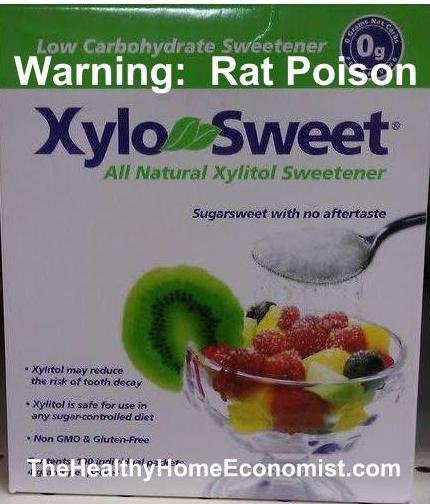
I appreciate your article, but I don’t think you back up your premise that most xylitol is made from GMO corn. If you really want to get that point across, I’d advise you not to use a picture of a xylitol product that specifically states it uses non-GMO corn.
Having said that, do you think Splenda is a better choice?
Thanks …
Jennifer\’s last post: CPS Takes Baby After Parents Seek Second Medical Opinion
I order xylitol by the 5-lb. bag. I use it to sweeten tea, occasional sweet treats (made chocolate pudding with it, turned out great) and rinse with it for dental health. I think a lot of people are turned off by the name which seems to imply something fake and chemical, but as a few have pointed out here, it’s a natural substance found in fruits, birch bark, and produced by our own bodies. I wouldn’t advocate eating it a cup at a time, but who would anyway?
Even the argument against eating anything made from corn doesn’t stand up, where xylitol is concerned. Whether from birch or corn, it’s virtually identical.
I wrote a post at my own blog where I recommend it in the strongest terms:
http://writtens-jen.blogspot.com/2010/05/eating-cake-and-having-your-health-too.html
And some may find this info on its dental benefits quite eye-opening:
http://www.healingteethnaturally.com/rinsing-mouth-brushing-teeth-with-xylitol-sugar.html
This is a terribly misleading article. There are countless scientific studies that prove the benefits of xylitol. The rat example would be equivilant to me eating 2 pounds of xylitol. I’m sure I’d be sick after that! Who eats 2 lbs of sugar!? Also, naturally manufactured xylitol will work wonders. Stear clear of candy bars and baked goods that only “contain xylitol” becuase that usually means there is some other type of synthetic sugar that is no good.
Xylitol is fiber-like, yes. It’s processed by our bodies like a fiber so it brings water into your gut, but that doesn’t turn negative until you’ve had too much. The recommended amount per day is 5-6 grams for a human. That’s all you need.
So a guide to Xylitol:
1. make sure your source is pure, non-GMO and minimally processed
2. please don’t eat 2 pounds at once (stick to 5-6 grams per day)
3. for oral benefits don’t mix into coffee or pastries but rather take in the form of gum or mints
4. in order to see benefit it must be integrated into your daily routine
For oral benefits check out this website
http://drecoaching.com/
Why not put it in coffee and use it for baking? I think it makes perfect sense to use it both as a food and as an oral rinse. I do myself. And it is actually more effective and economical to use the granular form orally rather than gums or mints. The dentist Ulrich Bruhn who has researched it extensively, recommends using straight xylitol and has had great success with it. Please check out the article at healingteethnaturally.com, here is the link again:
http://www.healingteethnaturally.com/rinsing-mouth-brushing-teeth-with-xylitol-sugar.html
Jenifer\’s last post: The Night The Bed Fell
{ 10 trackbacks }