

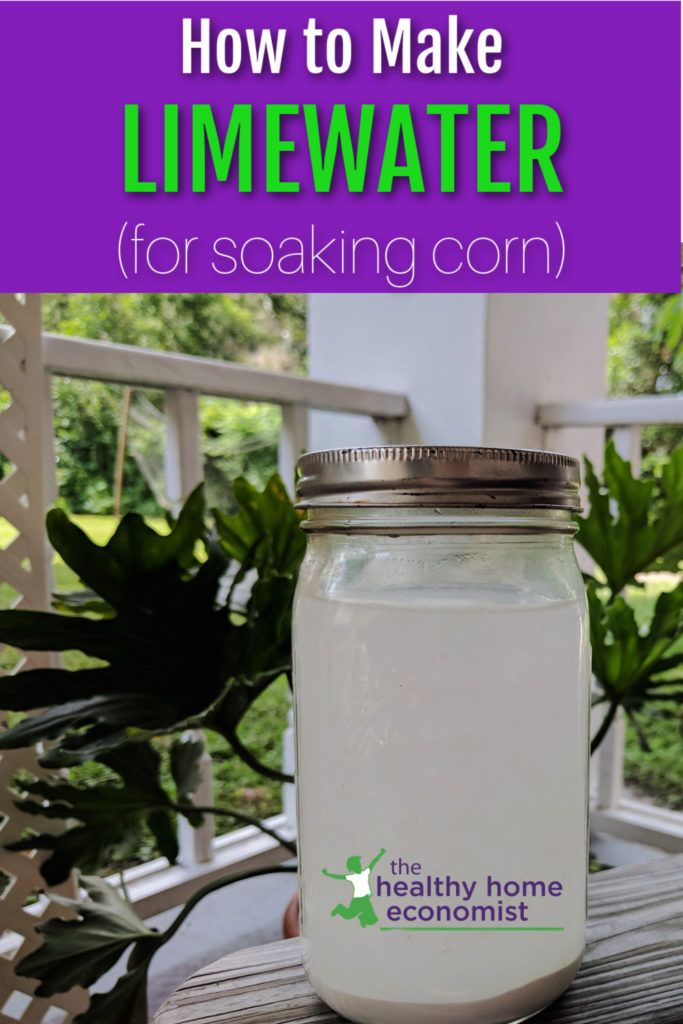
How to make limewater for soaking corn kernels, corn flour, or cornmeal in accordance with traditional Native American cultures for improved digestibility and bioavailability of nutrients, particularly Vitamin B3.
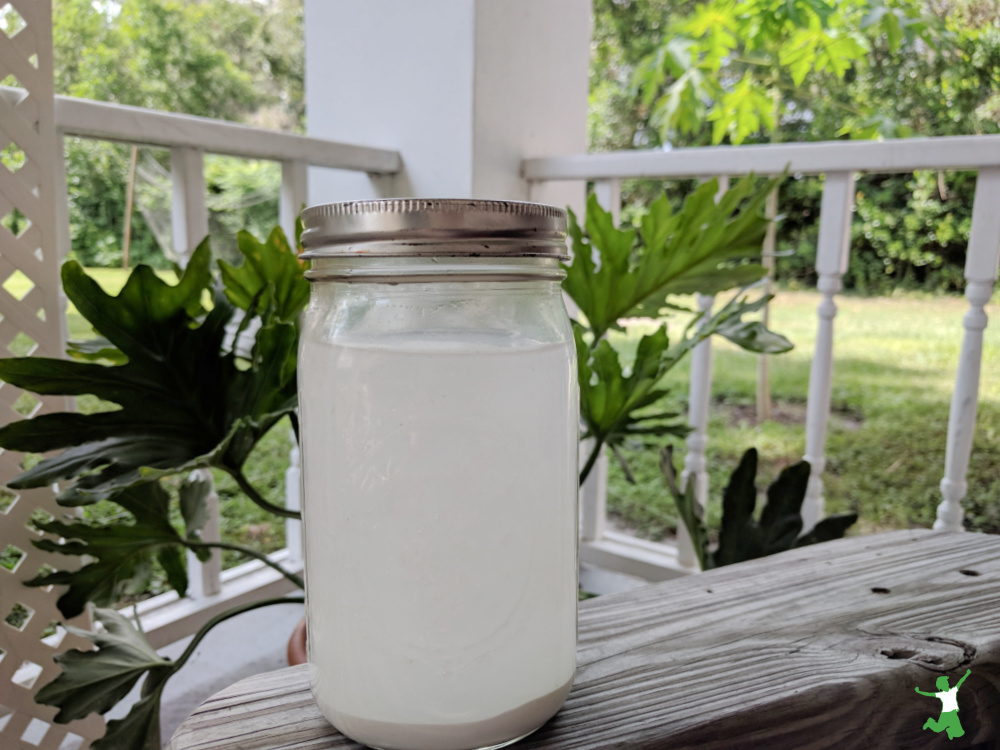
Corn has a bad rap these days primarily due to the pervasive presence of high fructose corn syrup (HFCS) in the food supply. This frankenfood is generally made with GMO corn and laced with mercury residue from processing. (1)
It is in the majority of processed foods and drinks and is being blamed for all sorts of health woes including a role in the obesity epidemic.
The truth is, however, that corn is a traditional food! When high quality, nonGMO corn is sourced and prepared properly using limewater, it can be both delicious and healthy!
And, if you are a Southern gal like me, you like your corn – am I right?
Why Soak Corn?
Soaking corn or cornmeal overnight in limewater releases Vitamin B3. It also improves the amino acid profile of the corn making for easier digestion.
Note, you do not have to soak cornstarch. The reason is that the nutritional value of cornstarch is very low as it is basically just pure carbohydrate.
If whole food forms of corn are a staple in your diet, then soaking in limewater is a must.
The disease pellagra is caused by Vitamin B3 deficiency. Symptoms of pellagra include sore skin, mental problems, and fatigue. Most doctors fail to diagnose it!
Even if you don’t eat corn that frequently, limewater is easy to make and lasts for a long time in the refrigerator or cool pantry.
Why not soak your corn to create homemade corn dishes? It is an easy to do step that improves the nutrition and digestibility of the meal.
In the video included with the recipe below, I show you how to make limewater using the Nourishing Traditions method.
It is the proper soaking medium for corn in North and South American traditional societies. The healthy, strong, and fierce Seminole Tribe of Florida, for example, sustained themselves primarily on soaked corn gruel.
Masa Harina?
Note that preparing masa harina is slightly different. This type of corn flour has already been treated with lime.
Thus, an overnight soak in limewater is not needed in this case. However, it will still require soaking in a slightly acidic medium like buttermilk or water with a squeeze of lemon juice. This serves to deactivate anti-nutrients like phytic acid.
Usage Tips
Use 1 cup of limewater for every 2 cups of corn or cornmeal for making cornbread, corn casserole and other corn-based dishes.
Pour the limewater out of the mason jar carefully – you don’t want to use the lime that has settled at the bottom, only the limewater.
Soaking for 12-24 hours is sufficient to release the nutrients. However, cornbread will rise better if soaked for a full 24 hours.
What About Popcorn?
What about popcorn? Should the kernels be soaked in limewater too?
Actually, no. Soaking popcorn kernels overnight and then drying them before popping is time-intensive and unnecessary if it is an occasional treat.
If you enjoy popcorn frequently, I suggest soaking/drying large batches of corn kernels at a time and storing the ready-to-use soaked popcorn in a tightly sealed container. Alternatively, use heirloom popcorn for a lower anti-nutrient load per serving.
Recipes using Properly Prepared Corn
With your limewater ready to go, here are a few recipes to try that require the soaking of corn flour and meal.
Homemade Limewater
How to make limewater using the traditional method that will create more nutritious and digestible corn based dishes for your family. Can also be sipped as a beverage for extra calcium!
Ingredients
- 4 Tbsp dolomite powder
- filtered water
- 1 quart mason jar
Instructions
-
Spoon dolomite powder into a 1 quart mason jar. It should be spread evenly about 1/2 inch deep at the bottom of the jar.
-
Fill the mason jar with filtered water. Leave about 1 inch at the top.
-
Screw on the lid tightly and turn a few times to mix the dolomite powder in the water.
-
Leave the jar on the counter until the dolomite fully settles out at the bottom of the jar. This will take a few hours, and then the water will be clear.
-
Place the jar in the refrigerator or cool pantry. Use this water for soaking corn and corn flour for any corn based dishes.
-
Once the limewater is used up, toss the dolomite that has settled at the bottom of the jar and start with fresh powder for your next batch.
Recipe Video



Is sourdough starter effective in breaking down anti-nutrients when making corn bread etc? Thank you kindly
I sprout my wheat, dry and grind it I am wondering if you can do the same with corn and lime water for grinding cornmeal or corn flour? Thank you!
Hello! Thank you for this information. I am wanting to make limewater in bulk to soak (then sprout) whole grain corn for my hens (layers). Could I use ag lime for this? I believe that is primarily calcium carbonate. From my brief research it appears mrs wages pickling lime is a chemical (ugh!), so i would not want to use it in my food or my food’s food! Please advise 🙂
Hi again Abby, I am not sure these will be posted. I am reading on, and it does appear that calcium hydroxide is the lime you want, not calcium carbonate which won’t dissolve the skins of the corn (with the phytic acid we want to avoid binding calcium in the diet plus to release the B3). My apologies if I added to the confusion. THIS is what I was trying to find out, and I accepted this article as being useful. But reading on, I am convinced it is not the plain calcium carbonate that will do the trick on the corn.
I also had heard about Mexicans using wood ash to soak the corn before rinsing and cooking. That would give the same effect. It’s like making soap, a powerful alkali. I must research more of how to do this method.
Plain calcium carbonate works … it also works for water glassing eggs just like calcium hydroxide.
Every time I find an article on soaking corn in lime, there is confusion. This one is no different. Too many unanswered questions. It appears that dolomite does not produce nixtamalization. Calcium hydroxide does. Is it safe to consume? No one says clearly. So apparently, soaking cornmeal isn’t a good idea, even though I’ve seen it recommended several times. The only clear idea seems to be to soak whole corn in sodium hydroxide, then rinse thoroughly.
If you check out Nourishing Traditions, there are references for this practice. In addition, you may find as I have, that when you soak the corn (very high in niacin) in limewater, you get a niacin flush. This does not happen otherwise.
Another problem is that sodium hydroxide is flat out toxic. It’s used in oven and drain cleaner! I would never use this to soak food. Manufacturers use it, but they care little about consumer health. They are only interested in pure efficiency of processing.
What are your thoughts on hominy? Thanks!!
Can I reuse the stuff at the bottom to make more lime water, or does it only make one batch?
For whole grain corn grits, I use one cup of lime water in the recipe and soak them 24 hours? Just lime water and no ACV? There’s no need to deactivate phytates? I use 3 cups water for every 1 cup grits. So I would use 2cups water and 1cup lime water for 1 cup grits?
can you reuse the dolomite to make more lime water or do you have to use fresh dolomite each time?
You need to use fresh dolomite each time.
thank you Sarah 🙂
Hi “William Hughes-Games”. Are you saying that you can take the Dolomite powder (like the one recommended here), heat it, and then “slake” it and that would result in the slaked lime from dolomite that you mentioned at the end…that provides the vital nutrient? How do you do this? First just heat it the powder and for how long? Then how do you “slake” it to create the soaking water? Thank you!
Being a chemist, I was surprised that dolomite was suggested to make lime water. No problem using Calcium Magnesium carbonate (Dlomite) instead of Calcium carbonate (Limestone) but it has to be heated to drive off the Carbon dioxide, resulting in CaO (quick llime) and then slaked resulting in Calcium Magnesium hydroxide of Calcium hydroxide, depending on which type of rock you start with. Dolomite powder by itself would have very little effect. mixing it with water does not make lime water. That is only achieved by using Calcium Hydroxide or Calcium Magnesium hydroxide. Note that one other commentator mentioned that wood ash has been used. This is rich in Potassium Hydroxide which is a really strong base. Calcium Hydroxide is a reasonably strong base. If you are doing this, make sure to get the slaked lime and best of all slaked lime from dolomite as Magnesium is a vital nutrient and missing in many diets.