
Video: How to Make Coconut Milk

by Sarah, The Healthy Home Economist on February 2, 2011


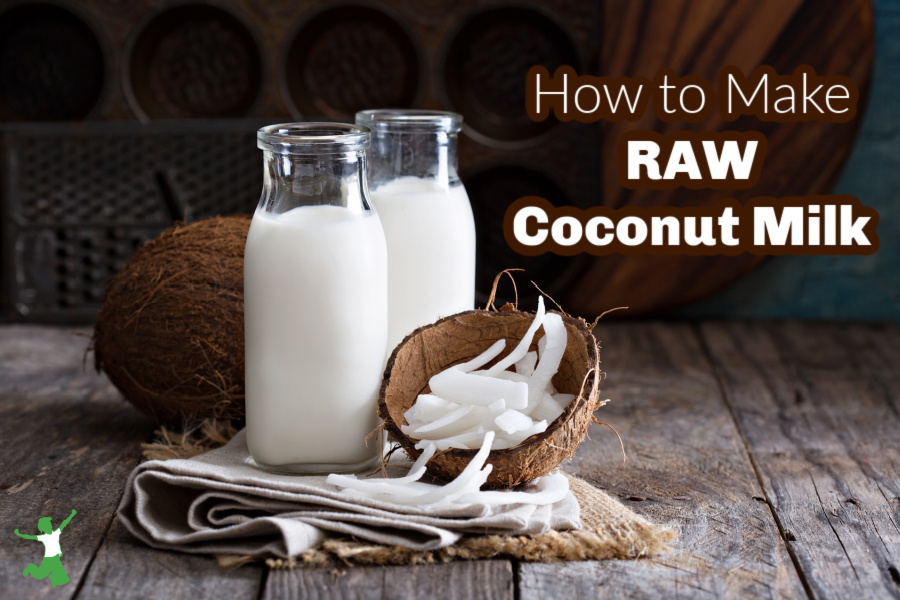
Last week, I visited an Asian Supermarket and showed you via video the primary items that I buy there.    If you recall, two of the items I purchased were raw, frozen coconut meat and young coconuts.    I mentioned in that video that these items were good for making homemade coconut milk.

High quality coconut milk is a must have in the kitchen of any Traditional Cook who seeks to serve nutrient dense meals for her family.   One of the most highly desirable nutrients in whole coconut milk is lauric acid, a medium chain saturated fat that is quickly used by the body for energy and is also highly anti-viral, anti-bacterial, and anti-fungal.  Remember that lauric acid is produced by the mammary gland and is one of the reasons breastmilk keeps infants so healthy!

Unfortunately, coconut milk is typically found in cans or aseptic packages which can potentially result in undesirable toxins such as BPA or nanites leeching into the milk. There is one brand of coconut milk, Native Forest, that is marketed as BPA free, but if it’s possible to make fresh coconut milk that maintains all its rawness and nutrition for basically the same amount of money as the canned version, wouldn’t this be the best way to go?

Most homemade coconut milk recipes I’ve seen utilize boiling hot water.  While this is certainly fine particularly if you are going to cook with the coconut milk once you’ve made it, I personally prefer to make coconut milk in a manner that maintains all the rawness in order to preserve all the enzymes and nutrition.

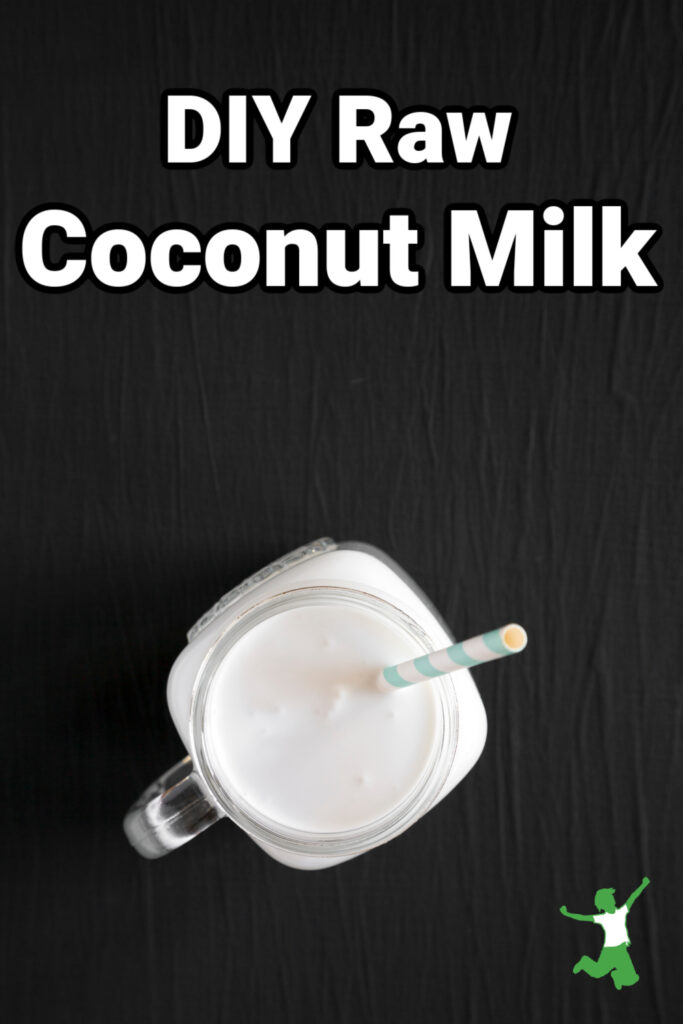
In this 2 part video series, I show you how to make whole coconut milk that is both raw and fresh and uses only coconut meat and coconut water.. no plain water added.     Making coconut milk this way costs little more than the much less tasty and nutritious canned versions so why not make a lot at once and freeze it for convenient use later?

In the second part of  the video which I will post soon, I will show you a very simple method for using this whole, raw coconut milk while still preserving all enzymes and nutrition.

Sarah, TheHealthyHomeEconomist.com

* This post is linked to Fight Back Friday!


The Healthy Home Economist by E-mail


{ 46 comments… read them below or add one }

Julie February 2, 2011 at 11:55 am

Thank you again for another great video. If we ever get dug out of the snow here in New Hampshire I am heading over to the Asian grocer to find the young coconuts and the frozen coconut meat. By the way, this morning my husband and I had the beet, carrot,apple juice from one of your posts. We really enjoyed the addition of the beet and have enough energy to go out and shovel snow all day long!!

Reply

Linda E. February 2, 2011 at 12:00 pm

Does the homemade coconut milk taste like coconut? I buy SO Delicious brand(not in the can) and it doesn’t taste like coconut. I really dislike the taste of coconut. That’s why I’m asking.

Thanks

Reply

Sarah, The Healthy Home Economist February 2, 2011 at 1:47 pm

Hi Linda, the fresh coconut milk has a very mild coconut flavor.

Reply

andrea February 2, 2011 at 12:15 pm

if you use only the shredded coconut, where do you get the liquid ?

Reply

Sarah, The Healthy Home Economist February 2, 2011 at 1:45 pm

Have you watched the video? I use the fresh coconut water from the young coconuts.

Reply

Kelly February 2, 2011 at 2:13 pm

If you did not have access to the young coconuts, but only the raw shredded meat, could you simply use filtered water to blend it up?
Kelly\’s last post: Walter Sands Basic White Bread – KAF

Reply

Sarah, The Healthy Home Economist February 2, 2011 at 2:30 pm

Hi Kelly, yes you can do that but you might want to buy unflavored, additive free coconut water from the store and use that instead.

Reply

Amy Love@Real Food Whole Health February 2, 2011 at 2:31 pm

Hey Sarah- GREAT video! Thanks so much for sharing it! I never thought about using the frozen raw coconut meat- excellent idea. I’ve been sticking with Native Forest, but I’m inspired to make my own now. I would love to share a little recipe I make that uses my coconut milk. It’s SO easy and I came up with it while traveling when I needed something fast in a pinch. Take one can of coconut milk, or about 12 oz of fresh, and put it in a mason jar or blender. Add two-three pastured egg yolks. (more would be ok too!) Add a drizzle of raw honey or Grade B maple syrup. Screw the lid on tight and shake, shake, shake! That’s it! If you were at home and had access to a splash of vanilla extract, and a pinch of nutmeg, those would be excellent additions. It served 4 people a good size amount to keep them full and energetic for quite some time.
Amy Love@Real Food Whole Health\’s last post: Antibiotics For Irritable Bowel Syndrome

Reply

Dorothea February 2, 2011 at 2:32 pm

Sarah,

Could this be done using a Vita Mix? The Vita Mix doesn’t not extract the pulp but pulverizes everything. I guess instead of Coconut milk, I’d have a coconut smoothie?

Reply

Sarah, The Healthy Home Economist February 2, 2011 at 2:36 pm

Hi Dorothea, sure you could use a Vita-mix. Sieving out the pulp is only a requirement if you want smooth coconut milk.
Sarah, The Healthy Home Economist\’s last post: Video- How to Make Coconut Milk

Reply

Barb February 2, 2011 at 3:51 pm

I’m very excited to try this- thanks fo rthe video!
As for extracting the coconut water, might I suggest making an additional hole on top, opposite from the one you made. I’d bet the water would come out much more quickly.
Barb\’s last post: Homemade Ornaments

Reply

Sarah, The Healthy Home Economist February 2, 2011 at 4:58 pm

I tried that but you can’t punch another hole .. there is only one soft spot that I could find.

Reply

sara February 2, 2011 at 5:11 pm

That looks so yummy. I’m happy that my work unblocked YouTube, hahaha. I have that same juicer at my office and i’ll definitely be trying that!

Reply

Gabriela February 2, 2011 at 6:11 pm

May I ask what Juicer you use? It looks like a nice one. Thanks for the video!

Reply

Sarah, The Healthy Home Economist February 2, 2011 at 6:24 pm

Hi Gabriela, its a Jack La Lanne basic model. Does a good job .. really dry pulp so it gets the most out of your investment in organic vegetables. Easy to clean too. Here’s what it looks like although mine is a bit different as it is a few years old:
http://astore.amazon.com/theheahomec0a-20/detail/B000Q6CZW4

Reply

Tyler Simmons February 2, 2011 at 8:13 pm

Hi Sarah,

I have been wondering how to do this recently, this will be fun to try.

I just put up a summary of the things I like about your site here: http://evolutionaryhealthsystems.blogspot.com/2011/02/healthy-home-economist-my-fermented.html

check it out if you get a chance.

TS
Tyler Simmons\’s last post: Healthy Home Economist- My Fermented Food Adventures

Reply

beth February 3, 2011 at 9:37 am

Question for you. You were talking about how the methods with boiling water make the milk not truly raw. What do you think about blanching almonds? They are in the boiling water for only a minute and then put in cold water. (When I blanch my own, I mean.) Does that make the almonds no longer raw? Thanks!

Reply

Sarah, The Healthy Home Economist February 3, 2011 at 10:15 am

Not really sure about that one, Beth. I suspect at least some of the rawness is lost, but probably not all.

Reply

Terri February 8, 2011 at 4:05 pm

I am so excited to milk this. I actually went to the Asian market near my home (that I always just drive past) and found the frozen shredded coconut and the fresh young coconuts. I did notice that you really need to read the frozen shredded coconut though, as I found some had added sugar in them.

I am anxious to see your next post or video on how you use the coconut milk.

Reply

Terri February 8, 2011 at 4:06 pm

LOL, I meant to say I am excited to MAKE this…..guess I had milk on the brain….

Reply

de February 23, 2011 at 3:22 pm

Sarah, I just recently found your website and am very interested in your videos, however I am unable to find the link for making the coconut milk video..am I missing something on this page? Can you provide it please? thanks

Reply

Sarah, The Healthy Home Economist February 23, 2011 at 3:37 pm

Hi de .. the video is there now. I’m not quite sure how the youtube video disappeared from the post but it’s back now! :)

Reply

Lauren February 26, 2011 at 6:17 pm

Hi Sarah,
All I was able to find in my area were green coconuts, not white. The one I opened had LOTS of water in it, but no edible meat.. It only had this jelly-like coconut goo in it. I dug into the meat with a spoon, and it was very hard and not sweet at all. Is this just too immature? Should I wait on opening the others to let them ripen, or are they just different than the white ones in your video?

Thanks!!
-Lauren

Reply

Sarah, The Healthy Home Economist February 26, 2011 at 7:23 pm

You can use the water out of the green coconuts. You will need to get mature coconut meat in the frozen section as I show in the video as you will get very little if any meat in young coconuts.

Reply

Nicola December 16, 2011 at 2:39 pm

I was wondering about this myself. So are young coconuts only good for their water then?

Reply

Mimi February 22, 2012 at 7:56 am

Nicola — the meat in young coconuts is edible and delicious. Don’t throw it away! It can be eaten straight out of the coconut. Just scrape it out with a spoon, and avoid getting rough bits of husk in your mouth (although no harm in it of course, you can always spit that part out). This stuff is a prized ingredient for pies, fruit salads and as a plain ol’ nutritious snack where I come from.

Reply

Lucy March 3, 2011 at 2:04 pm

Sarah, I’m a real newbie… and on a very limited budget. Thanks for being such an encouragement!

I’m curious how long the fresh coconut milk will keep in the fridge. Thanks, Lucy

Reply

Sarah, The Healthy Home Economist March 3, 2011 at 2:09 pm

Hi Lucy, it lasts about a week. Freeze what you will not use in that time.
Sarah, The Healthy Home Economist\’s last post: Got a Fever Skipping the Meds Has ALWAYS Been the Best Policy

Reply

Rob March 3, 2011 at 5:07 pm

What do you do with the coconut pulp from the blender? I hate to waste it.

Reply

Rob March 3, 2011 at 5:11 pm

Oops, just saw your new post about how to make coconut flour. Great timing as I have been wondering how to do just that. You are awesome!!

Reply

Lauren March 28, 2011 at 10:28 am

Hi! So, I opened up 3 of the coconuts I bought, and went ahead and got the water out so they would go bad. I put all the water in a tupperware container in the freezer, and when I lookd today, there is a purple slime on the top and bottom of the water. Do you think it’s still OK to use? Should I scrape off the purple and use that? I wasn’t sure if it was just oxidation or what. Thanks!!

Reply

Christine Kaiser April 1, 2011 at 5:31 pm

I was wondering how you get the kefir grains back out of the coconut milk when it is done fermenting?

Reply

Annette December 19, 2011 at 2:56 pm

Thanks for this video! I am going to try this. About the young coconuts; do they come out that way? How come the coconuts in the grocery store have brown on the outside?
I have a Vita Mix; just pulverize it.
And, where is the follow up video?
Thanks!

Reply

Stephanie February 22, 2012 at 10:20 am

Sarah, I was wondering about the frozen coconut meat you bought. I went to my asian market and found what appears to be the exact same brand of coconut meat you purchases at your market. On the top of the bag it says ‘Cook before serving.’ Is there a reason for this? I want raw coconut milk and yours is the only reasonable recipe I’ve found for it. Is there a reason my coconut milk would be unsafe to eat raw? Thank you for the recipe!

Reply

Angel June 2, 2012 at 5:35 pm

Sarah, could you please make a video about how to make coconut oil please? I have seen several methods over the internet: one is heating the coconut milk and the other is with a juicer, I am not really buying any of them, if you have time and the knowledge I would really appreciate you sharing it in a video. Thank you.

Reply

Natalia August 27, 2012 at 11:38 am

Maybe I did something wrong, but my coconut milk separated only just after a few minutes. I have use the store bought coconut milk before to make kefir before and it was delicious, but the one from homemade milk didn’t come out right because the milk kept on separating. Any ideas how to prevent this?

Reply

judy September 2, 2012 at 4:40 pm

can i drink this coconut juice?

Reply

Stacey DAmico October 8, 2012 at 1:41 pm

Hi Sarah,
About 4:40 into the video when you add some coconut meat from a glass measuring cup – you refered to it as dried shredded coconut. I thought that earlier you had said that we shouldn’t use dried shredded coconut because it needs to be reconstituted with boiling water. I’m wondering if maybe you were really using the frozen coconut meat but mistakenly called it dried shredded coconut meat?
Thanks Stacey

Reply

Steve November 6, 2012 at 4:17 am

Per Tropical Traditions, coconut oil does not contain enzymes, which is why it is stable for so long. I presume that is also true for the coconut meat, but I am not sure of that. If so, you shouldn’t need to worry about heating it when making your milk.

http://www.tropicaltraditions.com/virgin_coconut_oil_heat.htm

Reply

Shawn December 30, 2012 at 8:04 pm

Hi, just noticed you using a juicer to separate your coconut mixture. Great idea except your using a centrifugal style juicer which happens to introduce a lot of oxygen to whatever your juicing causing an ‘oxidative’ effect. Rather try using a press, a slow spinning juicer, such as the omega 8006 or similar, or use the chess cloth method.
Thanks for the videos and keep up the good work!

Reply

Telma March 10, 2013 at 9:11 pm

Love your videos.
Have one question.
I live in Hawaii. Do you know where to find live kefir over here.
Hawaii does not allow to commercialize raw milk unfortunately. Where is the alternative milk again.
Thank you so much

Reply

Tina March 11, 2013 at 5:13 am

Telma,

On maui, you can buy raw milk if its “pet food”. So, farmers here are selling raw milk that way. Ask around or get to know organic farmers. They won’t advertise it, you have to find out by word of mouth. It is I agree though, very hard to find, and much more demand than supply I’m afraid.

Reply

Telma March 10, 2013 at 9:14 pm

One more question.
I do make the coconut milk the old way with some warm water. I use fresh coconut since I live in Hawaii.
What is the difference between this and the one you showed on the video with coconut water?
Thanks

Reply

Tina March 11, 2013 at 5:08 am

Thank you for the video.
I recently ditched the tetra-paks and I’m glad I did.
I have been making coconut milk with fresh young coconut meat & coconut water.
I love using a nut milk bag to strain the milk, and clean up is a breeze.

My only problem with coconut milk made this way is the taste. My 4 yr old does not like the tanginess of coconut water, and he refuses to drink the fresh raw coconut milk since it has a much earthier, tangier taste than coconut milk made by rehydrating coconut flakes. (I’ve been making it that way for a few years).

Sadly, it is also very expensive (and I live in Hawaii). I end up using about 6 coconuts to make about 6 cups of milk (coconuts here are about $4 a piece at the farmers market). Sad that real raw food has to cost so much. Its just not affordable.

Reply

Viviana March 30, 2013 at 8:10 pm

Hello, I have a question @ klabbering raw milk. I left @ a qt. of raw milk out on my kitchen counter for THREE Days! But, only some solidified and separated while most remained liquid. It certainly smelled sour but, when I tried to strain in cloth it went through so fast and was very milky not at all clear. Not even semi-clear. I scooped out the solids put in a jar and used the rest of the milk (?) not sure if that was whey….to soak my organic whole wheat flour for pancakes. I don’t know if I actually clabbered my milk and if using what rushed thru the cloth to soak my pancake flour was ok? PLEASE HELP!!!

Thanks,
Vivi

Reply

JC April 25, 2013 at 12:51 pm

Dah! to get the water out of the coconut FAST, poke 2 holes on opposite sides of the top. Let air in one hole while pouring the water out of the other. Works for me!

Reply

Leave a Comment

CommentLuv badge

{ 4 trackbacks }

Previous post:

Next post: