

Table of Contents[Hide][Show]
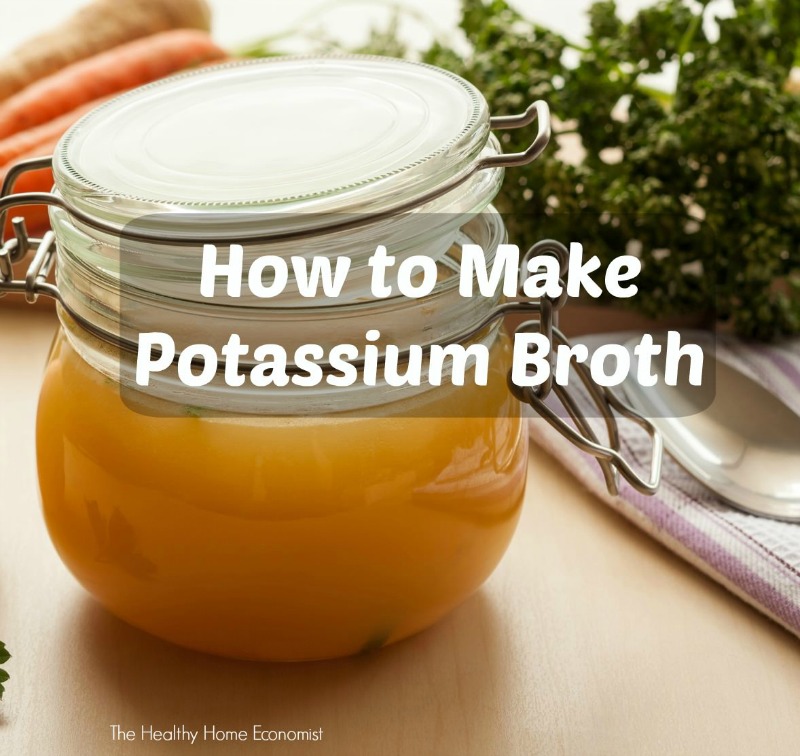
After the births of my second and third children, I was fortunate enough to have a number of friends with extensive knowledge of traditional food preparation bring my family meals until I was back on my feet. In addition to enjoying the benefits of bone broth and nutrient-dense meals, potassium broth was one of the most helpful tonics these caring friends made sure I had in the refrigerator to help me recover very quickly.
Potassium Broth Benefits
Potassium broth is best sipped warm like tea. It is an incredible rejuvenator! When a tablespoon of liquid whey is stirred into each cup, it assists digestion and absorption of the copious amounts of potassium and other minerals present in the broth. The liquid whey also adds enzymes and probiotics.
Potassium broth is an excellent present to bring to a dear friend after she’s had a baby. It is also a wonderful tonic for someone who has recently had surgery or suffered an extended illness.
I’m often asked what is the best thing to bring to a relative in the hospital. Without a doubt, homemade soups and Potassium broth in a thermos top the list! It is easy to load up a small cooler with 3 or more thermoses for the days’ meals. Liquids stay warm in a thermos for many hours. I have not found a nurse that objects to a small cooler by a patient’s bedside.
One other excellent use for potassium broth for pregnant and newly postpartum moms. It is fantastic for eliminating issues with leg cramps at night. People sometimes suffer from these as they get older as well. A mason jar of this tonic in the refrigerator for sipping at night before bed is a great home remedy for this problem.
Another dish that is perfect for recovery is Kitchari porridge. Of course, the healthiest bone broth loaded with gelatin is a wonderful food to offer as well. Potassium broth is much quicker to make, however. It is also a good option for friends/relatives who are vegetarian.
How to Make Potassium Broth
Potatoes are nightshade vegetables. As a result, be sure to use very fresh, preferably organic potatoes in this recipe. They should never be green under the skin or have any visible sprouts, as this could add the toxin solanine to the potassium broth.
Inspired by the recipe in Nourishing Traditions Cookbook.

Potassium Broth Recipe
Recipe for homemade potassium broth that is an excellent tonic postpartum or for those recovering from surgery or illness in the hospital
Ingredients
- 4 potatoes well scrubbed, preferably organic
- 3 carrots peeled, chopped, preferably organic
- 4 celery stalks chopped, preferably organic
- 1 bunch parsley preferably organic
- 4 quarts filtered water
- 1 Tbl liquid whey
Instructions
-
Peel potatoes. Place the potato peelings, carrots and celery in a large pot with the filtered water. Bring to a boil, reduce heat and simmer for 30 minutes. Add parsley and simmer for 5 more minutes.
-
Cool and strain the finished potassium broth into glass containers in the refrigerator, reheating small amounts as needed. Add 1 TBL whey to each cup for a big boost to mineral assimilation.
-
Potassium broth freezes beautifully, so freeze what you will not use in about one week.
Recipe Notes
Potassium broth lasts about 4 days in the refrigerator. Freeze what you will not use in that time.
The cooked and strained veggies are ideally tossed into the compost bin (all the minerals are in the broth!).



Awesome, thank you for this recipe. A few questions…
-How did you calculate the amount of potassium in this recipe?
-Do you use potato skins because they contain the most potassium in the potato? Thanks!
Can I use sweet potato/yam peelings?
It should be white potatoes which have a different nutritional profile.
Thank you???
1.Can you recommend an alternative to the whey for dairy allergy folks?
2. I’ve seen other recipes add a beet for added potassium or is this not ideal?
I’m mixing the cooked carrots in with my dog’s food????
Hi Britt, there really isn’t a substitute for whey. You can just leave it out.
I followed your recipe and my broth looks much lighter that the picture you show. Not sure what I did differently. I did not add whey though as I am sensitive to dairy. I appreciate your feedback.
with Gratitude,
Dana
If you’re looking for a protein alternative to whey that’s high in potassium, pea protein is a good option. Pea protein is a plant-based protein that’s high in protein and fiber, and contains potassium.
Pea protein is a denatured, ultraprocessed ingredient that should be 100% avoided. You cannot separate pea protein from whole peas in your kitchen. You need a factory to do it!
Curious as to why you peel the carrots…I grow my own or buy from farmer’s market, so usually I just scrub and sometimes scrape with the back of a knife.
If you grow them yourself in healthy/clean soil or are VERY confident of your farmer, then feel free not to peel! 🙂
I am doing low carb, do you know if the minerals seep out but carbs stay with the solids?
I don’t know for sure if 100% of the carbs are gone. Certainly, most of them would be the solid portion of the vegetables.
Would you be able to still get the potassium benefits without adding the whey?
The whey makes it more digestible and adds probiotics and enzymes, but you can leave it out if necessary.
I’m not doing great to nightshades lately. Is there something else to substitute for potatoes? Also, I’m allergic to milk. Thoughts on something different to add instead? I was thinking maybe some of the fermented water from some of my fermented veggies (carrots & beets).
Sounds like this recipe isn’t for you. You can try making plain bone broth instead. https://www.thehealthyhomeeconomist.com/video-traditional-stocks-and-soups/
How many milligrams of potassium is this? I am trying to build my potassium, but need numbers
It would vary considerably based on the quality of produce that is used.