

Table of Contents[Hide][Show]
How to make homemade ghee on the stovetop for a healthy cooking fat that has a high smokepoint and is also shelf-stable. Making ghee yourself reduces the cost per serving considerably for this nourishing fat.
Other options are making homemade ghee in the oven or trying neutral-tasting coconut ghee (half ghee, half coconut oil) if desired.
Knowing how to make ghee is simply a must for any Traditional Cook.
Clarified butter as it is also known, has been used for thousands of years by Indian cultures. In fact, traces of ghee have been found on fragments of Indian pottery dating as far back as 6500 BC!
When in a liquid state and made from unheated butter, ghee is called butter oil. Dr. Weston A. Price discovered that butter oil and cod liver oil work synergistically to supercharge absorption of Vitamins A, D, and K2 known as the X-factor.
Dr. Price always carried flasks of cod liver oil and butter oil to the bedside of very ill patients.
More often than not, he was able to revive them with a few drops of each under the tongue. Using cod liver oil or butter oil separately did not have the same deathbed reviving effects.
Benefits of Ghee (over Other Cooking Fats)
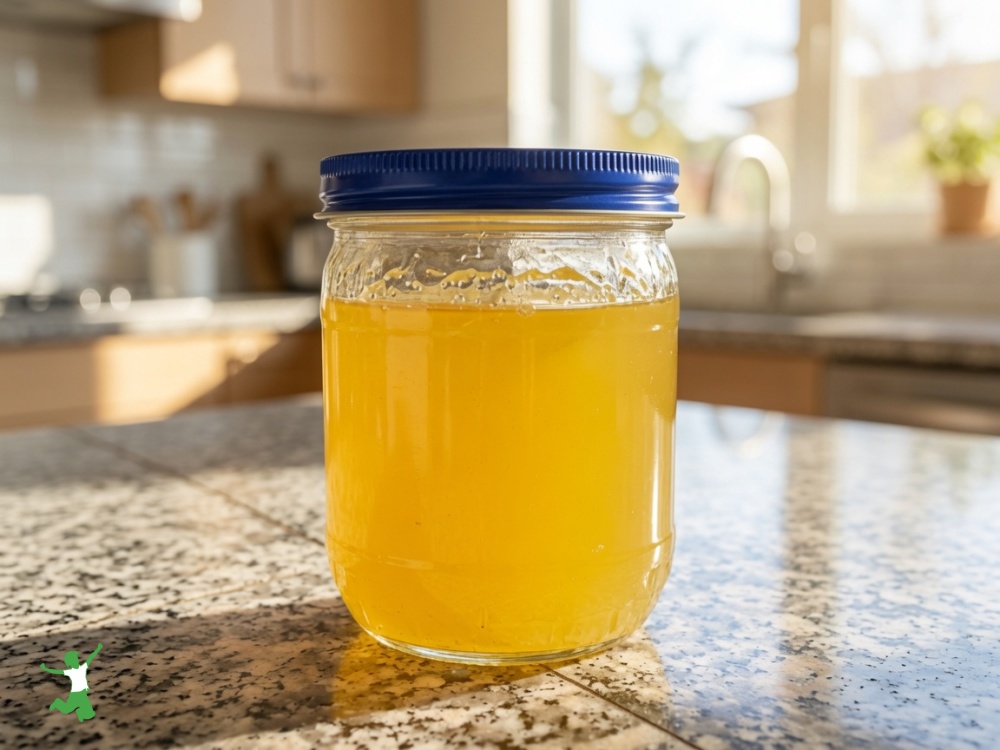
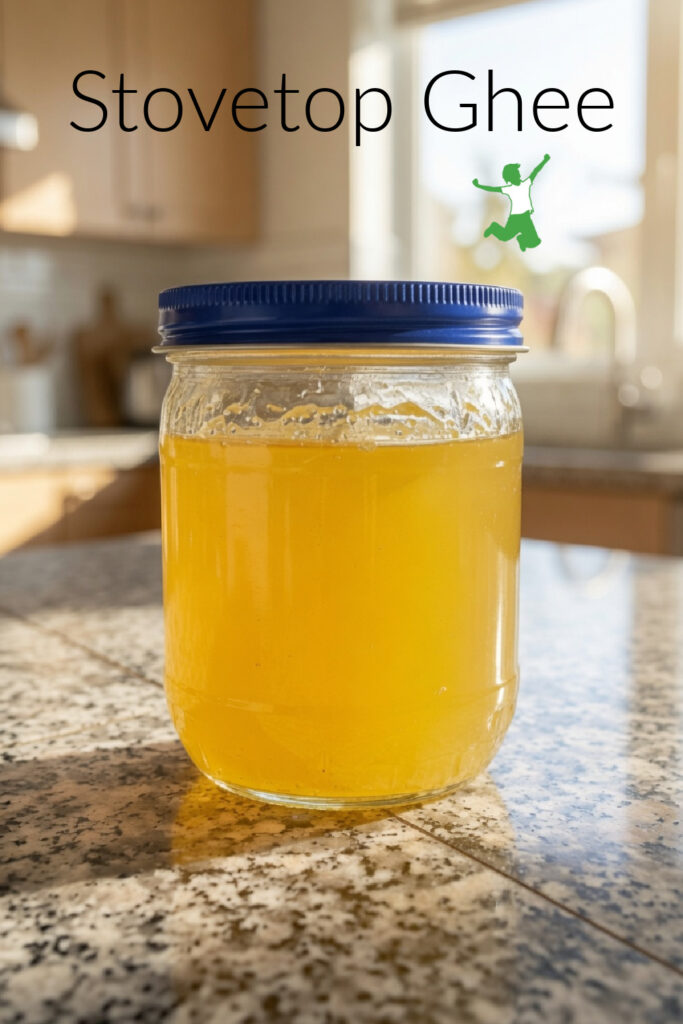
It is best to know how to make clarified butter oil or ghee yourself rather than buying from the store. Notice the picture above of a jar that I made myself with pastured butter from a local farm. It is such a beautiful deep yellow!
Commercial ghee is ridiculously expensive, so learning to make it yourself is not only a more nutritious way to go, it is very cost-effective.
I make clarified butter oil for about half the cost of buying it.
Unlike butter, ghee does not need refrigeration and keeps well on the counter or pantry for many months. Keeping a jar in the pantry for a quick veggie saute is very convenient!
Another benefit of ghee is that it is easier to digest as all the milk solids (proteins) have been removed from the butter.
Even those with a true dairy allergy often find that ghee presents no trouble for them digestively.
Another advantage to using clarified butter instead of plain grass-fed butter is that the grassy taste and sometimes cheesy smell of the butter is eliminated.
Therefore, by learning to make clarified butter oil from grass-fed butter, you will find that you now have a healthy fat for cooking that does not displease your family with a cheesy odor. This can sometimes happen with grass-fed butter alone.
The recipe and video lesson below covers how to make this healthy and indispensable fat for use in your own kitchen.
I also cover how to make ghee capsules. This is a convenient way to ensure you get plenty of the animal form of Vitamin K2 (MK-4) with your daily dose of cod liver oil.
If you are spending money on high vitamin cod liver oil (this is the brand I’ve used for many years) it is a must to be taking it with clarified butter oil. This supercharges the beneficial effects!
Note that it is not advisable to make ghee from homemade raw butter. The heating process causes a loss of the enzymes and probiotics in this special food. However, the Vitamin K2 is not harmed as it is a very heat resistant nutrient.
Prefer to Buy?
If after reviewing the recipe and video demo below you decide to buy instead, I would recommend this vetted source as a premier retailer of quality grass-fed ghee.
Plain, cultured, and herb-flavored varieties are all available including a coconut oil/ghee blend.
How to Make Ghee on the Stovetop
This simple recipe for making ghee can be accomplished on the stovetop in just a few minutes.
Ingredients
- 1 lb butter preferably grassfed and organic
- 1 wide mouthed mason jar quart size
- 1 cheesecloth fine mesh
- 1 funnel
Instructions
-
Place pound of butter in a medium sized pot or stove safe glass bowl. Turn heat on low and allow the butter to gently liquefy.
-
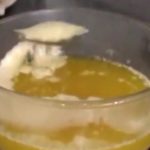
Turn heat to medium-low and gently remove foam that comes to the top of the melted butter with a slotted spoon.
-
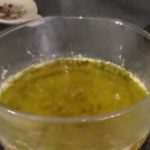
After removing the foam, allow the melted butter to simmer on medium-low heat for 5-10 minutes longer to allow all the milk solids to settle out on the bottom of the bowl. You will know when the separation process is complete as the solids will be slightly brown on the bottom and the clarified butter will be completely clear and transparent.
-
Line a funnel placed into the open end of a wide mouthed mason jar with a fine mesh cheesecloth.
-
Pour the clarified butter into the funnel so that it is strained through the cheesecloth as it enters the mason jar.
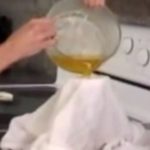
-
Allow the finished ghee to cool in the mason jar. When room temperature, fasten the lid on tightly and store in the pantry as a convenient and incredibly healthy cooking oil for all your kitchen needs.
Recipe Video



Got my fermented cod liver oil in the mail yesterday, and I’m going to make Ghee from my raw cream today! Woot! I’m 3 months pregnant and I’m sure it’s very beneficial for baby also 🙂
Here it is, on pg. 102: “High vitamin butter oil is not the same as ghee. Ghee, or clarified butter, is butter from which the milk solids have been removed. It is a wonderful fat for cooking because it does not burn as easily as regular butter and also has a delightful flavor and color. However, it’s not a superfood since its nutrients are much less concentrated than those of high-vitamin butter oil.”
I’m confused…I feel like we’re talking about two different things. I am reading “Eat Fat to Lose Fat” right now and she specifically states that Ghee is NOT the same as HVBO and ghee is not considered a superfood (but HVBO is). Are you saying that — in the absence of superior HVBO — ghee is the closest substitute in helping absorb the FCLO? Thank you!
Butter oil and ghee are not the same thing
As a specific supplement for teeth, rather than just a general food for nutrition, what would be the doses of each ghee and CLO? And when would you expect to see improvement, on average, of course?
Also, what’s the best way to give it to babies? My son is only 7 months old, and getting him to swallow all of it without wasting it would be a challenge.
Just out of curiosity, but where did traditional cultures get the nutrients found in HVBO? I’m assuming they didn’t have the equipment to extract it like we do, right? Wouldn’t they have gotten it from something like ghee anyway?
Thanks for this. I haven’t been able to put in in my baby’s WAPF homemade baby formula at all because it was unavailable. I’ll start this right away.
Does heat mean the same as cook?
Warming it doesn’t work. You do have to heat it .. you do lose enzymes but otherwise the wonderful fat soluble nutrients remain intact as they are not damaged.