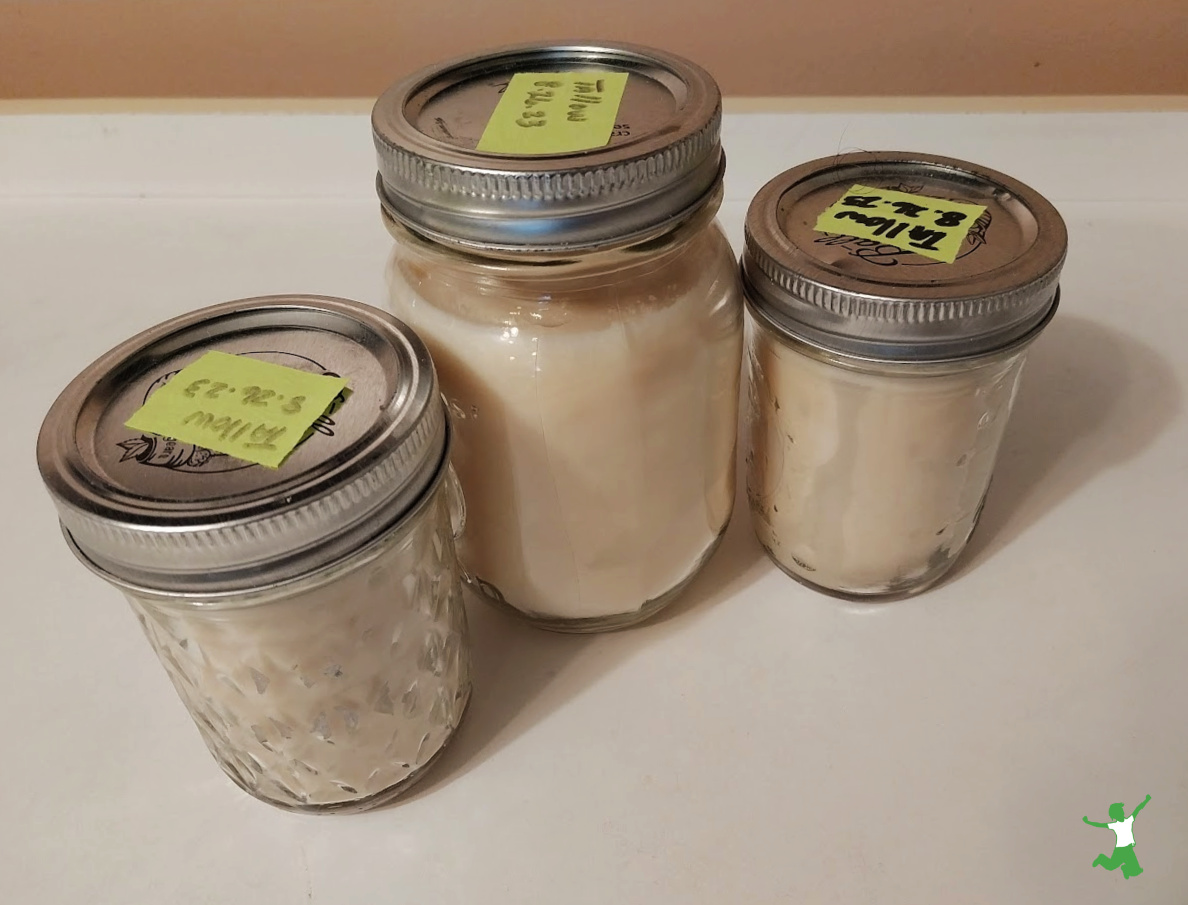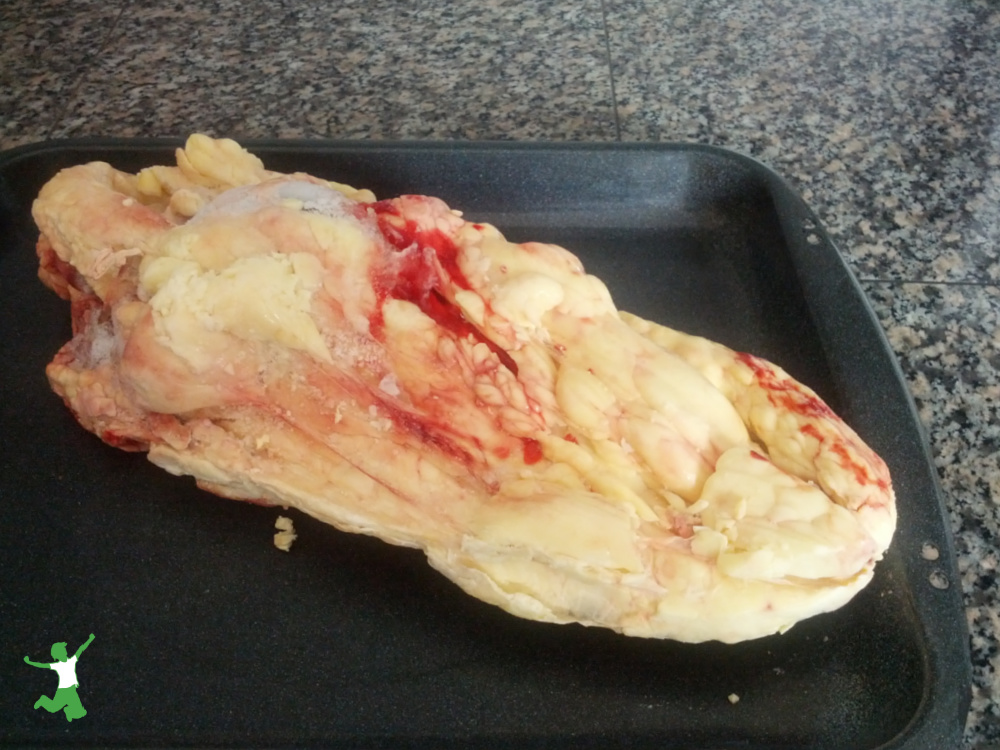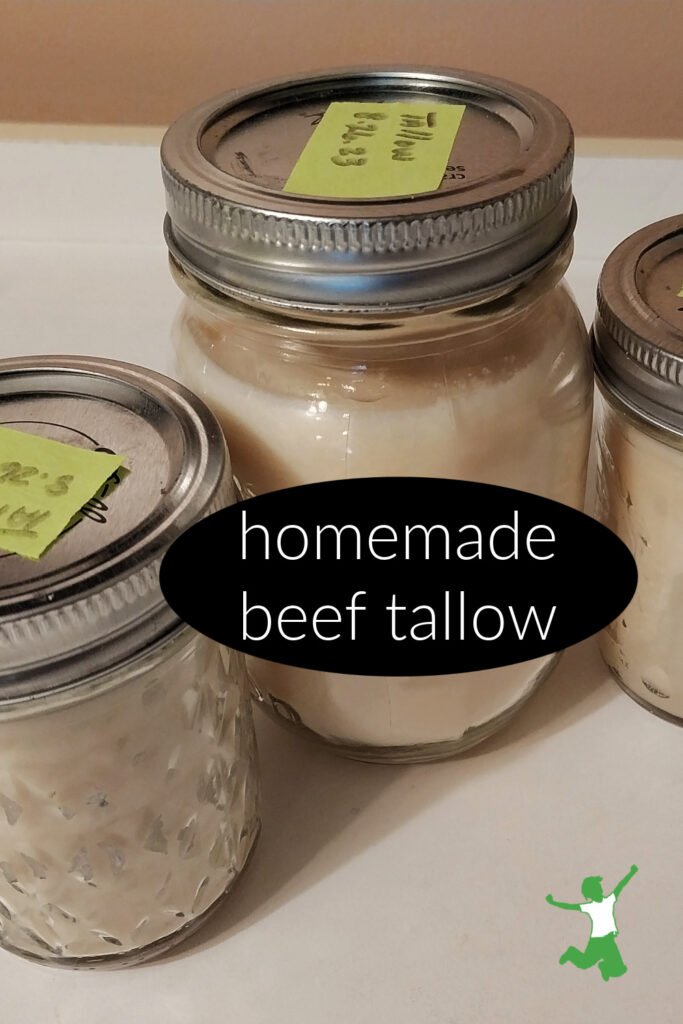

Beef tallow is hands down my favorite fat to use for frying. It is ideal for this purpose as it has less than 3% polyunsaturated fats, just a bit less than coconut oil. What’s more, if your beef tallow comes from a cow finished on grass or given grain for a very short period of time (a few weeks at the most) before processing, a good share of those polyunsaturates are in the form of conjugated linoleic acid (CLA), that fatty acid that you should seek to add to your diet as it helps builds muscle, assists with weight loss and drastically reduces cancerous tumor risk to name just a few of the health benefits.
The majority of beef tallow is approximately 55% saturated fats and 40% monounsaturated fats which are both very heat stable and do not easily produce free radicals when heated unlike liquid vegetable oils.
Beef tallow is not just any old beef fat, however. It is the rendered form of suet, which is that nutrient rich beef or mutton fat around the organs, particularly the kidneys.
In this newest video lesson, I show you how to render beef tallow from an intact piece of suet straight from a local, grassbased farmer.
Start to finish, this video shows you exactly what you need to know to produce several jars full of deep yellow beef tallow, rich in Vitamins A and D – those critical fat soluble vitamins prized by Traditional Societies for their importance in bestowing maximum vitality to both young and old.
Another notable monounsaturated fat that is present in high amounts in beef tallow is palmitoleic acid, which is highly antiviral and antibacterial. So fire up those healthy french fries on your stovetop using beef tallow. With flu season coming on, consumption of plenty of beef tallow will serve to help keep you well in the coming cold months.
Please note that beef tallow is solid at room temperature and keeps well in the pantry, but I choose to refrigerate as this is my personal preference. In my experience, rendered beef tallow will keep many, many months in the refrigerator.
Sarah, The Healthy Home Economist
|
|

{ 53 comments… read them below or add one }
Hi Sarah -
What about the beef fat that one pours off from making beef stock? While maybe not officially considered “tallow,” do you still use this fat for sautéing/frying?
Thanks!
This plain beef fat that you can peel off the top of chilled beef stock is great for sauteing but I have not had much luck frying with it. The fries just don’t get crispy like they do with tallow. Tallow blows regular beef fat away in the frying department.
Sarah, TheHealthyHomeEconomist\’s last post: Video: Rendering Beef Tallow
My understanding is that even a few weeks of finishing on grain will undo most of the favorable fat profile in grass fed beef. 100% grass fed and finished is the best way to go.
Not true. If you look at the chart on eatwild.com a couple of weeks does not greatly reduce the nutrition at all and you gain a lot of tenderness to the meat and it’s much easier to cook without it turning into shoeleather. I know I will probably have many disagree on me about this – which is of course fine – but I prefer my grassfed beef finished for 2 weeks on grain.
Sarah, TheHealthyHomeEconomist\’s last post: Video: Rendering Beef Tallow
Here’s the chart. 14 days on grain reduces omega 3s for example by about 16%. Not much to me for the huge increase in enjoyability of the meat.
http://eatwild.com/healthbenefits.htm
Sarah, TheHealthyHomeEconomist\’s last post: Video: Rendering Beef Tallow
The great thing about buying local is that you can get your cow finished any way you darn well please. If you want it 100% grass finished, you can do that. If you want it finished for just a bit on grain like me, you can do that too. The point is to avoid conventional beef which is fed GMO grains for months and there is so much lost nutritionally that it becomes practically a different food group!
Sarah, TheHealthyHomeEconomist\’s last post: Video: Rendering Beef Tallow
Yes and in fact the reduction in the heat sensitive omega 3′s is better for frying, I once tried to use beef tallow that was from very healthy cattle and it smoked well below 350 which should not happen to such a saturated fat.
I would love to ave access to grass fed beef. But I don’t know of any resources in my area. :0(
Feeding some non-GMO grain for a couple of weeks to a grassfed beef is ok as long as it’s just part of the diet instead of nothing but grain…like they do in the feedlots. Make sure that the animal is still getting all of the good grass they want to eat. Personally, we don’t feed any grain to our cattle. We have a 2 year old steer right now that is available for sale that is completely grassfed and looks wonderful! What the grass looks like is important to finishing a grassfed animal, as well. Early spring grass is high protein and full of sugar. The grass we have growing right now is the same – we had a bad drought for months and then the rain came so the grass is springing up like it does in spring and the cattle are putting on weight like crazy. If you butcher a grassfed beef after he’s been eating drought/summer stressed grasses, the meat won’t be as good as the higher protein/more tender grasses. Pasture rotation can help with that, too, but most people don’t do that (we do). Remember how people used to wait to butcher their hogs after they knew they’d been feeding on acorns in the fall? Good stuff! We eat goats, too. Getting ready to send several young wethers to the butcher this weekend (some are still nursing their mothers even though they are almost as big as their mom). The grassfed goat meat is wonderful! I love the stewmeat. Even the chops are good – keep the heat low and slow and use some good fats like coconut oil/butter (I mix them) to cook it in. The stewmeat is mild and tender. Same for the lean beef – keep the heat as low as possible when cooking and put some good fat with it. And certain breeds of cattle are also better than others for tenderness…age of the animal is also a factor as is sex (steers are more tender than bulls but we like bull meat – more flavor).
Oh, I can definitely do this (I think!)! Thank you, Sarah! Kris has the other half– we will have to make a day of it and render it together. I can’t wait to make my french fries tomorrow. I just picked up some beautiful organic russet potatoes yesterday. I’m so glad I didn’t waste that suet!
On a separate note, I’m so glad you posted about the finishing of the beef with grains. The beef I had, I’m fairly certain, was not finished on grains, but I think I would prefer the taste/smell of beef that is. I’ll need to explore my options on where to get some. Thanks again for this video!
Camille McConnell we should look into this!
Thank you! I have some beef suet in the freezer that I need to do…
Thanks again healthyhomeeconomist! We use tallow all the time to fry stuff. I cheat though and buy it, already rendered, from my Amish farmer!
@Anita Awesome … hope you find the video helpful. You will be delighted how easy it is. I’ve tried different ways to render tallow over the years and the way I show in the video is hands down the best for a busy Mom.
@Helen lucky you!
I have grass-fed beef tallow. Sometimes the smell is a little off putting, but the taste is wonderful.
we’re butchering pigs on Friday and rendering lard next week.
yummy!
Weird .. FB posted this twice!
Great! Thank you for posting. Hopefully many of those traditional fats will come back in people’s kitchens.
I’m wondering if fat from Bison would be okay to use. Most of the local beef producers around me say there isn’t enough fat on the cows to sell for tallow. But I can get Bison fat from animals raised in the mountains on grass. Thoughts?
Megan, I think bison fat is absolutely wonderful, and great for cooking!
Thank you!
I’ve been rendering beef tallow for a few months now, but I do it on the stove! It’s the most economical healthy fat when you do it yourself! For me it comes out to about 3¢ an ounce.
Matt Black
Will pick some up on the next farmers market trip! Great article by the way on oxalates and candida. No clue it worsened the problem.
When I make bone broth from beef bones I get this fat layer on top after putting it in the refrigerator.
Can I use this fat for cooking?
What’s the name of this fat then?
I just rendered some lard last night!
I know you mentioned suet in the video but can you explain the difference b/w suet and tallow? I have suet from a cow in my freezer and wondered if I can use the same process in your video to render it??
How timely, I just got about five pounds of beef far from my share of a cow.
You look amazing in your video, Sarah! That butter and beef fat have treated you well! So much for the low-fat craze so many of us have fallen into!
Actually, grassfed and grass finished meat can be wonderfully tender and delicious, without any grain finishing. I wrote two cookbooks to prove it!
It all depends on how you cook it, and getting good meat.
Personally, I only eat one hundred percent grassfed and grassfinished meat, because we prefer it to everything else.
Stanley Fishman\’s last post: Traditional Sea Salt Is a Vital Nutrient
I am put off by the smell… I bought 1/2 calf last year and all year I tried and tried to get used to it. It was slightly gamey to me and smelled funny. I gave a few cuts to friends who eat grassfed beef to see if it was my meat that was weird– they loved it and so clearly, it must be me! I’m not sure what to try next but I don’t want to commit to buying that much beef again until I know I like it. I used a grassfed cookbook but it wasn’t the problem– it was the weird smell.
As far as the funny taste and smell… many butchers age the beef by hanging it at slightly above freezing temps for 10-15 days. Aged meat develops that off flavor and we do not like it. We ask the butcher to cut it up ASAP. Usually 2-3 days. Never had an off flavor since.
If the aged beef has a funny smell, the cooler was not being kept cold enough. We have processed from one to three bulls/steers a year (between us and our son’s family). We used to ask to have the beef hung for 4 weeks. But the butcher’s cooler was not staying cold enough (when you bring warm carcasses in there, it warms up the cooler). So we went to three weeks but it still was too long for a cooler that wasn’t staying cold all the time. Now we have them hang it for two weeks and that’s working ok for now. We would really rather have it hang longer,especially with bulls, but that’s the way it is for now. We have goats processed regularly, as well, and we have them hang for a week. No funny smells or taste. These are grassfed animals, too. I think the grain fed animals get the funny smell sooner…
Just some background on myself – my parents owned a grocery store when I was growing up and I worked in the meat shop most of the time. After I got married, I worked in a slaughter house for a while. We also butchered our own animals at home (cattle ranch) for ourselves. After we moved to another state to homestead (1980), we did all of our own butchering (including sheep) for many years. Then we started using a local family owned processor for the cattle but we still did all of our own chickens, sheep and goats. Now we do all of them at the processor’s – easier to let them do it. Except the chickens – we do one or two when we want chicken noodles or something. My husband has been butchering since he was a kid, too. If the cooler is staying close to freezing, your beef should be able to hang for four weeks without any trouble…
I did this for the first time last year – and WOW! The only way to fry potatoes!
Is there any reason not to mix animal fats when you are rendering them? I have a little bit of tallow and a few chicken skins both stuck in my freezer until I got around to rendering them. Any reason why I couldn’t mix them?
Thanks for this helpful video, Sarah! As I’m just beginning to “get in touch” with my food, especially meats, I would have liked to have seen a couple of minutes of your chopping away the fat. It may seem very obvious to you, but I’m not sure what a kidney looks like and would be unsure of how to cut around it. I guess you can probably tell by the color and texture difference, but it would be nice to see it in a video before being faced with it on my kitchen counter.
I agree. Would have like to see a bit of that too.
@Sheila thanks
Butter and tallow beat botox any day of the week. LOL
I am getting some fat tomorrow…stupid question, can you render any beef fat? Does it have to be the fat around the liver…I’m new to rendering!!
Never mind. I should have watched the video first! my question is answered.
Okay Sarah, I just have to say thank you! This could not have come at a better time! We have been urban farming for about 3 years and in a couple weeks we’re going to butcher our 7 month old lamb(he’s huge by the way) and I had no idea I should do this. I lost 25 lbs. about a year ago after switching to a whole foods diet, but I feel like your website has opened my eyes to the other things I need to do to complete my diet. The problem is although I lost weight, I still feel sick as ever with my chronic issues. Anyway, I just wanted to see if you could tell me if there’s anything else I should save from our lamb butchering so I can be sure and get all I can from it! Thank you again!
DaNelle Wolford\’s last post: Monday Mumbojumbo
Tallow is also a nourishing food for skin care! The following page shows how to make your own tallow balm!:
http://www.vintagetradition.com/how-to-make-tallow-balm-at-home.php
That website is awesome – I was a bit off-put at the possible smell but after reading it, I will definitely try this!
depending what you eat with it…
Will you adopt me?
We just started to get tallow from my farmer. Yum, what a great way to oven fry potatoes! I grew up in England, and my grandmother used to always make what she called suet puddings. They couldn’t get butter during the second world war, so they would grate suet into the rice pudding, etc. I believe what she called suet was the fat from the kidneys. Both my grandmothers lived well into their 90′s. There is definitely something to be said for all that lard and tallow/suet, and very little white flour and sugar. Keep Calm and Grate the Suet! (Also, steak and kidney pie is probably not a dish for folks who didn’t grow up eating it – the only thing I couldn’t get my husband and kids to eat. I love it!)
Hi Sarah, I tried this and while I did get quite a bit of tallow from the chunk of suet I had, all of it didn’t melt down like yours did, and I still have a lot of large chunks left that, instead of turning to liquid are just getting dried out in my oven. Did I do something wrong?
Thanks! I am on Gaps and don’t eat potatoes. How else would you recommend using the tallow?
I would be very grateful for information about entry to your college.My brother is see king a job.That’s always the case.I feel I am the happiest person in the world.He reminds me of his brother.The two brothers look very much alike.The two brothers look very much alike.If only I could fly.I decline!You’re suffering from an allergy?
Does anyone know: I just got two huge sacks of what I thought were tallow, but it is already cut into chunks. Does this mean it’s actually fat just cut off from other parts of the meat? Or maybe the butcher was really nice & cut it up for me? How can I tell what kind of fat it is?
{ 2 trackbacks }