

Easy recipe for homemade gjetost cheese, a traditional food of Norway, that tastes like mild cheddar but is made in a fraction of the time.
A friend of mine recently mentioned to me that she was drowning in whey.
She had a gallon or two of raw milk that had naturally soured into clabber, and she wisely decided to use it in a traditional manner. She then separated the clabber into cream cheese and fresh liquid whey.
Hint: The raw cream cheese can be blended with a bit of maple syrup (or raw honey) and strawberries to make a lovely raw spread for a morning bagel.
But what about all that fresh whey?
I suggested that some of the whey could be used for fermenting probiotic vegetables and fruits, such as beet kvass or sauerkraut. But,
Even after culturing several dishes, however, there was still a lot to use up!
Help!
In situations like this, use the extra whey to make traditional Norwegian gjetost cheese (pronounced “yay-toast”).
This simple, healthy cheese is made by boiling down whey on a low temperature for a number of hours until it is reduced to a quarter or less of its original volume.
When the gjetost cheese is almost ready (the whey is almost completely boiled down), you remove it from the heat and add some cream to enhance the smoothness and flavor.
The color as it boils down gets darker and darker.
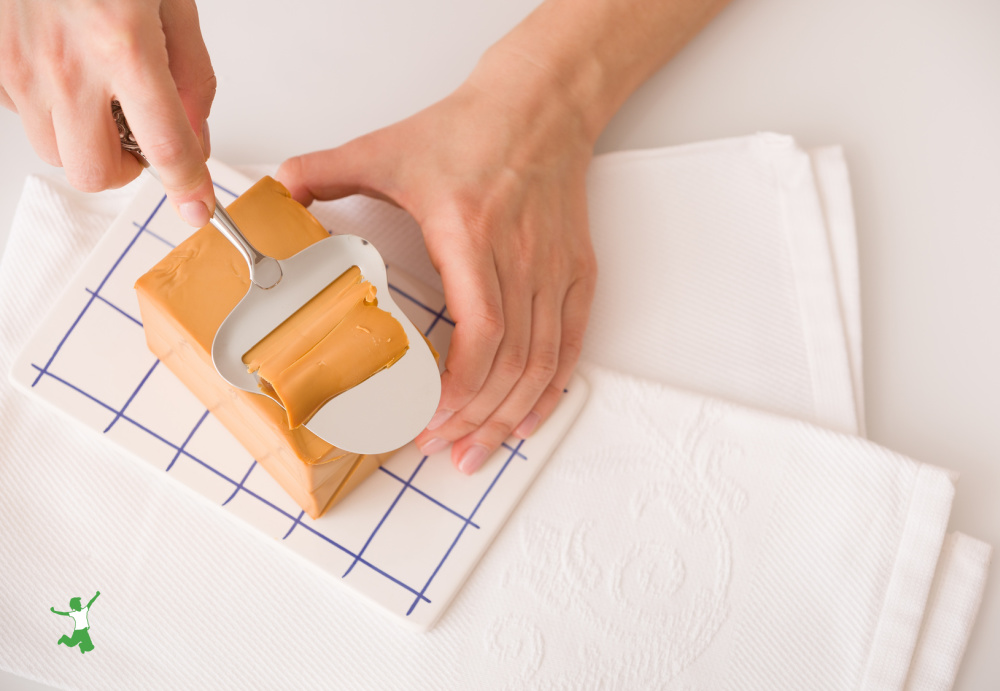
The resulting cheese tastes like a mild cheddar, but is softer to slice and made in a fraction of the time (normal cheddar takes 2-12 months to age depending on how sharp you want the flavor).
Believe it or not, that is all there is to it!
Gjetost cheese can be served as a sauce for pasta, similar to a creamy alfredo sauce.
You can also use gjetost, aka “homemade” cheddar cheese, to flavor vegetables or enhance the flavor of soups.
The idea is to boil it down to the desired consistency for the appropriate culinary use.
You may use the whey from either cow or goat milk to make your simple and easy “cheddar” as well.

Homemade Gjetost “Cheddar” Cheese
Easy recipe for homemade gjetost cheese, traditional to Norway, that tastes like mild cheddar but is made in a fraction of the time.
Ingredients
- 1/2 gallon fresh whey
- 1/2 cup cream preferably organic and grassfed
Instructions
-
Pour the whey into a large pan and bring to a low boil. Simmer uncovered for 2-3 hours stirring frequently until the whey has been reduced to the texture of thick gravy and is about 1 pint in volume.
* This is a great task to start right after breakfast and it will be done by lunchtime.
-
Stir in cream and continue to simmer stirring often until desired consistency is reached.
-
Remove from heat and let cool for a few minutes. Blend the gjetost cheese with a stick blender to enhance creaminess and serve warm immediately as a pasta sauce or pour into containers to refrigerate for later use.
-
Gjetost cheese will solidify a bit in the refrigerator and will last for about 1 month. It is delicious cold as a spread on crackers.

More Recipes for Homemade Cheese
How to Make Ricotta Cheese
Homemade Quark recipe
How to Make Whey and Cream Cheese
Cheesemaking: Common Problems and Solutions
How to Make Yogurt Cheese
Perfect Cottage Cheese



Hmm… the gjetost I’m familiar with is similar to what is described in some of the comments above. Something that can be slides and is carmelized/sweet. (Love it with apples!) Still, this sounds interesting. Might have to give it a try! 🙂
Hi, I tried to make this with left over riccotta whey and it tasted great when it was at room temp – creamy. I put it in the fridge and it became grainy and not as great. How can I stop this from happening? eat it straight away?
I made ‘gjetost’ last week with whey left over from making batches of milk kefir ‘cheese’, my resulting product was so salty I had to throw it out,ant ideas what I did wrong? I have been making milk kefir for awhile and love it! I also have growing kombucha and water kefir (which is not my favorite,but, tolerable.
I read that whey (made from clabbered milk) will last about 6 months in the refrigerator. But it already smells sour so what if it smells more sour now that’s it been in there for about 2 months?
How will I know when it’s bad?
What would the difference be if I didn’t use the whey from my other cheeses compared to using yogurt whey or my raw milk whey?
I make this using whey from other cheese like mozzarella. I do not understand why you have not from cheese-making?
I like to know why the whey gets sometimes slimy when I make quark
Since I am a Norwegian, I feel an urge to join the “name-discussion”. Gjeit means Goat, therefore you can’t make Gjeitost from Cows milk. Cheeses made from whey with added cream goes by the name: Fløtemyseost. Fløte = Cream, Myse = Whey, Ost = Cheese. All cheeses made from whey are mostley called “brunost” = Brown cheese, as they all have brown color. “Normal” cheese made from the curds are refered to as “hvitost” or “gulost” = White Cheese or Yellow Cheese. Gjeitost can be both white cheese and brown cheese, dependending on wether it is made from goats milk whey, or goats milk curds.