

Easy recipe for homemade gjetost cheese, a traditional food of Norway, that tastes like mild cheddar but is made in a fraction of the time.
A friend of mine recently mentioned to me that she was drowning in whey.
She had a gallon or two of raw milk that had naturally soured into clabber, and she wisely decided to use it in a traditional manner. She then separated the clabber into cream cheese and fresh liquid whey.
Hint: The raw cream cheese can be blended with a bit of maple syrup (or raw honey) and strawberries to make a lovely raw spread for a morning bagel.
But what about all that fresh whey?
I suggested that some of the whey could be used for fermenting probiotic vegetables and fruits, such as beet kvass or sauerkraut. But,
Even after culturing several dishes, however, there was still a lot to use up!
Help!
In situations like this, use the extra whey to make traditional Norwegian gjetost cheese (pronounced “yay-toast”).
This simple, healthy cheese is made by boiling down whey on a low temperature for a number of hours until it is reduced to a quarter or less of its original volume.
When the gjetost cheese is almost ready (the whey is almost completely boiled down), you remove it from the heat and add some cream to enhance the smoothness and flavor.
The color as it boils down gets darker and darker.
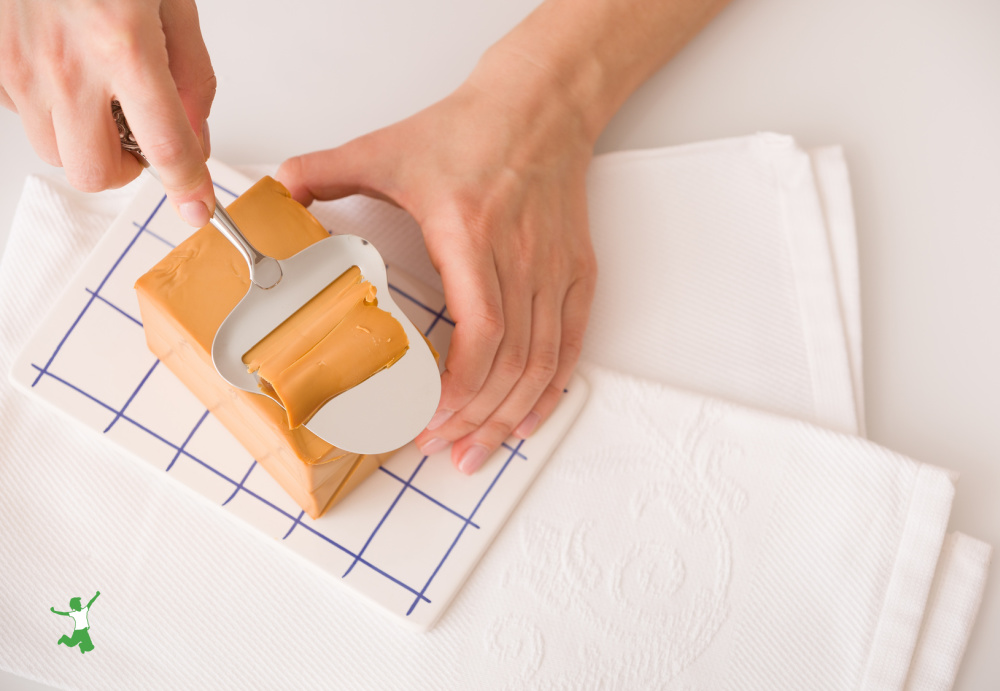
The resulting cheese tastes like a mild cheddar, but is softer to slice and made in a fraction of the time (normal cheddar takes 2-12 months to age depending on how sharp you want the flavor).
Believe it or not, that is all there is to it!
Gjetost cheese can be served as a sauce for pasta, similar to a creamy alfredo sauce.
You can also use gjetost, aka “homemade” cheddar cheese, to flavor vegetables or enhance the flavor of soups.
The idea is to boil it down to the desired consistency for the appropriate culinary use.
You may use the whey from either cow or goat milk to make your simple and easy “cheddar” as well.
Homemade Gjetost “Cheddar” Cheese
Easy recipe for homemade gjetost cheese, traditional to Norway, that tastes like mild cheddar but is made in a fraction of the time.
Ingredients
- 1/2 gallon fresh whey
- 1/2 cup cream preferably organic and grassfed
Instructions
-
Pour the whey into a large pan and bring to a low boil. Simmer uncovered for 2-3 hours stirring frequently until the whey has been reduced to the texture of thick gravy and is about 1 pint in volume.
* This is a great task to start right after breakfast and it will be done by lunchtime.
-
Stir in cream and continue to simmer stirring often until desired consistency is reached.
-
Remove from heat and let cool for a few minutes. Blend the gjetost cheese with a stick blender to enhance creaminess and serve warm immediately as a pasta sauce or pour into containers to refrigerate for later use.
-
Gjetost cheese will solidify a bit in the refrigerator and will last for about 1 month. It is delicious cold as a spread on crackers.

More Recipes for Homemade Cheese
How to Make Ricotta Cheese
Homemade Quark recipe
How to Make Whey and Cream Cheese
Cheesemaking: Common Problems and Solutions
How to Make Yogurt Cheese
Perfect Cottage Cheese



Thank you!
Im having real issues now. My husband is butting heads with me with almost everything that has to do with changing our eating habits. We’re starting the GAPS diet and besides him showing little interest in hearing anything Im reading him, he told our 2 yr old he didnt have to drink his stock with dinner if he didnt want to. When I tried to give my son his fish oil my husband said I should stop because our son didnt want it. Yes, its not the most pleasurable thing but its not bad at all and hes already taken it the last 3 days! Our son just felt like being difficult and then my husbands gonna argue with me about all this right in front of the kids! Has anyone else been met with resistance from family, in particular your husband, when trying to implement all these new things into your diet?? This is rough!
Definitely a difficult situation. I would suggest a private conversation after the kids have gone to bed where you can come to some sort of a compromise about it. The absolute hardest thing to deal with when trying to heal with food is resistance from a spouse.
Can you make this with whey leftover from cheese making, which has had rennet added to it?
Fresh whey definitely makes the best end result … not sure if it would work well with whey leftover from making another type of cheese.
I have been looking to this lately, as I’m just starting cheese making, and *ALL* the other recipes I found made the assumption that you WERE starting with whey left over from making cheese. Some even discussed the fact that different types of cheeses leave slightly different whey, and will result in flavor variations.
One site even suggested making your cheese (like Chevre), then making Ricotta from your leftover whey, THEN making gjetost from the whey leftover from THAT!
Happy to see this as I adore Gjetost. Tried it tonight with 1 gallon of fresh whey left from today’s batch of goat chevre. Got the entire gallon to reduce down to 1 pint, with a splash of cream, and it is still quite thin in texture. Not at all gravy like. Any thoughts? And how might I get it to the dark ochre, hard block I buy in the market?
Thanks for your post!
To get the dark stuff you need to have the caramelized milk solids which would result in a sweet end result.
If your pint was still too thin, keep reducing it down. You said you added a splash of cream, try a bit more … a full 1/2 cup.
Oh, and I see you made it with leftover whey … it works best with FRESH whey not leftover from cheesemaking.
Oh dear, now I am confused. How do you end up with whey (fresh or stored) unless it is leftover from cheesemaking? I can get whey from my kefir and yogurt making, but not as much.
Tasted the gjetost last night and it tasted like I had dumped a 1/4 cup of salt in! INTENSE. Not at all good (although I could discern some hint of the gjetost blocks I buy). And still thin after refrigerating. I’ll try again with more cream and reduce further, but I am afraid of even more saltiness with further reduction. Makes me wonder how much salt is in my goat’s feed as I NEVER add salt to my chevre. BLECK! But I am determined….
Thanks for your response!
Fresh whey would be separated from clabbered raw milk. You would get a lot that way.
You can’t use whey leftover from cheesmaking in the homemade baby formula either as it will wreck it.
Oh, this is timely. I do believe I’m drowning in whey.
I pay twice as much for raw milk as it costs to buy pasteurized milk at the grocery store. Before we started eating real food, my family and I had some issues with allergies and autoimmune disorders, so just to be on the safe side I make all of our milk into yoghurt. We end up with quite a bit of whey left over, especially when I drain it into Greek style yoghurt. Because it’s so expensive, I never throw my whey away. I’ve recently added grain back into our diet by fermenting it into sourdough bread, so I use some whey to make up the bread. And as others have mentioned, I keep a jar of whey in the fridge to add to my homemade condiments to ferment them. Sometimes the whey jar gets full (it’s a half gallon jar), so I will leave it to collect and try this recipe. Thank you! Regardless of whether or not it’s traditional gjetost cheese, it sounds lovely and I’m sure my children will love it!
I’m so grateful for your blog!!!
Hi Louise,
I make homemade bread from freshly milled flour all the time. Can you tell me how you use the whey leftover from yogurt cheese to make sourdough bread. I’m so intrigued! I would live to try it. I, too, make homemade yogurt and strain it sometimes for yogurt cheese spread. I’ve used leftover whey to cook with chicken and such, but haven’t tried it with veggies, for condiments, or bread making. I know you posted this over three years ago, but I’m hoping you might see my comment. Thanks!
Pondering if I can use one of my crockpot…it will boil if put on high.
Late to the party, but I just made a batch yesterday in my slow cooker. It’s hot hot here so I didn’t want to cook in the house. It took 12 hours to get reduced down, but worked just fine. I finished the cooking on the stove top to get to the desired consistency which took about 15 minutes. I like it soft and creamy and served with fruit. Or on my spoon. 🙂
Can I use the whey drained from homemade yogurt?
You can but you won’t get much cheese that way. You need a lot of whey to make this cheese in large enough quantity to warrant the time spent to make it.
Gjete – goat ost – cheese. I have had many varations of it, when I lived in Norway, and all of them used goat milk. Very tasty, but strong.
Thank you so much for this post. I make yogurt almost everyday as well as clabbered milk and aside from using the whey to make kimchi and fermented ketchup, I find myself drowning in whey also.