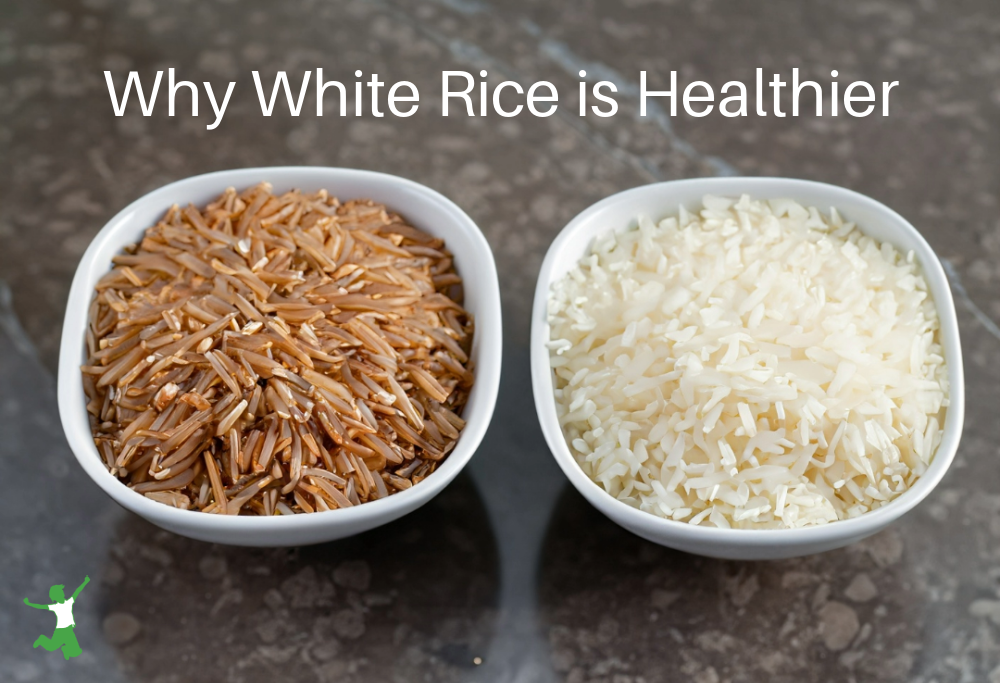

*
My last videoblog titled “Healthy Chinese” drew some comments from folks questioning my choice of rice.
Why was I using white basmati rice instead of brown? Isn’t brown rice the healthier choice, after all?
Ok, I’ll spill the beans, rice. Here are my reasons …
Truth is, neither my husband or myself have ever enjoyed brown rice. Every time we eat it, it just seems to not sit very well in our stomachs. It, well, uh, sits like a brick for lack of a better word.
I’m never one to force feed a food to myself that doesn’t intuitively seem to be something my body enjoys receiving – even if politically incorrect. So, for our entire married life (19 years and counting!), I’ve always served white basmati rice in our home.
White rice just seemed to digest a whole lot better for us. That to me was reason enough to choose it over the brown rice.
You are what you digest, after all – not necessarily what you eat!
End of story? Well, not quite.
You see, a few years back at the annual Weston A. Price Conference, I became familiar with a new book called Fiber Menace. The author, Konstantin Monastyrsky, was a speaker at the Conference that year and his talk about the dangers of a high fiber diet was really buzzing around amongst the Conference attendees.
Now, Mr. Monastrysky’s point about the dangers of a high fiber diet was in relation to high fiber from grains, not fruits and veggies. In other words, folks who eat a bowl of All Bran every morning to keep the bathroom visits regular are unknowingly ripping their insides to shreds.
The basic premise of Fiber Menace is that grain fiber plays a leading role in many gut related ailments including colon cancer.
When I first learned of this information, my preference for white rice over brown rice started to make more sense. Perhaps the brown rice didn’t digest that well because of all that fiber?
Chalk one up for the white rice.
A second piece of information which seemed to further validate my preference for white rice came in the Spring 2010 Issue of Wise Traditions magazine (p. 28-39).
Ramiel Nagel, of Cure Tooth Decay fame, wrote a thought provoking article in that issue on the devastating effects of phytic acid in the diet. Phytic acid is a very powerful blocker of mineral absorption in the gut.
In this article, Mr. Nagel writes that brown rice is very high in phytic acid and that soaking reduces this potent anti-nutrient by very little. He also maintains that the traditional method for preparing brown rice is never to eat it whole (with only the husk removed), but rather to pound it in a mortar and pestle in order to remove the bran layer too – coincidentally, the primary source of the phytic acid.
Nagel goes on to point out that experiments have shown that milled rice, the rice that results from this pounding process, has the highest mineral absorption from rice. Mineral absorption from whole brown rice is much less as the phytic acid from the bran greatly interferes with the absorption process.
Which is Better? Brown Rice or White?
So it seems that brown rice is not necessarily a healthier choice than milled white rice. Obviously, whether you choose one or the other is a personal preference, but I hope this information helps you sort through the decision with a bit more clarity.
As for me and my family, we will be sticking with the white basmati rice (white basmati rice is more nutritious than plain white rice). Intuition told me many years ago that brown rice was not something that was sitting well in my stomach or my husband’s and it seems that as the years go by, more research is coming forth to indicate that this decision was the right way to go after all.
Do you eat white rice or brown rice in your home? Why or why not?
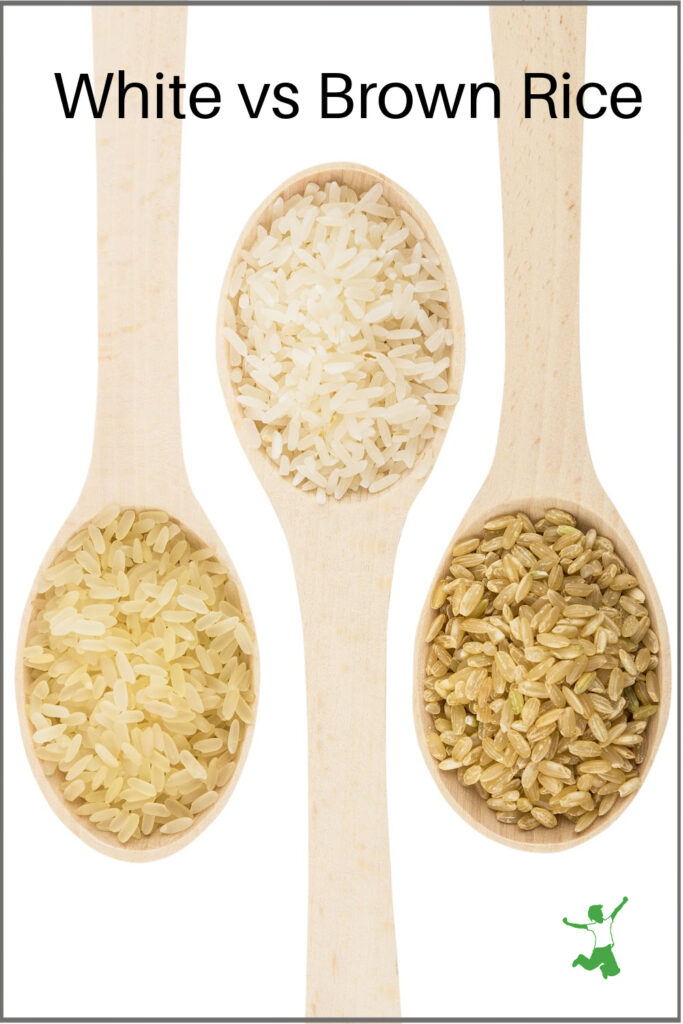
*I have linked this post to the Real Food Wednesday blog carnival at Kelly the Kitchen Kop and Pennywise Platter at the Nourishing Gourmet.
Sarah, The Healthy Home Economist
Picture1 Credit
Picture2 Credit
|
|


{ 192 comments… read them below or add one }
We eat both but I've been trying to switch to brown rice because I thought it was healthier. How often are we told not to eat white flour, white sugar, and white. . . .rice? This was very interesting information that you posted. I've been looking into the "grain issue" recently.
Hi Dorothea, you would probably very much enjoy reading Ramiel Nagel's article on phytic acid in Wise Traditions magazine. He talks not only about brown vs milled white rice but also about whole grain vs white bread. He doesn't advocate many grains much anyway – regardless of whether they are whole grain or not. But, one very interesting point he makes is that folks who eat refined grains sometimes can actually absorb more minerals in the long run from these foods than folks who eat only whole grain – due to the blocking action of phytic acid from the bran portion of the grain which is present in whole grains but not in refined grains.
Sarah, what about sprouted grains? – i had run into you you tube video on sprouted spelt a while ago- Does sprouting brown rice make it better, ie less phytic acid?
Sarah, we only eat organic white basmati rice.
We tried the brown, and felt bloated and uncomfortable.
This was a surprise, since everyone said brown was much healthier. Since I always trust my personal experience first, we gave up brown rice, and quietly switched to white. I did some research, and was also surprised to see that white rice was preferred in the traditional diet of all of the great rice eating countries, such as China, Japan, India, Korea, Thailand, Vietnam, almost everywhere.
Your article just explained the science behind that traditional wisdom.
We also avoid any grain with bran in it. Our current favorite is sprouted spelt flour which has been sifted to remove the bran. We get it from To Your Health Sprouted Flour.
I might add that we are devoted followers of Dr.Price and the Weston A Price foundation, eat a WAPF diet, organic or the equivalent, and eat the healthiest diet circumstances allow. As part of that diet, we avoid all bran.
You can’t seriously be going by what type of rice is more preferred in rice eating countries. The reason they choose white rice vary and they typically have nothing to do with nutrition. It’s more about shelf life and status symbols.
Absolutely. It has almost nothing to do with health and more to do with the fact That without rice these people will die. They eat white rice specifically because of how long it lasts.
you can’t seriously be so condescending???
Condescending how? Sorry but there is nothing condescending in either my reply or justin’s.
I try to stay away from grains as much as possible. However, it is hard and I find myself consuming at least some grains (usually wheat, which I think I have an allergy to – my skin seems to breakout every time I eat a lot of wheat). I am not a huge fan of brown rice, but I do like white rice, so this is good to know!
-Steph
I ran into food sensitivities years back and found that the hulls on several items were causing me problems. One being grains and the other chickpeas/garbanzo beans. I had eaten brown rice for years and my doctor explained what you wrote about above. I was surprised as we hear so much about the benefits of whole grains. After finding this out, I remember reading Heidi to my daughter when she was little and it mentions how Heidi used to hide her white bread rolls to take to her grandmother as her stomach couldn't tolerate the whole grain anymore. Made me realize that perhaps this is how this whole white bread came about. Perhaps part was appearance but perhaps part was digestion. I think the trouble that we have run into in modern times is that the flour/grains are being enriched and it is these enriched ingredients like the iron and bromide that have wreaked havoc on our health. The iron being a bad form of iron for us to ingest and bromide (which is no longer used) falsely occupying the receptor sites of iodine in our thyroid. It was interesting to me that I could eat chickpeas but not garbanzo beans (or vise versa ~ can't remember). The difference I found out was that one has a hull and the other doesn't. Can't seem to find this in any research but somehow my doctor knew. So, when we eat rice, we too eat white rice just not enriched white rice. Every now and then we eat brown but very rarely. Great article. Thanks.
the reason that grandmother, actually peter’s grandmother, couldn’t eat the black bread was because it was too hard. the white rolls were softer and that is why heidi wanted to take them back for grandmother to eat.
I know this is an old post, but just an FYI chickpeas and garbanzo beans are exactly the same thing, just different names.
They both have hulls(as they are exactly the same thing), unless the hull is removed.
I think this is a very interesting topic. I know my family prefers white basmati but I still can't help beleive that well soaked brown rice has more nutrtion. I also wonder about the high glycemic rating… We don't eat very many grains so I guess I might as well go with the white basmati.
The glycemic index of the white rice becomes a nonissue as long as you eat it with a lot of wonderful, healthy fats. For example, the white basmati rice that I make into fried rice in my Healthy Chinese videoblog is cooked in copious amounts of coconut oil. Cutting up a few fried eggs into the fried rice to make egg fried rice would be even better.
Sarah – how does jasmine rice compare with basmati, nutrition-wise? And thank you for helping me not feel guilty anymore about not eating nasty brown rice.
Great point about the glycemic index. In China, rice was never eaten by itself, but always mixed with foods that had been fried in pork lard, which was the traditional fat used for cooking.
Hi Kay, it is my understanding that jasmine rice is a long grain rice similar to basmati. Basmati rice originated in India, I think, whereas jasmine is from Thailand. But, since they are both long grain, they would compare favorably to the basic short grain white rice nutrition-wise.
While these two rices have similar aromas, they have many differences.
Jasmine rice:
• Originally from Thailand, featured in Southeast Asian cooking
• Moist and sticky texture
• Shorter grain
• More economical
• Glycemic index: 109
Basmati rice:
• Originally from India, featured in Indian, Middle Eastern, and Persian cooking
• Dry and fluffy texture, grains don’t stick together
• Longer grain
• More expensive
• Glycemic index: 58
http://www.thekitchn.com/whats-the-difference-between-j-1-93814
Hmm…might need to try out the white rice again. I know we've seemed to have minor issues with brown — not enough to have switched yet. We were actually told we were allergic to it at one point (by an acupuncturist/nutritionist via muscle testing). So this is all good to know.
Thanks for posting! I hadn't heard any of that yet! As we just went grain free it doesn't effect our family so much but I will definitely mention it to my Mom! Thanks!
.ambre. latest post:Pizza With A Grain Free Twist
Our family is crazy for jasmine rice! Glad to know it's not a bad option. We don't often have rice, but this gives me an idea for supper tonight….
Heidi
Hey folks .. there are couple comments that haven't come through yet for some reason. Probably a Google glitch. Hopefully, all should be caught up soon.
Sarah-do you soak the white rice? I remember my pastor's wife (who is from S. Korea) said that the best way to make rice was to soak it and then rinse it thoroughly, which is how she made her white rice in Korea.
I haven't soaked white basmati rice before. I'll bet it does improve the end product, though. How long does she soak it for and does she soak it in plain filtered water? I will have to try it next time I make it.
I’ve been soaking my white basmati rice like Nourishing Traditions would soak brown, up to 7 hours in water and a little whey. Then I drain it, rinse it and cook it the usual way, but generally in some broth or stock. It’s wonderful! I figure the soaking has to help digest it even more, right? Maybe it’s an extra step I don’t need to take, but sounds like a good idea.
It is seven months since I first read this about white vs brown rice and I have not gone back to brown yet, but do see that WAPF and NT recipes still seem to prefer and suggest brown over white. Have they not read Fiber Menace? On the soaking, I was in Turkey last summer, talk about fabulous food! and when I got back home bought a Turkish cookbook because that food totally hit a chord with me and they use of course, white basmati rice but they not only soak it first, but then continue to rinse, soak for a few minutes, rinse again and continue with this process until the rice water is no longer milky, but clear. Then they let it air dry before sauté ing it in ghee before adding the stock to it. Rice pilaf and all it’s variations from this cookbook are so very good and according to your article here, much more nutritious.
I found that soaking white basmati rice improves digestion and taste! I only soak in distilled water. I’m amazed how important the type of water used is at achieving the best results from soaked grains. I have big issues with beans and lentils, even soaked. I decided to soak in distilled water with vinegar rather than filtered water. I had NO gas or bloating AT ALL. i was so amazed.
I have a bag of brown rice in the pantry that has been there for who knows how long! I think I will finally throw it away. My family has never liked brown rice… I'll stick with my jasmine rice! We love it in jambalaya
I may be showing my ignorance here, but I have never used white because I thought it was bleached. Most grains are not that white naturally.
Hey Sarah:) It's been a while!
Hey Erin,
I just wanted to say that as far as I know, the white rice imported from Asia is naturally that white. I’ve seen that rice in every stage of it’s production.. the only bleaching it gets is from the sun when they spread it out to dry. Also, no-one I met in the Philippines had ever even heard of brown rice!
Cheers!
I probably should have added that I don't eat the brown rice(that I thought was healthier) very often because…drumroll please…it doesn't sit well with me.
I've come to a similar conclusion and no longer feel guilty about choosing white rice over brown. I became convinced after reading the book "Japanese Women Don't Get Old Or Fat".
I serve white rice with TONS of grass fed butter melting on top.
Hi Kelly, thank you for that fantastic suggestion! I didn't know that sprouted brown rice was available! I'm sure that would work very well as a modification for folks who really prefer the more robust flavor of brown rice over white .. the sprouting would go a very long way to eliminating the phytic acid problem in the bran and make it much more digestible for sure.
I've been a brown rice lover for at least 35 years since my dad was very fond of it and I guess it carried over to me. But I like all kinds of rice depending on the cuisine. We like Thai food quite a bit and it really needs the sticky white stuff. I have had to cut way back on all grains though as the older I get the more picky my body has become about what I put in it.
I don't mind brown rice and none of us have trouble digesting it (as far as we know anyway), but I'll bet my family would love it if I served white rice again. We have been mostly eating Japanese germinated brown rice, which is a sprouted rice, maybe that's why it sets well with us… (Here's my post where I talk more about it:
It's always so interesting when you find out something you thought was "bad" is actually OK, as in this case or GOOD for you, like BUTTER!
Kelly
Hi Sarah, what about soaking the rice with something like lemon juice for a time to help the abosorption of minerals? Wouldn't that make a difference? We've started soaking to help cut down the cooking time and my next step is to soak with something like lemon juice or rejuvalac
We've been eating brown rice for years, not sure what its doing to our bodies. Praise the LORD, we are healthy, and stay away from doctors.
I'd love to hear what you have to stay about soaking. I'm currently taking the GNOWFLINS ecourse which is talking about the benefits of soaking grains.
blessings
carmen
Wow, I love learning new things. I prefer the taste of brown rice but one of my boys always wants white basmati rice(Grandma has that kind). It never occurred to me that it may b/c he digests it better. After a severe reactions to MMR and subsequent GI/bowel issues, his digestive health is so important. I guess from now on I will be making two kinds of rice. Thank you for the book recommendations.
p.s. we know longer vaccinate, mommy wasn't so educated when her boys were little:(
So If not grains, what would a person eat for breakfast if not cereal? just wondering.
Eggs, bacon, kefir or yogurt smoothies are a few favorites at our house. Coconut flour pancakes are really awesome too.
Thanks so much, Sarah, will try coconut flour, I love the coconut oil too.
Welshire Farms turkey bacon, french toast made from sprouted bread, lotsa butter, cinnamon, maple syrup, free-range eggs. Raw milk. Yum
Saute`d veggies (organic of course) and oven-baked potatos, served with a pastured egg on top, all cooked in plenty of your choice of traditional fat, such as olive oil, coconut oil, bacon fat, or BUTTER!
This is what we had for breakfast this morning.
Yes, a prolonged soaking with a starter medium like whey or lemon juice would reduce the phytates. 24 hours would be a good timeframe. Soaking with plain water doesn't do much though.
Interesting. I eat organic brown basmati rice from our family farm in Arkansas. I have never like white rice, even as a child. I felt like it created a kind of "glue" in my mouth as I chewed it. I'll have to try the jasmine rice soon and see if that's better to me. My family might like it better as well…I've never given them options when it comes to rice because I've always believed brown rice compared to white rice like whole grain flours compared to white.
We eat both brown and basmati rice, but I often "doctor" the white rice by cooking it in chicken broth and adding lots of butter to it! Actually, I do that to the brown rice, too
Sarah,
My husband will love it if we switch back to white rice. !! Have you seen this method of preparing brown rice: http://www.kitchenstewardship.com/2010/04/01/phytic-acid-in-rice-reduced-96-with-accelerated-fermentation/
It's interesting! I'd love to know if it changes anyone's "sitting with them" for those who aren't digging the brown rice.
What an informative post! I always like to find out what is healthy to feed my family as we are trying to avoid doctor visits via healthy dieting. I grew up with long grain Jasmine white rice and it was hard to switch to brown rice (thought and heard it was healthier). I tried and gave up. After reading your post I remember only "poor people" eat brown rice from our culture as they are not refined (now I know it is also hard for the digestiv system, thanks to you). And we only soaked short grain rice overnight to improve the cooking of that type of rice.
Sarah! Wonderful post and I want to share it on my Thoughts of Friday blog post! What I love even more than the information you discovered about the white rice is that YOU were eating Intuitively which is something I have been doing and trying to explain to people for a very long time! LOVE IT!
Alex@amoderatelife
Ah, you've touched a great point for this white rice loving family! We enjoy a good side of white rice and I genuinely feel that it is not damaging to our health in any way. Traditional cultures did sometimes remove some of the hull when they ate their grains. There's no reason to think we can't do the same. Brown rice never worked for our family, and using white has been much easier and more enjoyable.
Hi Sarah,
How is white Jasmine rice more nutritious than plain white rice?
We eat brown rice, but I now use the method that Rami described in the article, the one that Katie mentions in her comment above. I also cook it in bone broth and serve with lots of butter.
It is interesting though. I worked with 2 girls, one from the Middle East, and one from the Phillipines. They both told me that back home, it was traditional practice to pound the rice and feed the bran to the pigs. They also did not soak their rice. Nowadays, they just buy white rice.
My dd has cavities, and we have to be careful of grains. I have consulted with Rami, and it is his suggestion that I freshly grind my grains, and then sift and large portion of the bran out to further remove phytates.
hi sarah, thanks for another great post. I am a retired chef in NYC (20 year veteran), cooking instructor and stay at home mom to two young children – 2 & 5 years. Fried rice is an economical, quick pick-up, delicious treat in our house as well. i wanted to share some of our family recipe ideas for fried rice that i feel would bring the dish to another level. 1. After you've added the coconut oil to the pan, add fresh garlic and ginger – then the egg, then the rice. (you can also add crispy almonds and chiles for texture and heat 2. adding veggies like shredded carrot, thinly cabbage and broc will impart a sweetness. 3. add any protein – fish, pork, beef, chicken, etc 4. finish with an "asian sauce" that can be used as a sauce, marinade or vinaigrette. keep this sauce in a clearly marked plastic squeeze bottle in the fridge for easy use. A balanced blend of fermented shoyu, fish sauce, rice wine vinegar and fresh lime juice. when you want to use it as a vinaigrette, gently heat coconut oil and emulsify. 5. When all is cooked through and rice has taken on the sauce. turn off the heat and add scallion, fresh cilantro and thai basil (regular basil will do). an extra squeeze of lime juice is always nice when serving. thanks again for all the info. i look forward to reading your posts on a daily basis. be well and enjoy!
Thanks so much for writing this post! I like the taste of brown rice, but I usually prefer white rice, especially for fried rice. I know brown rice is usually recommended, however, in India I believe rice is traditionally milled first, which would indicate the rice bran is not as good for you.
It is definitely food for thought, but this makes me feel a lot better about serving white rice to my family
I'm not a huge grain eater, one way or the other, but when I eat rice, I prefer white. I know that I've taken a little heat for this from the health food police and felt mildly ashamed, but brown rice just never tasted very good to me. Thought-provoking post, thank you!
We eat both. I prefer brown (taste, texture, and GI wise) and my husband prefers white. I use white for recipes such as Spanish rice, when brown rice just isn't right, and if we're having plain rice as a side dish, because I think it's more flavorful and I get Gestational Diabetes (and I'm often pregnant) meaning I must watch how much fiber/protein/carbs I consume and in what ratios. But we'll have white rice with stirfries or mixed into other things.
In my switch to traditional foods I find the whole grain/properly prepared grains and rices to be the most difficult thing to understand. The WAPF website is a bit difficult to navigate to find information on what to eat in these areas. For instance, is all pasta bad? Is whole what pasta worse than refined? What about things like quinoa and couscous?
Hi Ashley Jane, pasta is not the greatest food by a long shot. We only have it on rare occasions in our home. Unless you sprout your grain and then make the pasta yourself, I don't see it as anything but a hard to digest, improperly prepared grain filler food at best. Couscous is not soaked or sprouted either so would be in the same category as pasta. Whole wheat pasta would be just as bad as refined IMO – probably worse as the phytic acid in the bran would block what few minerals could be digested anyway. Quinoa is fine as long as it is soaked or sprouted first. I am not a big fan of grains anyway and when you do eat them, great care must be taken in their preparation.
Quinoa is not a grain. It is a seed.
M1ssDiagnosis\’s last post: Coming Back Stronger by Drew Brees- A Book Review
A grain is a type of seed. For example, the kernels of corn are seeds but they are also a grain.
A grain is a type of seed, true–but not all seeds are grains. Quinoa is a seed that is not a grain.
Hi Paula, according to Nourishing Traditions Cookbook, quinoa is indeed a grain (p. 475) full of antinutrients like other grains and as such requires special preparation such as sprouted or soaking before eating.
Sarah, The Healthy Home Economist\’s last post: How I Healed My Child’s Cavity
I was taught to wash the brown rice by soaking in water and "scrubbing" it with my hands, rinsing and repeating until the water stayed fairly clear. This would "polish" the rice and removed a significant portion of the bran.
My nutritionist would agree that there is little nutritional difference in white rice or brown rice grown and processed in a similar way. If they start selling GMO rice…that's a whole new ball game.
So, to clarify, should we soak white rice? Or just brown rice? My husband's Indonesian, so we eat tons of white rice at home and I'd like to know if we should soak it?
It is my opinion that you do not need to soak white rice as the antinutrients are in the bran portion which has been removed. Those that choose to eat brown rice should definitely soak it.
In the 70′s we had friends who were from Iran. The wife would cook Persian food for us sometimes. She soaked her rice and always used white (but never white bread as that was “for sick people”). Her rice was always *perfect* with ever grain separate and fluffy. I don’t know exactly what she did to it but it was good! I’ve never soaked my rice and we’ve been using brown rice for years as I’m very carb sensative and turn it to sugar very quickly. Not diabetic and I don’t want to be one, either. I don’t eat just brown rice, though – I put half brown rice and half barley so it’s not so *heavy*. I read a study a couple of years ago that said that barley has a unique fiber that is uniquely good for humans. Does anyone know if this is true? Does pearled barley also need to be pre-soaked?
Hello Lynne
I am not sure if you will get this information now, but we use white basmati rice all the time ( We are from India). The trick to get each grain fluffy and separated is you soak the basmati rice for 20 mins and the ratio of rice to water ( 1: 1 1/2).
So, for 1 cup rice, heat the oil and put any spices you wish to( we usually use 1 stick of cinnamon, 2-3 green cardamom, 1 clove and a bay leaf) and then put 1 1/2 (one and a half) cup of water. When the water boils, put salt and the soaked rice(drained completely). Let it come to boil and leave it on medium flame until you see most of the water evaporated, meaning, when you can see the layer of rice rather than water. Cover it and simmer it for 12 mins. Turn it off and leave it without opening. Befroe serving, mix it lightly and you will get fluffy and separated rice. HTH.
Thanks for these instructions! I will follow them tonight! I hate brown rice and have felt guilty about using white, although it didn’t make sense that most Asian cultures use white and they aren’t dropping over from it. Now I know how to cook it! Thanks again.
I have been wondering for a long time now which is worse: white or whole grains. I still wonder, but appreciate this latest addition to the issue. I find few are talking about it.
I thought that "polished" rice was introduced in the late 1800s by Europeans to Asian countries, and resulted in an epidemic of beriberi from vitamin B deficiency. Isn't the whole reason we discovered vitamins was that we started refining grains and realized diseases resulted from the missing nutrients? Perhaps it was from overreliance on grains, but this is still a very confusing issue …
I thought this was old knowledge, as I learned it in Jr. High. I have been scanning the posts here for some information relating to this issue also, and am disappointed that, having found my question asked by someone else two years ago, no answer has been given by the educated people otherwise frequently posting here. I hope this reply sparks renewed interest in this question and results in an answer.
We've used brown rice for years, long before I knew anything about phytates and grains. I remember being pleased to read in Nourishing Traditions that brown rice was very low in phytates, so didn't think much about it. Now with Rami's articles etc I'm rethinking the rice issue. Thanks for the helpful perspective!
Just wondering, what is it about long-grain rice that makes it more nutritious than short-grain? Especially if both are "white"? Is there anything else to look for in choosing rice? I was at my local Indian foods store and was amazed at the types and preparations of rice available. Maybe it's just a brand thing. Any tips appreciated.
Hi Celeste, I was told by my Ayurvedic MD some years ago that long grain white basmati was more nutritious than short white rice.
We eat more of white basmati rice now, especially after my older 4 yeal old daughter suffered from numerous cavities. Yes, the mainstream health view is to actually eat more brown rice, and that what we were doing, as well as my friends. But after reading Rami's book, we avoid lots of whole grains now. I used to bake a lot with whole grains (soak the flours) but I guess this was not enough. My daughter's teeth are much better now that whole grains are limited.
This is interesting and very good news for me, my husband is Vietnamese so making jasmine rice is an everyday thing for us. I also love basmati when making anything mexican but, too always tried to use brown.
Very interesting post! I live in Japan, and used the sprouted brown rice for awhile, but it is very expensive. Then I found out that “partially milled” rice is also popular here. You can get rice with 30%, 50% or 70% of the bran removed. You can also get rice with all of the bran removed, but the germ intact. This would seem like the healthiest choice, as you get all the nutrients in the germ without the phytates in the bran. However, I worry about the question of rancidity — wouldn’t the germ go rancid very quickly without the protection of the bran layer?
We eat rice every day, often 2-3 times a day, so it is an important food. At the moment we are using the 70% milled rice, which I soak overnight in plain water. I do worry about that 30% of the grain containing phytates, though. After reading your post, I am thinking that we might be better off with plain old white rice! Which means that my Japanese husband and father-in-law were right — sigh!
At the same time, Japanese people do not have the greatest teeth — lots of ppl have terrible crowding. So there is definitely something wrong with the diet. It may be the white rice, or maybe the soy …? Or modern deficiencies due to too much sugar, etc.
Would love to hear your thoughts on the partially milled rice.
PS I have another weird thing where I like eating brown rice with a vegetarian meal, but can’t stand eating it with any meal containing fish or meat — it just doesn’t “feel” right.
Hi Sarah,
I think the biggest point is, to listen to your body regarding any foods you eat. I’m assuming that any rice or pasta that says “enriched” are the ones to be avoided, and those heavily promoted “whole grains” that seem to cause more trouble, in the end…excuse the pun, fall into that category, as well. Funny how years ago I had an eating disorder and would NEVER eat anything with fat in it and always, always tons of bran: bran muffins, bran cereals, bran bread etc. I wasn’t safe to be in a closed space with, if you get my drift (ouch…sorry). All of this makes perfect sense to me now. I got a clue about this a few weeks ago on a site called “Ask Sally Fallon”; they were talking about just this issue, and, again, everything I thought I knew got spun around. Question: What’s the consensus on risotto and wild rice? Thanks for the great post!
Nourishing Nancy\’s last post: Don’t relax yet- Food Bill S510 is back on!
Hi Nancy, not sure about wild rice. Soaking would be necessary for sure, I would think as wild rice is rather fibrous in my experience.
Thanks Sarah, will try the Coconut flour for sure, and I also love the Coconut oil.. ya, and up till now it was dont eat bacon, dont eat butter and dont eat this or that and eat lots of grains. well until I started reading these posts , which really changed my thinking on eating. but with moderation..
Really appreciate the Healthy Home Economist….
Hi Sarah — very interesting, I’ve not heard this before but it all makes perfect sense. We love white rice although have grown to love brown. The phytic acid is a new concern re. digestion, so the less the better. Thanks so much — I always learn a lot from you!
Sally\’s last post: It Doesn’t Get Any Dirtier Than This
Thank you Sarah for “giving me permission” to eat white rice again! No matter how I soaked brown, cooked it, etc. it just never tasted all that great and now I know why! I missed my white rice terribly and now I can eat it again without guilt! White basmati it is from now on!
not sure on the white basmati being more nutritious than plain/short grain white rice.
I’ve not seen any data on it .. just was told this by an Ayurvedic doctor some years ago. I suppose if I was given a choice of short white rice (instead of basmati white) and brown rice, though, I would definitely go with the short white rice.
Sarah, The Healthy Home Economist\’s last post: Video- All About Duck
Hi Sarah,
I’m really enjoying your site (love the videos!) and it was nice to see another post advocating white rice … I’m also a fan of Perfect Health Diet which also recommends white rice over brown to avoid the toxins.
Haiga white rice is considered by some to be a middle ground where it is milled to remove the bran, but still retains nutrition from the germ.
I love the aroma and taste of basmati rice and I had saved this info regarding the Ayurveda perspective:
“According to Ayurveda, Basmati rice is the king of all rices. Basmati rice is saatvic or pure, it balances all three doshas, it is nourishing for the body tissues and it is easy to digest. Aged Basmati rice has an aroma and flavor arguably the best in the world.
The central concept of Ayurvedic medicine is the theory that health exists when there is a balance between three fundamental bodily humours or doshas called Vata, Pitta and Kapha.
Vāta or Vāyu (wind) is the impulse principle necessary to mobilize the function of the nervous system. It affects the windy humour, flatulence, gout, rheumatism, etc.
Pitta (bile) is the bilious humour, or that secreted between the stomach and bowels and flowing through the liver and permeating spleen, heart, eyes, and skin; its chief quality is heat. It is the energy principle which uses bile to direct digestion and hence metabolism into the venous system.
Kapha (phlegm) is the body fluid principle which relates to mucous, lubrication and the carrier of nutrients into the arterial system.”
Thanks,
Mark
We have been having a debate between brown rice and basmati for years!! I got on the brown rice bandwagon a while ago and never really noticed a problem with it. My partner, who is from East Africa insists on basmati and that it is very good for us.
Thank you for this. I have been feeling very guilty for feeding my family basmati rice, which I thought to be something which was not good for us. I will tell him that I am now much happier with basmati.
Such a great post–it’s time for the closet white rice lovers to come out!!! I have been known on cold, winter days to cook up a pot of white rice for myself and consume the whole thing, with lots of butter on top. It’s a real comfort. Just the other day my husband mentioned how nice it was to have white rice–which by the way seems to go much better with kim chee.
Sprouted brown rice is very good both taste wise, texture wise and in the way it digests, but it is expensive. I did try to sprout my own once and ended up with a pot of rice that to my husband and me “tasted like mash gone bad”. Bad taste, bad bad smell. Probably I did something wrong, but am not interested in trying it again.
Thanks for the encouragement to not stress over the white rice. It is after all , not the main part of a meal.
Keep up the good work!
We eat long grain white rice. For me, the versatility for the price is the biggest factor…I make a risotto dish with it, coconut rice to go with fish or stir fry and it can be used in all sorts of rice dishes…it can be Spanish rice or used in soup…everyone in my house loves it AND you can get a WHOLE dinner for 4 people for only 1 cup of rice! YAY!
Nothing is a bargain or healthy if you can’t even get it IN the body…my kids probably would eat brown rice, but again, the versatility of the white makes it our top pick
Depends on what I’m eating with it. I tend to eat low carb, but when I have rice with Chinese food, or Thai food, I go with brown. More flavor. With Indian I do white basmati. With Japanese, I do white sticky rice (although I prefer to get just sashimi). At home I have a mixed rice blend, which also has wild rice (not technically a true rice). Covers all the bases.
Diann\’s last post: Smoothie Test- First Attempt And- Second
I have been trying, to varying degrees of success, to eat grain free for years. As family economics wax and wain we sometimes are eating some grains. Having spent some time living in the hippie, vegetarian world I am no stranger to brown rice. But as you say, It just doesn’t sit right in the stomach. Maybe things that our bodies can’t digest are should not be eaten.
I just recently read an article somewhere which said not to eat white rice (or use rice cereal for babies) because it spikes insulin levels. Yes? No? Maybe?
Hi D, if one has blood sugar issues, the white rice (or even brown rice for that matter as brown rice or any grains spike insulin also) should be consumed within the context of a high fat sauce such as in Asia where rich peanut sauces are made with whole coconut milk for example. This levels out any potential insulin spike quite well.
Now I am all sorts of confused! hahaha, I read the article a few weeks ago at Kitchen Stewardship and soaking brown rice, and my fiancé and I have been loving it! He grew up with jasmine rice and misses it sometimes, but mostly we are loving brown, the feel and taste with everything. I grew up with instant rice (which made trying to make real rice really funny!) and I am not quite certain which to choose now… I generally fry any rice I cook in a bit of coconut oil or butter before I serve it so I guess that helps.
Bottom line is…? Don’t be afraid of white if you like it better?
Another question. What is your opinion of brown rice baby cereal? Some of the parents of my infant day care babies are just starting to feed solids and, of course, they are instructed to start with cereal by their brainless, nutritionally uneducated (or should I say mis-educated) pediatricians. Is brown rice a better choice in this instance, because of the insulin issues? No history to go by with a baby, so . . .
I’ve tried until I’m blue in the face to encourage parents to start with pastured egg yolks, meats and a little mashed avocado. I just KNOW they think I’m a nutjob for suggesting such foods. I have also copied the WAPF article Nourishing a Growing Baby at least a hundred times in the past year and given it out to parents, but I don’t think they even read it because they all come here telling me how they started the kid on cereal. Grrrrrr. I’m just curious to know if the brown rice is a better choice in this regard.
Oh, and I should add that I’ve also tried to encourage the parents of these babies to always add fresh butter to their baby foods before serving, no matter if it’s fruit or veggie. They don’t get THAT either. They all say “oh my, too much saturated fat”. . . double grrrrrrr.
I personally never used rice cereal … brown rice or white. Babies shouldn’t be getting rice cereal. Period.
I love both Jasmine and Basmati rice…. seasoned and plain. Lime Chilli Jasmine is to die for as is Cumin Basmati. What do you think of long grain & wild rice ? I LOVE wild rice. Never cared for brown rice. it’s disgusting IMO. It’s sticky and heavy and not enjoyable at all to eat
I like long, firm rice that’s not broken. I eat a lot of Indian, Thai and Japanese food so I DO love my rice.
I have never really enjoyed rice for my entire life…..even with copious butter or coconut oil ontop. It just tasted like a barely edible filler food for me alongside Indian or Chinese dishes.
However, I recently discovered that rice is absolutely delicious and digestible for me when it is cooked with chicken broth instead of water…..I now enjoy white and brown rice! Chicken broth has completely transformed my experience of eating rice!
Great Article!
Hello,
I spent a year in the southern Philippines with my family when I was 14 (2001). My health conscious mother tried to find out why no-one was eating the ‘healthier’ brown rice. When she asked about it, everyone gave her confused looks. They didn’t know what brown rice was. The rice that was grown there was naturally white. Since then I have had no qualms eating plain white rice. Of course, I do not consider Uncle Ben’s to be rice (tastes like rubber to me). My preferred brand is rooster rice.
I just found this post via some recommended ready suggestions at the bottom of a recent post. Just wanted to share a bit about how I discovered that white was better than brown rice myself.
Our daughter suffered from constipation with no medical cause for over 12 months. It took us 15 months to go from our Primary Physician, A few Naturopaths, a Homeopathic Team to a Traditional Chinese Herbalist. The herbalist’s dietary recommendations were to only eat white rice and grains to give our daughter a rest to digest very simple things; plus a diet high in vegetables, low in sugar, cooking from scratch, etc. Less than 6 months later and her constipation is cured. From pooping only once every 10-14 days to once a day now, I am grateful and amazed.
The specific rice she recommended is Haiga Rice, which is a partial white rice, with most of the bran removed. Short info: http://www.chefshop-gourmet-food-store.com/3197.html
We have used it primarily for the past 6 months (as our budget allows) and are happy with the results (health wise)!
Holli\’s last post: What Does Mama Do
We have been eating brown rice, and I feel so guilty about forgetting to soak the rice. I have 2 boys, one with autism, and obviously we should limit the rice. From now on I will soak the rice at least overnight or longer, and also try to do white rice when he has his “Rice Day” on his rotation diet. I notice as we merge more towards an SCD dietary approach, he is able to start gaining weight back, after going GFCF since last year. He had lost weight and was looking downright skeletal, but as we take care of the yeast issues this is resolving himself. His appetite is now back full force, and I am scrambling to cook enough to keep up with it. Perhaps one day we’ll get to the full SCD diet and he will be able to eat dairy again with no issues.
Wow! Thanks so much for that info! I have always TRIED to do the brown rice thing but, like you, it has never set well on my stomach and I never understood why. Makes more sense to me now. I will relax and enjoy my white basmati.
I realise this post is old, but I had to make a comment. I too have problems with brown rice. Realised it was the fibre part & my guts hated it (as well as rye). I also remember reading that the fibrous part is where mould can reside, so that is one reason I went back to white basmati years ago. Moulds can very toxic especially if you have a less than optimal immune system. Never had a problem with white basmati rice particularly if lots of healthy fat in the main dish. I’ve got an Italian friend who has rice every day, often twice. She’s very healthy & full of beans (rice!)
On a forum, I stated the following…
“I believe that white rice is naturally grown as white rice in SE Asia. They don’t remove anything from it. I could be wrong, but all they do (when I have seen it in SE Asia) is pick the mature rice stalks and hit it hard to separate the rice “kernals” from the stalk. And then it’s rice white. They also grow red rice there, but I believe it is done the same way. I could be mistaken though. ”
And this in the response that I received…
“But wouldn’t this mean that white rice has the same anti-nutrients in it as brown rice? Same for white wheat flour. The fact that it’s white doesn’t reduce the phytic acid. So it would have to be treated like brown rice anyway? ”
Please give feedback on this, as my husband is Indonesian and eats white rice everyday.
This subject really interests me. My grandfather lived to be 103 years old. He cooked white rice (steamed) every day of his life and ate it at least once a day, he loaded his bowl with white rice, lots of butter and milk. That is how we children ate it too. So yummy!!!
Hello-
I am new to this post, even though I realize its very old. I have a question: if this is true of brown rice, why isn’t it also true with other grains such as wheat? Wouldn’t that same reasoning make white flour better than wheat?
Thanks so much for posting on this!!
Please read my post on “Whole Grains Cause Cavities?” which explores this and why sifting flour to remove a portion of the bran is a good idea.
http://www.thehealthyhomeeconomist.com/2010/11/whole-grains-cause-cavities/
Sarah, The Healthy Home Economist\’s last post: The Weekly Comment Spotlight
Is the bran not good for anything? Just throw it away?
I follow Weston A Price.Besides the soaking of the grains.I wanted to show u this by Sue Becker and get your thoughts on it. Their is benefits to phytic acid.
http://info.breadbeckers.com/phytic-acid/
I saw this by Sue Becker a number of years ago. This article has many flaws and I might add that Sue Becker herself has suffered from colon cancer in recent years … one risk of eating too many improperly prepared grains for a long period of time. Perhaps phytic acid can have a short term benefit as Sue points out .. but eating it day in and day out for years is a terrible and constant irritation to the colon with many risks for colon disease of all kinds. In addition, there are other reasons for preparing grains traditionally .. phytic acid is but one reason.
Sarah, TheHealthyHomeEconomist\’s last post: The Weekly Comment Spotlight
Do you have any studies showing that grains are unhealthy? And show it to be a link to colon cancer? Evidence that dietary fiber reduces colorectal cancer is mixed. Im just trying to understand this better.So unless they are sprouted or soaked grains shouldnt be consumed? Ive read a lot on phytic acid & dont find it to be an issue for EVERY BODY. Im not for the paleo diet its all based on theory.I like the basis of it but not the whole grains arent meant to be eaten.In the book “Healthy at 100″ for John Robbins describing the eating habbits of several communities in the past century around the world with the longest living healthy documented records ( In Peru,In Caucasus , In Japan ….) He describes Whole grain as one of the daily main foods with almost zero incidence of autoimmune,cardiac disease, diabetes or cancer and almost all of those long living people are astute at their later years with good vision and healthy teeth . Now if Whole grain itself is the problem, those people will not be so healthy. I eat sprouted bread on occasion, but half to say its like eating cardboard! Not sure how u can say that her colon cancer was caused by grains.Maybe it was hereditary we just dont know. I think its refined grains,junk food, processed foods like lunch meats,nitrates, and chemicals that are in our food today that are causing theys health problems, not healthy 100% whole organic grains. Like i said i follow wapf we eat whole fat butter,milk,cream ect…organic meats but i just havent seen enough proof that soaking grains before eating is really going to make a difference for me.
I find I do best with whole grains(whether flour as with wheat, or whole brown rice), generally, as long as they’re not rancid. My body indicates by response. White starches I find are best eaten with substantial ‘other foods/ingredients’.
Phytic acid is a combination of phosphours compounds found in large amounts in whole grains, beans and peas which can negatively affect the absorption of minerals in the body. I am not sure if you include these food groups as well in the phytic acid theory. I think the real concern is in the processing of any food and how that processing destroys or breaks down any essential nutrients and also the preservatives or additives. I would have to disagree that white rice is better than brown from a nutritional standpoint. If this is based on taste over nutrients perhaps in some opinions, but not so sure if you are basing on nutritional fact. The bulk of rice eating in the world is polished. Unfortunately, polishing removes a large proportion of many minerals and vitamins, especially the B vitamins. Only about 60% of the riboflavin remains in the polished rice, one -third of the niacin and less than one half of the pyridoxine. I suppose it’s a matter of what you want to get out of your food.
Finally! I’m so excited to learn that there is real research that backs me up… I’m a real-food person who loathes the heaviness and taste of brown rice. It has always been organic, white basmati or jasmine rice in our home. I feel like I”ve just come ‘out of the closet…or um pantry’!
Hi Sarah,
This is a great post. We NEVER eat brown rice. It’s almost always rancid. My MIL, who is Chinese, also advised me against brown rice. She is the one who told me it is rancid. The only time she recommends it is when you are sick. Make a porridge with it and eat it. It will strip the sickness out of you. But it should not be eaten otherwise as it also strips all the good things out of your body as well…vitamins, minerals, etc.
Love,
Mary
I’ve eaten brown rice maybe twice and it was the kind that was pre-cooked. It tasted pretty good, but it wasn’t my favorite rice. I find that the enriched long-grain rice isn’t that tasty and it gets mushy very easily. I love Jasmine rice because it has a nice flavor to it and the smell of it is wonderful. I’ve never tried Basmati rice because it is much more expensive than the Jasmine, but I want to try it one day. Great post. See, I knew I didn’t want to eat brown rice for a reason.
I think you need to be a bit more skeptical about the things you hear and consider the sources before you pass judgement and share your beliefs with a wide audience, many of whom are also nonskeptics. You have presented no credible body of research that backs up the claims that brown rice is unhealthy — or that grain fiber plays a leading role in many gut related ailments including colon cancer.
I have a feeling you also believe innoculations cause autism….. yes?
Hey,
my question is in regards to “keeping regular” – I have had an issue with this for as long as remember, and always thought it was normal to only go once a week (if that) until finally discussing it with people and realising it’s not. In the last year I have changed everything about my eating, and now have a diet rich in healthy fats, grass-fed & organic meat, vegetables, eggs etc. However, the way I stay “regular” is that I have 2 tablespoons of Chia Bran in a shake each morning. This allows me to go every second day, a huge improvement. When I dont have the chia, I become more irregular.
I have been working on my digestion quite a lot, however from the articles I’ve been reading on here lately I am starting to understand that the best way to digest grains is to remove the bran, its still a bit fuzy in my head but I guess what I’m asking is, is the chia bran good for me? Is there a better way to try and keep regular? Is digestion directly linked to being regular and therefore I still have a long way to go, being that I can’t seem to be regular without the aid of the chia bran. I always linked fibre to bran and am confused at the removal of it.
Some advice would be fabulous
Thanks
Aimee
Jenni – if you click on the link to the book details in the article (which is what she was saying informed her) it has a list of the research they cite. Not promoting either side of the debate, just defending the blogger’s methods
I have 50 lbs of brown rice stored away.
What do I do now?!
Hi Sarah,
What about jasmine rice? Your thoughts? Would love to know what you think…
B
I love basmati rice, brown or white! I always soak the brown rice in water with lemon juice for at least 24 hours and haven’t had any problems with it. I also cook it with broth and everyone tells me that they normally don’t like brown rice but they like mine.
I did read that white rice has some kind of insoluable fiber-like component that is actually good for you, so I don’t feel guilty anymore when I use white rice for arroz con gandules (Puerto Rican rice with pigeon peas).
DavetteB\’s last post: Welcome to My Home on the Web!
I recently mastered sour dough bread only to find that I immediately started feeling addictive and started gaining weight. I gave up even traditionally prepared grain.
Fiber Menace does not address coconut flour, which is very high in fiber. I used it in holiday baking, but I have a growing cocern about its GI affect.
Any expert advice. Sandra
I’ve recently mastered sourdough, too, and LOVE it. I love it a little too much, and like you am feeling a little addicted. I can eat 4 slices of the stuff, slathered in butter and not even feel at all full.
Maybe it’s time to me to go grain free- at least for a while.
I’m skeptical that white rice is better than brown, but it’s the same kind of skeptical I was when I heard that butter and tallow are good for you. I’d like to see more research backing up all this talk about rice. My husband will be so happy if we switch back to white rice.
How about this: Your body reveals what’s good for you by response. How does your body respond to brown rice consumption, and how does your body respond to white rice consumption. Simple as that. Correlate. Be aware. I find libido is a strong indicator as well as skin indications.
Wow! This rice thing is news to me. I’m going to have to try some basmati rice and see if the family likes it better. My husband and kids barely touch the brown rice that I keep insisting on making and wasting.
I may have to try grinding grains again knowing that it may actually be okay to sift the bran out. I’ve tried grinding in my Blendtec and it works well but we don’t like the grainy bits (the bran I presume) end up in the baked food. I thought the idea of grinding grains was to use the entire thing.
I so have to read more about all of this. Thanks for the great info
I also read that whole grains are generally more infested with fungus which is really bad if you want to control candida.
Yuck! Didn’t know that! Does soaking and cooking kill fungus like bacteria?
i believe theres a difference between bleached white and non bleached white. also, were forgetting the rice polishings! the outer layer the best for you part?
This is still a hot topic. I love coming back and seeing what else is written on the subject. Sarah, if you have time, would you comment on Dr. Mercola’s e-mail today, 1/23/12. He quotes a Dr. Jaminet saying that white rice has far less toxins than brown rice and some other things about white rice and potatoes being a good source for carbs, healthy carbs.
I read also from Dr Mercola (awhile back) that brown rice has more lectins in it than white rice. Lectins can cause health problems. I read the article featuring Dr Jaminet too! Very interesting!
It would certainly be much easier for me store white rice; I’ll soak it, rinse it, and cook it up in a good meat stock.
Thank you for the article!
Beth Stowers\’s last post: How To Make Natural Food Coloring
I really enjoy Dr. Jaminet of the Perfect Health Diet (PHD). PHD refers to white rice, potatoes, and sweet potatoes as “safe starches”. Low toxins and a source of glucose, which they write the body needs at least a certain amount.
So, white rice isn’t viewed as highly nutritious from a micronutrient perspective, but rather for the glucose. Rice products are also viewed as safe, like rice noodles and rice syrup (glucose-based sweetener). Safe means it is low in toxins, as opposed to it’s okay to eat large amounts.
PHD advocates adding sauces in the form of a fat and acid, like butter and lemon juice, with safe starches which has one benefit of lowering the GI of a meal.
Thanks,
Mark
this is a great post which sums up my views about rice!
and I started to look at foods also, not in terms of their macronutrients, but their energy, and I know you said you love science so this might not be your thing, but I think food is so much more than just ratios and numbers. anyway according to traditional chinese medicine and ayurveda, white rice is very neutral and healing for the body, whereas brown rice is nourishing but warming and drying at the same time, so not suited for frequent consumption. I think it’s that, the idea of balance, that really allows us to absorb all we can from our food. so that said, i do have wholegrain rice once in a while, and when I do I soak them (because my mum always does).
had a recent post on white rice, where I linked up your post (:
http://mummyicancook.blogspot.com/2012/02/plain-old-boring-rice.html
It’s funny I came upon your article! We buy white basmati in bulk and just recently I was thinking we should switch to brown because it is ‘healthier’
My husband never really liked it, though I do. Can’t blame him! Maybe we’ll just stick to the basmati
Anastasia @ eco-babyz\’s last post: Stokke Bounce ‘n’ Sleep Review
I gave up brown rice last year as well. Just figured it had become too processed like many other foods. What do you know about the Himalayan red rice? I am eating that now with sauteed veggies. But usually I use quinoa. Sometimes buckwheat.
Hi Sarah ,
I too tried brown rice a few years ago.But had severe bloating and somehow my body didnt like it.So didnt try again.I am from India and we traditionally eat while short grain rice and also have basmati .
One question which is have is , should the white rice also be soaked before using ? Please explain
And also i suffer from lot if cavities , so i thinking of avoiding all grains and just add white rice a little whenever i feel low in energy.Will that work ?
I am very glad to see this article! My husband and I both grew up in a culture where white rice is a staple. I cook white rice at least once a day. We usually use it as a base for our meal, with other foods – meats, veggies – over it. Am dealing with digestive issues, as well as weight issues, and was about to try giving up rice entirely until I read your article. I’ve always been in the same camp that, if other cultures eat it and are healthy, why is it unhealthy for me? Thank you for agreeing with me!
I am going to try to cut down on the amount we eat, just to see if it helps with any of the issues I have, but at least I don’t have to feel guilty over our favorite food!
We prefer Whole Grain White Jasmine Rice.
I have been soaking my grains recently with apple cider vinegar in order to neutralize some of the phytic acid (anti-nutrient). I will use kefir more once my order of kefir grains arrive.
I believe brown rice has more phytic acid than white, but if you want to soak the rice, one way would be to use 1:1 ratio of water to rice and add roughly 1 tbsp of apple cider vinegar per cup or two of rice. Cover and soak on the counter for 7 + hours. This will affect the flavor, but I actually like it (at least when I mix the rice with other flavors/foods). You can also rinse the rice after soaking. Add whatever amount of water is needed for cooking.
This is interesting to read! The doctor I am currently taking my daughter to has told me to only give her organic white basmati rice. I was surprised by that at first. At that time I thought only brown rice was the healthiest. I have found now that she digests the white basmati much better and it causes her no side effects the way the brown rice did.
But what if someone has Type 2 Diabetes? White rice causes a blood sugar spike, no? What’s the best choice in that case? Looking for your input, please.
Best to probably not eat rice at all in that situation. If you must, then eat white rice with a very rich cream sauce which will even out the glycemic reaction considerably.
I also thought I was doing myself a favor by eating brown rice and I really do like the taste. However, it just tears me up when I eat it. I am back to white!
BTW I love your website and all of the wonderful helpful information you post! It is such a community service. Thank you!!!
I’m Asian and have been Paleo/Primal since July 2011. Long grain jasmine sweet (white) rice is very popular in our culture and in our neck of the woods (Texas). When I was leaning down, I avoided white rice. Now that I’m lean, I’ve added it back to my diet in moderation but I do double check my blood sugar with a glucose meter. Blood sugar 2 hours post jasmine rice + stir fry: 90. Blood sugar 2.5 hours post Tex-Mex (guiso, rice, charro beans, corn tortilla): 127.
Before Paleo/Primal, I did the All-Bran breakfast religeously and that winter (2010-2011) I suffered one of the worse bouts of chronic rhinitis and upper respiratory infection in my almost 4 decades of life. Winter 2011-2012, no issues with allergies or infection and no meds either.
Of course, YMMV and n=1. Not a fan of basmati rice but that’s a cultural preference issue.
Fermented cooked brown rice is best for regular consumption. Almost totally free of phytic acid, which binds vital minerals. Has way more nutrients than white rice. Much better for you according to Traditional Chinese Medicine.
Non-fermented cooked brown rice has loads of phytic acid, and is an excellent intestinal cleanser and relieves constipation. Regular consumption is not recommended.
Non-fermented uncooked brown rice can be chewed on alone to cleanse parasites from the intestines. Never tried this, but sounds like a valid possibility.
Sprouted cooked brown rice should be consumed in moderation by certain people because of its highly cooling thermal nature.
That’s all I got for now.
Thanks for sharing. I’ve heard most rices are cooling too, but am not as well versed in fermented rice recipes. May I ask what steps are usually taken to ferment brown rice properly in traditional chinese medicine? If you know anything about the preparation and nature of oats, or other grains, I’m curious to know about that as well.
I actually got a lot of the above info wrong. No need to ferment brown rice, just soak it overnight or longer. Always toss out the soak water afterwards. There seems to be a movement online to demonize phytic acid, but the scientific literature doesn’t seem to support that, instead implicating IP6 as having anti-cancer effects. Brown rice is neutral thermally. Sprouted brown rice is not that cooling. If you are going to prepare any whole grain, soak it overnight in spring water for at least 12 h. Municipal water is loaded with chlorine/chloramine/fluoride/VOCs etc. which may be absorbed to some extent at least by the grain, so spring/filtered water is a must. Oats should ideally be bought hulless in a sealed package and then freshly rolled by you before soaking. Hope that helps.
Personally I like the texture of brown rice more, and it seems to go through me just fine. Plus it has a far higher amount of magnesium in it (stops fine muscle movement that I have problems with) Plus I just really hate the taste of white rice.
If it ends up ripping apart my insides, at least it tasted good.
Before trying to make a difference in our eating habits-I purchased 20 bags of regular white rice-because this is what my husband really likes. I had recently purchased brown rice to try and see if we liked it. I soaked the rice overnight and put it in a soup. It turned out really nice-so once in a while I soak some for us to have for dinner-I also soak the white “not so good for you” rice. And pray that God fills in the gaps.
Kelly-Jo Cole\’s last post: Yummy Raw Foods!! Frozen Fruit Cream!!
Oh. My. Goodness. I am SO grateful for this information. I cook brown rice, exclusively, but my husband really loves white rice. I will switch to the Basmati and quit feeling guilty. Hooray!!!
Yolanda\’s last post: Baked Apples ~ yummy!
I live in Japan and no one here eats brown rice. when you go to the store there is a large aisle of white rice and one small bag of brown rice. Here, brown rice is generally regarded as unhealthy. I thought it was strange that people in the united states thought brown rice was better when I visited there.
I forgot to mention, we eat short grain japonica rice, I think it’s called calrose rice in the states
My guess is that ALL whole grains have more lectin activity, as the lectins are found in the germ/bran and not in the starch. This is *probably* why people naturally over the last many hundreds of years, re-fined their grains (or, of course, fermented, etc). My grandma always peels potatoes (more toxins found in the skin) and eats her rice white, and she’s 98 and healthy.
It’s interesting that the whole fiber/whole grain movement began in the late 60s and 70s – the “health food” movement, and we’ve had so much more gut dysfunction since then. Undoubtedly antibiotic overuse (leaky gut, etc) play a role in this, but I also wonder how the lectin connection from “whole grains” and fiber play a role…
Very good points, Sean. I wonder how long before the jury comes back in. We are still learning.
I think the whole-grain movement took hold when masses of Americans began to have problems with irregularity/IBS, etc., due to lack of exercise and increased consumption of overly processed foods (boxed mixes, cold cereals, etc.), including bread so loaded with preservatives that it would stay “fresh” for days and inactivate many digestion processes in your body, and it was discovered that the addition of grain brans to the diet would relieve the gut problems that were weighing down so many of us; and, of course, wheat-germ replaced the vitamins that were destroyed in the “preservation” process of “store-bought” white bread.
That’s good to know. I don’t like brown rice and felt a bit guilty about it.
Sarah,
I’m not sure why fiber is such a menace since so many cultures have had whole grains as part of their diets for thousands of years–even substantial amounts ten thousand years ago. While I understand that cultures at both ends of the Earth may have remained healthy in spite of their diets’ lacking in features the European diets incorporate, there are no scientific studies that have substantiated that whole grain fiber is anything other than beneficial. Of course, everything in moderation. Science is built upon proving or disproving a hypothesis. An approach to a question is either scientifically approached or non-scientifically approached. Only through hypothesis and studies is something truly proven. It simply is disingenuous and non-scientific to, at once, serve yourself up as an authority with a degree in home economics–and the implied science that a degree infers– and, in the same manner to offer up advice based solely on how your alimentary canal is digesting–be it nineteen years of white rice or a week after ‘drinking the water in Mexico’. In other words, your looking at a Harvest Moon and exclaiming how bright it is to your eyes does not make it a star. It simply makes it bright. Nothing less and nothing more. Also, if you approach nutrition solely in relation to a doctor’s writings of eighty+ years ago, or a one-time pharmacist’s non-scientific postulating of thirty+ years ago, then stem cell research and its benefits–as an example– could not exist today because they were unknown yesterday. This does not disprove them; rather, it begins to disprove your teachings as time marches on but your knowledge is left in a time capsule that existed as it did in the 1930′s or 1970′s. Not as it is in the 21st century. Respectfully, you have many wonderful qualities, Sarah, but you cannot expect to be continuously correct looking backwards and not forward. Imagine your children boasting that they are going to a college that will give them knowledge to the beginning of the third quarter of the last century. That’s what you are boasting is the definitive ‘end’ to knowledge of whole grain foods. Logically, this cannot be so.
Interesting….I’ve been a fan of both since I was a kid, but the problem I’ve been having with brown rice (that I am hoping others may be able to comment on) is that the oils in the bran go rancid very quickly, unless you have a fresh source and put it in the fridge at home. Being told that “whole” is better my whole life (I’m 26), I’ve finally come to this same conclusion, that it is not always so. Rancid oils are poison to the body, and so I would rather have a little less “fiber” and not deal with the tummy-ache I get from eating rancid oils. Now I don’t feel bad at all about skipping the brown rice–humans don’t need grains to survive.
I used to think the same thing, but that’s not necessarily true…Most packaged organic brown rice is stored in silos designed to limit oxygen, the bags are flushed with nitrogen and the rice itself is generally transported and stored in cold conditions before being put on shelves…so the chances of it going rancid are actually really slim. Brown rice is without a doubt way more nutritious than white rice and more beneficial to the body in many other ways, fiber being one of them. Simply soaking the rice for 12-24 h and adding a bit of whole wheat flour takes care of the excess phytate. Humans definitely need grains to achieve optimal health…you can also try subsisting on potatoes…civilizations were built on grains, there’s no way to support 7 billion of us without all of us making grains a dietary staple in some fashion.
Interesting. I’ve never seemed to really like brown rice either, not only because of the taste but how I felt after eating it.
Now I have a nutritional reason to shout to the world that YES! I eat white rice and it’s okay!!!
Missy\’s last post: Testimony Tuesday~ Sharing My Testimony a Little at a Time
White! It’s always tasted better, been easier to cook, and easier for my body to handle…
So have you sprouted brown rice? You can’t do that with white? Maybe that is the problem.
i eat all types of rice i enjoy all flavors and textures..i mix it up everyonce in a while.. but overall i try not to eat to much breads or grains w/e eat more veggies on the side!
my husband would be very glad to read this article. we’ve tried brown rice before, but like you, it just didn’t sit well in the stomach. also, it doesn’t go well with other food.
as for white rice, i use either jasmine or basmati. i used to get the california grown long grain white rice, but there’s an odd smell to it when you cook it. so, i decided that even if it’s expensive, i’m going to get jasmine rice, which has a very nice aroma. basmati i came across because we love indian food, and basmati rice seems to be the indian choice. i prefer basmati over jasmine because the latter is a little bit starchy, and the former is a bit dry. when i cook garlic fried rice, basmati is a better choice.
i eat and love white rice but since i was diagnosed with diabetes, my mother insists that i eat brown rice, which, according to studies and articles i have read, is much healthier and better for diabetics like me. as you have mentioned in your article, i find brown rice not my “type” of food to ingest besides not that too tasty, therefore, does not satisfy my hunger. i am glad that i have read your article about this. now, i can eat my white rice without guilt. thanks.
Hi Sarah and I see this is still a hot topic and yet people even in our own WAPF still don’t know about this. At our local chapter just last Sunday, our leader mentioned to me that she finally posted this blog in her newsletter. Some people overheard her and you should have seen the jaws drop! “What? White Rice Better Than Brown??” and couldn’t believe it, nor did one woman want to change. I hope Sally comes out soon and corrects this or at least comments on it, because all of her recipes in NT call for brown rice. Thanks again Sarah!
What is your take on Brown Rice Flour?
We eat both. But I prefer white rice since it’s easier to find white rice here in our local market compared to the brown rice. I’ve always thought that brown rice is healthier to eat. Thanks for this article Sarah.
We eat white Jasmine rice from the Commissary. When I tried to serve the brown rice to my young children, they were not able to digest it and the end result was ugly. My son has autism so I though his guts were just able to process the amount of fiber. I stopped using it. We use rice quite a bit but I’m always trying to serve it with lots of good butter or coconut oil to slow down the carb digestion.
Macrobiotics teaches chewing 100 times before swallowing. This predigests the brown rice and there are no digestive problems and you absorb all the nutrients. They also offer fermented brown rice in miso, etc. Very digestible, and all nutrients intact, sugar gone.
Sarah,
Have you read
Phytic Acid:
A Visual Summary Of The Research On Home Kitchen
Remedies For Phytic Acid by Amanda Rose?
She states, “However, there is some evidence that adding
calcium to the soaking grains inhibits phytic acid reduction (Hallberg et al.,
1991). In our kitchen, we soak our grains in plain warm water.”
Have you heard of this?
No mention of arsenic content. I read somewhere that brown rice contains a lot less arsenic than white rice.
Well, you may be a cook, but eating white rice with no nutritional value to speak of, over wholesome brown rice is beyond my comprehension. You body loves brown rice, and to say it sits like a brick in your stomach is also difficult, albeit, your stomach may not be used to healthy foods, in which case, you and your husband are headed for deadly diseases.
Turns out, white rice is also lower in arsenic. I am disturbed by the recent news that rice takes up arsenic from the soils and stores it, which is then possibly absorbed by your body. Not cool. And the FDA of course, has not said what level is safe to eat. I wonder if they have tested any human beings to see if they have high levels. No clue. But either way, this further validates your story.
It was recently in the news of the high levels of arsenic in brown rice, particularly in the outsides, and after telling that, the nurse who was speaking said that we have absolutely no reason to worry about consuming it regularly…Whaaat? As for me, I’m going to have a little concern and although we do not eat much grains, we will go with white rice instead of brown.
Deborah,
I would worry. I wish I knew what I ate in the days prior to my medical testing for work this year. I had arsenic, cadmium and cobalt in my urine. No levels were above the supposed levels of concern. I eat a lot of mexican food, and often cilantro and other greens, but rarely eat the rice. I don’t know if I ate something toxic, or was exposed to something toxic (hair dye the week before?) or if I ate a chelator. Nobody else that I work with had ANY detectible levels in their test results. I’m supposed to be the healthy one. What gives???
probably a supplement.
Two of my children suffer from mineral deficiencies. They were getting occasional baked goods made from brown rice flour, but after I heard about the phytic acid I switched to white rice flour. That one change seems to have made a significant difference — they’ve been much more content lately.
How do you tell if children suffer from mineral deficiencies?
Anyone tried Congee? This is a way to cook a small amount of rice in a slow cooker with a large proportion of water for a long time. The rice balloons up and explodes making a porridge like soup. It tastes very nice and feels very good eating it.
In this process, I have found the husks to be somewhat of a curiosity. There are less husks consumed than in a portion or normally cooked brown rice, but they don’t seem to add anything to the soup. They taste more like the husks on popped popcorn.
Glad to read all the controversial articles!
I thought as long as you soaked the brown rice long enough with something acidic to reduce the phytic acid, it would be ok. No? This is confusing.
if you dont have the (brown) part than you need to complete the rice protein.
Can you help me understand? I have followed your blog for a long time and have come to the conclusion that “less processing” of foods the better. Closer to nature, the better. But that blows that theory to H*** regarding the brown/white rice blog. What you’re saying sounds good but how do you explain that white rice is not closer to nature than brown rice??? Thank you.
this helps me overcome the huge guilt i have for letting my kids eat white rice everyday. raising my family in indonesia makes it nearly impossible not to. ♥ now how to get rid off all the msg that sneaks its way into our food over here!? arrrrg…
I seem to be just about the only one here who prefers brown rice to white! I find the white to be rather insipid in both flavor and texture.
Then again I’m sure jasmine or basmati would help. Thanks, this was good food for thought.
Chinese people actually ate only whole grains for thousands of years. It apparently wasn’t until the late 1600s that people started eating white rice in greater numbers. White rice constipates, is devoid of valuable minerals, vitamins, and fiber…it’s empty calories. Brown rice, and especially sprouted brown rice (GABA rice) is loaded with all kinds of valuable nutrients. The Chinese government is actually trying to get 15% of all rice consumption switched to sprouted brown rice by 2015 both for nutritional/health advantage and also because this could feed more people with an equivalent harvest of rice since the bran is not thrown out…
I’m starting to understand more about the phytic acid, but can someone please tell me about lectins? Aren’t these of concern in the diet too? What do I soak beans in and how if we were to eat them and would we even need to soak rice if it is the Basmati white? I also read lately about how cooked meats have been found to have carcinogens that only happen when heated that cause cancer. We eat grass-fed and pastured meats often. We have been staying away from most all beans and grains but just started incorporating sprouted Ezekiel Bread and I also found some sprouted blue corn chips, with other grains by Garden of Eatin’. I really would appreciate input on these subjects since I don’t have time with a newborn and 20 month old to dig around blogger websites right now. Thank you in advance!!
What peer-reviewed scientific journals have studies published on the health risks of consuming brown rice vs. white rice? What peer-reviewed scientific journals have studies published that support the information in the book, The Fiber Menace?
Have you done any background research on the author of this book who is, not an M.D. but a “pharmacist” educated at a “reputable university” (name of said university never shared). Tell me, what respectable medical researcher doesn’t even give a clue to where they were educated? Did you ask yourself while reading this book if maybe the author is trying to sell you something? While science cannot always answer our questions, and isn’t a perfect method in finding truth, it is the best and most sound method available. Please be discerning here; some guy claiming to be a medical professional publishes some whack book going against decades of research regarding refined vs. whole grains is probably trying to sell you something. Look into this “author’s” background. Read *real* research – and certainly do that before you share with others – in the name of avoiding the spread of misinformation.
I’ve read the article and comments with interest. Years ago, I practiced as a nurse on a remote island in the Pacific where white rice was the only rice folks could get, and white flour was the only flour they had access to. The rampant, raging cases of diabetes was pathetic. As folks adjusted their diet by adding more fiber (grain fiber and all), among other lifestyle changes, their blood sugars dropped quickly into normal ranges.
I am not convinced by some of the “evidence” that I’ve read in this article and other posts that grain fiber is a culprit for any problems. Folks like the quick “chew” of white rice, and preference often ends up outweighing other more substantial evidence.
If you have intestinal problems when adding fiber, whether rice or other whole grains, start out mixing the whole grains with the white half and half, then graduate up until your system has adjusted to the natural food. Initial problems are not a sign that the food is bad, but that your body is not used to the function of the fiber.
A plug for fiber:
1) Fiber binds with cholesterol in the bowels, thus reducing blood cholesterol.
2) Fiber in the bowels absorbs much needed water, keeping the bowels functioning well. Sluggish bowels mean that toxins and other impurities stay in the gut longer, allowing them to be absorbed back into the body.
3) Fiber is the “slow release” mechanism needed by the grain to release the sugars into your blood stream at a steady rate.
One final note: When I grew up in Arkansas where they grew a lot of rice, we purchased the rice bran/germ millings from the grain mills for a wonderfully low price. We added it to our horses’ grain and they developed the most luxuriously silky coats and manes. Frankly, I would like those nutrients, thank you!!
Right on, Teresa!!!!
Thank you for this article! I was trying to find an Ayurvedic teacher whom I had seen on Dr. Oz who disagreed with Dr. Oz and preferred white rice over brown. I am glad to hear that their are other’s who trust their own bodies over general advice. I have always had digestive issues and find white rice much easier to digest as well. No more guilt for eating white rice!
I came across this article in my search to find the healthiest rice (brown basmati rice). What I find interesting is it seems that all those individuals whose bodies do not tolerate brown rice very well making the switch to white rice and basing there descisons on the two articles referenced (Fiber Menace and phytic acid). I did not hear anyone that loved brown rice and experienced no gastic discomfort switching to white rice. Just a observation. I also am curious as to how much is considered too much high fiber. Are they talking about more than the 25-35 grams of fiber required for men and women? Thanks for giving us things to think about.
wheat is toxic. don’t eat it. the reason whole wheat is better is because you cant digest as much of it. they extended this to rice for no reason. look what 3 billion skinny chinese people eat, white rice every meal. dont eat wheat and corn.
You need to educate yourself, because a ton of those Chinese people live on wheat, not rice. Northerners especially.
I eat white rice too but I’ve just read that there is GM rice?! Engineered rice that has human genes?! Please someone tell me if it’s real! I’ve made a mistake of not buying organic rice and have been eating this white medium grain rice (I got it from an Asian grocery store) and I’m really freaked out by this…So should I switch to organic rice ASAP?!
I have been diagnosed celiac since 2010 but just this month I had added gluten free corn tostitos, rolled oats and brown rice flour to my diet…only to discover I got ILL and it was the lectins.. My research says all these must go… along with quinoa, greek yogurt, bell peppers and white potatoes…. but that WHITE RICE is OK. Well thank goodness for that so I will now slowly add white rice to my diet and see how I do. So, it will be WHITE RICE at my house !
I liked your article. It’s true, every body tolerates things differently and it’s all in the gut !
{ 16 trackbacks }