

• Skip to main content
  • Skip to header right navigation
  • Skip to after header navigation
  • Skip to site footer
the healthy home economist text logo with green silhouette of a person jump cheering

The Healthy Home Economist

embrace your right to a lifetime of health

Get Plus
  • Home
  • About
  • My Books
  • Shopping List
  • Archives
  • Log in
  • Get Plus
  • Facebook
  • Instagram
  • Pinterest
  • Twitter
  • YouTube
  • Get Plus
  • Log in
  • Home
  • About
  • Subscribe
  • Archives
  • My Books
  • Shopping List
  • Recipes
  • Healthy Living
  • Natural Remedies
  • Green Living
  • Videos
  • Natural Remedies
  • Health
  • Green Living
  • Recipes
  • Videos
  • Subscribe

Therapeutic Cabbage Tonic (easy!)

by Sarah Pope / Oct 22, 2026 / Affiliate Links ✔

Jump to Recipe

Table of Contents[Hide][Show]
  • Preparation Suggestions
  • Cabbage Tonic+−
    • Ingredients
    • Instructions

Cabbage tonic is a probiotic liquid that is similar in taste to diluted sauerkraut brine, but faster and a bit easier to make. It is a therapeutic cultured beverage for those who are healing or maintaining the health of the gut microbiome.
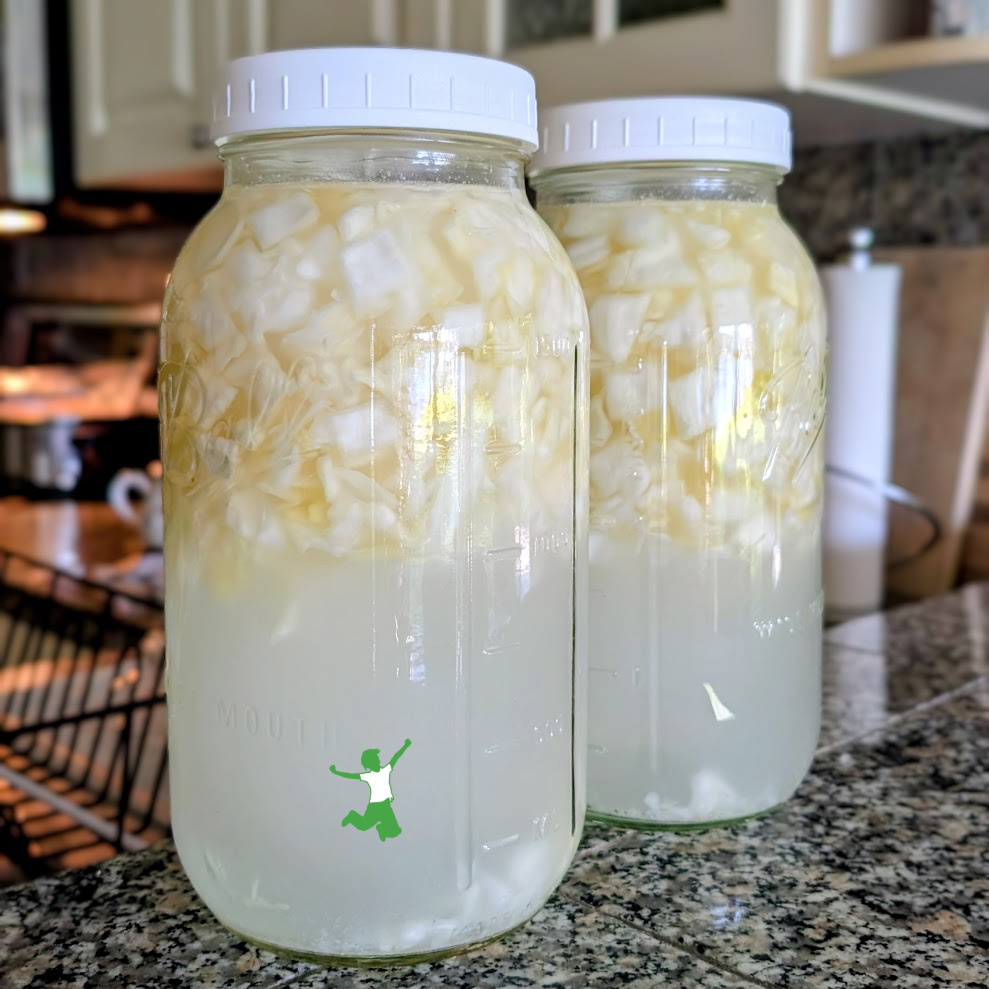
easy cabbage tonic in large mason jars on counter

I recently started making cabbage tonic as an easy addition to my fermentation routine.

Dr. Natasha Campbell-McBride MD emphasizes homemade fermented vegetable juices/brines as a therapeutic beverage for those healing (or maintaining) the gut microbiome.

Cabbage tonic, in particular, supplies readily available probiotics, enzymes, lactic acid, and highly bioavailable vitamin C.

For those who are sensitive to Vitamin C supplements like me, cabbage tonic is one of the very best, food-based sources that is easily metabolized (unlike synthetic Vitamin C, where you need huge amounts with the risk of long term side effects!).

Next to beet kvass, cabbage tonic is perhaps the most therapeutic fermented beverage to consider for your culturing repertoire.

Specifically, “cabbage tonic” is a popular adaptation of a similar version in Nourishing Traditions, which fits guidelines for gut healing protocols like the GAPS Diet.

However, even for those not on GAPS, it is a therapeutic beverage to sip in small amounts daily to help keep the gut microbiome (and hence, overall immunity) in tip top shape!

I recently made a gallon of cabbage tonic as you can see from the photo above of 2-half gallon jars on the counter, happily fermenting away.

Preparation Suggestions

I highly recommend heavy-duty glass fermentation weights to keep the cabbage below the surface of the liquid to discourage mold.

I also strongly suggest using kefir whey as the most probiotically active fermentation starter you can use (with dozens of beneficial microbial species). Second best would be strained liquid whey from 24-hour homemade yogurt (organic white mountain bulgarian yogurt in glass jars is one of the few commercial brands that is properly fermented for 24 hours).

Hint: Add ¼ teaspoon cayenne pepper to 4 ounces of the finished tonic for a sore throat gargle.
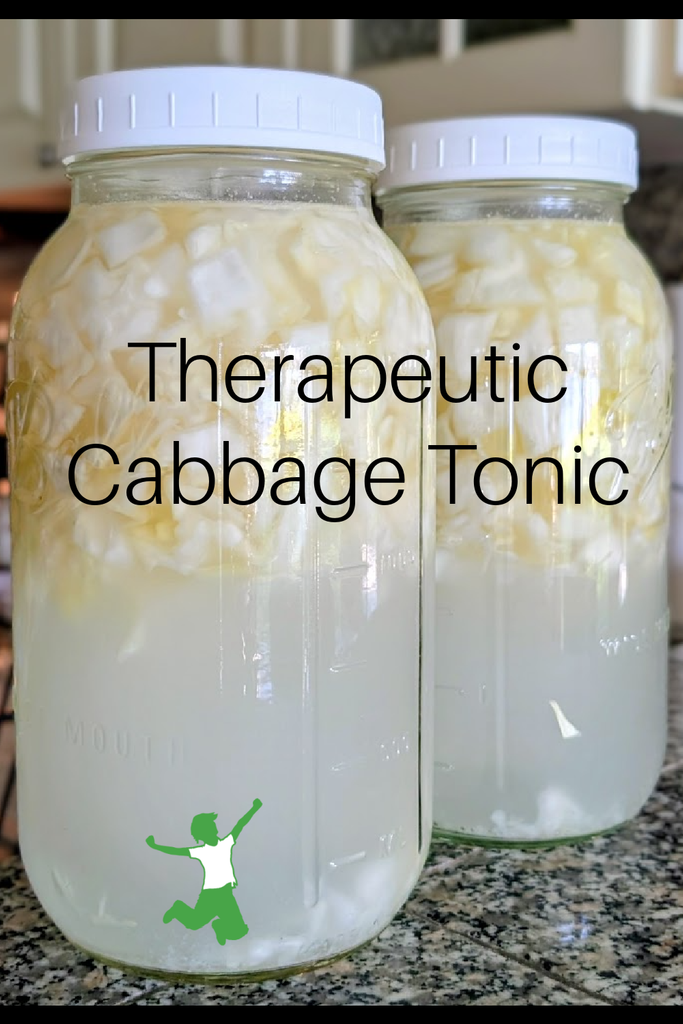
cabbage tonic in large mason jars
5 from 2 votes
Print

Cabbage Tonic

Cabbage tonic is a probiotic liquid that is similar in taste to diluted sauerkraut brine, but faster and a bit easier to make. It is a therapeutic cultured beverage for those who are healing or maintaining the health of the gut microbiome.

Course Drinks
Keyword cultured, fermented, probiotic, therapeutic, whole food
Prep Time 15 minutes
Fermentation 2 days
Servings 32
Calories 10 kcal
Author Sarah Pope

Ingredients

  • 1/4 large cabbage preferably organic
  • 1/4 cup kefir whey
  • 1 Tbsp sea salt
  • filtered water

Instructions

  1. Shred cabbage and place in a large bowl with sea salt.

  2. Firmly massage the sea salt into the cabbage until the juices start to flow (about 2 minutes).

  3. Place the massaged cabbage with all the juices into a 1/2 gallon mason jar.

  4. Add kefir whey and top up with filtered water, staying 1 inch below the top rim of the jar. Add optional fermentation weight to keep cabbage shreds below the surface of the liquid. Screw on the lid.

  5. Leave on the counter at room temperature for 2-5 days (go longer when the days are shorter and the house is cooler).

  6. Refrigerate and enjoy small amounts of the liquid daily as a therapeutic beverage. The cultured tonic keeps for many weeks in the refrigerator.

  7. When the liquid goes below the top of the cabbage, refill with filtered water, 1 tbsp sea salt and 1/4 cup kefir whey to make a second batch with the same cabbage. After the second batch, add the cabbage to soups/stews (or discard) and begin again with freshly shredded cabbage.

Nutrition Facts
Cabbage Tonic
Amount Per Serving (2 ounces)
Calories 10
% Daily Value*
Potassium 200mg6%
Carbohydrates 2g1%
Protein 0.5g1%
Vitamin C 6mg7%
* Percent Daily Values are based on a 2000 calorie diet.

⁠

fermented cabbage juice in mason jars
FacebookPinEmailPrint
Category: Fermented Beverages, GAPS Recipes, Immune support, Skin Health, Vegetarian Recipes
Sarah Pope

Sarah Pope MGA has been a Health and Nutrition Educator since 2002. She is a summa cum laude graduate in Economics from Furman University and holds a Master’s degree from the University of Pennsylvania.

She is the author of three books: Amazon #1 bestseller Get Your Fats Straight, Traditional Remedies for Modern Families, and Living Green in an Artificial World.

Her four eBooks Good Diet…Bad Diet, Real Food Fermentation, Ketonomics, and Ancestrally Inspired Dairy-Free Recipes are available for complimentary download via Healthy Home Plus.

Her mission is dedicated to helping families effectively incorporate the principles of ancestral diets within the modern household. She is a sought after lecturer around the world for conferences, summits, and podcasts.

Sarah was awarded Activist of the Year in 2010 at the International Wise Traditions Conference, subsequently serving on the Board of Directors of the nutrition nonprofit the Weston A. Price Foundation for seven years.

Her work has been covered by numerous independent and major media including USA Today, ABC, and NBC among many others.

You May Also Like

young girl with impetigo sores on her cheek

Impetigo Home Remedy (no antibiotics!)

Diluting DMSO to Desired Strength for Various Home Remedy Uses

woman holding dandelion for liver health

Best Herbs and Superfoods for Liver Health (and beautiful skin!)

bone marrow and cheese omelette

Bone Marrow & Sheep Milk Cheese Omelet

sprouted almond milk in a glass with raw almonds on table

Sprouted Almond Milk

dairy-free coffee ice cream in glass bowl with decaf beans on wooden table

Coffee Ice Cream (decaf & dairy-free)

Going to the Doctor a Little Too Often?

Get a free chapter of my book Traditional Remedies for Modern Families + my newsletter and learn how to put Nature’s best remedies to work for you today!

We send no more than one email per week. You will never be spammed or your email sold, ever.
Loading

Reader Interactions

Comments (4)

  1. Erin

    Oct 28, 2026 at 10:07 pm

    Ive got very low commensals and as a result have a hard time with many fibers, including crucifers whether cooked or not.. think this would be tolerable vs a sauerkraut? Thanks!

    Reply
    • Sarah Pope

      Nov 2, 2026 at 10:01 am

      My suggestion would be to just drink the liquid and skip the cabbage itself if you have issues with crucifer fiber.

  2. Laurel

    Oct 28, 2026 at 4:13 pm

    5 stars
    I was so glad to have something similar on hand a year or so ago. I was having some strange stomach pains off and on, but then it escalated to the point where I ended up going to the ER to get it checked out. They said I had a stomach virus, and to take Tums for it. Being desperate, I bought some Tums and tried them. It didn’t touch it. That is when I remembered my sauerkraut juice and how I had read it was good for stomach “bugs”. It only took a small amount and I was feeling so much better. I continued on it for a couple of days to be sure I was done with the virus. What relief!

    Reply
  3. Lisa

    Oct 28, 2026 at 7:18 am

    5 stars
    This is a great recipe. I’m going to get cabbage at the farmer’s market this weekend and try it. I’ve also been looking for fermentation weights. I didn’t even think to look at Azure Standard. I just added them to my cart! Thank you for all the great information!

    Reply
5 from 2 votes

Leave a Reply Cancel reply

Your email address will not be published. Required fields are marked *

Recipe Rating


Sidebar

Mother Nature’s Medicine Cabinet

5 Secrets to a Strong Immune System

Loading

The Healthy Home Economist

Since 2002, Sarah has been a Health and Nutrition Educator dedicated to helping families effectively incorporate the principles of ancestral diets within the modern household. Read More

  • Facebook
  • Instagram
  • Pinterest
  • Twitter
  • YouTube

Check Out My Books

Mother Nature’s Medicine Cabinet

5 Secrets to a Strong Immune System

Loading

Contact the Healthy Home Economist. The information on this website has not been evaluated by the FDA and is not intended to diagnose, treat, prevent, or cure any disease. By accessing or using this website, you agree to abide by the Terms of Service, Full Disclaimer, Privacy Policy, Affiliate Disclosure, and Comment Policy.

Copyright © 2009–2026 · The Healthy Home Economist · All Rights Reserved · Powered by BizBudding Inc.

Rate This Recipe

Your vote:


A rating is required
A name is required
An email is required

Recipe Ratings without Comment

Something went wrong. Please try again.