
The “Cumulative Time” Approach for Making Stock

by Sarah, The Healthy Home Economist on April 4, 2012


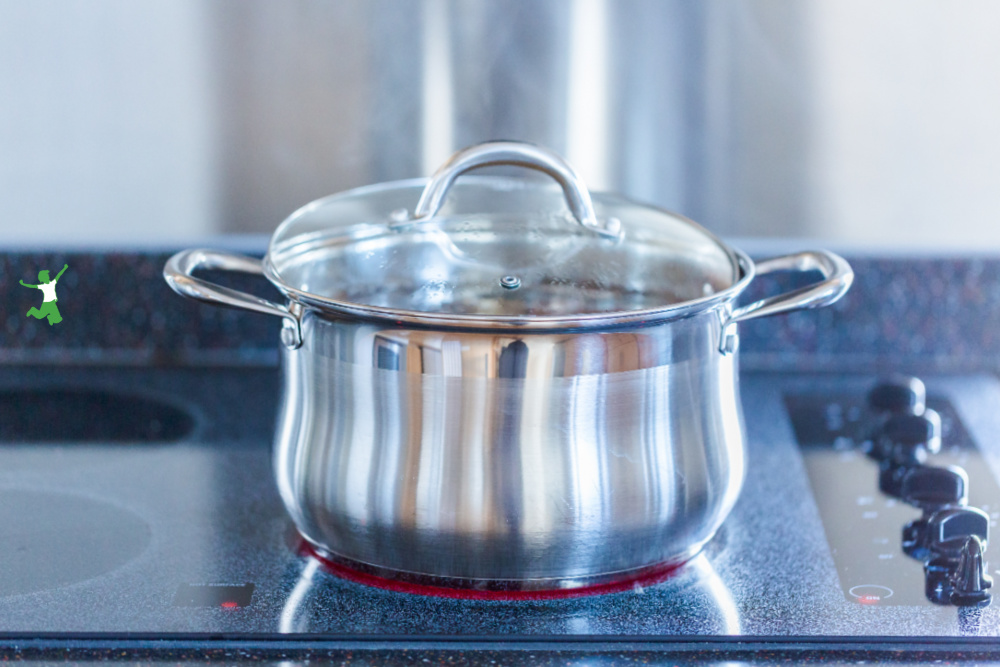
This post is a follow-up to the recent article 5 Reasons Why Your Stock Won’t Gel.   In the comments section of that post, several people expressed concern about leaving a simmering stockpot on the stove for the number of hours required to ensure a quality, gelatinous end result.

One gal mentioned that her husband was a firefighter and that leaving a stockpot simmering overnight or while they were out of the house was completely out of the question.

If leaving a stockpot on the stove on low heat, continuously simmering for anywhere from 6-50 hours depending on the type of stock is in any way a concern, you have a couple of options.

Option number one is to make fish stock.  Fish stock is very fast and you can make a quick gallon of it in only 4 hours.

Option number two is to use the Cumulative Time approach for making stock.  Monica Corrado, MA CNC and author of the blog Simply Being Well introduced me to this concept recently when I sat in on one of her amazing cooking classes at the Fourfold Path to Healing Conference in Baltimore.

The Cumulative Time approach simply means that the required simmering time for a particular type of stock can either be continuous or broken up into sections that equal the total required duration when added together.

The catch is that each time you start to heat the stock again, you must bring it to a boil, skim the foam, and lower to a simmer.   You can’t just bring it to a quick simmer after it’s been off the heat for awhile.

What to Do With the StockPot When It is Off the Heat

The great news is that there is no need to move the stockpot in and out of the refrigerator between simmering sessions on the stove.  The reason is that it would take a stockpot 4 hours or more at room temperature before any pathogens started to grow.

Anyone who has made stock before knows that a stockpot with the lid left on will never get to room temperature for 4 hours even if you leave it on the stove for 12 full hours with the heat off.

If the length of time required to make chicken or beef stock has been intimidating to you in the past, try the Cumulative Time approach!  Just be sure to keep a little notebook in the kitchen so that you can log the total amount of time the stock has simmered so that you ensure a quality, gelatin rich broth when you are finished.


Sarah, The Healthy Home Economist

Picture Credit


The Healthy Home Economist by E-mail


{ 78 comments… read them below or add one }

Dawn April 4, 2012 at 10:14 am

We use a crock pot-works great and greatly lessens the risk of a fire.

Reply

Jennifer April 4, 2012 at 2:11 pm

What a great idea, Dawn. The thing that’s held me back from stock is definitely the time component. I’m not comfortable with an open flame going while we’re asleep or out, nor do I possess the planning & managing chops to keep track of simmering time. So I love the idea of the crock pot.

Can you share what kind you have, what temps you use, when you lower the temp, etc? I’m very new with the crock pot and only know enough to be dangerous – but not effective. ; )

Reply

Zsofia April 4, 2012 at 7:48 pm

I use my crockpot too. After letting the bones soak with a splash of ACV I turn it on high. Skim if needed once simmering. Later I will turn it to low for the rest of the time.

Reply

Holly April 4, 2012 at 9:59 pm

I definitely love my crockpot for stock making. I have a 6 quart hamilton beach that is about 5 years old. I add all the ingredients and a generous blast of vinegar, cover and cook on high. On high I get a nice simmer, and from beef bones I get stock with so much gelatin you have to gouge it from the jar. For chicken stock I get a much softer gel, but still it normally gels. If it isn’t gelled after 24 hours in the fridge (which happens if I don’t have many or very good quality bones in the pot), I put it back in the crockpot on high, bring it to a simmer and then I crack the lid. I let it cook ’til the volume is reduced by half. By then I normally have a nice gel.
Holly\’s last post: Gratituesday: Duplicates

Reply

Kelli April 5, 2012 at 9:44 am

Haha the first thing I thought when reading this was, USE YOUR CROCKPOT!!! Scrolled down to post and you had beaten me to the punch. :) I don’t know if stock would ever get made at my house if not for a crockpot. We’re busy people and are in and out of the house all the time.
Kelli\’s last post: I’m Not a Dirty Hippie: Menstrual Cup Edition

Reply

Beth May 11, 2012 at 12:43 pm

Once you’ve brought it to a boil and skimmed the scum, it’s best to turn it down so it is barely burbling. A high simmer for the duration isn’t recommended since it can oxidize the cholesterol, from what I understand. Ideally you want a very slow, almost still, gentle simmer.

Reply

Cyndi Phillips via Facebook April 4, 2012 at 10:25 am

I’ve been doing this for years now. It’s nice to know that others are too.

Reply

Allison April 4, 2012 at 10:28 am

I have always let mine simmer on extremely low heat overnight. Now I am wondering if I should be concerned doing that due to a fire hazard? :/
Allison\’s last post: Whole Foods: Milk

Reply

Sarah, TheHealthyHomeEconomist April 4, 2012 at 10:31 am

I always simmer mine continuously. I am not concerned at all as the heat is so very low but I know some folks are which is why it is great to have another approach in your back pocket.
Sarah, TheHealthyHomeEconomist\’s last post: The “Cumulative Time” Approach for Making Stock

Reply

Jill Nienhiser February 28, 2013 at 8:55 am

Yeah, I have a gas cooktop and cook it overnight. I start it in the evening and then turn it down to low before bed. I keep the vent hood and cooktop clean of grease and make sure there is nothing easily flammable nearby like a potholder. I’ve done this for years. I have smoke detectors. I suppose something could go hideously wrong but it’s hard to imagine what, and it seems like the smoke detector would wake us if there was a problem. Crockpot is a good option, too.

Reply

Jackie April 4, 2012 at 10:41 am

I do both the stove top and the crockpot. Although now with GAPS its both crockpots PLUS the stove top! lol! I do have to check the stove top though as its in a drafty place and has blown out before when someone left the back door open. That made me nervous so I try to use the crock. Is there anything wrong this using a crockpot? I bring it to a boil on the stove and then transfer it to the crock… and when reusing bones do you need to boil it again?

Reply

Sarah, TheHealthyHomeEconomist April 4, 2012 at 10:46 am

I don’t use crockpots myself but if you can get the right simmer on it, it should be fine.
Sarah, TheHealthyHomeEconomist\’s last post: The “Cumulative Time” Approach for Making Stock

Reply

Our Small Hours April 4, 2012 at 1:39 pm

Sarah, why no crock pot? Is it the crock pot brand or slow cookers in general?

Reply

Margie April 4, 2012 at 11:15 am

Since I work outside of the home, I am unable to use the stovetop (also have gas stove and worry about gas leak if flame went out) and need to start doing this regularly. I just started making my own broth and am so excited to add it to my family’s regimen. Could you please tell me how long you let your broth cook in the crockpot? I like the idea of boiling it and transferring! I am loving all these tips–and thanks to Sarah for getting this info out there for me!!

Reply

Lisa B. April 4, 2012 at 12:43 pm

I have a gas stove as well and I can’t take that risk. I boil on the stove and then transfer to a crockpot. I wish mine had a temperature setting. That would be awesome!

Reply

Jackie April 4, 2012 at 12:47 pm

I usually just boil it on the stove and get out the scum and then transfer it to my crock pot. I had to play around with the temp settings as I have two VERY different crocks and neither are anything fancy! I got it to where its def on the verge or at a low simmering bubble. (not boiling!) And honestly I leave it in the pot for however long it takes me to get back to it! lol! usually overnight. I would consider the timing the same as if you had it on the stove. I think the newer crocks that are all fancy would work even greater… thats why I am bugging my hubby to get me one ;-)

Reply

Hope Comito Malott via Facebook April 4, 2012 at 10:42 am

This is how I make bone broth. The broth is always wonderful. There’s never too much for freezing though. It’s usually gone within 3 days.

Reply

Betsy Wieting Kunz via Facebook April 4, 2012 at 10:58 am

I always make my stock in a crockpot. That way I feel comfortable leaving it going while I’m gone or overnight.

Reply

Pam April 4, 2012 at 11:11 am

I always use my crockpot. The rolling simmer is always perfect and my stock gels, no problem…even the lower quality chicken that I use sometimes to stay within budget.

Reply

Evelin Saxinger via Facebook April 4, 2012 at 11:12 am

Ever whipped up a gelatinous stock in a VitaMix – FROTHY!!!!

Reply

Phillip Schmidt April 4, 2012 at 11:14 am

If I do have to leave it turned off at any time, I put a lid on it and bring it to a good rolling boil for a couple minutes before I shut it off. This should kill any pathogens that have happened to drift in and the lid keeps others from drifting in.

However, most of the time I just leave it simmering the entire time.

Reply

amber April 4, 2012 at 11:16 am

I use my crock pot for bone broth too, I unplug it in the morning when I leave for work. I put a couple cups and a bit of sea salt in a thermos to drink on my drive to work. Then when I get home I plug the crock pot in, bring it to a rolling boil, and then turn it down to a simmer while I’m sleeping. I repeat this each week, with a new batch. I guess I’m more scared to have the crockpot going when I’m not home, than to have it on when I’m sleeping :)

Reply

Peggy April 4, 2012 at 11:16 am

Has anyone any experience making it in the oven?

Reply

Wendy April 4, 2012 at 1:17 pm

I make mine in the oven. I use an enameled cast iron pot and keep it in the oven at 225 for 24-36 hours. Works perfectly!

Reply

Molly April 4, 2012 at 1:36 pm

Wow, that is really interesting. I hadn’t heard that before. To make it in the oven.

Reply

jessie April 4, 2012 at 5:17 pm

Michael Ruhlman (author of Ratio: The Simple Codes Behind the Craft of Everyday Cooking) discusses making stock in the oven. It may not be done as commonly as other methods, but it would seem to work.

Reply

Jill April 4, 2012 at 11:16 am

I actually just wrote a blog post on how to make stock in the crockpot. Wow-it was so easy and was gently simmering for hours-it gelled up beautifully!

Reply

Lucinda Seago via Facebook April 4, 2012 at 11:22 am

My stock only started jelling when I started using free-range chickens. But quantity is my problem – unless you are constantly making it (which gets expensive), it is gone way too soon. So I only make stock when I want to really knock sickness out of somebody

Reply

Steph February 28, 2013 at 2:53 pm

I have this problem too – storing the stock is problematic (we just have the tiny freezer above our fridge, and it’s usually pretty full), but if you make soup, it’s gone too soon! Does anyone have a store-bought brand they like? I only eat meat from the farmers’ market, but if there is a reputable company selling stock online or at the store I might consider that in a pinch.

Reply

Suzanne April 4, 2012 at 11:24 am

In your perfect simmer video, you mentioned you made stock from the bones of a chicken you cooked the night before. Can I use a roasted chicken carcass to make stock? Thank you!

Reply

Sarah, TheHealthyHomeEconomist April 4, 2012 at 1:56 pm

Yes, that works fine too.
Sarah, TheHealthyHomeEconomist\’s last post: The “Cumulative Time” Approach for Making Stock

Reply

Anna April 11, 2012 at 10:46 pm

Hi,
I’ve tried that and the bones of the chicken became so brittle after cooking that they broke apart with even minimal touching. Is this normal?

Reply

Beth May 11, 2012 at 12:37 pm

Yes.

Reply

Brian April 4, 2012 at 11:24 am

Another option if you have to take it off the heat is to wrap your stock pot with towels or a blanket. I’ll do this before leaving work and come home to stock that is still piping hot. Simply remove the towels and put it back on the burner to finish simmering.

Reply

Sue T. April 4, 2012 at 11:29 am

I use the crockpot set on low. It simmers it at a nice level . I feel safe leaving it when I am not at home. It makes perfect stock!
Sue T.\’s last post: Lemon Butter Black Cod

Reply

Sue T. April 4, 2012 at 11:32 am

Here is the link to my blog that has the info on cooking times etc.
http://sueskitchendigest.blogspot.com/2011/10/homemade-chicken-broth.html
Sue T.\’s last post: Lemon Butter Black Cod

Reply

Sybil Strawser via Facebook April 4, 2012 at 11:35 am

I’ve got a GIGANTIC stock pot! I leave it on “warm” overnight for the beef stock..for 2 nights. Good to know it will stay hot enough if I turn it off.

Reply

Howard C. Gray via Facebook April 4, 2012 at 11:41 am

I’ve had an “episode” burning some bones. Sure made the house smokey and scared the crap outta me! And ruined a nice pot.

Reply

Soli Zat Johnson via Facebook April 4, 2012 at 11:46 am

Oh definitely need to try this out!

Reply

Eileen April 4, 2012 at 12:20 pm

Sarah…what kind of plastic containers do you use to freeze your stock? I’ve used the quart canning jars but would like something smaller when I want to use smaller portions.

Reply

Jennifer April 4, 2012 at 1:18 pm

Eileen,
If you use the wide mouth pint canning jars they are perfect. They have straight sides so you don’t have to worry about filling them a little too full to avoid the shoulder of the jar like with the quart jars. I just label mine using a sharpie pen on the glass (which washes off easily) and then can reuse the jars and lids over and over again. You don’t have to worry about any chemicals leaching into the broth either.

Reply

Sarah, TheHealthyHomeEconomist April 4, 2012 at 1:58 pm

I use heavy duty gallon and 2 gallon plastic containers. I am very careful never to scratch them and they never get put in the dishwasher or get exposed to hot liquid. Glass just doesn’t work for my large family as I use gallons of stock at a time not quarts or half quarts. There is a picture of them on the link in the post above to the traditional stock/soups video.
Sarah, TheHealthyHomeEconomist\’s last post: The “Cumulative Time” Approach for Making Stock

Reply

Eileen April 4, 2012 at 5:50 pm

Where do you find the heavy duty containers?….I’ve looked in the stores and online but I don’t know which ones are heavy enough.

Reply

crazy4boys April 4, 2012 at 11:24 pm

I, too, would love a good source for the heavy duty gallon and 2 gallon plastic containers.
crazy4boys\’s last post: Composting

Reply

Pavil, the Uber Noob April 5, 2012 at 3:28 am

I use used gallon containers for coconout oil.
But then, I am just a noob :) .

Reply

Sarah, TheHealthyHomeEconomist April 5, 2012 at 8:10 am

Pavil, you are FAR from a noob. :) You brew galactic kombucha scobys and kefir grains. People should line up for lessons from you!
Sarah, TheHealthyHomeEconomist\’s last post: The “Cumulative Time” Approach for Making Stock

The Primalist April 4, 2012 at 12:44 pm

That’s exactly what I do. I wouldn’t feel comfortable leaving the stove on overnight or when I’m out. So I just turn it off, leave the covered pot out, and re-start when I’m ready. Works great.

Reply

Jane Metzger April 4, 2012 at 12:44 pm

I use my crockpot for everything. I turn it off at night sometimes because I don’t want whatever I am cooking to tun to mush. The older ones cook at a lower temperature than the newer models. Don’t know when this change was made, I was just told this by my brother-in-law. It is good to know that turning it off at night is safe for the food. Now I am ready to try the broth!

Reply

Jolin Huffington Mahoney via Facebook April 4, 2012 at 12:57 pm

Thank you so much, cooking the stock long enough has always been a problem. This is a perfect solution:)

Reply

Wendy April 4, 2012 at 1:30 pm

I’m thinking of making a solar oven to make stock in during the summer. Does anyone have experience with this? It would be like the cumulative time method, so I guess I would have to bring it inside to boil it on the stove every morning. I wonder if I closed the oven at night if it would stay hot enough that I wouldn’t need to reboil it…

Reply

Teresa Ensslin May 28, 2012 at 11:26 am

I have used my sun oven, and it works great! Only problem is that it’s hard to control the heat, and it can get way too hot so you don’t have the “smiling,” barely simmering temp you want. You can just leave the door unlatched, though, or prop it open a bit. I leave it all the way open to dry almonds etc.

My Hamilton-Beach crock pot is too hot on “low” but too cool on “warm.” I’ll experiment w/ putting the lid a bit sideways.

The oven really is a great solution in winter. I wonder whether the firefighters would approve of the oven being on super low all night. Is this much different from having the heater on low all night? The liquid will not boil off if the temp is very low and if you are using a traditional stock pot.

Where I live, cooking inside in summer is not practical. So the sun oven is great, or I can set the crockpot outside (never overnight though!!! Can’t chance an unexpected rain!).

Reply

Wendy Coffman April 4, 2012 at 1:38 pm

Every week we cook two chickens with salt pepper thyme and a couple bay leaves in the crock during the day. That night we have fabulous roasted chicken w plenty of leftovers for lunches or chicken tacos. After dinner we toss in veg and 4-6cups water and cook it on low overnight. In the morning we have lots of yummy stock that held beautifully!

Reply

Shirley J April 4, 2012 at 3:20 pm

I’ve tried the crockpot – my settings are high (4 hrs), medium (6 hrs), low (8 hrs), and warm (10 hrs). Low keeps foods at a steady boil, with warm there are no signs of bubbles. I have searched and searched for a crockpot that allows you to set temperatures but have never found one. I think I heard it has something to do with safety. But I wonder why it should be different than an oven.

Reply

D. October 8, 2012 at 11:59 am

@ Shirley J: I’ve had trouble with crock pots, too, in regard to temperatures. Mine (I have three) get so hot I can fry chicken in them! They are not made the same as when they first arrived on the market back in the 1970′s or whenever. They were actually better back then. Everyone is hoarding the old ones!

My DH was a firefighter (now retired) but the difference between a crock pot and a stove is the voltage. Anything which plugs into a wall is a potential fire hazard, of course, but the small appliances are where he saw the most damage over the years from kitchen fires. For years I have kept all of my small, counter-top appliances unplugged except when in use. I keep my toaster unplugged and covered with a tea towel because it’s right next to my kitchen window and I DO NOT like toasted bugs! Also, my DH literally preaches to women never to use the plug-in air freshners (like Glade and a few others) and he almost went bonkers when they introduced a line of mentholy / Vicks-y type scented plug-ins to use in kid’s rooms! He just stood here in front of the TV and hollered “no, no, no!! those are dangerous”.

Until and unless you’ve experienced the tragedy of a house fire, it’s hard to understand the power of electricity. We have some friends who recently lost their son to electrocution as he was installing a new light fixture. Electricity is nothing to mess with.

So I am one of those people who would not leave a crock-pot or a stove on overnight or when I’m away from the house, so it’s comforting to hear that what I’ve been doing with my broth making for the past 40+ years is ok! I always just leave it on the stove and restart the next day. Sure wish they still made stoves with the old-fashioned deep well / soup well in the back. My gramma had one of those and she kept soups and broths going constantly, but her stove was wood-fired. I DON’T miss that part!

If you are not home during the weekdays, start a smaller batch on a Friday evening and let ‘er rip until Sunday evening, with nights off. I just made some ham stock over this past weekend because I had a ham bone and a ham hock waiting to perform. :) Small batch is the key word when you have only a short amount of time to work with.

Reply

cristina April 4, 2012 at 3:26 pm

Sarah,
I sometimes make my stock in a crock. This time I added about 15 carrots (to use for others meals w/the chicken). My soup turned out a very dark brownish/orange tea color almost. I think its from the carrots. Would this be ok? The soup has a good taste.

Reply

Megan of RojerThat.com April 4, 2012 at 3:28 pm

I can’t stand the smell of bone broth simmering, plus we have a gas stove/open flame. SOooo I put my ancient crockpot on the outside patio! I bring it to a boil on high setting then turn to low and leave it out there to simmer for a day or two. It gels beautifully every time.
Megan of RojerThat.com\’s last post: Homemade Organic Vinegar

Reply

Maryann April 4, 2012 at 5:09 pm

Do you ever have a problem with the liquid becoming too low? I was wondering if you have to add water at any point and if so does that dilute the broth or hinder the gel?

Reply

Sigrid April 4, 2012 at 5:35 pm

So, I think you answered this in your post above, but it is safe to leave stock on the stove top for longer than two hours? I have small children so I’m always worried of food poisoning them. I try to get my stock in the fridge right away after cooking, but then I heard that you have to let food cool before putting in the fridge. I’m confused can you help me with this?

Reply

Alex Roworth-O'Neil via Facebook April 4, 2012 at 7:29 pm

Or come into either GRUB locations and pic up some high quality freshly made stock today!

Reply

Fiona April 4, 2012 at 8:21 pm

Thank you Sarah! I have been wondering about this. I don’t so much mind making stock on my electric stove (although after seeing your simmer the other day, I think I may keep it too low overnight), but at some stage I could be moving into a house with a gas stove, and I know there’s no way I could sleep with a flame burning all night!! So I’ve been worried about what I would do if that ever comes (although it may not happen for a couple of years!!).

I also kind of like the idea of leaving a crockpot outside to make stock!! It would also feel a bit safer that way. Unfortunately, my crockpot doesn’t seem quite big enough… I have used it before (before I got a good stock pot), but I really had to squeeze the ingredients in!

Reply

Joyce April 5, 2012 at 12:42 am

Hi Fiona, Even my two crockpots combined can’t make the all the stock I need. I invested in a Le Creuset 12 qt. Stainless Steel stockpot–got it for a great price at one their outlet stores. I use a metal flame tamer under mine on my gas stove and start in the day time whenever I get around to it and leave it on the flame tamer on very low all night. As long as you use a flame tamer and don’t turn your gas flame down so low that it is flickering, you won’t have any problem.

In addition, I found a great Rubbermaid strainer that it curved on the edges (no bar to rest it on the pot side) and it makes a fabulous scouper/strainer when you are making large quantities of stock. For instance, I cannot pick up my 12 qt. stockpost and strain the stock into something else. So, I use the scouper/strainer and scoop out most of the bones, etc and the weight of the pot them becomes manageable for me. good luck!

Joyce

Reply

Sita April 4, 2012 at 11:06 pm

I have been enjoying this blog but cannot seem to find any sort of “about the author” page.
This is a bit frustrating. Does anyone know if there is a page dedicated to telling me who it is I am reading and perhaps the goal or concept of this blog?

I don’t even know how to properly share it as I can’t say what precisely I am sharing beyond “a blog which seems to be focused on healthy concepts by a possibly anonymous person”… Not much a of a selling point that..

Am I missing an obvious link?

Reply

Eliza April 5, 2012 at 1:17 am

Click “Sarah” at the top of the page.
Eliza\’s last post: Grain-free spiced pear and apple pie

Reply

Sita April 5, 2012 at 4:04 pm

OH!

Thank you. I didn’t realize I could “click” the words on the purple bar. I thought they just opened the drop menus. Hence my frustration. I saw her name but could only see options for adverts etc. in the dropped portion.

Very interesting.

Reply

Eliza April 5, 2012 at 1:16 am

I always just let mine simmer continually as it just doesn’t worry me. A lot of my friends and family tell me I am mad though, so this approach may be the key to get them to finally start making real stock!
Eliza\’s last post: Grain-free spiced pear and apple pie

Reply

Maryann April 5, 2012 at 9:14 am

I started my first ever pot of chicken stock on the stove yesterday (bones from roasted whole chicken plus the neck, and other parts they stuff inside). My husband refused to allow me to leave it on the stove overnight, even though we have a Corning cook top (he is a volunteer fire police and has been to too many stove fires caused by unattended pots). So, I transferred it to my crock pot. It only has 3 settings, High, low, and warm. The high seems to boil too much, with the low there is no movement in the broth so I am now adjusting it between high and low hoping to find just the right “roll” as Sarah showed in her video. My house sure smells yummy and my stomach has been growling — hoping my first attempt has good gel results! :-)

Reply

Linda Scott Tyler via Facebook April 5, 2012 at 8:34 pm

When making beef stock how do you know when precisely that it is done? What is it I’m supposed to be looking for? I was already doing the cumulative time approach when making stock. (I have firefighters in my family, too) (I’ve only made one batch of beef and one batch of chicken) The chicken didn’t gel. : ( Does that mean its no good?

Reply

Cana April 5, 2012 at 10:59 pm

I brought a slow cooker with a countdown timer (10 hours). But there are slow cookers where you can program the time to turn on and to shut off. I’m away at work for 10 hours and I get home just in time for my slow cooker to turn off. I just punch in another 10 hours or whatever # of hours you need to complete your stock.

Reply

Rebecca April 5, 2012 at 11:52 pm

Like Sybil and Joyce I make my stock in LARGE quantities. My family loves lots of soups and we all enjoy a cup of warm salted broth before bed. I keep my bones in the freezer until I have enough to fill my giant stock pot. We never throw a bone away, just toss it in the freezer. I also combine bones from chicken, beef, turkey or whatever. The flavors deliciously mingle and it is much easier than trying to keep them separate. I also toss in chicken heads, gizzards, necks and feet. My favorite bones from the cow are the shanks (calf bone) because they make wonderful gelatin. Here in Washington State we have cold enough months 6-7 months of the year that we make most of our stock on the woodstove. This is a wonderful energy saver since the woodstove would be going anyway. I have an assortment of cast iron trivets of various heights so I can set my stock where I need it to get the right simmer.
I also freeze my stock in glass jars. No need to risk chemicals leaching from the plastic into your lovely stock. We use 1/2 gallon canning jars that you can buy at the local hardware store. I just leave a good 2″ of head space for it to expand as it freezes. Homemade bone stocks are a foundational part of my family’s diet.

Reply

Laurie April 7, 2012 at 8:46 am

I might have missed it in the comments or mis-read the post, but I wanted to clarify something. The temperature danger zone is between 40 and 140 degreees – the zone where bacteria multiply rapidly. Whether or not the stock cools to room temp in 4 hours depends on a variety of things… like if they strain their stock and put it in more shallow pans or pans that conduct cool air more quickly, stir, etc. While it may take a while to get to room temp, any temp below 140 will bring about bacteria growth. Bringing to boiling is essential to kill any bacteria growth started, but thinking that it is safe if it goes to room temp isn’t always the case, although it will work the majority of the times. Having made literally thousands and thousands of gallons of stock through the years, there have been times when not keeping an eye on those variables caused me to have to throw some out because of the obvious spoilage. You can also very effectlvely reduce stock in the oven if you are careful about watching it the first time you do it to see how quickly it evaporates on your temp setting.

Reply

Kim April 11, 2012 at 8:11 am

I have been making stock since June when I learned and WILL NEVER go back to store bought. This past batch was the best yet– it was SO gelatinous! I put 2 jars in the fridge for easy use and sure enough, my son felt under the weather. I scooped (not poured, b/c it was so perfectly gelled!) the stock in my pot, added incredible English Peas we got from a local farm and shelled ourselves, sliced carrots, added a handful of egg noodles and cut up leftover chicken that had cooked in fresh garlic and lime sauce (YUM) and, my kids ate every single drop. The illness never came to fruition, kids were like normal afterward, I even took 2 thermoses to the ball park Saturday with the soup for my lunch. Thank you for all your instruction. It has transformed my kitchen.

Reply

Dawn June 12, 2012 at 9:02 pm

I use my 6-qt crockpot for stock, but I also bought an electric roaster oven for making bigger batches. I can roast beef bones in it for an hour or so, then add my water, vinegar and other stuff. I can set the temp so it just barely simmers and, like the crock pot, I don’t mind leaving it on overnight (I prefer not to leave a pot to cook all night on my gas stove). If I can’t make stock right away, I save chicken carcasses in the freezer and then dump them all in the roaster oven for a big batch of broth.

Reply

Candace January 5, 2013 at 11:19 pm

Why vinegar ? I have been making stock for years and never heard of adding it what does it do exactly and can I use Bragg’s brand ?

Reply

Musical Shoot January 23, 2013 at 5:08 pm

Fantastic put up, very informative. I wonder why the other specialists of this sector do not understand this. You must proceed your writing. I’m confident, you have a huge readers’ base already!|What’s Happening i’m new to this, I stumbled upon this I’ve found It absolutely useful and it has aided me out loads. I am hoping to give a contribution & assist different customers like its helped me. Great job.

Reply

Patrice February 28, 2013 at 1:11 pm

I bring stock to a boil on the top of the stove, then transfer it to the oven. I put the temp at 235 degrees F. (Your oven might vary) That keeps the covered stock pot at a perfect simmer. I simmer the pot in the oven starting in the evening and leave it simmering all night. My oven has digital controls, so I set the timer to turn the oven off about 3:30 AM. It then has time to cool before I leave for work. IMHO, the oven is much more efficient, energywise. The gas cooktop is a very inefficient heating device. My crockpot has two settings: too high, and too low, so I don’t use it much unless I am close by to watch it.

Reply

Maria February 28, 2013 at 2:40 pm

I’ve been doing this for a few days now and I really like it. When my crockpot is on low, it brings the broth to a gentle boil. At night I just leave it on the warm setting. When I want broth, I lower a wire strainer into the crock pot and dip my broth out of the strainer into cups to cool and replace what I took out with fresh water. I bought a dedicated crockpot for this on the path to doing the GAPS diet.
http://nourishedkitchen.com/perpetual-soup-the-easiest-bone-broth-youll-make/

Reply

Mati February 28, 2013 at 7:02 pm

I’d like to learn more about glutamate formation in stock when using a pressure cooker. Can you share some citations from the scientific literature? I’m finding it difficult to put together search terms precise enough to find articles.

It’s important not to try to make too much stock. I expect a quart and a half from the carcass of one roasted chicken, and often cook it down even more to save storage space. My stock always gels with a wide variety of timings. For more flavor, simmer shorter; more minerals, until it’s opaque, tea-with-milk color from all of the dissolved bone. It’s usually almost as hard as commercial Jell-o preparations.

My favorite method takes advantage of freezing temperatures outside. Simmer 1-2 hours, add vinegar, leave on the back porch overnight; then simmer 1-2 hours the next day, cool and package. The freezing with acid seems to break it down as though it had simmered for many more hours, and it preserves more of the flavor.

Reply

Santjie STols March 3, 2013 at 12:42 am

I use a crockpot. My husband won’t allow continious on the stove, and I dont have time for the cumulative approach. In NZ we don’t cook the bones that long, it did not gel, but I even double cook bones with great results in the crockpot

Reply

Leave a Comment

CommentLuv badge

{ 1 trackback }

Previous post:

Next post: