

Easy recipe for homemade butter using raw or pasteurized cream. The method is simple and maximally nutrient-dense when the cream is sourced from pastured cows. This food is considered sacred in traditional cultures.
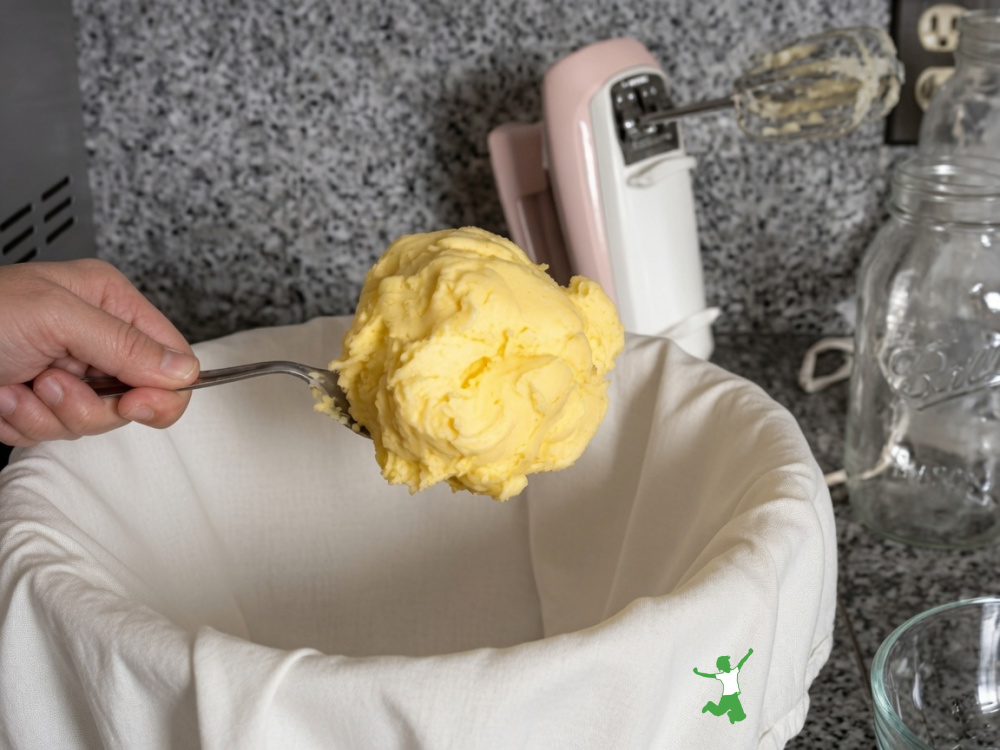
Ah, homemade butter. Has there ever been a more perfect food?
To the Traditional Swiss living in the isolated Loetschental valley early in the last century, raw butter made from unpasteurized cream was a sacred food. No pale supermarket butter, but a golden alpine butter made from the rich, beige raw cream of cows grazing on thick grass.
The children raised on this nutrient-dense, raw butter had strong physiques, and wide faces with plenty of room for their teeth. They also displayed very high resistance to disease.
In fact, there wasn’t a single case of tuberculosis in the Loetschental Valley despite this illness raging elsewhere in Switzerland during the early part of the 1900s. At that time, the Swiss villagers still existed on foods grown or sourced themselves in the valley. Only salt was brought in from the outside.
The young men raised on this nutrient-dense traditional diet with plenty of raw, deep yellow butter were so perfect and pleasing in physique, strength, and character that the Vatican favored them over all others in Europe to serve as the Papal Guard.
The Loetschental Swiss knew that it was this nutrient-dense, raw butter that was responsible for their robust health. The indigenous Swiss would put wicks in bowls of the first spring butter and burn it in their Churches!
We now know that this sacred food contained ample amounts of true Vitamin A (NOT beta carotene!), D, and K2. When sufficient amounts of these fat-soluble vitamins are present in the diet, they work synergistically to produce a level of health unknown in modern civilization.
The Importance of Raw Butter
When I first became knowledgeable on the subject of Traditional Diets, obtaining plenty of raw, grass-fed butter for my family became a primary goal.
The problem was that raw butter was not available anywhere near where I lived. I couldn’t even find raw cream or unpasteurized milk for that matter!
Determined to have this sacred food for my husband and me (I was pregnant at the time) and for my oldest child who was a young toddler, I sourced quarts of frozen, raw grass-fed cream from elsewhere and shipped in 9 or more quarts a month for my family’s use.
With some of that beautiful beige, grass-fed cream, I would make the most tantalizing, golden butter for my family. I continued this habit for many years.
How to Source Grassfed Cream
The only thing you really need when making butter is quality pastured cream. Don’t use anything else or your butter will turn out white or very light yellow. Pale butter indicates a low amount of fat-soluble vitamins and no Vitamin K2.
The easiest route is to buy quarts of raw, grass-fed cream from a local farm. If you don’t have a local grass-based dairy farm nearby, you can request your local health food store to stock pasteurized cream.
This pastured A2 cream is an excellent brand available via a nationwide co-op with hundreds of drop locations.
Devon cream is also high quality and can be mail-ordered to your door.
Be sure to avoid UHT (high temp) pasteurized cream, as it is excessively processed and denatured.
If you can obtain raw, pastured milk but not cream, another idea is to separate the cream off the top of a gallon of milk using a turkey baster and make butter with that cream.
The key is to get creative! Raw butter is THAT important to have in the diet, particularly for those of Northern European ancestry.
Can’t Tolerate Dairy?
If due to allergy or availability, you are unable to enjoy the benefits of pastured raw butter on a regular basis, it is very important to be sure you’re getting sufficient Vitamin K2 (called the “X-Factor” by Dr. Price) in the diet via a whole food derived K2 supplement (as MK-7, the fermented form). Another dairy-free option to obtain K2 (as MK-4, the animal form) is Australian emu oil.
Both forms of Vitamin K2 synergize with Vitamin A and D obtained in the diet and/or via high vitamin cod liver oil for maximum absorption and effectiveness. The three together are particularly effective at maintaining the health of the teeth and gums.
The recipe below details the instructions demonstrated in the viral video tutorial. You may use either raw or pasteurized cream, preferably from pastured animals for maximum nutrient density.
Note that once you make the butter, you can easily take it one more step to make homemade ghee, which is shelf-stable. Both ghee and raw butter oil are concentrated forms of all the goodness of butter!
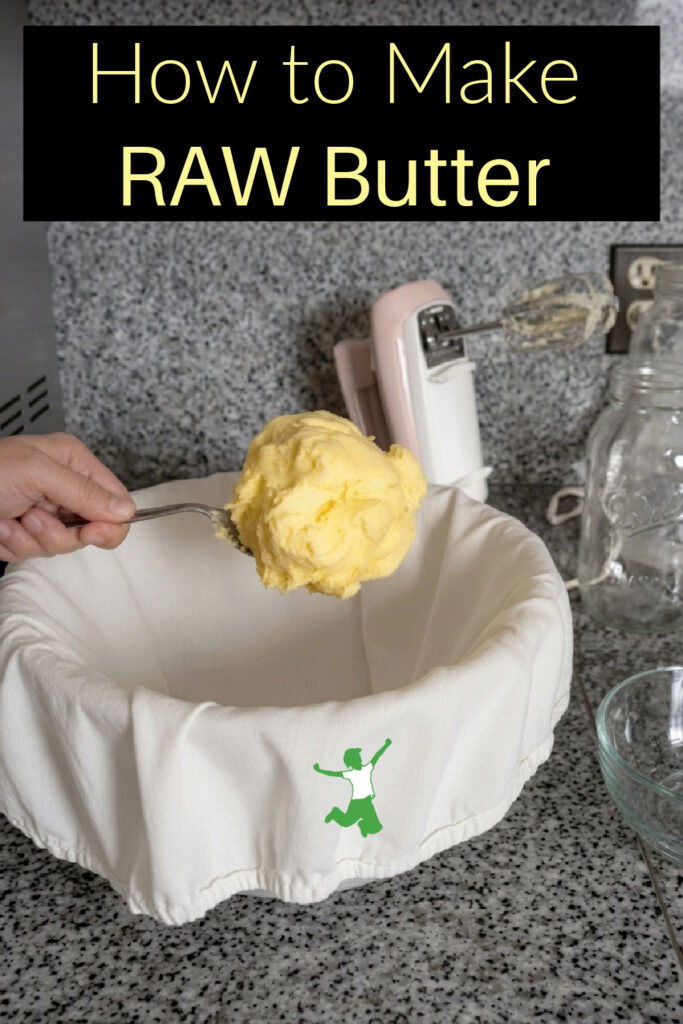
How to Make Raw Butter
Easy recipe for homemade butter using raw or pasteurized cream. The method is simple and maximally nutrient-dense when the cream is sourced from pastured cows. This food is considered sacred in traditional cultures.
Ingredients
- 1 quart cream preferably raw and grassfed
- 1 large glass bowl
- 1 hand mixer
Instructions
-
Pour the cream into a glass bowl and let come to room temperature (around 68–72°F / 20–22°C). This takes about 1-2 hours and is a very important step. Room temperature cream ensures that the churning into butter takes minutes.
-
Turn on hand mixer on medium speed and mix until the cream turns into butter. You will know this because suddenly, the butter will separate from the buttermilk in the bowl and change color to yellow. This takes about 2-5 minutes depending on the temperature of your kitchen.
-
Add 2 cups ice cold water and remix for a few seconds. Pour butter mixture into a fine mesh cheesecloth, gather up the ends and squeeze bag to strain out the water mixed with buttermilk. Repeat this rinsing process one or two more times as desired to make sure all the buttermilk is removed for the sweetest tasting butter.
-
Scoop the butter into a small container with a lid. Refrigerate. Raw butter will last for many months in the refrigerator. It also freezes beautifully for later use if desired.
Recipe Video
Recipe Notes
If you use slightly soured cream in this recipe instead of fresh cream, you will have cultured butter!
Reference
Nutrition and Physical Degeneration, Dr. Weston A. Price



fantastic! I can’t wait to make some. Thank you.
Hi Sarah,
Thanks for your infomative videos – I have learned lots from you.
I have been making my own butter from grass fed beef now for several months. The last couple of times though the cream seems to whip past the point of separation so fast I miss it. The product then becomes very soft again. Any clues as to what to do? Can I get back to that butter stage again?
Thanks heaps Susan
i have been making butter from beautiful raw cream, gallons at a time (we’re lucky!) for the upcoming year. but i don’t know what to do with the “buttermilk” i have left over. i have tried to research it. can i culture it with my homemade yogurt (from raw milk) or leave it on the counter? i do not culture the cream prior to making my butter. thank you!!!!
Hi Sarah, I live just south of St. Pete. We have a wonderful farm locally that I get grass-fed beef, raw milk and cream, and pastured chickens and eggs. I would like to make some butter from raw goats milk but can’t find a source in my immediate area. Is there anything in the Tampa/St. Pete area? Also what’s your take on grain supplementation? I would be happiest if any supplementation was with non gmo and soy-free. Is it worth using chickens/eggs/dairy if there is GMO or soy in the feed even if supplementation is minimal?? Thanks so much! I’m so grateful for your blog – it’s what initially kicked my butt into gear to provide the right foods for my family!
Dear Sarah,
Thank you for this (and all the other!) wonderful posts.
I tried to make butter from my local raw milk supplier (i live in Malaysia) and it turned out to be white, not even a pale yellow. So i contacted the supplier and he told me that the cows are fed mostly (60-70% grass, some hay and vegetarian milled pellets that are made out of corn, grain etc). I explained to him that grass fed butter is supposed to be yellow and he said that the colour varies depending on the time of the year that cows are milked, not necessarily based on their diet. I also told him about cows and grains and Omega 6.
Upon further reading on the internet, various sites have reported differences in the colour of the butter, depending on the type of grass, type of cow etc.
My question is, is there science to back our claims of white butter being less nutritious?
Or that yellow better is the most nutrient dense?
Thanks so much!
Hi Sumi,
How do you make your raw butter out of raw milk, if I’m not mistaken it could take awhile to get enough cream skimmed off.
I live in Malaysia too 🙂
Thanks!
Hi Sarah,
What did you do with the water that you washed the butter with? I am new to the butter making…
Thank you!
I read that cooking with ghee helps with mineral absorption of the veggies, etc, but is there a fat substitute if dairy allergies are an issue? Do you get the same nutritional benefit cooking veggies, etc in coconut oil or lard?
Hi Sarah,
I wanted to thank you for this post and video which were very helpful! I made wonderful raw butter last week, and am making another batch, and our whole family loves it. I have a blog on the education of taste French-style (being French, this butter reminds me of my childhood in Normandy!) and I put a link to your video on the blog and FB page, people seemed really interested… I also made creme fraiche which was fabulous. Looking forward to following you!