

Easy recipe for homemade butter using raw or pasteurized cream. The method is simple and maximally nutrient-dense when the cream is sourced from pastured cows. This food is considered sacred in traditional cultures.
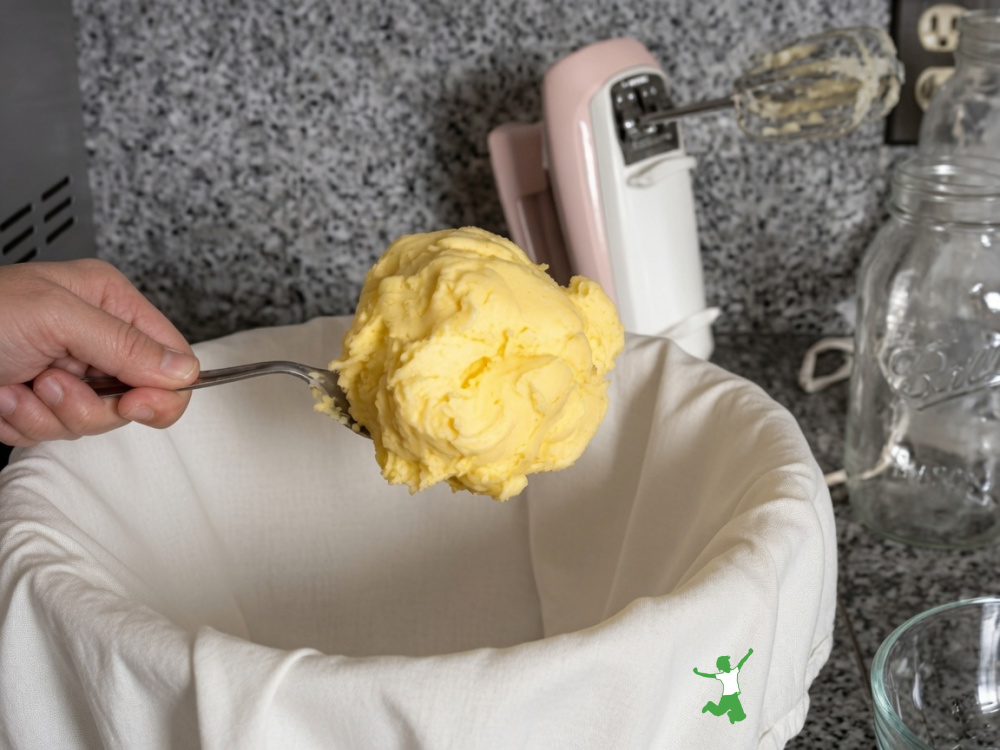
Ah, homemade butter. Has there ever been a more perfect food?
To the Traditional Swiss living in the isolated Loetschental valley early in the last century, raw butter made from unpasteurized cream was a sacred food. No pale supermarket butter, but a golden alpine butter made from the rich, beige raw cream of cows grazing on thick grass.
The children raised on this nutrient-dense, raw butter had strong physiques, and wide faces with plenty of room for their teeth. They also displayed very high resistance to disease.
In fact, there wasn’t a single case of tuberculosis in the Loetschental Valley despite this illness raging elsewhere in Switzerland during the early part of the 1900s. At that time, the Swiss villagers still existed on foods grown or sourced themselves in the valley. Only salt was brought in from the outside.
The young men raised on this nutrient-dense traditional diet with plenty of raw, deep yellow butter were so perfect and pleasing in physique, strength, and character that the Vatican favored them over all others in Europe to serve as the Papal Guard.
The Loetschental Swiss knew that it was this nutrient-dense, raw butter that was responsible for their robust health. The indigenous Swiss would put wicks in bowls of the first spring butter and burn it in their Churches!
We now know that this sacred food contained ample amounts of true Vitamin A (NOT beta carotene!), D, and K2. When sufficient amounts of these fat-soluble vitamins are present in the diet, they work synergistically to produce a level of health unknown in modern civilization.
The Importance of Raw Butter
When I first became knowledgeable on the subject of Traditional Diets, obtaining plenty of raw, grass-fed butter for my family became a primary goal.
The problem was that raw butter was not available anywhere near where I lived. I couldn’t even find raw cream or unpasteurized milk for that matter!
Determined to have this sacred food for my husband and me (I was pregnant at the time) and for my oldest child who was a young toddler, I sourced quarts of frozen, raw grass-fed cream from elsewhere and shipped in 9 or more quarts a month for my family’s use.
With some of that beautiful beige, grass-fed cream, I would make the most tantalizing, golden butter for my family. I continued this habit for many years.
How to Source Grassfed Cream
The only thing you really need when making butter is quality pastured cream. Don’t use anything else or your butter will turn out white or very light yellow. Pale butter indicates a low amount of fat-soluble vitamins and no Vitamin K2.
The easiest route is to buy quarts of raw, grass-fed cream from a local farm. If you don’t have a local grass-based dairy farm nearby, you can request your local health food store to stock pasteurized cream.
This pastured A2 cream is an excellent brand available via a nationwide co-op with hundreds of drop locations.
Devon cream is also high quality and can be mail-ordered to your door.
Be sure to avoid UHT (high temp) pasteurized cream, as it is excessively processed and denatured.
If you can obtain raw, pastured milk but not cream, another idea is to separate the cream off the top of a gallon of milk using a turkey baster and make butter with that cream.
The key is to get creative! Raw butter is THAT important to have in the diet, particularly for those of Northern European ancestry.
Can’t Tolerate Dairy?
If due to allergy or availability, you are unable to enjoy the benefits of pastured raw butter on a regular basis, it is very important to be sure you’re getting sufficient Vitamin K2 (called the “X-Factor” by Dr. Price) in the diet via a whole food derived K2 supplement (as MK-7, the fermented form). Another dairy-free option to obtain K2 (as MK-4, the animal form) is Australian emu oil.
Both forms of Vitamin K2 synergize with Vitamin A and D obtained in the diet and/or via high vitamin cod liver oil for maximum absorption and effectiveness. The three together are particularly effective at maintaining the health of the teeth and gums.
The recipe below details the instructions demonstrated in the viral video tutorial. You may use either raw or pasteurized cream, preferably from pastured animals for maximum nutrient density.
Note that once you make the butter, you can easily take it one more step to make homemade ghee, which is shelf-stable. Both ghee and raw butter oil are concentrated forms of all the goodness of butter!
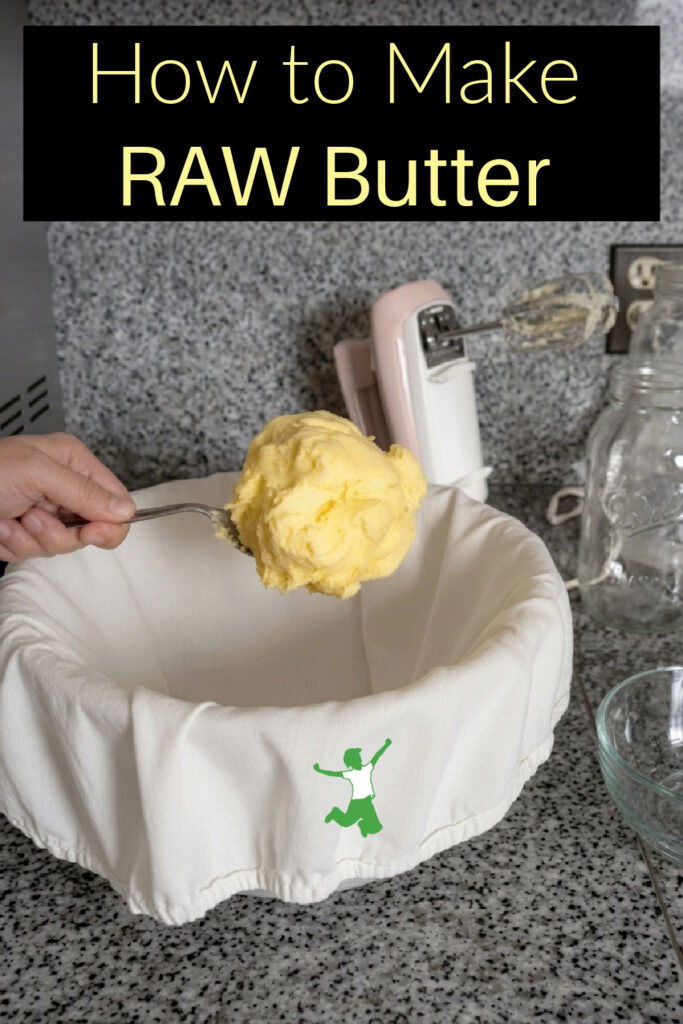
How to Make Raw Butter
Easy recipe for homemade butter using raw or pasteurized cream. The method is simple and maximally nutrient-dense when the cream is sourced from pastured cows. This food is considered sacred in traditional cultures.
Ingredients
- 1 quart cream preferably raw and grassfed
- 1 large glass bowl
- 1 hand mixer
Instructions
-
Pour the cream into a glass bowl and let come to room temperature (around 68–72°F / 20–22°C). This takes about 1-2 hours and is a very important step. Room temperature cream ensures that the churning into butter takes minutes.
-
Turn on hand mixer on medium speed and mix until the cream turns into butter. You will know this because suddenly, the butter will separate from the buttermilk in the bowl and change color to yellow. This takes about 2-5 minutes depending on the temperature of your kitchen.
-
Add 2 cups ice cold water and remix for a few seconds. Pour butter mixture into a fine mesh cheesecloth, gather up the ends and squeeze bag to strain out the water mixed with buttermilk. Repeat this rinsing process one or two more times as desired to make sure all the buttermilk is removed for the sweetest tasting butter.
-
Scoop the butter into a small container with a lid. Refrigerate. Raw butter will last for many months in the refrigerator. It also freezes beautifully for later use if desired.
Recipe Video
Recipe Notes
If you use slightly soured cream in this recipe instead of fresh cream, you will have cultured butter!
Reference
Nutrition and Physical Degeneration, Dr. Weston A. Price



Is it okay to skim the cream off of one half gallon every week and keep adding it to a jar in the freezer til I have enough for butter? I can’t afford that much “fertilizer” 🙂
I can’t get raw milk right now, but I have been able to find the milk that is one step up from raw….is it possible to make the butter from that? And how do I get the cream from it?
Thank you, I love your videos and recommend them.
You guys are so lucky. I live in Malaysia and it’s very hard to get raw milk, practically impossible to get raw cream or raw butter.
Thank you for making all videos about traditional cooking.
I love his video! I’ve made raw butter for a few years now but never thought to wash it using the mixer or food processor. I can’t wait to try it, so much easier! Do you use the same mixer washing method for the 2nd and 3rd washings as well?
I’m guessing it needs to be heavy cream for making butter. Yes? My farmer only sells light cream. Should I let it sit for a week and then skim off the heavy cream? Thanks.
I can make so many things, but raw butter is still so hard for me! Only a couple of times has mine turned to butter. Most of the time I whip and whip and whip and nothing happens with the cream. Any theory as to why this is? I feel like such a dunce with butter.
That is so strange. Do you at least get whipped cream? If so, the very next stage is the magical transformation to yellow butter which is sure to elicit the “oohs” and “ahhs” from your impressed family. I can say that if the cream is really really fresh, it takes quite a while to whip into butter.
In the video, that cream was 2 weeks old and it took about 3 minutes whipping in a bowl with a hand mixer for it to transform into butter.
I know. I must have some bad butter karma or something! One week old raw cream. In a glass bowl using an electric hand mixer on high. 30 minutes. Got a little bit of foam that resembled whipped cream on top, but it never turned.
Was your cream cold or room temp? Room temp comes to butter easier and faster.
that is so nice to comment on! i heard that the butter must be very, very cold and it took me a 10 min. in kitchenaid mixer….
thank you i will let it room temp. this time!!
thanks
My first time making butter I used cold, fresh cream. I had to beat for 55 mins, but I did get nice, rich butter. 30 mins isn’t long enough sometimes.
I made my first batch of raw butter today (Thanks Sara BIG time for the quick lesson!) I used 2 day old milk, turkey baster-ed the cream off, which I got one quart off a gallon of milk, left it in the fridge for a day and this morning mixed and mixed and mixed for 30 minutes (the cream was cold, straight from the fridge), it turned to whipping cream fairly quickly and then just stayed there. I thought maybe it had warmed too much so threw the bowl back in the fridge and I then went online to find out the problem. Very debate-able on the temps and age of the cream, no one answer, either ice cold or room temperature! Or fresh fresh cream or 1 week old cream! Yeesh, soooo with getting no answers, I dug the bowl back out of the fridge and seen that there was some major separation. I scooped all of the heavier fluffy whipping cream off the top into another bowl and drank the ‘almost buttermilk’, holy moly, tasty tasty!! i whipped again for another 15 minutes and got my nice yellow butter! I only got about 1 cup of butter off 1 quart of cream but I assume being winter months in Canada might have something to do with that? Or I have no idea what type of cow I’m getting my raw milk from (will find that out shortly!!) Either way, I washed it and it’s just ‘heavenly’! So all in all what did I learn? Nothing, nothing really than being persistent with the whipping or maybe quicker if I whip then let it sit, take out the buttermilk and whip again? No idea but I WILL master it, it’s just unbelievable! I wish I would have found your site Sara and learned this traditional eating while my children were home, I guess now for myself, my hubby and our grandchildren, our healthy ‘raw’ diet is better late than never!
Should mention that I am on my 5th batch of Kombucha (luv it!) Also luving my water and milk kefir! Any idea if there is a limit to drinking too much? I would have no problem drinking 2 quarts each of Kombucha and water kefir a day and I could see when those hot summer days come I’d drink more, especially the Kombucha as it’s so refreshing (organic ginger juiced and lemon added for 2nd ferment)
Have made many many batches of your cold cereal recipe Sara, just awesome, I tweaked it a bit by adding hemp hearts, coconut, ground flax, ground chia, pumpkin seeds and of course soaked Einkorn flour!) It’s my late night snack when I need ‘crunch’ and grandson’s LUV it!
Sounds like a good idea to make a pit stop for raw cream during your trip. You can load up enough for many months. During the years when I had no access to raw milk locally, we did raw cream that I sourced from far away for everything … raw butter, homemade raw ice cream etc etc.