
Table of Contents[Hide][Show]
Common misconceptions and myths surrounding sourdough bread that those who enjoy it need to understand to avoid unreasonable health expectations about this traditional food.
Yeast was first introduced as a substitute for sourdough starter in breadmaking at the court of Louis XIV of France in March 1668.
Scientists at the time already knew that this substitution would harm public health by reducing the digestibility and nutritional value of bread. Their counsel resulted in an initial and vehement rejection of the idea. (1)
Ultimately, the idea slowly took hold anyway due to the increased speed and convenience of using yeast for baking.
This combination of factors proved too strong to resist, particularly as the hustle and bustle of the Industrial Revolution arrived in full force.
Today, almost all bread, no matter if made with wheat or gluten-free flour, is made using baker’s yeast.
Consumption of these modern quick-rise baked goods instead of traditional sourdough bread has indeed resulted in an overall decline in health, as warned centuries ago.
The result has been a widespread backlash against bread, with carb consumption implicated in numerous health woes. The book Life Without Bread summarizes the case.
On the other hand, the realization that modern carbs aren’t healthy has also resulted in a resurgence in popularity of authentic sourdough bread.
Naturally leavened bread made without yeast actually facilitates the body’s absorption of cereal grain nutrients. This compares with yeasted bread, which diminishes or destroys the grain’s nutritional value.
Properly made sourdough bread also eliminates anti-nutrients from the cereal grains. The most notable of these is phytic acid, which blocks mineral absorption and can trigger gastric distress.
Preliminary research also indicates that those with Celiac disease may be able to eat sourdough bread made with wheat.
For those who wish to eat bread without the downside, sourdough bread is definitely the answer!
Unfortunately, the excitement over sourdough bread has spawned some myths about this traditional food that abound as well.
While there are numerous benefits to consuming sourdough bread, watch out because the following is not among them!
Sourdough Starter Probiotics
It is true that a properly made sourdough starter contains Lactobacilli, a friendly form of bacteria.
This is a beneficial strain of bacteria found on the surface of all living things. These microbes are even crawling all over you right now, keeping your skin healthy and in proper pH balance.
These lactic acid-producing probiotics are responsible for the breakdown of anti-nutrients like phytic acid. They also encourage the slow rise of the bread without the addition of any yeast.
The absence of baker’s yeast in a true sourdough loaf permits baking the bread at a lower temperature as well. This protects the integrity of the cereal grain proteins along with their nutritional value.
These benefits are made possible by the fermentation of the bread dough prior to baking using a probiotic-rich sourdough starter.
Here’s where the confusion starts….
Just because sourdough bread dough is fermented, does this make sourdough bread a probiotic food?
NO.
Probiotics Destroyed by Heat
While it is true that sourdough bread dough is indeed fermented and rich in probiotics, the resulting sourdough bread is completely devoid of beneficial bacteria.
How can this be?
The reason there are no probiotics in sourdough bread is that the heat of the baking process destroys them, similar to how pasteurization destroys probiotics in raw milk.
Remember that probiotics are living things and, as such, will perish under similar conditions as food enzymes.
Dr. Mary Enig has this to say on the subject:
All enzymes are deactivated at a wet-heat temperature of 118 degrees Fahrenheit, and a dry-heat temperature of about 150 degrees.
It is one of those happy designs of nature that foods and liquids at 117 degrees can be touched without pain, but liquids over 118 degrees will burn. Thus we have a built-in mechanism for determining whether or not the food we are eating still contains its enzyme content. (2)
Sourdough bread is typically baked at a temperature of at least 300 °F/ 149 °C and sometimes as high as 450 °F/ 232 °C.
In short, there is no enzymatic or probiotic activity remaining in sourdough when you eat it.
Sourdough Bread is NOT a Probiotic Food
In conclusion, the notion that sourdough bread benefits gut health because it contains probiotics is completely false.
Baking in the oven completely destroys the probiotics in the sourdough starter.
Does this mean you shouldn’t eat sourdough bread?
Of course not.
There are many benefits to eating this nutritious traditional food, including enhanced nutrient absorption. It is also gentle on digestion, even for those with gut disorders, unlike modern quick-rise bread made with baker’s yeast, which can inflame the gastrointestinal tract.
Probiotics, however, are not a reason to eat sourdough bread.
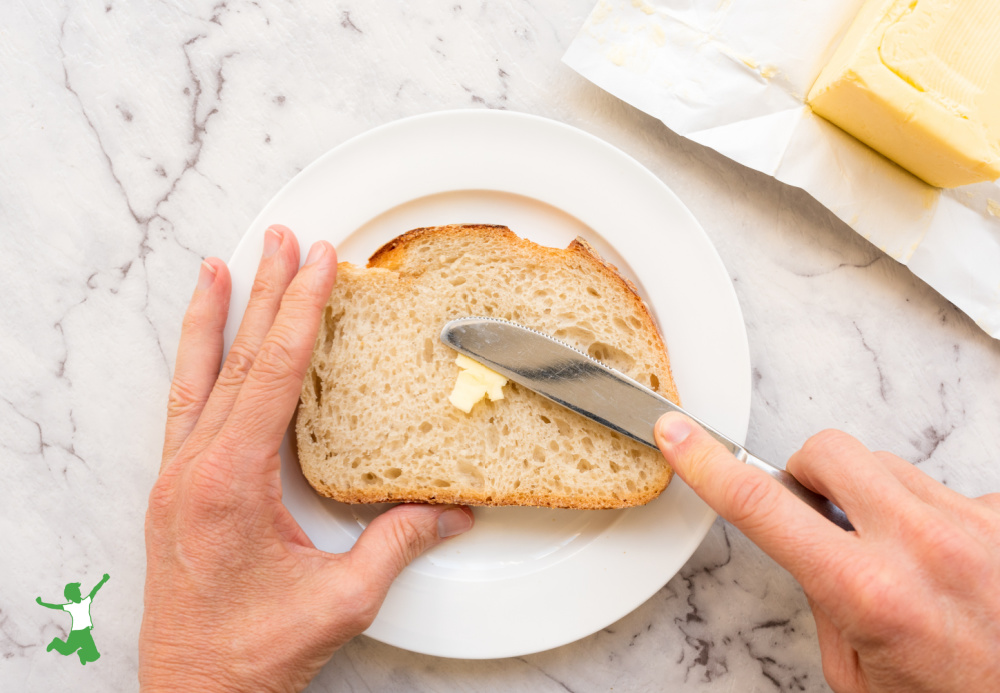
So, slather on some probiotic and enzyme-rich raw butter and local raw honey, and enjoy the real benefits of sourdough without unreasonable expectations!
(1) Nourishing Traditions
(2) Enzymes



I checked the ingredients of the sourdough bread I’ve been buying, and the last ingredient listed is “non-packaged yeast”. Does this mean it’s no good? Or are they referring to naturally occurring yeasts?
Sounds like a labeling trick to me. There shouldn’t be any yeast added to true sourdough … packaged or not.
I love sourdough bread, but is all bread labeled “sourdough” really made without yeast? For example- bread purchased in the bakery department of my local Wegmans? How do I know if it’s real sourdough or not?
I’m going to write a post on this. You are right … it is very confusing out there. Bread manufacturers are using the word sourdough incredibly loosely.
Cindy, I have a recipe for sourdough starter and than bread and I can post it online if you want. The only thing is that it takes about 7days. Total procedure from four to plate. My bred is made from rye flour. Do you want it?
If you’re in Florida…check these folks out
Sarah, I make authentic sourdough bread twice a week. My husband is addicted to it! He always reminds me when we’re nearing the end of a loaf, he hates to be without it and doesn’t even like to “fill in” once in a while with what used to be his favorite store-bought breads.
I don’t blame him one bit!!
Who has a good, easy, GF sourdough bread recipe they’d like to share? I have a brown rice sourdough starter that I use to make waffles regularly, but I’d love to have a bread recipe!
Sing it, sister. There is *nothing* worse than retrieving your fresh, hot toast from the toaster only to find it covered in chemtrails. I blame the Illuminati.
Sarah
Although is seems correct that none of the bacteria in Sourdough could survive a 450F bake, it is amazing that after 3 to 4 days on the counter at room temp, my sourdough loaf appears to get tangier/more sour than when freshly baked.
Internal temp when taken out of the oven is ~190F, above the temp any LAB should survive, but is it possible, some made it through the baking procès?
Even at 190F, this is far higher than the 150F at which food enzymes and probiotics are destroyed. Cooked foods do not contain probiotics.
i like this post Sarah, because I love bread, which I already switched for gluten free, it gives me the hope to taste real bread again.I’d like to learn how to make my own sourdough though. Thank you for another interesting article.
If you don’t want to make your own, it’s worth seeking out a local small scale producer of artisan breads and finding out if they make true sourdough. There is one in our area that makes a huge variety of breads, all sourdough, and many of them with local flours. Such bakers need our support.