
Video: How to Make Ghee (Butter Oil)

by Sarah, The Healthy Home Economist on March 17, 2011


Ghee is simply a must in the pantry of any Traditional Cook. Butter oil or clarified butter as it is also known, has been used for thousands of years by Indian cultures for cooking. In fact, traces of ghee have been found on fragments of Indian pottery dating as far back as 6500 BC!

Dr. Weston A. Price discovered that butter oil, when taken along with cod liver oil, works synergistically to super charge the powerful immune boosting effects. Dr. Price always carried a flask of cod liver oil and another of butter oil to the bedside of very ill patients and more often than not, was able to revive them with a few drops of each under the tongue. Using cod liver oil or butter oil separately did not have the same deadbed reviving effects.

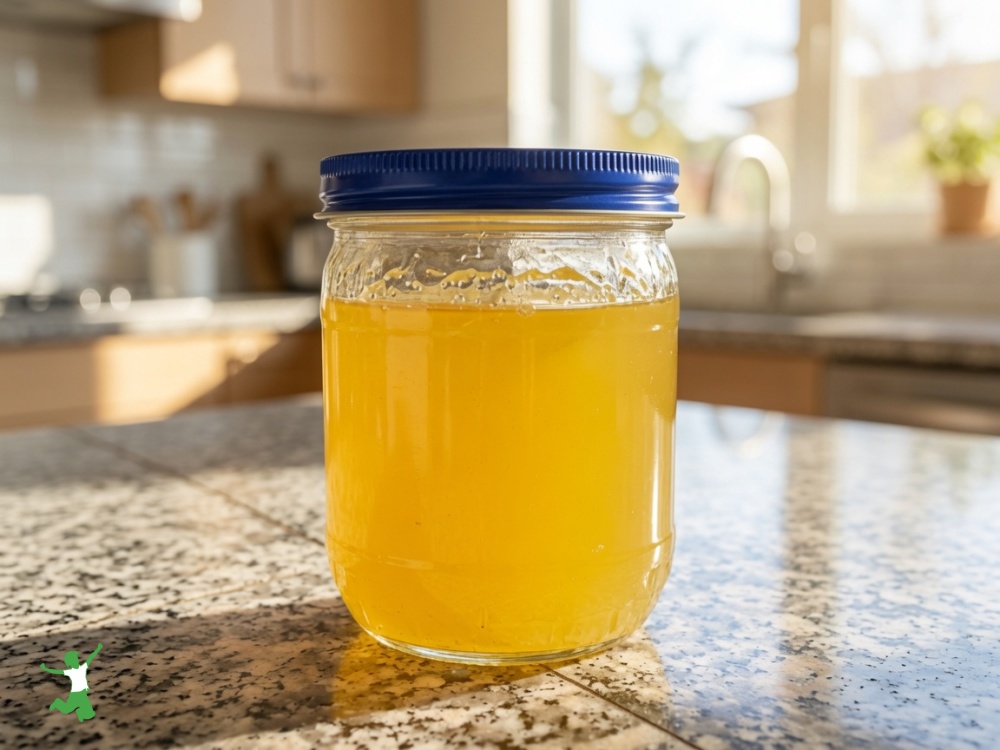
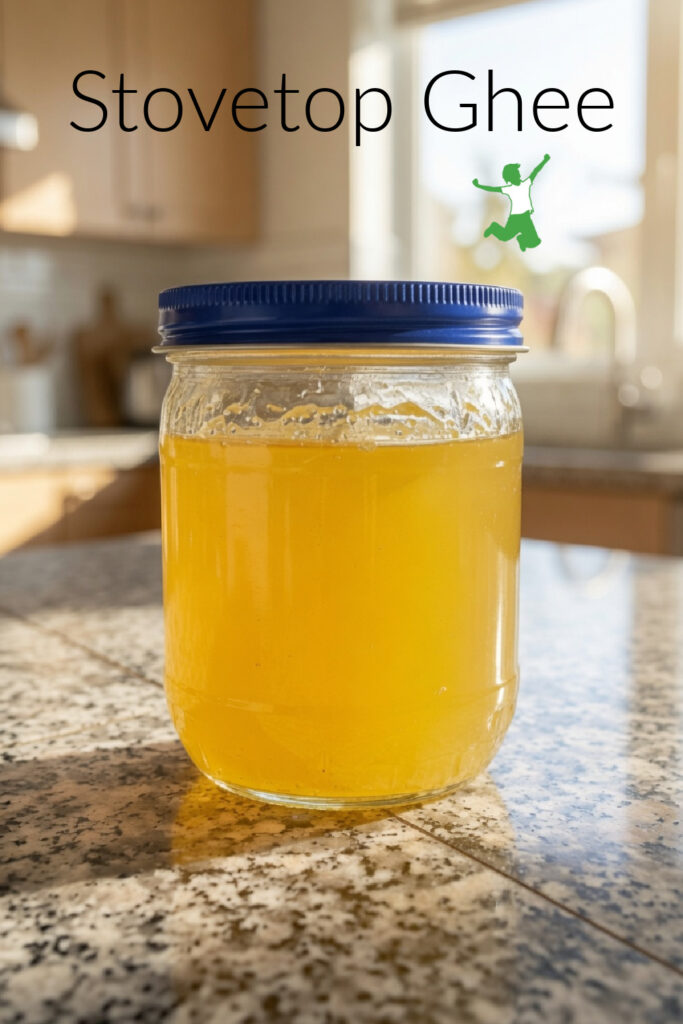
It is best to make your own ghee rather than buying from the store. Notice the picture to the left of a jar of ghee that I made myself in my own kitchen with grassbased butter from a local farm. It is so yellow! Ghee from the store is a pale yellow, indicating a much lower level of nutritional value.

In addition, ghee from the store is ridiculously expensive, so making it yourself is not only a more nutritious way to go, it is very cost effective as well! I myself make ghee for about half the cost of what it would be to buy it at the healthfood store!

Unlike butter, ghee does not need refrigeration and keeps well on the counter or pantry for many months, so keeping a jar in the pantry for a quick veggie saute is very convenient!

Another benefit of ghee is that it is easier to digest as all the milk solids (proteins) have been removed from the butter.  Very frequently, even those with a true dairy allergy find that ghee presents no trouble for them.

Another advantage to using ghee is that when you use grassfed butter to make it, the “cheesy” taste and smell of the butter is eliminated.   Therefore, by making ghee with your grassfed butter, you will find that you now have a healthy butterfat for cooking that does not displease your family with a strong odor as would sometimes happen when cooking with grassfed butter alone.

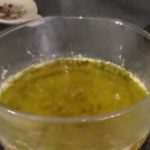
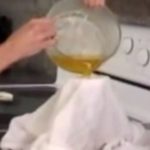
My video lesson for this week covers how to make this indispensable healthy fat for use in your own kitchen.  I also cover how to make butter oil capsules for taking with your daily dose of cod liver oil.   If you are spending money on high quality fermented cod liver oil, it is a must to be taking it with butter oil to supercharge the effects!

Sarah, TheHealthyHomeEconomist.com


The Healthy Home Economist by E-mail


{ 160 comments… read them below or add one }

Arlene Alasandro March 17, 2011 at 11:20 am

Just want to thank you for all your wonderful videos-you have opened my eyes to a lot and encouraged me to try many things I may not have had the courage (or incentive) to!!

Reply

Sarah, The Healthy Home Economist March 17, 2011 at 12:53 pm

You’re welcome, Arlene! I am glad that the videos are encouraging you to try some new things in your kitchen! :)

Reply

D. March 17, 2011 at 11:28 am

I’ve never been successful making ghee, so maybe I’ll try it again after viewing your video. I like the idea that it doesn’t need refrigeration. My fridge is always loaded to the gills with other homemade dairy goodies! Whey, cream cheese, sour cream, buttermilk, kefir, yogurt, greek yogurt, creme fraiche . . . the list goes on. ;->)

Reply

Diana March 17, 2011 at 11:28 am

Thanks for the great video, Sarah! I’m going to get some of my new-spring-grass-butter into ghee as soon as possible! A quick question: what is the benefit of taking the butter oil in a capsule as opposed to on a spoon like you would with cod liver oil? Also, is there anything in the makeup of an empty capsule that could be harmful if taken regularly? If you are not taking cod liver oil (working on the budget still!), is there any benefit to taking butter oil alone?

Reply

Sarah, The Healthy Home Economist March 17, 2011 at 11:37 am

Hi Diana, butter oil off the spoon is fine .. but it is sometimes easier to pop a few capsules. especially with kids who don’t like stuff off the spoon. Also, the capsules are great for traveling. Butter oil is wonderful alone .. it just is supercharged in effectiveness with the fermented cod liver oil.

Reply

Erica Johnson March 17, 2011 at 11:29 am

How many butter oil capsules (size?) do we take with our Green Pastures FCLO?
Erica Johnson\’s last post: Woodworker goes for a spin!

Reply

Sarah, The Healthy Home Economist March 17, 2011 at 11:38 am

1/2 tsp of butter oil per day is great, so that would be about 2 of the jumbo capsules that you buy empty at the healthfood store.

Reply

Alison March 17, 2011 at 11:37 am

I make my ghee in the oven: 2lbs. butter in my cast iron pan (a good way to season it) at 250 for about 1.5 hours and then skim away the foam, strain in cheesecloth, works like a charm and I don’t have to stand at the stove watching it!

My question for you is, do you know how much butter oil should be taken on a daily basis? Right now I’m taking the green pastures capsules, but love the idea of making it at home, a lot cheaper!
Alison\’s last post: Politically Incorrect food resolutions

Reply

Sarah, The Healthy Home Economist March 17, 2011 at 11:40 am

Hi Allison, the Green Pastures butter oil is raw, so would be better from that standpoint than homemade, but money-wise making it at home is a very very good option for those who would not buy it otherwise due to the price. 1/2 tsp a day is a wonderful dose with your fermented cod liver oil.

Reply

Adrienne March 17, 2011 at 11:42 am

We have just recently reintroduced butter into our household so I am really excited to try this!

One of my sons has a life-threatening allergy to dairy, but has been able to seemingly tolerate more exposure recently so I am also going to check w/ his allergist about doing a small food challenge with ghee – since you reminded me that all of the proteins are removed and that is the part that causes the allergic reaction.

I have a few questions, however –

1. how much protein is there actually in butter as it is all fat and the nutritional labels for butter show it as having no protein?

2. How much ghee do you end up getting from about a pound of butter

3. Would the quality of ghee made from grass fed beef be equivalent to that of Green Pasture’s butter oil? This sure would be a lot cheaper!
Thanks for the informative post!
Adrienne\’s last post: Saint Patrick’s Day Dairy-Free Fudge

Reply

Sarah, The Healthy Home Economist March 17, 2011 at 12:57 pm

Hi Adrienne, there really isn’t much in the way of milk solids in the butter. Check out the video and you will see at the end the milk solids at the bottom of the baking dish. You really don’t discard much at all when making ghee. The Green Pasture’s butter oil is centrifuged and is raw so would be better than homemade from that standpoint. The soil where Dave’s farm is is so rich that it is a good idea to be getting some of that as well. We just use so much butter oil in our home – particularly for cooking – that we simply must make it.

It also concerns me that so many folks do not take butter oil with their fermented cod liver oil. It is a shame as the two together work so much better. The butter oil from Green Pastures is pricey which is why I think folks in this economy buy the fermented cod liver oil first – which is the correct choice. BUT, there is a way to take the butter oil anyway by making it yourself if price is an issue which is why I was motivated to make this video.

Reply

Merry Lynn March 17, 2011 at 12:10 pm

Being a little knew to the idea of cooking with butter, I have a question: I had recently heard that using butter in high-heat situations like frying was not a good idea in that the high heat actually damaged the oil and made the oil carcinogenic. I would really like some feedback on this. I have no problem whatsoever in using butter after cooking, as much as everyone wants and we LOVE the taste of butter!

Reply

Sarah, The Healthy Home Economist March 17, 2011 at 12:13 pm

Hi Merry Lynn, butter burns when you cook it too high, but ghee has all the milk solids which burn removed, so it has a very high smoke point. This is not to say that you can’t heat it to a high enough temperature to damage it, which of course you can. But, for the majority of cooking situations – even frying – ghee is a wonderful choice. Butter could never be used for frying, however.
Sarah, The Healthy Home Economist\’s last post: Video- How to Make Ghee Butter Oil

Reply

Mikki March 17, 2011 at 1:06 pm

Sarah,
I have a jar of ghee from Ancient Traditions and a jar of coconut ghee from Green Pastures in my fridge. Can I put them in the pantry. They are awful hard to scrape out of the jar cold! How long at room temp will these last?
Mikki

Reply

Sarah, The Healthy Home Economist March 17, 2011 at 1:10 pm

Hi Mikki, I have Green Pastures coconut ghee in my pantry as well. That and your store bought ghee should last a minimum of 3-4 months if not up to a year in the pantry.
Sarah, The Healthy Home Economist\’s last post: Video- How to Make Ghee Butter Oil

Reply

Mikki March 17, 2011 at 11:09 pm

Thanks! I’m taking them out!

Reply

jill March 17, 2011 at 1:36 pm

Hi Sarah,
Thank you so much for this instructive and money saving video! I always wondered why my grassfed butter from the farmer had such a smell! I am so glad you mentioned this as I thought it was just me or just my farmer. I guess “cheesy” is a good way to describe it – or just foul… I never made ghee from it, as I thought the ghee would smell just as bad. I may try to make the ghee from grassfed butter again. Thanks!
jill\’s last post: Don’t Be Fooled- Natural vs Organic

Reply

Sarah S March 17, 2011 at 1:37 pm

Speaking of butter oil…my whole family takes FCLO and HVBO except the baby who just takes FCLO. What age should I introduce HBVO to her? She is 9 months old.
Thank you for such an informative blog. I will have to try making ghee.

Reply

Sarah, The Healthy Home Economist March 17, 2011 at 1:40 pm

Hi Sarah, she should be taking it now. Butter oil is included in the homemade baby formula video for newborns through age one, so your daughter can start taking it right away.
Sarah, The Healthy Home Economist\’s last post: Video- How to Make Ghee Butter Oil

Reply

Sarah Smith March 17, 2011 at 2:24 pm

Hi Sarah,
Does your family pay the extra to buy the Green Pastures butter oil since it is raw? Or do you just take the homemade butter oil? Just wondering as I’m trying to decide the best course to take. We’ve been buying the Green Pastures stuff, but it is SO expensive. Do you know if the butter oil Weston Price referred to in his studies was raw or cooked?
Sarah Smith\’s last post: Chicken Bones – A Nourishing Snack!

Reply

Sarah, The Healthy Home Economist March 17, 2011 at 3:27 pm

Hi Sarah, we do buy Green Pastures butter oil but we need more butter oil than that which is why I also make it.
Sarah, The Healthy Home Economist\’s last post: Video- How to Make Ghee Butter Oil

Reply

Sarah, The Healthy Home Economist March 17, 2011 at 4:15 pm

Oh and Dr. Price centrifuged his own butter oil which is the same process Green Pastures’ uses from what I understand from Dave Wetzel, the owner. Making it at home over the stove or even in the oven if you prefer is an inferior process to centrifuging which retains rawness, but this homemade butter oil is still highly nutritious and very much worth your time and effort to make if you are not currently taking any butter oil in the diet.

Reply

Emily March 17, 2011 at 2:25 pm

Wow, for some reason I never realized that butter oil and gee were the same thing. But now I’m slightly confused about two things. Why is the gee I buy in the store a soft solid and the butter oil I get from green pastures a liquid? Also the gee I buy says it does not need to be refrigerated but the butter oil from green pastures says that it should be refrigerated after opening (making it rather difficult to measure and take)?

Reply

Sarah, The Healthy Home Economist March 17, 2011 at 3:29 pm

Hi Emily, ghee (butter oil) goes from a liquid to a solid somewhere around 75F same as coconut oil which is why sometimes you will find it as a liquid but depending on the temp of your house it may go semi-solid in the pantry. Green Pastures butter oil does not need to be refrigerated but perhaps the label says as much for labeling law purposes as some folks would leave in the cupboard for over a year and then it would go bad. But, if you use it up in a few months as we do, then no need to refrigerate.

Reply

Sara March 23, 2011 at 5:43 am

Ahhhh, you may have answered my question. I made ghee yesterday according to your video and this morning I found it soft solid. It is rather cold in our house. I was thinking that I somehow didn’t make it correctly, but maybe I did? How do I know whether I made it right if it becomes semi-solid? Also, is it typical that you find yourself skimming foam the entire time it’s on the stove top? Just as I would think all the foam was gone, more would appear. I’d appreciate your thoughts on the Sarah! Thanks!

Reply

Sarah, The Healthy Home Economist March 23, 2011 at 7:53 am

Mine is a semi solid right now in the pantry. It will be a liquid once the warmer weather comes. Just skim as much foam as you can as these are off flavors and you don’t want them staying in the butter oil which is why I don’t use the oven method for making it.

Reply

miika March 17, 2011 at 3:18 pm

Would just eating butter along with the daily dose of cod liver oil have the same effect as taking clarified butter? We eat a lot of butter, especially with breakfast, which is when we take our cod liver oil, so I’m wondering if we need to add the extra spoonful of clarified butter or is the butter we use on our bread enough (amounts to a good teaspoon or two per person as well).

Reply

Sarah, The Healthy Home Economist March 17, 2011 at 3:30 pm

Hi Miika, if the butter is from a good local source and grassfed, then yes, that would be great. Few people take a spoon of grassfed butter with their cod liver oil, though, which is why butter oil is quite convenient.
Sarah, The Healthy Home Economist\’s last post: Video- How to Make Ghee Butter Oil

Reply

Yolanda May 15, 2011 at 6:08 pm

I’m so glad Miika asked that question! I was thinking the same thing…. can’t I just take my CLO with a meal that has butter…. Could you please give me a link to where I can find out why FERMENTED CLO is better? I have not purchased any yet. It seems so very expensive. My husband and I both take Norwegian CLO that we get through Swanson Vitamins, and it is nice stuff. Will it not be of benefit to us? Thank you for your lovely blog and videos. You have helped and inspired me a lot.

Reply

Caitlin March 17, 2011 at 3:52 pm

Hey Sarah,
I am confused about the nutritional properties of butter oil. I was under the impression that heat destroys most of the nutrients in foods, which is why raw milk products are much more nutritionally dense than pasteurized. I guess I’m just wondering what nutrition is left after all the heating of the butter oil? What vitamins resist heat and which break down etc.?
Thank you so much!
-Caitlin

Reply

Sarah, The Healthy Home Economist March 17, 2011 at 4:12 pm

Hi Caitlin, heating such as what happens with pasteurization (particularly high heat pasteurization such as what happens with UHT milk) destroys the enzymes and it is particularly damaging and denaturing for milk proteins. The milk fat, however, is rather stable when heated and not harmed other than enzymes being lost which is why pasteurized butter is still recommended if that is all that a person can afford (although raw butter would certainly be a better choice if this is in the family budget). When you make ghee .. you are removing the fragile milk proteins and leaving only the fat which is still highly nutritious after the process is complete.
Sarah, The Healthy Home Economist\’s last post: Video- How to Make Ghee Butter Oil

Reply

Caitlin March 17, 2011 at 5:51 pm

Hi Sarah,
I guess I’m confused because you say ghee can be used as a substitute for Green Pastures Butter Oil, which has vit.’s A,D, K etc. in it. But heat destroys these vitamins. Doesn’t the process of making ghee destroy these vitamins? Is there a way to make ghee that leaves the vitamins intact? And do you know how they make the butter oil from Green Pastures? Do they heat it and then add the vitamins back in, or do they process it without heat? Or is it some other component in the butter oil which, when combined with Cod Liver Oil, makes the pair really powerful for the body?
Thanks,
-Caitlin

Reply

Caitlin March 21, 2011 at 12:42 am

??

Reply

Beth March 27, 2011 at 4:09 pm

Caitlin, I don’t believe vitamins A, D & K are destroyed by heat as, say, vitamin C is.

As for the Green Pastures process of raw centrifuged butter, there are a couple of mentions above, and you can read about it on their website, http://www.greenpasture.org. See the blog archives on their website for interesting info, such as:
http://www.greenpasture.org/fermented-cod-liver-oil-butter-oil-vitamin-d-vitamin-a/part-2–deeper-discussion–why-fclo-and-high-vitamin-butter-oil/

The http://www.westonaprice.org website is also chock full of great info – just type a word in their search field and see the amazing array of results that you get!

sara March 17, 2011 at 4:16 pm

The best butter that I can find nearby is salted; would that work?

Reply

Sarah, The Healthy Home Economist March 17, 2011 at 5:09 pm

Hi Sara, yes it will work. Some ghee recipes call for a bit of salt to be added to the unsalted butter prior to straining (unsalted is more traditional) but as long as you don’t add any additional, it should be ok.

Reply

Victoria March 17, 2011 at 4:22 pm

Hi Sarah,
I just have to tell you how beautiful you look! Wow! Just beautiful!
Blessings!

Reply

Sarah, The Healthy Home Economist March 17, 2011 at 5:08 pm

Victoria, you are very kind! Thank you! :)
Sarah, The Healthy Home Economist\’s last post: Video- How to Make Ghee Butter Oil

Reply

Jo at Jo's Health Corner March 17, 2011 at 5:15 pm

I love ghee and I make it myself too. I will definitely share this video on my facebook page..
Jo at Jo’s Health Corner\’s last post: Radiation – Tips from Gary Young on How Protect Yourself Using Essential Oils

Reply

Jean March 17, 2011 at 5:49 pm

Hi, You used the words low temperature pasteurization. What is its definition? We still have snow on the ground where I live so it will be 6 weeks or so before I can get the spring grass fed milk/butter. You said you use a lot of it. How much is that? I’m wondering how much butter I should have to make a years worth of ghee for a family of 4. I’m still learning lots about traditional cooking and have been making changes since last August. The grass grows between April/May and September where I live. Sounds like the butter in May would be better than that from August. Thanks.

Reply

Sarah, The Healthy Home Economist March 17, 2011 at 6:01 pm

Hi Jean, low temp pasteurization is also known as “vat pasteurization”. Ask you farmer about it and he/she will know what it is and whether they offer grassfed butter of this kind. We use the ghee from 1 lb of grassfed butter about every 2-3 weeks (this is in addition to the butter we use). August butter is also fantastic so no worries if you can’t stock up enough May butter.
Sarah, The Healthy Home Economist\’s last post: Video- How to Make Ghee Butter Oil

Reply

Michelle Malmberg March 17, 2011 at 7:28 pm

Thank you, Sarah. We make a lot of ghee and I’ve found it MUCH easier to simply let four pounds of butter simmer for a couple/few hours. The milk solids all fall to the bottom of the pan and no skimming is required. Strain the oil and that’s all. Lightened up my efforts on Ghee Day!

Reply

Sarah, The Healthy Home Economist March 17, 2011 at 8:15 pm

Hi Michelle, what concerns me with not skimming is that the foam (off flavors) would end up in the butter oil. I’m not sure that it would fall to the bottom.

This same thing would happen making stock .. if you don’t skim the foam it ends up on the broth and the broth ends up not tasting as good.
Sarah, The Healthy Home Economist\’s last post: Video- How to Make Ghee Butter Oil

Reply

Shannan March 17, 2011 at 7:33 pm

What is everyone’s favorite FCLO and how do you get it down??

Also, this might be a dumb question… But, how do you find good quality grass fed butter?? Do you just call around and talk to local farmers??

Reply

Nancy March 17, 2011 at 7:50 pm

Can you can the Ghee for long time storage?

Reply

Sarah, The Healthy Home Economist March 17, 2011 at 8:16 pm

I wouldn’t can it. I would freeze it instead.
Sarah, The Healthy Home Economist\’s last post: Video- How to Make Ghee Butter Oil

Reply

Lara March 17, 2011 at 11:46 pm

Thank you for this video I will be making ghee this weekend. Just wondering what is coconut ghee as compared to coconut oil and why use it?

Reply

Sarah, The Healthy Home Economist March 18, 2011 at 9:34 am

Hi Lara, the coconut ghee is a special product offered by Green Pasture Products that I have not seen anywhere else. It combines organic virgin coconut oil (75%) with ghee (25%) in a really delightful mix that is a lovely cooking oil.
Sarah, The Healthy Home Economist\’s last post: Video- How to Make Ghee Butter Oil

Reply

Ann March 18, 2011 at 1:16 am

Sarah,
Thank you for all of your wonderful videos. I was curious about the coconut ghee and did some googling. This site mentioned that raising the heat to turn clarified butter into ghee actually improves the flavor and generates antioxidant compounds. Keep teaching us how to be healthy!
Ann

Reply

Sarah, The Healthy Home Economist March 18, 2011 at 9:36 am

Hi Ann, ghee definitely has improved flavor over regular grassfed butter .. there is no doubt about that ! :) Didn’t know about the antioxidant compounds that are generated! No wonder traditional Indian cultures have stuck with it for so many thousands of years!
Sarah, The Healthy Home Economist\’s last post: Video- How to Make Ghee Butter Oil

Reply

Diann March 18, 2011 at 4:35 pm

Thanks, this looks easy! And now that I’ve found a good source of grass fed butter, I’m looking forward to making it. It is also good to know that I don’t have to fight to find room for it in the fridge (not that there’s all that much more room on my counter tops). Just curious, though… when refrigerated does it remain a liquid, or does it solidify?

It will be useful for culinary experiments in Indian food as well as the nutritional aspects, I’m sure.
Diann\’s last post: Turnip- Broccolini- Onion- Mushrooms – Sauteed

Reply

Sarah, The Healthy Home Economist March 18, 2011 at 5:14 pm

Hi Diann, it really depends on the temperature of your home. Our home is about 70F right now (the spring weather is warm already here in FL) and the ghee is soft and easy to scoop out but not liquid. By the time the really warm weather arrives, it will likely stay liquid.

Reply

Amber March 18, 2011 at 5:57 pm

So do you personally use raw butter or do you use pasteurized? And if so, from where?
Thanks for the video! I had no idea I could make it so easily!!!
Amber\’s last post: Reaching those who’ve never heard…

Reply

Sarah, The Healthy Home Economist March 18, 2011 at 5:59 pm

Hi Amber, I use raw butter for spreading on toast and the like (non-cooking uses) and low temp pasteurized grassfed butter for making ghee.
Sarah, The Healthy Home Economist\’s last post: Video- How to Make Ghee Butter Oil

Reply

Gail July 8, 2011 at 11:36 am

Sarah, what brand and where do you get the low temp pasturized grassfed butter? I also live in the Tampa area.

Reply

Melinda March 18, 2011 at 9:29 pm

Hi,

I am trying to store my frozen bone broths in glass in order to prevent the food from interacting with plastic. I just threw out my third mason-type canning jar today because I guess I left it on the counter too long while doing other things and it cracked outside of the freezer. I generally try to thaw them in the refrigerator.
Two large ones cracked in the freezer – the first I thought I had simply overfilled. Then another one cracked which was not overfilled. I have used square pyrex dishes which have plastic tops which do not crack, but they spill so easily I end up wasting a bunch. Any suggestions?

Reply

Yolanda May 15, 2011 at 6:20 pm

Melinda, if you are going to freeze liquid in a glass jar, you need to use a jar that is designed just for that. Ball makes pint sized canning jars that are smaller on the base and taper up to a larger diameter on top, without the “shoulder” on a typical jar. Otherwise the liquid will freeze, expand and break the jar.
Yolanda\’s last post: Garden Musings

Reply

Bess March 19, 2011 at 11:19 am

So excited to know how to make ghee!
I heard that KerryGold is a good brand for butter (I think it is low temp pasteurized, do you know?). And if this is a good brand, should I also stock up on it now? (Not sure if it is springtime in Ireland.)

Reply

Sarah, The Healthy Home Economist March 19, 2011 at 2:28 pm

I don’t think an international brand like Kerry Gold would have a seasonal variation like a small farm would. Just a guess.
Sarah, The Healthy Home Economist\’s last post: Video- How to Make Ghee Butter Oil

Reply

Heather March 22, 2011 at 12:24 am

I tried this today and when I poured it into my jar, it didn’t seem clear enough. I heated it longer… And now it’s darker and even less clear. I think I messed it up… Maybe burnt the butter? Is that even possible over low to medium heat? Suggestions for next time? Thanks!

Reply

sara March 22, 2011 at 8:42 am

I tried this, but mine definitely came out more brown than yours looks in the picture- Was I supposed to be using a glass pot, or is there some other reason that mine is darker?

Reply

Heather March 22, 2011 at 5:15 pm

That sounds like what happened to mine. I used a stainless steel pan.

Reply

Carol March 27, 2011 at 12:15 pm

At this time I can’t get any butter from my farmer so I’ve been using Kerry Gold and Pastureland. Are these butters both ok then for making ghee?
Thanks.

Reply

Sarah, The Healthy Home Economist March 27, 2011 at 6:27 pm

Hi Carol, yes those butters are fine for making ghee. Get some local grassfed butter when you have the opportunity, though.
Sarah, The Healthy Home Economist\’s last post: Genetically Modified Cows Produce “Human” Milk

Reply

Carol March 27, 2011 at 7:14 pm

Thanks. I will, but spring is not quite here yet up north. And my farmer doesn’t sell butter in the winter. Soon…. spring will come… :-)

Reply

Ranjani March 29, 2011 at 5:07 pm

Hi Sarah,

Thank you again for this elegant video and method to make ghee! Is there a brand of butter you would recommend if we can’d find local grass-fed butter? Also, should the milk solids be discarded or can they be recycled into another recipe?

Ranjani.

Reply

Sarah, The Healthy Home Economist April 1, 2011 at 8:13 pm

I think you should discard the milk solids Ranjani. If you can find local grassfed butter, Kerry Gold would be the best US brand. Not sure where you live, but just find the best quality most YELLOW brand you can find at the store. It will likely be a gourmet butter of some kind.
Sarah, The Healthy Home Economist\’s last post: Grassfed Goes Gourmet

Reply

Carol April 1, 2011 at 7:06 pm

I have a question about leaving it out on the counter. I was talking with someone yesterday who said they made ghee (learned how in a class on Indian cooking) and her ghee got mold in it after a short time. Is that normal? Why would that happen? TIA

Reply

Sarah, The Healthy Home Economist April 1, 2011 at 8:12 pm

Not sure Carol. I live in hot, humid FL and mine lasts fine in the pantry for several months. Of course, refrigerate it if you have a concern. It just hardens up that way and is a little inconvenient for cooking.
Sarah, The Healthy Home Economist\’s last post: Grassfed Goes Gourmet

Reply

Beth April 12, 2011 at 1:26 pm

Say, Sarah, was that a Pyrex bowl you were using to clarify the ghee?

Reply

Sarah, The Healthy Home Economist April 12, 2011 at 1:57 pm

Yes it was.
Sarah, The Healthy Home Economist\’s last post: An Airport Terminal With Real Food

Reply

RobinP April 20, 2011 at 12:44 pm

We live on a small homestead and milk two Jersey cows. I have tons of raw milk butter I made last year to have in the freezer while our cows were dry during the winter. Can I use this butter, some of which has been frozen for nearly a year, to make my ghee? I made so much and now it’s time to make it again, so I’d love to use last year’s for my ghee.

Reply

D. June 9, 2011 at 12:45 pm

I was wishing Sarah would come back and answer your question RobinP, as I have the same query. I have several pounds of homemade butter in the freezer from batches I’ve made over the winter months. It’s not totally from grassfed, of course, but a lot of it is.

The last time I purchased KerryGold butter it was waaaaay salty. I have been told never to use salted butter to make ghee, is that true? I’m wondering why it would, or wouldn’t, make any difference? I would think the salt would give it a longer shelf life, but the KerryGold was so salty that I think you’d get an off taste.

Suggestions? Ideas?

Reply

D. June 9, 2011 at 1:17 pm

I found this information about ghee. Don’t know how accurate it is though because she claims ghee will only keep for about 1 month. Mine never lasts that long when I finally DO get a good batch, but I think it usually keeps longer than a month, right?

===================

Here’s the article:

“How to Make Ghee at Home

To make ghee, add one pound of unsalted (preferably organic, although that can be pricey) butter to a large, heavy pot. Bring the butter to a boil, being careful not to scorch or burn the ghee, as that can irreparably damage the flavor. This takes about three minutes. Once the ghee is boiling, lower the heat to medium and continue boiling. A foam of milk solids will develop on top of the ghee, and eventually settle to the bottom of the pot. The ghee is done once it has stopped foaming, is a translucent dark golden color, and when there are visible brown milk solids on the bottom of the pot- this takes about seven minutes. Remove the ghee from the heat, and pour it into a heatproof container, through a fine sieve or mesh strainer to remove any further milk solids and impurities. Ghee does not need to be refrigerated, and can keep for up to one month on the shelf.”

Taken from this site: http://www.associatedcontent.com/article/2548099/how_to_make_ghee_at_home.html?cat=5

Then there’s another guy (at the same site) who insists that salt should be used (see why this is so confusing?? Everyone has their own beliefs. Food is now a religion!)

http://www.associatedcontent.com/article/2551457/how_to_make_ghee_at_home.html?cat=5

Well, I’m now back to asking the same question about salt. Grrrrrr . . .

Reply

DEBRA March 3, 2012 at 2:37 pm

SINCE SHE NEVER CAME BACK TO ANSWER YOUR QUESTION, I FEEL FREE TO DO SO: YES, YOU CAN USE THE BUTTER TO MAKE INTO YOUR GHEE! THERE’S NO REASON WHY NOT! BY REMOVING THE SOLIDS AND FOAM FROM THE BUTTER IN THE HEATING PROCESS, YOU ARE REMOVING ANYTHING THAT WOULD MAKE IT TURN BAD ANYWAY. YOU JUST HAVE TO MAKE SURE YOU POUR THE STRAINED GHEE OIL INTO A CLEAN, [STERILE WOULD BE BETTER] DRY JAR WITH A STERILE LID TO START WITH. YOU CAN STERILIZE THE LID AND JAR IN BOILING TEMPERATURE WATER FOR A FEW MINUTES, USE TONGS TO REMOVE AND STAND ON A CLEAN TOWEL TO DRAIN DRY AND COOL DOWN BEFORE ADDING THE STRAINED GHEE OIL. I HOPE THIS HELPS YOU!

Reply

Dale April 29, 2011 at 7:44 pm

Hi Sarah,

I watched another video about making Ghee and that guy’s saves all of “foam” to be used much like you would normally use butter. After making my first batch of Ghee, I gave it (the foam) a taste and it was actually pretty good. After adding a bit of salt, it was quite good.

Anyway, as long as the flavor is pleasant, do you know of any reason NOT to use it? Like, is it bad for you?

Thanks…

Reply

DEBRA March 3, 2012 at 2:41 pm

NOT ONLY IS THAT FOAM STILL BUTTER THAT CAN BE EATEN AND USED IN COOKING, IT CAN ALSO BE RENDERED IN WITH OTHER FATS WHEN MAKING LYE SOAP!

Reply

Patience May 22, 2011 at 9:55 pm

Hi Sarah,
I was in my favorite Mediterranean/Middle Eastern market and found a butter ghee called Ziyad Brand All Natural Butter Ghee. The ingredients are clarified butter oil. It is in a glass jar and the color is bright bright yellow, like a smiley face. When I opened it it smells exactly like the grass fed raw butter from Organic Pastures! Do you have any knowledge of this brand? thank you!

Reply

Patience May 27, 2011 at 5:51 pm

Hello, I found a “pastured cows” organic butter at Albertson’s Market in California, the brand is Wild Harvest organic… This is pasteurized butter. They add lactic acid to the cream. I called the company with questions and they called me back today. The cows that this butter comes from are in the Mid West (sometimes they truck in cream from the East Coast also). Because of snow they also feed dried grasses in winter, and when the cows are being milked twice a day they are given grains at each milking- grains can include corn, flax, wheat, etc and also can include from 0-10% soy, all organic of course. Also, the farmers can decide how much grain to feed and what would be in it, as long as it is organic. The farmers who join the co-op are not permitted to sell raw milk, the contract states that the farmers must sell all milk to the group. What do you think of this description of this pastured cows butter? Also, please see my previous post regarding Ziyad brand Butter Ghee. Thank you for so much helpful information!!

Reply

Toni June 5, 2011 at 7:49 pm

Hi Sarah, Ghee seems so easy to make! I can’t wait to try it! I enjoy watching your videos as well as do my daughters. I have been trying to find a good home economics course as I home school and want my girls to learn traditional methods of food preparation, but that type of educational material just isn’t in the home school catalogs. We just got done watching your kitchen equipment video and my three oldest ages 13-8 were totally engrossed and that gave me the idea to use your videos for our home ec!

Reply

Kate May 2, 2012 at 11:43 pm

There is a course I found just for that at the Food renegade website. Here’s the link
http://www.foodrenegade.com/realfoodnutritiontext/samples.html
you may have to copy and paste. It’s specifically for home school :)

Reply

TwentyFirst CenturyMum June 9, 2011 at 12:47 pm

Thanks for this. With regards to the fish oil – I am keen to know your opinion of this product and whether it is ‘sufficient’?
usana BIOMEGA
http://www.usana.com/webhosting/vitalvits
I’ve looked for quality vitamins for a long time and am pleased to have found these as they come highly respected.
My area of interest right now is healing my own cavities that pregnancy and morning sickness have created!
Would love your feedback. Thanks
TwentyFirst CenturyMum\’s last post: Id love to write a piece on the how to juggle time

Reply

Samantha June 11, 2011 at 9:56 pm

Hello Sarah

I was curious on how to give my kids the butter and cod liver oil? I have a 2 and 3 year old, and for me to give it to them on a spoon would probably make them gag! I already cook with the ghee, but I don’t think that would be enough. Any thoughts? Thanks!

Reply

Patience June 15, 2011 at 3:40 pm

I began using butter ghee and the kids don’t like the cheesy grass fed smell lol- however, I cook their eggs in it and then add a bit extra ghee in the bottom of the bowl or on the plate before I put the cooked eggs in/on and I mix it up. It disappears and they don’t seem to notice it at all lol!

Reply

Samantha June 16, 2011 at 8:28 pm

Thank you Patience! For the cod liver oil I have been giving it to them in their juice. I usually make carrot juice and mix it in or I will use apple juice. They seem to not mind the taste. Lol!! Thanks again!

Reply

tammyk July 14, 2011 at 1:40 pm

Is there a reason for using a glass bowl for heating the ghee? Would a regular pot damage the oil?

Reply

Jill July 25, 2011 at 2:58 pm

Hi Sarah,
I just recently found out how important Vit.K2 is and was wondering if K2 is in the butter oil that you make yourself like Ghee?
I ordered K2 supplements that are derived from soy but have since heard that the k2 in butter oil is much better for you. Any thoughts on this?

Reply

Melisa July 25, 2011 at 3:22 pm

Hi, I usually buy Organic Valley pastured butter. It is pasteurized and salted. is this okay to use for making ghee? The raw butter I can get here is 12 a pound the OV is $5.50. The pasteurization totally ruin it for making the ghee? thanks!

Reply

aqua August 12, 2011 at 11:41 pm

The Green pastures supplier told me butter oil is not the same as ghee/clarified butter?

Reply

Ann October 13, 2011 at 9:54 am

Butter oil is definitely NOT the same as ghee/clarified butter. The butter oil that Weston Price found so healing was made only from the milk of cows that had eaten a certain kind of grass early in the Spring. Summer and Fall grass did not produce the same nutrients, particularly a special factor that was a very specific form of Vitamin K. I am surprised no one has mentioned that here. Enormous oversight! I haven’t checked, but I would guess Green Pastures knows this and only uses butter that contains this special factor.

Reply

Billy Butterfield (@bilibutterfield) (@bilibutterfield) October 15, 2011 at 11:25 pm

Video: How to Make Ghee (Butter Oil) — The Healthy Home Economist http://t.co/Z0BmEAwr

Reply

michelle g October 28, 2011 at 7:17 pm

Thanks for your great video and tons of information. Trying to economize and making my own caps of CLO and now I can add butter to the list. brilliant ! Reading the comments were super helpful as well. Yes, you look radiant with beautiful skin.
Thanks.
Michelle

Reply

Mark Dickinson (@DonkeyJawPosse) (@DonkeyJawPosse) December 16, 2011 at 9:02 am

Video: How to Make Butter Oil
http://t.co/oVgH6Wjn

Reply

Fehmina December 23, 2011 at 12:31 pm

Hi,
Thanks for sharing. I am a bit confused though. I read in Eat Fat, Lose Fat by Mary Enig and Sally Fallon that ghee or clarified butter is NOT same as butter oil, especially because it’s nutrient content is far less than butter oil, hence not making it a super food.

Also, this site, states the same.
http://nutraprointl.com/2010/10/31/is-gheeclarified-butter-is-the-same-as-butter-oil/

What are your thoughts?

Reply

Sarah, TheHealthyHomeEconomist December 23, 2011 at 12:48 pm

Ghee is definitely butter oil. It’s not raw though which is the distinction some make.
Sarah, TheHealthyHomeEconomist\’s last post: Respected Medical Journal Disses Gardasil

Reply

Fehmina December 23, 2011 at 4:59 pm

Exactly, so that is why the nutrition is lost in the heat process, which is in a more concentrated form in butter oil, which uses centrifugal method. Anyway, I am just wondering if I should stick with ghee (I am Indian) and use it in my cooking, and was initially very happy to learn that it is same as what Dr. Weston Price was talking about, but then when I read that there def is a distinction, so health benefits might be compromised. However, it has to be effective to some degree to have worked for your son’s cavity. Oh how much I wish life would be simple.

Reply

Fehmina February 7, 2012 at 7:53 pm

Hi Sarah,

I have been meaning to write to you for some time. Anyway, I hav been reading Nourishing Traditions, and came across a point which would basically explain if ghee is not “raw” like butter oil, then how did it help reverse your son’s cavity. Like mentioned by Dr. Price and Sally Fallon, it’s the X factor or Actavator X that is the key in producing the benefits, and based on her book, Nourishing Traditions, the X factor is not affected by pasteurization. So heat will not kill it, given of course that the butter used for making ghee, is made from grass fed cows. Hope this helps clear out some air :-)

Reply

Stephanie December 28, 2011 at 4:30 pm

Thanks so much for this! I am trying to heal 2 cavities in my son and also my own mouth. This has been very helpful to me and i will definitely be trying this! :)

Reply

Erin January 8, 2012 at 5:47 pm

I am on a waiting list to purchase a herd-share in order to obtain raw milk. In the meantime, can I make quality ghee with cultured pasture butter (Organic Valley)? I just tried a small batch…got foam, but no milk solids on the bottom. ??
Also…is there any vitamin K2 in bacon fat from organic pastured pork purchased at a local farm?

Reply

Randa January 31, 2012 at 4:34 pm

Hi there! I’m new to most of this – just bought Nourishing Traditions recently and am re-vamping my kitchen & lifestyle. Haven’t finished reading NT yet, so not sure if this question is answered there: what do you do with the milk proteins you strained out of the ghee? Do they just get thrown out?
Thanks!

Reply

DEBRA March 3, 2012 at 2:57 pm

THE FOAM THAT WAS STRAINED OFF THE TOP ARE STILL EDIBLE AND CAN BE USED AS BUTTER STILL, OR RENDERED IN WITH OTHER OILS TO MAKE LYE SOAP, FOR ANOTHER IDEA…

Reply

Carrie February 6, 2012 at 10:40 pm

I need a butter substitute, my child has an anphylactic allergy to all forms of dairy protein!

Reply

jean February 25, 2012 at 7:52 pm

how about coconut oil?

Reply

Maria May 7, 2012 at 10:04 am

Thank you for this great Information.. very helpful.. :D

Reply

LauraDrahan May 24, 2012 at 10:05 am

Just curious, is ghee healthier than grass fed organic butter and if so, why? Thanks for the video!

Reply

Teri June 26, 2012 at 12:04 pm

My son has a terrible dairy allergy and I’ve been debating for years now whether or not he can have ghee. I desperately want him to have it because of the nutritional value but am afraid to because he’s had anaphalaxis to dairy before. Does anyone have a successful experience with giving high quality ghee to a person with dairy allergy? I somehow feel like the butter oil will actually IMPROVE his allergy but also do not want to send my 3 year old to the hospital. Any advice is greatly appreciated!

Reply

paulandrewanderson July 22, 2012 at 7:42 pm

I got stumped at “unsalted grass-fed butter”! Jumping past this gorilla-in-the-room is futile, for I (and the bulk of humanity) will not have any idea what this is, or where to get it.

Reply

Marje July 26, 2012 at 12:28 pm

Sarah: I just made this according to your instructions and it turned out beautifully.

I was wondering what to do with the part that I had skimmed off…. so added it to some steamed asparagus just before I served it…. received several complements from hubby…. asked me to create that “special sauce” again for him. So….. next time I make ghee, he’ll get the special sauce again.

Thanks for a terrific video.

Reply

Kieran August 14, 2012 at 5:54 pm

Hi Sarah, great video. My dentist said i had a small cavity in my tooth that would need filling in 6 months ( which i hate the idea of ) . What dose of homemade butter oil would you recommend? And what dose of cod liver oil? To heal this Thanks alot. Kieran.

Reply

Terri September 3, 2012 at 12:25 pm

Sarah,

Thanks for the great tutorial. I made the ghee and when I came back to my jar there were solids floating on top and on the sides! I used a coffee filter but I did get impatient and squeezed it slightly. Was it that or did I not cook it long enough. Thanks for all your hard work to help us with our health!

Blessings,
Terri

Reply

Tricia September 7, 2012 at 12:59 pm

Sarah, I have a question that you might have already answered. I just don’t have time to read the 110 comments to see if it was asked. I was at Whole Foods this morning and they don’t carry raw butter, said Calif law prohibits it. There was no ghee so I bought organic pasture butter. Will that work. They also only had emulsified Norwegian cod lover oil. The lady who worked there told me emulsified is the same as fermented.

Will these 2 substitutes work? I don’t have time to wait for a shipment since my daughter’s cavities were discovered yesterday and her appt. to fill them (with composite) is in 2 weeks. I need to start now. Any suggestions?

Reply

Nychole September 11, 2012 at 11:53 pm

I got some gel capsules from while foods but they are dissolving when I put liquid in them am I getting the wrong kind?

Reply

Katy September 14, 2012 at 7:15 pm

I think I burnt my butter oil. It was looking great, a nice yellow color, but I waited the 10 minutes and by the time I strained it, it had turned a dark brown. Do you think I can still use it? Or should I just throw this batch out and try again? Thanks!

Reply

Elke September 16, 2012 at 3:37 pm

THANK YOU SOOOO much for your www. It has been very informative. I will be making ghee this week, and also ordering fermented cod liver oil to give to my children as well. I was wondering if you may have an answer for me. I am getting the liquid peppermint cod liver oil, and not sure how much I should give them. I have 6yr old twins and a 9yr old.

I also read your blog on your sons cavity, and since my 6yr old is cavity sensitive, I was excited to hear about this pairing.

Have a great day!

Reply

Denver Tina via Facebook October 17, 2012 at 8:12 am

What about eating lots of butter and cream? I don’t like ghee.

Reply

Denver Tina via Facebook October 17, 2012 at 8:13 am

Grass-fed, of course.

Reply

thehealthyhomeeconomist via Facebook October 17, 2012 at 8:15 am

@Denver use a bit of ghee with your cod liver oil. It boosts effectiveness.

Reply

Ashley Rozenberg via Facebook October 17, 2012 at 8:19 am

Any opinion about nutrapro hvbo? A friend of mine takes it and seems happy with it. I make my own ghee anyway but it would be nice to buy in the winter when the cows in poland go indoors.

Reply

Kristy Pendergast via Facebook October 17, 2012 at 8:19 am

I bought skate oil instead, and have a freezer stockpile of raw cultured Jersey butter from June/July. I am good for a little while :)

Reply

Sabina Ras via Facebook October 17, 2012 at 8:22 am

I can’t play the video for some reason…:(

Reply

Rachel DeCourcey via Facebook October 17, 2012 at 8:23 am

Where I’m located, it’s difficult to get Green Pasture’s fermented cod liver oil/butter oil, even without it being back ordered. I have a 7 year old who seems to have her Dad’s teeth. In fact, we are on our way to the dentist because it looks like her back molars are turning brown. I was wondering, do you think a regular, high quality cod liver oil would be a help even if it’s not fermented? I called our local natural food supplement store (owned by a private naturopath) and they don’t carry fermented cod liver oil, nor butter oil.

Reply

Chris P Critter via Facebook October 17, 2012 at 8:29 am

Ghee, while a wonderful source of healthy fat, is highly heated, whereas butter oil is not, and has its high vitamin content intact. I would think grassfed butter would be closer to that than ghee.

Reply

Mali Korsten via Facebook October 17, 2012 at 8:31 am

I’m interested to know what makes ghee more effective than straight butter? I know they say that butter oil is more concentrated, but how does just removing the milk solids make such a huge difference? Surely eating 1/4 cup butter a day is just as effective (if not more effective) than taking small quantities of butter oil? Just curious…

Reply

thehealthyhomeeconomist via Facebook October 17, 2012 at 8:32 am

Green Pastures is raw – yes, but is is unavailable. Ghee is the next best thing to take with your cod liver oil each day. Butter would not be closer as making ghee concentrates the nutrients by removing all milk solids.

Reply

thehealthyhomeeconomist via Facebook October 17, 2012 at 8:33 am

Ghee is butter oil … they are interchangeable terms in India. Butter oil is usually heated as in the form of ghee. Green Pastures is the only source of raw butter oil in the world that I know of.

Reply

Stephanie Ellis via Facebook October 17, 2012 at 8:35 am

High vitamin butter oil is unheated. Cooking the butter to make ghee will make it no longer raw. Do you think this will destroy some of the vitamins that are supposed to be beneficial and effective in the cod liver and butter oil blend?

Reply

thehealthyhomeeconomist via Facebook October 17, 2012 at 8:35 am

We’re not saying ghee is better than grassfed butter here. I am talking about having butter oil as a supplement with your cod liver oil each day. Ghee has the nutrients of butter concentrated as the milk solids are removed.

Reply

Kristy Pendergast via Facebook October 17, 2012 at 8:37 am

the fermented skate liver oil has the same activator X as the HVBO, at least that is what is says in the Green Pasture’s blog. Is there something else in ghee/butter oil that would make it a better choice to take with the FCLO?

Reply

Denver Tina via Facebook October 17, 2012 at 8:46 am

Nutrients seem like they’d be destroyed with the heat it takes to make ghee. I think raw, grass-fed cream is a superfood; I don’t think that of ghee.

Reply

thehealthyhomeeconomist via Facebook October 17, 2012 at 8:51 am

Butter oil is what was recommended by Dr. Price. The different types of fats in the butter oil as opposed to cod liver oil provide the building blocks for all the prostaglandins. I believe it is more than just Activator X that is synergistic between the two. The skate oil is awesome though! There’s some activator X in the fermented cod liver oil also from the assays I’ve read.

Reply

Penny Shilling via Facebook October 17, 2012 at 8:51 am

Just made my raw grass fed butter today! Coconut oil and cod liver oil are both super foods.

Reply

Heidi Engwert Bott via Facebook October 17, 2012 at 8:54 am

I’m able to make butter and ghee from our raw milk, but getting fermented cod liver oil is extremely cost prohibitive at this point. Is it possible to use a quality cod liver oil that hasn’t been fermented and get some of the healthy benefits?

Reply

Jeanette van den Heuvel via Facebook October 17, 2012 at 9:02 am

I made butter oil a couple of times as you described. However, after a few weeks the butter oil grows moldy. Did I do something wrong then?

Reply

Sandra Ann Briand via Facebook October 17, 2012 at 9:15 am

Jeanette, there is probably still water in the ghee. Try cooking it a bit longer until the surface of the ghee becomes quiet. It will burn quickly at that point so take it off the heat immediately and transfer it to another pot to cool.

Reply

Jennifer Dayley via Facebook October 17, 2012 at 9:22 am

All I can get here is pastured ‘pasteurized’ butter to make my ghee, & it isn’t from the fall months :/ I guess it’s better than nothing, right?

Reply

Becky Lee via Facebook October 17, 2012 at 10:04 am

Ashley Rozenberg, nutrapro hvbo has been successfully tested in my house. It has stopped cavities in their tracks. I switched due to cost to Pure Indian foods ghee, which advertises it is hvbo, but within a month a new cavity appeared. Switched back, stopped in its tracks. I’m dealing with cavities in baby teeth, so I don’t expect regeneration, just to stop the decay, which the Fclo and nutrapro hvbo does. Maybe ghee works for others who don’t have very cavity prone teeth, but it failed me twice.

Reply

Jeanette van den Heuvel via Facebook October 17, 2012 at 10:08 am

Do you have to cook it reaylly (I mean: take to 100 degrees), I thaugth you only had to warm it?

Reply

thehealthyhomeeconomist via Facebook October 17, 2012 at 10:12 am

Warming it doesn’t work. You do have to heat it .. you do lose enzymes but otherwise the wonderful fat soluble nutrients remain intact as they are not damaged.

Reply

Jeanette van den Heuvel via Facebook October 17, 2012 at 10:20 am

Does heat mean the same as cook?

Reply

Jennifer Starmann via Facebook October 17, 2012 at 10:56 am

Thanks for this. I haven’t been able to put in in my baby’s WAPF homemade baby formula at all because it was unavailable. I’ll start this right away.

Reply

Heidi Allebach Iannuzzi via Facebook October 17, 2012 at 11:03 am

Just out of curiosity, but where did traditional cultures get the nutrients found in HVBO? I’m assuming they didn’t have the equipment to extract it like we do, right? Wouldn’t they have gotten it from something like ghee anyway?

Reply

Heidi Allebach Iannuzzi via Facebook October 17, 2012 at 11:36 am

Also, what’s the best way to give it to babies? My son is only 7 months old, and getting him to swallow all of it without wasting it would be a challenge.

Reply

UmEnis Hilary Shelbaya via Facebook October 17, 2012 at 11:40 am

As a specific supplement for teeth, rather than just a general food for nutrition, what would be the doses of each ghee and CLO? And when would you expect to see improvement, on average, of course?

Reply

Angie T via Facebook October 17, 2012 at 12:15 pm

Butter oil and ghee are not the same thing

Reply

Adria Salvatore Torrez via Facebook October 17, 2012 at 12:43 pm

I’m confused…I feel like we’re talking about two different things. I am reading “Eat Fat to Lose Fat” right now and she specifically states that Ghee is NOT the same as HVBO and ghee is not considered a superfood (but HVBO is). Are you saying that — in the absence of superior HVBO — ghee is the closest substitute in helping absorb the FCLO? Thank you!

Reply

Adria Salvatore Torrez via Facebook October 17, 2012 at 12:51 pm

Here it is, on pg. 102: “High vitamin butter oil is not the same as ghee. Ghee, or clarified butter, is butter from which the milk solids have been removed. It is a wonderful fat for cooking because it does not burn as easily as regular butter and also has a delightful flavor and color. However, it’s not a superfood since its nutrients are much less concentrated than those of high-vitamin butter oil.”

Reply

Julie Gerasimenko via Facebook October 17, 2012 at 1:07 pm

Got my fermented cod liver oil in the mail yesterday, and I’m going to make Ghee from my raw cream today! Woot! I’m 3 months pregnant and I’m sure it’s very beneficial for baby also :)

Reply

Becky Lee via Facebook October 20, 2012 at 9:54 am

We use 3/4 t of fclo and 1/2 t hvbo every day. saw improvement in about 4-6 weeks.

Reply

UmEnis Hilary Shelbaya via Facebook October 20, 2012 at 5:35 pm

Thanks Becky Lee! I’ve been checking back every day hoping for an answer!

Reply

Gavin December 7, 2012 at 12:42 pm

Is there any benefit to making this with cultured butter over regular? I know the enzymes and bacteria will be killed by the heat, but I’m still curious if through the fermentation process any vitamin levels are increased.

Reply

Debi Whalen December 20, 2012 at 12:55 pm

I love using ghee. I just tried to make a batch and did not pay as close attention as I should have. The butter oil turned brown. Most sites say to ditch it once it turns brown but It smells absolutely WONDERFUL! What is your advice?

Reply

Jen B. January 18, 2013 at 4:16 pm

So I know I’m commenting on a super old post, but thank you so very much for writing this post up. It has finally “dawned” on me by reading this post and one from the Nourishing Gourmet that ghee is butter oil! I’ve researched high vitamin butter oil vitamins and it is just too expensive for us to purchase. But ghee, well that’s completely do-able! :) I really want to provide my family with the best nutrients possible and in the right combinations, so thank you for providing so much info to us.

Quick question, how much/dosage do you recommend that childrens and adults take per day?

Reply

malena February 9, 2013 at 12:28 am

I was wondering if the homemade ghee could be used for the butter oil in the homemade baby formula recipe

Reply

Adam February 22, 2013 at 2:13 am

I work as a quality assurance lab tech at a margarine plant. Most of you know margarine is like butter, but with water or aqueous solution substituted instead of milk. With real butter, milk is used. Either way, real butter should be 80% oil and 20% milk. In my profession, we use soybean oil as the base. I’m not sure what oil is used in organic Butter, but aren’t you just rendering the milk fats off, evaporating the serum and getting at the base oil. If you are what is the base oil? I’m think just taking a teaspoon of soybean oil should be the same thing. Help me with my question, because I know I’m thinking about this incorrectly.

Reply

Amy Waters March 2, 2013 at 10:42 pm

I want to thank you for the recipe for homemade baby formula! It’s been a life saver for my little girl! I was unable to breastfeed and I didn’t want to give her soy based store formula but until I found your video and recipe, that’s what we were giving her. She was sick and in constant pain from the soy formula for the first month of her life. The first week of feeding her your recipe for formula, she was a totally different baby! She is now almost 6 months old and hasn’t been sick a day since she started your formula! I can’t thank you enough for your videos!

Reply

Ines March 8, 2013 at 6:49 pm

Hi Sarah..
I am kind of new with this type of cooking. I was a vegetarian until two months ago..but it was not working for me and after some visits to the dentist I decided to give dense foods a go.
I made the guee from a butter I made with pasteurised cream…very tricky to find raw butter in the uk…affordable anyway…and when it cooled down it became solid again. Any thought about what I did wrong.
Thanks for all the great videos

Reply

Amy April 26, 2013 at 4:45 pm

I believe true ghee is made when you basically burn the milk solids by boiling the butter for a while. It’s more for flavor, less for cooking. (Alton Brown)

Reply

Ruth Henderson May 16, 2013 at 4:11 pm

Is butter from a cow that is pastured on fast growing grass, but still has some grains, still going to be as beneficial for healing teeth decay? Our cow is grass fed only, but we can’t seem to have any extra milk/cream for butter with our family of 10. However our neighbors make butter from their cow which is pastured, but also gets grain. We can get butter from them, but I’m wondering if any knows if it would be as good and have the needful vitamins/minerals to supplement our cod liver oil.

Reply

aimee May 26, 2013 at 8:08 am

Hi Sarah! i live/love your blog :)
i am lucky enough to get beautiful raw cream and milk from a local friend, grass fed only. i usually make butter in my blendtec but the other day i was showing my father how easy it is to make butter. he has a vitamix. as the cream whirled in the vitamix, it got warm (i forgot about that feature). i had one weird warm mess. i put back in mason jar in fridge to figure out what to do with it when i got home. after minutes the oil separated from the buttermilk, a bright yellow on top. it is not creamy like butter but very oily, just like my green pastures butter oil. what do you think? i washed it with cold water and will use it for cooking. the oil is much yellower than the butter i made. just wondering if anybody has any thoughts on this? i find it very interesting…..thank you!

Reply

Mira June 16, 2013 at 4:03 pm

I wonder: would it work to skim the cream off homemade, raw milk kefir, make butter out of that and then ghee? Would that be considered fermented ghee??

Reply

Leave a Comment

CommentLuv badge

{ 7 trackbacks }

Previous post:

Next post: