
How to identify healthy soup brands at the store that don’t come packaged in cans, cartons, or shelf-stable tetra paks.
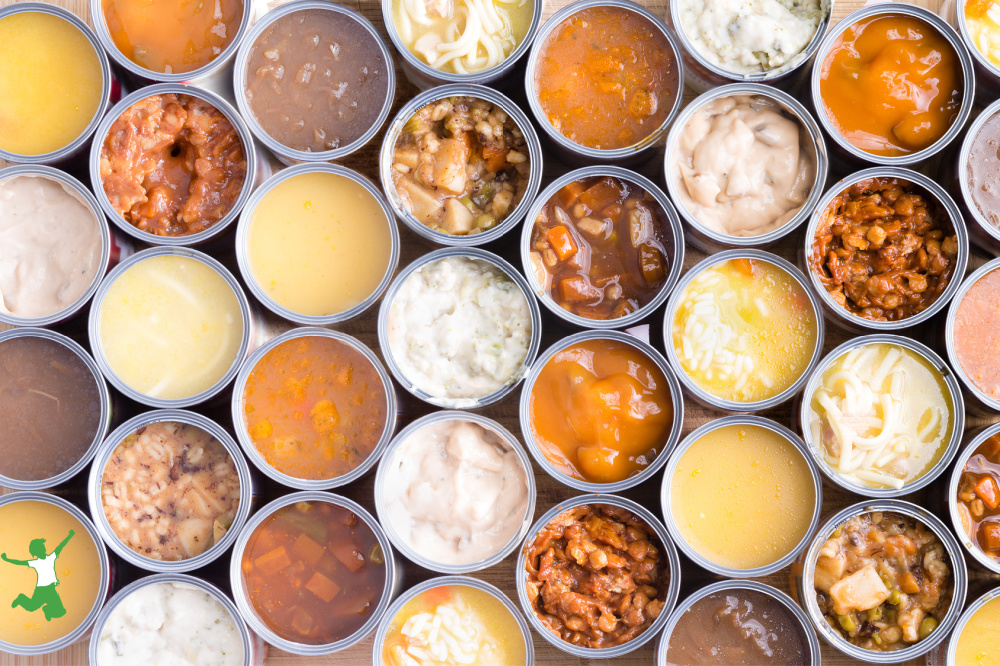
When the essential life decision to eat healthy is made, commercial soups are arguably some of the most important processed foods to leave permanently behind.
The news about Campbell’s Soup containing bioengineered, fake chicken meat is yet another example of how these Big Food brands deceive the public with their processed slop that is anything but nutritious, let alone safe! (1)
Surprisingly, a simple switch to a line of healthy soups made with organic bone broth is not as easy as it might seem.
Whether you buy from the supermarket or the health food store, soups in shelf-stable packaging or cans (including bouillon cubes) are unhealthy choices even if organic.
Worse, the vast majority of commercial soups contain neurotoxic MSG and other dangerous additives.
They are hidden under benign-sounding names such as “spices”, “natural flavors”, “seasonings”, “stock”, and “hydrolyzed protein” among dozens of others. (2)
Soup Ingredients and Packaging
Just as consumers catch on to the tricks behind one ingredient pseudonym, food manufacturers change it, resulting in a never-ending game of cat and mouse.
It can be a real challenge for label-reading shoppers to keep up with the many confusing aliases.
When I first realized how nutritionless and toxic canned soup really is back in 2002, I found it challenging to quickly make the transition to homemade versions.
It seems that when you most need a bowl of healthy soup, you open the freezer to find you are out of broth!
Even if you have good broth or stock on hand, perhaps the necessary ingredients needed to make soup are not available in the vegetable bin.
Making a run to the store to get soup ingredients when you are running a fever or already down with an illness is not wise or even within the realm of possibility in most cases.
Aren’t there any brands of healthy soup to have in the pantry in a pinch?
Let’s take a look.
Brands of Healthy Soup
Currently, the only place I am currently able to find quality soups the same as I make myself at home is my independently-owned health food store deli.
The chef makes them with real bone broth or meat stock and organic ingredients.
Yay! So thankful for this option, I can tell you!
If you have any locally owned restaurants or health food delis in your community, ask the chef how the soup is made. You might be pleasantly surprised and find a good source of ready-made soup when you need it.
Another option is to seek out traditionally made pho from a locally owned Vietnamese restaurant.
Cans and Cartons
Sadly, I cannot recommend any brands of soup in cans or cartons. This includes popular organic brands like Amy’s.
The packaging is just too toxic even if the ingredients are acceptable.
This includes BPA-free cans, which is a marketing gimmick. Manufacturers simply substitute another similarly toxic chemical such as BPS.
Eating toxic processed food when you are not feeling well is not the best approach for a fast recovery!
Whole Foods Hot Bar
After examining the ingredients of the soups featured at the Whole Foods hot bar (and other health food store mega-chain), it seems wise to avoid them.
These concoctions are typically just commercial soups in disguise. Check the ingredients carefully!
Most have GMOs, hydrolyzed protein, and unhealthy fats like canola oil in them.
Glass Jars
What about Rao’s line of soups in glass jars?
While the packaging is excellent, this brand does not appear to use authentic chicken stock as the base even though the marketing says it is “slow-cooked”.
There are also sketchy ingredients such as GMO corn starch for thickening.
5-Minute Soup
If you simply don’t have time to make your own soup or are in a location without kitchen access, it is definitely worth it to at least buy authentic bone broth.
You can make this easy and delicious 5-minute soup by adding just a few spices to the basic broth.
Best Bone Broth
After trying numerous brands and carefully vetting the packaging processes used, I recommend only a few frozen brands of bone broth.
This broth brand and this broth brand (ONLY frozen) are what I buy when I am out of homemade meat stock (my preference … more on this below). These brands are both excellent, high quality, and widely available across the US.
If neither of these brands are available to you, I suggest getting a copy of the Weston Price Foundation’s annual Shopping Guide. There are over two dozen brands listed in the current guide, several of them from regional companies.
**Never buy bone broth packaged in cartons or tetrapaks even if the broth itself is made properly.
The bone broth is boiling hot when it is poured into the tetrapaks aseptic cartons lined with thin plastic. This virtually guarantees a leaching risk of toxins from the plastic into the bone broth.
When it comes to healthy soup and broth brands, it’s not just about ingredients and preparation.
The packaging process is also important to vet before buying!
What About Meat Stock?
I personally prefer meat stock to bone broth.
It’s not that bone broth is “bad”; it’s that meat stock is considered safer and more therapeutic for those with any sort of autoimmune disease or gut issues. In my case, my husband was on GAPS for many years, so I got into the habit of meat stock instead of broth.
It was also inconvenient to make long cooked broth for the family and short cooked stock for him, so I got into the habit of using meat stock for everyone.
Note that the terms are interchangeable in many situations, but the real distinction comes in how long each is cooked and the proportion of meat to bones.
Meat stock is short cooked with roughly 50-50 raw meat to bones.
Bone broth is long simmered with less meat (you can use a carcass from a cooked turkey or chicken to make broth too).
Broth has more flavor than stock, but little to no usable collagen for tissue repair, according to Dr. Natasha Campbell-McBride.
Bone broth is also high in glutamate which is contraindicated for the GAPS Intro Diet and even the full GAPS diet for those who do not tolerate broth.
Meat stock has loads of usable collagen for healing/sealing the gut wall, which is why it is a must for GAPS and those who are working to recover their gut health.
Unfortunately, there are no companies I’ve come across that make authentic meat stock. You must make it yourself.
(1) Attorney General of Florida launches investigation into Campbell’s illegal use of bioengineered chicken
(2) Truth in Labeling



Hi! What is your take on dehydrated bone broth? I use Perfect Supplements bone broth. It simple when I’m in a crunch.
It does not compare to homemade in any way. I don’t recommend it.
What is your thought on dehydrated bone broth by Perfect Supplements? I try to avoid the containers and I’m not sure if this option is just as bad.
I’m surprised you didn’t mention about making quick fish stock using bonito flakes; takes only a couple of minutes. I learned that from you!
Yes, quick fish stock is great … but it has no gelatin. Slow cooked broth is better for soup when you’re ill.