

The often overlooked differences between pickled and fermented foods. They are not necessarily the same nor do they offer the same benefits to health.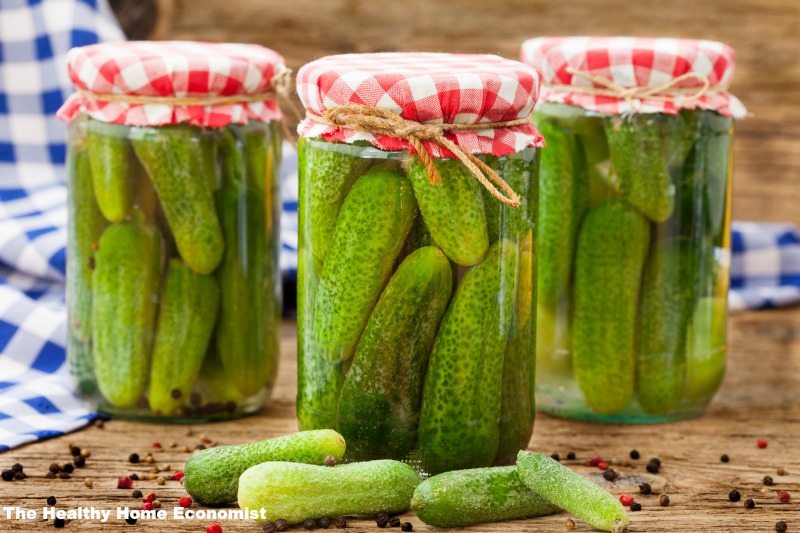
There seems to be a bit of confusion going around about fermented foods and the difference between what you make in your kitchen and the pickled versions that are available on the supermarket shelf. For example, in one of my video lessons, I demonstrate how to make sauerkraut in the traditional manner.
After the shredded cabbage ferments on the kitchen counter for a few days, it is then refrigerated or kept in a cool cellar where the sauerkraut remains naturally preserved for extended periods of time.
How does this homemade pickled cabbage compare to the pickled cabbage in a jar in the supermarket? What about pickled cucumbers or pickled garlic, also popular commercial choices?
Pickled vs Fermented Foods
Alex Lewin, author of Real Food Fermentation explains that the confusion comes from the overlap in definition. In a nutshell, not all fermented foods are pickled and not all pickles are fermented.
In other words, foods that are pickled are those that have been preserved in an acidic medium. In the case of various types of supermarket pickles on the shelf, the pickling comes from vinegar.
These vegetables, however, are not fermented (even though vinegar itself is the product of fermentation) and hence do not offer the probiotic and enzymatic value of homemade fermented vegetables.
Vegetables that you ferment in your kitchen using a starter, salt, and some filtered water create their own self-preserving, acidic liquid that is a by-product of the fermentation process. This lactic acid is incredibly beneficial to digestion when consumed along with the fermented vegetables or even when sipped alone as anyone on the GAPS Intro Diet has discovered (cabbage juice anyone?). In other words, homemade fermented veggies are both fermented and pickled.
Alcoholic Fermentation
What about alcoholic fermentation?
In the case of wine and unpasteurized beers, fermentation occurs as the result of certain yeasts converting sugars into alcohol but there is no pickling that takes place despite the common expression that a person who has had too much to drink is “pickled”.
4 Benefits of Culturing without Heat or Pressure
Home fermentation of vegetables preserves without the use of any pressure or heat unlike supermarket versions of the same foods. It allows the ubiquitous and beneficial lactobacilli present on the surface of all living things – yes, even your own skin – to proliferate creating lactic acid which not only pickles and preserves the vegetables, but also promotes the health of those that consume it in the following ways:
- Enhances the vitamin content of the food.
- Preserves and sometimes enhances the enzyme content of the food.
- Improves nutrient bio-availability in the body.
- Improves the digestibility of the food and even cooked foods that are consumed along with it!
Avoid Shelf Stable Pickled Foods
So don’t be fooled by unhealthy supermarket pickled versions of homemade fermented foods.
These modern foods are the product of high heat and pressure which destroys nutrients and does not in any way enhance health.
The one exception to this rule is the various fermented foods in the refrigerator section of many health food stores. These products are actually fermented and pickled. The only drawback is that these gourmet items are rather expensive compared to the pennies per ounce it costs to make them yourself.
If home fermentation is a kitchen goal that you are ready to tackle, there are plenty of fermented foods recipes on this blog to help get you started on this fun journey! If you prefer trying fermented beverages first, the provided link will take you to over two dozen recipes to consider.



Hi Sarah, slightly unrelated, but I’ve been reading up a lot about vinegar and acid in general being carcinogenic. Could I just ask if this includes organic unrefined cider vinegar do you know? I’ve always thought cider vinegar to be of huge benefit to digestion?
Thank you for this article though, makes the difference between pickled and fermented veg very clear…basically the naturally occurring lactic acid is what creates the probiotics, which you don’t get from vinegar…very very interesting, I for 1 will 100% be making my own fermented veg from now on!
I haven’t seen any compelling evidence that vinegar … when properly made from nonGMO ingredients and in its raw state is a problem (most white vinegar on the market is made from glyphosate sprayed GMO corn). Probiotic rich vinegar is a traditional food that didn’t cause any carcinogenic issues for traditional peoples.
Doesn’t fermentation also produce alcohol? Why aren’t fermented pickles, sauerkraut, or hot sauces alcoholic?
Sign me up please!
Its not true that store bought pickles have no nutritional value. They are high in vitamin K.
The pickles that I purchase have vinegar in the jar lactic acid is also listed. Is this fermented? My grandmother always did her own sour pickles and I always did mine but my hands no longer function as they did and I want to know if these pickles that list lactic acid are fermented. Be online store said yes they were fermented but I’m still not sure.
Sarah, I have been making pickles with good success for a while and it always tastes good. The number one aim is to get more probiotics. I did not use vinegar, just brine, dills and garlic and of course pickles, cutting off the ends. Recently however I bought pickles at the farmers market and it was quite a bit more sour, which tasted better than mine. Presumably, they mixed water with vinegar, but I am pretty sure it is not fermented. Can I have the best of both worlds? Meaning, I need to have the lacto fermentation, but can I ferment when I add vinegar also? Or is there another way of making my FERMENTED pickles more sour / tart?
There is a way to do this, but I have not experimented with it as of yet. Good idea for a follow-up recipe!
Thank you for outlining the difference between pickling and fermenting in the article! I’ve definitely made the mistake before of buying something I thought was fermented when in all reality it was just pickled. I have resorted to pickling / fermenting my own goodies now and buy them from the grocery store less and less. Pickles, sauerkraut, onions and carrots are my favorite four items to pickle / ferment. Thank you for your article! I learned something new today!