
The top three lifestyle habits women do that can bring on hot flashes in a hurry and contribute to excessive problems with this menopausal symptom.
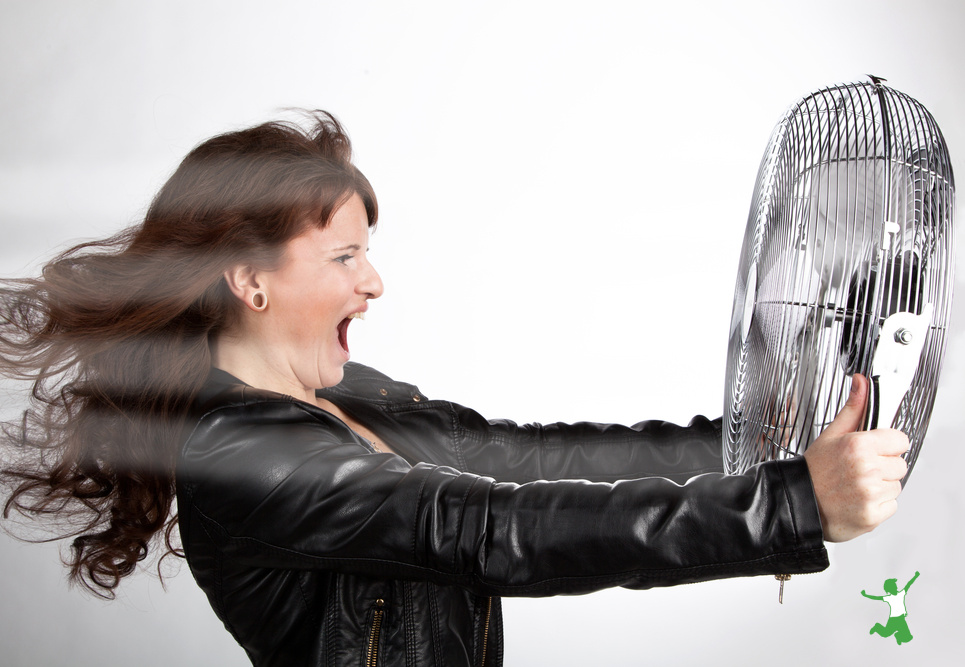
Hot flashes are a common and sometimes debilitating symptom of peri-menopause. In severe cases, it may continue for years even after menopause.
A reader recently emailed me for help with this problem. She writes:
Sarah, I am having a terrible time with hot flashes. I’m having to get out of bed multiple times a week in the middle of the night to go stick my head in the freezer for relief. Can you suggest anything that might help me?
As a matter of fact, there are definitely some very simple things a woman can do to avoid hot flashes potentially never experiencing them at all. Some women turn to natural alternatives like maca to help stabilize hormones.
While helpful, these alternatives are frequently not enough to alleviate bothersome symptoms. The advice below comes from my trusted doctor of many years who is both a Doctor of Chinese Medicine, acupuncturist, and herbalist as well as a board-certified Medical Doctor.
This broad expertise gives her the very rare and valuable perspective of both mainstream and alternative medicine.
Hot Flashes a Dreaded Symptom of Menopause
Perimenopause is that period of time when a woman’s body naturally transitions toward a nonfluctuating hormonal state known as menopause which concludes the fertile phase of her life. Women start perimenopause at widely varying ages.
Some women notice “The Change” coming on as early as their mid-30’s while others are well into their 50’s before any noticeable transition begins to occur. This phase can be just a few months or as long as a decade in length.
Interestingly, wearing a lot of makeup is linked to early menopause … up to 15 years earlier than women who don’t wear it much. Researchers have theorized that this is likely due to the ovarian disrupting effect of the toxins widely found in conventional makeup.
One has to wonder if the use of toxic tampons, pads and other personal care products along with excessive makeup wearing habits for many years starting as an adolescent might also contribute to uncomfortable perimenopausal symptoms decades later.
The hallmark of perimenopause is an uneven rise and fall of the main female hormone estrogen. Some women experience no symptoms at all from these fluctuations.
In the Japanese language, there is not even an exact word for “menopause”, an indication that this journey which all women eventually go through is not considered a big deal or traumatic occurrence. Perhaps its their regular natto consumption.
It my personal experience, avoiding the hormone disruptive effects of coffee and eating natto regularly (you can make soy-free natto yourself!) kept me free of hot flashes through these critical years.
For others, “The Change” can trigger terribly uncomfortable symptoms. These complications can include occasional or frequent hot flashes, probably the best known and most dreaded (peri)menopausal symptom of all.
Lifestyle Choices Make A Huge Difference!
What many doctors won’t tell patients that are suffering from hot flashes is that this symptom is greatly affected by lifestyle choices.
Even worse, they might be far too quick to suggest the health-destroying, long term effects of hormone replacement therapy (even the “individualized” transdermal patch are dangerous!) or just tell them to buck up and get through it because “it won’t last forever.”
This type of advice is not in any way helpful to a woman simply trying to get a decent night’s sleep or afraid to go to a social gathering for fear of an embarrassing sweat attack coming on unexpectedly.
The truth is that there are some simple things a woman can avoid doing that will greatly affect the frequency and severity with which she experiences hot flashes.
Below are the three major things that a woman should avoid doing as these habits can bring on problems with hot flashes in a hurry according to my doctor and her experience of several decades treating women with hormonal imbalances during The Change.
Sugar Consumption
First of all, she suggested drastically cutting back on sugar in the diet, as this is a common problem for women who experience hot flashes.
Given how much sugar Westerners eat today, this is probably not a big surprise.
The average American consumes a whopping 180 lbs/81.6 kg per year of refined sugars (this does not even include fruit and other natural sugar sources), which is a 27% increase just since 2003 when refined sugar consumption was 142 lbs per person per year.
Be aware that too much fruit or refined carbs like pasta can be a problem too.
Yes, you can eat too much fruit and pasta is not a health food!
Most people have absolutely no idea how much sugar they are really consuming until they sit down and really take a look at it in detail.
My guess is that most women who have a problem with hot flashes would almost invariably also have a problem with too much sugar and/or carbs in the diet.
A realistic goal if this is a problem for you would be to only allow natural sugars in the diet that combine to total no more than 36 grams per day.
One medium banana contains 14 g, for example. A single can of soda, a Starbucks latte, or a “healthy” bottle of fruit juice would put you over the daily limit in a hurry.
According to Tom Valentine of Search for Health, research has shown that significant immune system suppression begins to occur above 36 grams (for adults, less in children) so this is the manageable cut off point that seems a reasonable goal.
Alcohol
A second doctor-supported suggestion is to avoid drinking alcohol. Alcohol tolerance varies widely among people, so it is very important to know what will trigger a problem for you.
For some people, a single glass of wine occasionally consumed at a party might bring on a hot flash. For others, it might be a couple of drinks every night for a week that results in a problem.
Consequently, if you already have a problem with hot flashes, it seems advisable to go cold turkey off the booze until you get the situation under control.
Note that going off alcohol will frequently cause difficulty controlling sugar cravings and too much sugar is also a trigger for hot flashes.
Recovering alcoholics, for instance, are in great danger of becoming sugar or ice cream-aholics instead. This tragically was the experience of my late uncle who passed from liver cancer.
The solution for some is to enjoy fermented beverages like kombucha which are naturally very low in sugar and non-alcoholic when properly made, according to Nourishing Traditions.
I have one friend who says that homemade kombucha helped her tremendously in overcoming alcohol dependence and subsequent cravings.
Some Types of Exercise
Many women might be surprised to learn that exercise can bring on a hot flash.
While moderate exercise is certainly beneficial and can greatly assist with hormonal balance (see the linked article for details on how interval training helps hormones), suddenly starting on an exercise program and going overboard is a recipe for hot flashes in a hurry!
The key is to build up to any new exercise program slowly giving the body time to adjust appropriately.
As always, it is best to consult with your practitioner before initiating any exercise program anyway, especially if you are a perimenopausal woman already experiencing hot flashes or other complications.
Summary
In conclusion, keeping sugar and alcohol consumption to a bare minimum (or none at all) and ensuring that any exercise program is sensible and moderate will avoid the three most common lifestyle factors that contribute to a problem with hot flashes during perimenopause and menopause.
This advice comes from a licensed medical doctor with both a holistic and conventional background who has helped hundreds of women in her career deal with “The Change” in a non-medicated, life-embracing fashion.



I had remarked to Sarah in an email that cimicifuga racemosa was a life-changing help for me in menopause and she suggested that I share that info in a comment, so here we are…
I was having the WORST hot flashes ever – soaked sheets at night, soaked clothes during the day – and I had had a persistent headache for what felt like forever. I learned about cimicifuga racemosa in some way I can’t recall, but I was interested because homeopathy is my go to for all health problems and I always get ridiculously fast relief with homepathy. So I bought some and finally took the first dose one night before bed. A short while after I took it, while in bed, waiting to fall asleep, I suddenly realized that I had apparently had a headache for a long time because it was suddenly gone – what a moment! It was a clear case of not seeing the trees because I was enveloped by the forest. That night I had no sweats, and with consistent use for a couple months literally all menopause annoyances were gone. It has a weird name, but it also has superior relief.
Can you please tell me who your doctor is??? I live in the Tampa Bay area and I’m searching for someone just like her. My current doctor just wants to put me on the patch and compounded hormones, but I feel like there’s a better choice and I’m concerned about my long term health.
Please reach out in the chatbox. Names/addresses etc are not posted in a public forum.