

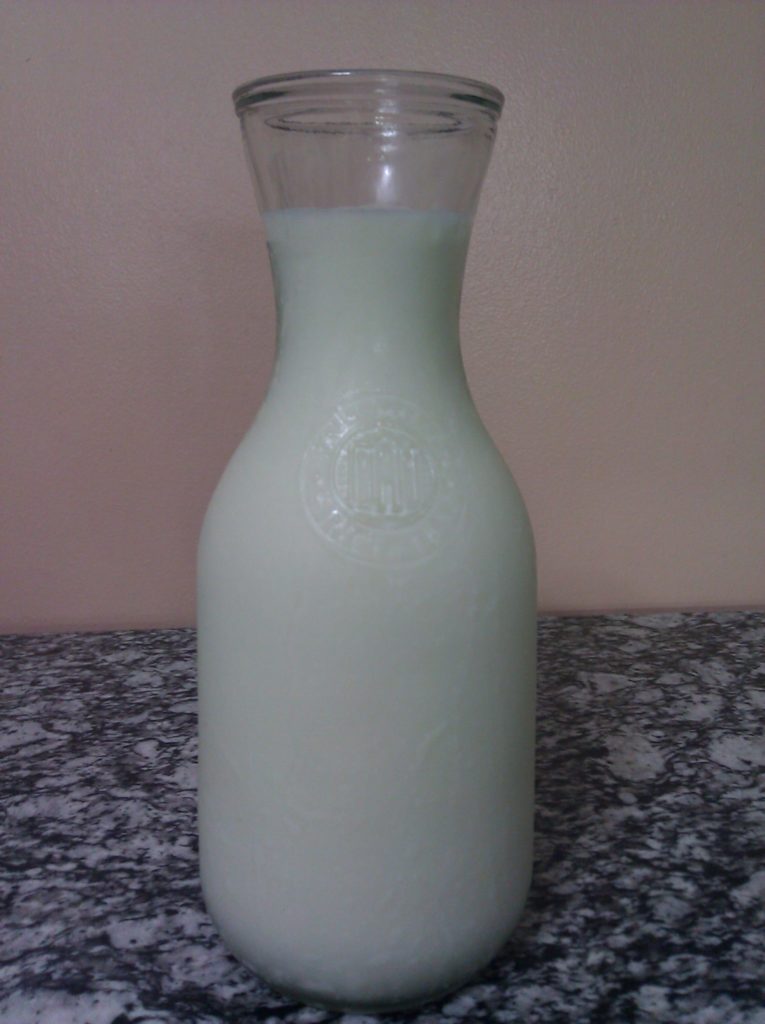
One of the most exciting things that has happened with this blog over the past year is a large increase in the international readership. I just love my international readers. They bring such a unique perspective to the discussion of each blog and contribute suggestions and ask questions that those of us living in the United States have perhaps never considered before.
One question that I’ve been getting recently, particularly from readers in India and Eastern Europe, is how to consume raw dairy safely when the cleanliness of the source is questionable.
People in these countries typically boil their raw milk first before drinking. However, the information they were reading on this blog and elsewhere about the health benefits of raw milk had prompted them to reconsider this practice. They wanted to start consuming fresh dairy in order to enjoy the significantly improved nutritional profile of milk that has been completely unheated.
What to do in this situation? I put this question to Tim Wightman, President of the Farm to Consumer Foundation and grassbased farmer extraordinaire to see what he had to say.
Three Methods for Ensuring Raw Milk Quality
If you are unsure of your raw milk source or are using it for the first time and are not yet 100% comfortable with your decision, try one or all of these methods to set your mind at ease:
- Buy only small amounts of raw milk at a time and use up within one to three days. Bacteria that cause food borne illness with the exception of Campylobactor require more than a few days to develop in the quantities necessary to cause human illness.
- Make homemade (unheated) kefir with the raw milk before consuming. If the milk is of questionable quality, the kefir won’t set right and the end result will be whey and milk solids or a very runny kefir that won’t be desirable for consumption.
- Probably the best way to drink raw milk and have peace of mind even if you are not completely sure of the cleanliness of your source is to freeze the milk for two weeks first before thawing and then drinking. Food or drink frozen for that period of time is considered safe to consume. As a bonus, raw milk that is frozen and thawed that ends up quite close to its original form with only just a few very small milk solids floating around is a good indication of quality milk.
Sarah, The Healthy Home Economist

|
|


{ 99 comments… read them below or add one }
Sarah, this is very good to know. I always find your blog so informative.
Thanks.
Ruth @ Ruth’s Real Food\’s last post: Three Top Posts of 2011
A food-friend and I picked up several gallons of raw milk yesterday for the very first time. Since I am new to it, just drinking hot cocoa. I live in Germany, so finding a source nearby took a while, but I finally did. It’s 15-20 minutes away and costs 1.50 euro for 2L. The farmer, who spoke far more English than I do German, was so nice. We had to wait while the cows were fed and milking began because the tank was empty – but while waiting for the tank to get filled, we toured the barn. It didn’t smell dirty at all, the cows were very calm and happy, fed organic hay, free to come and go as they please. They were totally mellow during the milking (which we got to observe), ambling into their stall, standing quietly, ambling out to the food when done. It was so neat! Definitely glad to have found it and the post is very timely. Next weekend, getting enough to make cultured butter…
Hi Kasi,
that is great! I know how hard it is to find real milk in Germany. I am still searching for it! may be you can give me a tip how you found the farmer?
(dear Sarah,sorry for the little off-top, it is just so hard to find raw milk in germany for me, I try to use every opportunity:)
Natallia,
I am in Heidelberg and was just able to buy raw milk from a vending machine at a farm today. I got the location info from the Germany chapter leader of the Weston A. Price Foundation. Here is the chapter leaders email: anita@roylt.com. I don’t know where you are, but the farm where I got mine is here: http://www.markushof-naturkost.de
Good luck!
Julie
Sarah, One problem with freezing the milk is that listeria LOVES lower temps. I am sure the info provided the above info to you was based on what Ted Beals has “found” based on tests conducted in CA with Organic Pastures milk in at least 2 different lab tests and 2 different labs. While most of this is good, some of the tests have been skewed to fit the side that wants it to fit. I think the rawmilkwhitepages.com or something like that goes into the tests and the results, you can also look up the various tests concerning ecoli, campy, list, etc and see the results.
However, all that being said and read, re-read, etc., milk from healthy animals is probably going to be OK. If the farmer is going to not be clean, they are the ones going to cause outbreak and sickness making it much harder for all of us to get milk or provide milk to our customers.
If the individual can not go to the farm and have a look around, try to get someone who does know at least a little bit about sanitation to go and look and provide info for others. Some of the WAPF chapter leaders have been doing that, there are other individuals here in the US who also do that.
Just because the animal is on a nice looking pasture does not mean you are going to get good milk. The animal can be healthy, the milk coming out of it can be just fine. BUT if the milk is not held in sanitary conditions, it is just an outbreak waiting to happen or one sickness if not even an outbreak. Then the other side will jump all over that and we will be back to square one in fighting.
Also, if you are new to kefir, it will set up differently depending on the temps it is in.
And finally, goat milk will separate when thawed from its frozen state. This is normal but there are many floaty bits in it. That is normal, cow milk does not separate like that.
Tracy
Listeria is extremely rare in raw milk from what I understand. EXTREMELY rare.
The goat milk I get that is thawed after being frozen does not separate and goes back to its original form almost exactly.
The freeze/thaw recommendation is based on USDA guidelines for safely consuming raw foods. The same goes for raw meats, not just raw milk.
A goat farmer I spoke with recently said that a good way to avoid separation of frozen milk as it thaws is to place the milk jug/bottle in a bowl of cool water while thawing. It worked for me.
We have been enjoying raw milk and cream for just over a year now. Just this last week, some of my family and I have gotten terribly sick. We have had symptoms of campy. It is now 6 days of tummy trouble. I found out yesterday that 3 other families that get milk with us have had the same problems. We are afraid to get more milk. Being this sick for this long is not worth it. We missed Christmas and New Year’s celebrations – and small children just don’t know how to deal with intestinal pain. I’ve LOVED the raw milk (store bought milk causes problems in my children). I don’t want to go back to Rice Milk and Almond Milk – but my husband is very upset with these circumstances. What would be your suggestion? Would pasteurizing our milk still be better than buying homogenized milk from the store? Would pasteurizing kill the campy bacteria? This makes me so sad (but I DO NOT want to be sick like this again!)
Ask around … you will probably be relieved to learn that there are most likely families suffering the same bug that don’t drink raw milk. Call the local hospital ER and ask if people have been admitted with a bad tummy bug of late. This is what I do when there is something going around our community and it always ends up being a non raw milk issue!
Sarah, I disagree with your response to Ronnie’s question. I could understand your comment if she and her family were the only ones who got sick, but 3 other family members got sick and they just so happen to get their milk from the same farm that Ronnie gets hers. People do get sick from drinking raw milk, and although I feel that the numbers may be exaggerated, there are still people who have gotten sick. Even if a farm is sanitary, there is still a risk for people getting sick and I’ve read about people getting sick from raw milk even from clean farms, so please stop down-playing this person’s concerns. I’m not for drinking hormone-laced, prison milk, but it’s reckless to advocate raw milk without informing your readers of both the pros and cons of drinking raw milk.
Neeli, this type of thing happens in my community almost every winter. Last year a bunch of families got sick too (including my own) and the raw milk was suspected as all the families got milk from the same farm. Guess what? It was a bad bug going around town. I am downplaying nothing … I’ve gone through this myself and know exactly what is going on here. She needs to call the local hospitals and see how many people are getting admitted to the ER with a bad intestinal bug and realize that it is 99% for sure a community related thing and no relation to raw milk.
Oh, and it was campylobacter too! This bug is extremely common in the restaurant business and is easily spread when eating out by an employee that doesn’t wash his/her hands for example.
Ronnie, I sometimes buy milk from a local organic store that sells cream-top milk in glass bottles. If you don’t want to buy raw milk again, then I think you might like this milk. It’s from grass-fed cows in most cases and it’s non-homogenized. I like how the cream floats to the top and it tastes so much better than conventional milk. I’m sorry that you and your family got sick, but there are pros and cons with everything and you have to do what’s best for your family and do your own research before you decide to do anything. What works for one family doesn’t necessarily work for another and it’s okay if you don’t drink raw milk because there’s no law forcing you to. I read and research before I feed my family anything, and I take advice on the internet with a grain of salt. Good luck to you and I hope you and your family feel better soon.
So sorry you & your family are sick Ronnie. Campy is a very very common bug & is highly contagious. In most cases it is caused by slightly undercooked chicken or poultry. It doesn’t take many of the little things to make you sick & then, as I already mentioned, it is very contagious. Shaking hands with someone who has the bug will most definately pass it on to you. There is a small chance it came from the raw milk (the cow would have to have the infection herself) but it is also very very possible that one of the families brought it with them when you picked up your milk. The recommendations are to freeze and thaw your milk, as Sarah mentioned in the blog post, as this reduces the campy bacteria. Hope this helps.
Thanks for all the responses below. My intention was to find out more info – I do a lot of research and that research led me to feed my family raw milk. We have absolutely loved it for over a year (and had some in the past, as well).
There are a number of “bugs” going around this time of year – but I have to say that my husband and I have never been this sick for this long before (except for pneumonia when we were young). Our concern is how long and debilitating this has been. Fortunately, he’s been off work – but he has also been dealing with kidney stones and a stint for a month previous – I have been concerned for him and a secondary infection. Today is now day 6 of intestinal problems and we’re finally beginning to feel marginally better.
All this to say – we do not believe that this is just a “bug”. We are not totally convinced that it is from the milk, either. I would be a terrible parent/wife, if I ignored the fact that it really could be the milk, too. I haven’t heard from the dairy, yet, to see what they have to say. We just do not want to EVER go thru this again if it can be helped. I have learned a lot of great information from this blog and it was the first place I thought I could find answers to our concerns. Thanks for giving me options.
I am correct to assume you can freeze raw milk and it will still be as beneficial as fresh milk when thawed?
Thanks for the info Sarah! We get our raw milk from a local farm who gets the milk from other farms so we do not know the source. Lately, the milk has been going sour within a week, not sure if that is an indicator of fresh milk or not. We’ll start freezing our milk as you suggested.
Lavina\’s last post: We Got Chickens at a Yard Sale
I have been hesitant to try raw milk, so thanks for the freezing suggestion. I’ll have to try that.
I don’t drink raw milk for my own personal reasons and I don’t judge others who do, however, I think this information is going to lead to problems and outbreaks. If people in other countries don’t have access to raw milk from sanitary farms, then they shouldn’t drink it raw. I think this article and advice is quite misleading to be completely honest. I once thought about finding raw milk to try it out and to see if my family would like it, but I’m not willing to risk the health of my family just to drink raw milk. I’m aware that many people drink milk that is unprocessed, but I’ve come to the conclusion that the cons outweigh the pros. I’ve seen stories of little kids getting sick and having health problems from getting E. Coli and a woman who contracted Camphylobacter and is now paralyzed from severe imflammation. It’s not worth it for me to give my child raw milk. It’s different for people who have access to clean farms where they know the farmer and trust that person to sell them wholesome, clean, safe milk, but in this case, I think your international readers would be better off not drinking questionable. I’ve also seen stories that have convinced me that raw milk isn’t for me and my family. Not saying that everyone who drinks raw milk is going to get sick because that would be a lie, but I think that it’s reckless for you to post this advice knowing that these people don’t have access to clean farms.
I know that you are an advocate for raw milk, and that’s your right, but what are you going to say if one of your international readers get sick from reading your blog and taking your advice? Yes, to most people, raw milk is a blessing, and has given them the opportunity to enjoy the health benefits of milk without all of the additives and hormones, but for people who can’t get clean milk, this article serves them no good.
And your scientific reasoning for this opinion is ???? The recommendation to freeze and then thaw is based on USDA guidelines for consuming raw foods safely. Even raw milk that has been frozen is allowed to cross state lines where liquid raw milk is not. Your opinion has no scientific underpinning and is based on fearmongering only.
Sarah, TheHealthyHomeEconomist\’s last post: How to Drink Raw Milk Even When Unsure of Your Source
Since when does anyone trust USDA guidelines though?
You lose a bit of the nutrients by freezing but not much at all. Nothing is denatured when you freeze raw milk like happens with pasteurization. It is a very viable option for those who are just dipping their toe in the raw milk waters.
I freeze raw milk just because I buy a bigger quantity at once than we can consume before it sours. I do get whey from soured milk, but I don’t need several gallons worth at a time. So I keep enough milk out of the freezer for our needs, and the rest gets frozen and rotated by age. When I defrost it, there are no problems. I leave it on the counter while any parts of it are still frozen (ice chunks) and then put it in the fridge. I shake it every once in a while when I think of it while it is defrosting. But we also drink it without freezing every week too. We have never had a problem with any illnesses, either way. The severe illness from food I did get earlier this year was from a party that served cold cuts, and half the party attendees got sick, but my family was the only raw milk drinkers there, so no connection with milk.
We will be trying it soon as we are going to start the GAPS diet in about 3 weeks! Looking forward to it very much!
Stephanie,
Raw milk is not “legal” on GAPS but you can kefir it once you’ve passed the intro stage if your body is ready for dairy. Good luck!
Tracey
I drive once a month to buy our milk. I buy 6 gallons at a time and we freeze 5 of them. We do not notice any difference. This makes it very easy for us to keep raw milk in our house.
Hi!
Thank you so much for this!! I’m so curious about the freezing option. We are in Central Africa and can buy raw milk from local farmers, but sanitation is a big problem. One day I even had my milk smell like kerosene! He had reused (and washed) a kerosene container to bring our milk! Our issue here is brucellosis. My husband had it 4 years ago and was weakened severely by the 6 mos. of treatments. It can be asymptomatic with only fatigue a month or two later. One colleague wasn’t diagnosed for almost 2 years and now has it chronically. And can eventually lead to chronic fatigue syndrome or arthritis for life. So, can I just clarify that he’s saying freezing would destroy bacteria like brucellosis? Or just keep it in low numbers?
Kimberly\’s last post: Remembering 2011
Milk in an old kerosene container? Ugh! You have much more than food borne illness to be concerned with it seems!
This is Tim Wightman’s answer to you question about brucellosis:
“If one freezes any food item for a period of two weeks it has the GRAS standard.. Generally Regarded As Safe.
Given Brucellosis is a bacteria it should fall under the same understanding if heat can kill it, cold can as well just like salmonella, pathogenic Ecoli’s ect.
BUT.. if brucellosis is an issue there are other things to be concerned about and the quality of the milk may be in question. Holding it at 145 degrees for 15 minutes may provide a better alternative.
Not all raw milk is the same, and our environment and degradation of soils and animal health means we must assess each producer and the forces that are brought upon that animal and production environment.”
Sarah, TheHealthyHomeEconomist\’s last post: How to Drink Raw Milk Even When Unsure of Your Source
I don’t understand how we can say that raw milk is virtually unchanged and yet everything that could be bad about it dies. What about the beneficial bacteria? They must die as well, no?
This is a great explanation for beginners! http://t.co/UiJqwz2u
Sarah,
Im in India. The reason that the tradition of boiling raw milk began in India was Tuberculosis. It is disease still quite widespread in South Asia and the bacteria is carried in cattle and transmitted through raw milk. Boiling completely destroys this pathogen and that is real reason Indians boil raw milk. Raising Tuberculosis free cattle is now possible in the west by it is still some decades away, if at all, in the developing world.
Hi Sam, below is from Tim Wightman. It seems that the notion of TB being transferred from cows to humans is erroneous as there are no studies proving this mode of transmission.
“TB can be transmitted in raw milk but is most often thought to be infected by humans not cows. The same reason in in western cultures bus drivers for children cannot be TB carriers, closed environment and easily transmitted. I have yet to see any studies that Bovine TB has been proven to transfer to humans.”
Sarah, TheHealthyHomeEconomist\’s last post: How to Drink Raw Milk Even When Unsure of Your Source
Tim also adds that, “Lack of adequate trace minerals is a key aspect to both human and bovine TB infection.
Just what lack of minerals and or extreme presence of a few effecting other minerals has yet to be discovered or researched.
It just easier to kill off infected herds rather than promote prevention. IE western medicine.”
Sarah, TheHealthyHomeEconomist\’s last post: How to Drink Raw Milk Even When Unsure of Your Source
Believe it or not, TB & brucellosis are not just a problem in the developing world. Both are widespread in Ireland. My farmer gets tested for both on a regular basis.
Hmmm. Looks like there are a couple of BigDairy trolls here trying to upset people. The bottom line for people like neeli is this – if you don’t want to drink raw milk, don’t. If you think Joe Blow down the street shouldn’t be drinking raw milk, recognize that it’s none of your business what Joe Blow does and let Joe Blow do his own research.
When I read the post from the gal about her family being sick, I knew instantly it was going to start something – and it did. But my first thought was not that raw dairy caused their illness, but that this is the time of year for all sorts of illnesses to be out and about and you can catch things at the grocery store, from school kids, from day care settings – I mean, the possibilities are endless. Just because they all drank milk from the same place doesn’t make milk the culprit. Lots of people are sick year ’round who drink pasteurized milk from the grocery store and no one is blaming that junk for everything that goes wrong within families.
The thing to do is contact the farmer and see if ALL of his families were ill. Then you’d have something on which to base an argument. Until then, people like neeli will continue to be seen as trollers for BigDairy in my eyes. Big Dairy is running scared, and so they should be.
Exactly D. And in the case of our group that got sick last winter, there were plenty of families that did not get sick that drank the same milk. AND, there were cases where some within the same family got sick and some did not. It was all over the board and there was no consistency to it at all. Clearly not a case of a food borne illness outbreak but just a bug going around like always happens this time of year.
Well said. My thoughts on this are that there are risks everywhere we go. I got E.Coli from a local restaurant a couple years ago. THAT WAS AWFUL. In high school I had a friend who got Hep A from a local restaurant (as did many others around town.) There are often peanut butter, beef, chicken, and other recalls because of some kind of contamination problem. And even Big Dairy milk can spread disease because there are some bacteria that aren’t killed by all of their Big Dairy processing. Wherever we buy our food from, the fact is that it’s all grown outside in the dirt, and it all comes from animals that live outside, and there is always some measure of risk involved. But we have to smart, store and prepare foods properly, use safe kitchen habits, choose brands wisely, pay attention to recalls and when we do occasionally get sick, fight it the best we can. The benefits of raw milk far outweigh the risks for me, especially when chosen from a trusted dairy.
Amber @ Classic Housewife\’s last post: Looking Ahead to 2012
Great ideas! Thank you for sharing.
Angie, for how long can you use the thawed milk?
One of the things I want to do is try raw milk this year. I found out that in Louisiana, you can only buy raw milk if you say it’s for your animals.
This will be the last time I post a comment on your blog since it’s obvious to me that you can’t handle when people have different views and opinions from yours. I am not a troll, fearmonger, or employee of the big dairy industy. I believe in real, wholesome, organic foods, but am not bias when it comes to information on the internet. I think it’s petty that you felt the need to block me for speaking my own opinions about raw milk. I’ve read some negative comments about the WAPF and it’s members and I am starting to believe what other people have to say. I was blocked and banned from posting any more comments because you can’t hand the fact that I am not naive and believe everything that you have to say. I do my own research and figure things out for myself. Funny how you asked me about my scientific data, but when I called you out and asked you if you were a nutritionist or a follower of outdated Weston A. Price information that you removed that comment to make it appear as if I was a fearmonger and spreading information to scare people. If you can’t handle other people’s different views and beliefs, then you shouldn’t have this blog. I think you are biased, blind, and childish for attacking others who speak their minds when they don’t agree with you. I see how it is, you only want comments on your blog when people blindly follow your advice. If you can’t handle the heat, get out the kitchen.
One last thing, @ D, if you would’ve taken the time to throughly read my original post, then you would’ve seen that I have no problem with people drinking raw milk. The thing that I have a problem with is the advice given to international readers who don’t have access to sanitary farms. I’m being attacked for speaking my opinions, yet you can speak yours and falsely accuse me of trolling? If someone wants to drink raw milk, then have at it, but don’t give advice when the conditions of the farm aren’t up to clean standards I think you’re filtering my comments to make it appear as if am an alarmist and fearmonger when I’ve supported this site for months. I think it’s a shame that you felt the need to attack me and post such petty comments. Shame on you and Sarah for your negative attitudes toward people who don’t share your views.
Someone is having a rather bad start to the New Year it seems. LOL
I think I would have to agree, Sarah. Cranky. Cranky.
In all honesty, I don’t understand why someone who thinks the Weston A Price foundation is “outdated” is reading the blog of a WAPF chapter leader.
Man Neeli! Yes there is a risk in drinking raw milk, but the risk is small, and the return is great. Store-bought milk is almost worthless to drink, if not harmful. The pasteurization removes the nutrients which must then be added back in. I drink at least 3 glasses of milk a day and have never felt better. I am also losing weight, although I am not hungry. However, if I lose my raw milk source, I will not return my family to store-bought milk. It’s just not worth it. I am very thankful for this article, as my breastfed baby needs some additional milk from time-to-time, and my pediatrician was concerned about the safety. I now plan on freezing enough for my baby for 2 weeks, then I don’t need to worry about him ever getting sick. Thanks Sarah for another great article! I really enjoy reading your posts!
Florida is like that, too.
I didn’t know you could freeze raw milk — I will pass this info on to friends who are concerned about bacteria and refuse to drink raw milk even though the farm we frequent is clean and trustworthy.
And, as an afterthought, I think you always handle discussions in your comments with dignified objectivity. I’m glad you block useless comments that don’t contribute to rational discussion. There are plenty of forums out there for arguing.
I do take issue with fear mongering comments as this blog is supposed to cut through that and provide another school of thought that is thought provoking and sometimes, yes, even downright uncomfortable. What good is this blog if it allows raw milk propaganda to reign with equal footing as rational, data supported information?
I appreciate your vote of confidence.
Sarah, TheHealthyHomeEconomist\’s last post: How to Drink Raw Milk Even When Unsure of Your Source
Sarah- thank you so much for this post! I live in Moscow, Russia and just this past week found a market where I could buy raw milk. The question about the quality of source has kept me from buying, but now I am very excited to go back to the market this week and buy some raw milk armed with methods to make the source quality not such a deterrent!
Thank you Sarah for this post! I live in Morocco where raw milk is plentiful, but the quality is questionable. I had been thinking of writing you or Jenny at Nourished Kitchen this very question for a while now. We now get milk from a farmer who pledges his farm is organic and cows are solely grass-fed. Of course the milk still comes in re-used water and soda bottles, but we haven’t yet had any problems with it. The next time I’m in the States I look forward to buying some Kefir grains so I can give Kefir a try and in the meantime I’ll try freezing it! Big Thanks!
That is the beauty of raw milk, it never goes bad. It might sour but then it is great for baking. Makes the best pancakes. And I have never had mine go sour. I have to leave it for a week or more before it will sour.
Angie, I couldn’t help but notice this post. I have never had raw milk before but I keep organic in the house. It last for awhile I noticed and I’ve never had it sour! If you have time, I’d love to have information on raw milk. I wonder if we could even get it in this liberal state?
I sometimes take for granted the blessings of living in the U.S. Our family has been enjoying raw milk since July of 2011. I found my farmer through realmilk.com by way of the Weston Price site. She is only 20 minutes away AND they are Amish. Before going to the farm I did my research and found the questions to ask and the responses to listen for. During our tour of the farm she answered all of my questions and more. I have a contract drafted by the Farm to Consumer Legal Defense Fund with my farmer and bought a cow share. (I live in Virginia where it is illegal to buy/sell raw milk). Thank you Sara for your How-To Video’s – I’ve made yoghurt, whey and cream cheese and am now making kefir.
Sara, can you give a specific reference to the USDA guidelines that recommend freezing raw milk and then making it legal to cross state lines? Thanks.
See the comment above by Tim Wightman. He references GRAS status (Generally Regarded As Safe) for any food frozen for at least 2 weeks. GRAS status is granted by the FDA if I recall but there is also something about this in USDA guidelines.
How to Drink Raw Milk Even When Unsure of Your Source — The Healthy Home Economist
http://t.co/pOrB0sb5
Eh, looks like Big Dairy has invaded this place. However, I personally would not drink raw milk or any milk for that matter from an unknown source. But its none of my business what other people do. if you don’t want to drink raw milk than don’t, but don’t take that right away from other people who do.
Kelli\’s last post: The Real Culprit Behind Hormonal Imbalance
I was wondering how your cleaned your milk jars? We tried glass, but they kept breaking on us so we switched to HDPE plastic ones. A week ago my family got pretty sick, and the milk was the suspect (it smelled really off too). But no one else we’ve talked to, who gets milk from the same place we do, got sick. So we’re thinking it’s the jugs…any suggestions?!
2 Questions.
If I freeze the milk for 2 weeks and then defrost, can it still be used in cheese making??
Also would the cream still separate and be ok to make butter with or should I skim it off in the beginning and dispose of it?
I do believe that frozen/thawed milk is still fine for cheesemaking. That said, I am no cheesemaking expert. Yes, the cream still separates on cow’s milk after it has been frozen and thawed.
Sarah, TheHealthyHomeEconomist\’s last post: How to Drink Raw Milk Even When Unsure of Your Source
I raise dairy goats and have frozen milk many times and then thawed it for cheesemaking as well as kefir. Goats milk cream does not rise to the top much though because it is naturally homegnized. I would assume previoulsy frozen cow’s milk would make cheese fine as well.
Tracey
It truly saddens me that things have to get so inflamed! I realize that people can get sick from raw milk, and do at times, and I’m sure anyone who takes the time and makes the effort to provide raw milk for their families does as well. there is risk from many of the foods we eat on a daily basis. Nourishing our bodies unfortunately, does present the possibility of illness.
I also realize, however, as an informed consumer, that people get sick from a variety of other foods as well, and that the raw-milk debate has attained the status of a witch-hunt. No one seems to bat an eye when parents feed their children the raw-fish and rice combinations that sushi restaurants sell, or a rare steak in a restaurant, school lunches every day, or, for that matter, McDonald’s “food” (and I use that term with a snicker) many nights a week in lieu of good wholesome meals cooked at home. All of the above-mentioned foods are unhealthy, dangerous, and will sicken a child with varying degrees of speed. Food-borne illness is not the only danger that foods present, and parents and families take risks with food choices every day.
I would love to hear from anyone who remembers the report that came about from a parent trying to sue one of the big, corporate chicken processing brands when their child ate the chicken and got salmonella poisoning. The judge declared that that parent should have been aware of the “inherent risks associated with eating chicken,” and that the parent was responsible for the child’s illness – not the chicken processing company, and she was not allowed to sue. Does anyone else remember this?
To me this story clearly outlines why the raw-milk debate is a farce. Why wouldn’t the same be said for families that choose the risks associated with raw milk? It clearly proves that our benevolent government wishes to control us, and not to protect us.
On the whole, I find the group of folks choosing raw milk to be some of the most informed consumers I’ve heard about. They do the research, and are trying to find ways to better nourish their children.
Sarah, I’m wondering about the kefir. I have resorted to buying my milk in a gallon, because a one-gallon jug is $10. here, but half-gallons are $8. What I do then, since the milk doesn’t get used that quickly (it’s just my hub and me) is to immediately make kefir with it.
I’m wondering about the consistency of kefir. Mine turns out with varying degrees of smoothness or chunkiness, various levels of separation, and takes various amounts of time to culture. Now, after reading what you’ve said, I’m concerned. Our house stays at the same temperature, summer or winter, most of the time.
How soon does raw-milk kefir need to be used?
My other question is in respect to the milk’s flavor – what kinds of chemicals are appropriate for the farmer to use in cleaning, and should they taint the flavor of the milk? Our milk occasionally has a chemical-type of taste, and I’m wondering if that is from the cleaning solutions, or is there a bacteria (not necessarily a bad one!) that could have that flavor? I notice that my kefir gets that flavor a bit more strongly after a few days, but the fresh milk has a slight flavor at times as well. Is this normal?
I don’t think a chemical taste is normal Ann. I’ve not ever had this experience and I’ve had raw milk from many farms over the years. I think you really need to have a conversation with your farmer about that. My hunch is that it’s something used to clean the holding tank.
I have some kefir in my fridge that is about 2 months old and it is fine. It does tend to separate more as the weeks pass, but it was creamy and smooth when it first was made.
Sarah, TheHealthyHomeEconomist\’s last post: How to Drink Raw Milk Even When Unsure of Your Source
Love this Sarah! You do such a great job researching, and finding strategies to help everyone get access to traditional foods! Best to you in 2012!
ButterNutrition\’s last post: Raw Ice Cream!
Hi, Sarah
I, too, am thrilled to hear that it’s okay to freeze raw milk, since I have to drive a long way to obtain it. There are weeks that we go without because I have to work on the pick-up day. How wonderful that I can make a monthly run instead of a weekly run. Can the yogurt be frozen as well? What about the cream?
Thank you for all the time you put into educating all of us!
I milk my own Jersey cow to get raw milk. We love it! I make cheese, yougurt, butter, best cream in the world.
“In the old days” …they used a silver coin to preserve their raw milk. It lasted about double the time and left no after taste. Does anyone know of any ill effects from that. I know that I take colloidial silver and I make it for my friends who have psoriasis and it is a remarkable how fast it works on it.
Interesting post, Sarah. The question of getting sick from raw milk in foreign countries seems more of an issue of cleanliness of the containers used to store the milk rather than the milk itself. When you examine CDC numbers of illnesses blamed on raw milk – even if you accept their conjecture of raw milk as the cause as being true (an open question itself given the rarity that raw milk samples test positive for pathogens) the risk of illness is so low it should be touted by health authorities as one of the safest foods the public can enjoy.
In ‘The Milk Book’, William Campbell Douglass talks about swill dairies, and raw milk from ‘dirty’ sources being fed to prisoners in the early 1900′s as causing almost no illnesses. The inherent protective factors in milk – specifically the lactic-acid producing bacteria and the enzyme complexes including lactoperoxidase make it extremely difficult for pathogenic organisms to grow – even with deliberate innoculations.
This is what I’ve always heard as well, but try telling that to the nay-sayers. I’ve tried explaining that pasteurized milk would be a way better medium to grow dangerous pathogens because all of the “good”, pathogen-fighting bugs have been killed, rendering the end product a perfectly sterile environment for the growth of poisonous bacteria. Unfortunately, “sterile” is what most uninformed consumers are looking for in their food. Something is going to grow in all that milk, I’d rather have it be the good bacteria!
Sarah, Our family has been raw milk drinkers for years and never been sick except one time. We bought some milk from a different farmer than we usually did but knew another family that had been buying from them for a few years, so figured it was fine. I don’t know if it was just a bad batch or what, but we all got sick, that is, only the folks who drank the raw milk. Those who didn’t drink it didn’t get sick. The remarkable thing is that before I realized it was the milk, (I thought it was just a regular tummy bug, although a very fierce one) I took the kefir that I had made out of this same contaminated milk and was giving it to everyone who was sick and they all got better almost immediately. I realized later that the milk was contaminated after a lot of phone calls to learn that EVERYONE who drank that batch of milk was sick. In the families that bought milk that week, the family members who drank the milk were sick and those who didn’t were fine. Also, I might add that those who drank the kefir made from that same milk got better and those who didn’t ended up in the emergency room.
So, I do think it’s possible to get sick from raw milk esp. if you don’t know the farmer. I do think it’s pretty rare though. We still drink raw milk and haven’t had a problem since. I just always stay with a farmer I know. As a matter of fact, after this event, I was truly amazed at the healing power of kefir. I am assuming that the good bacteria in the kefir wiped out the pathogens in the bad milk and in the digestive tracts of those who drank it.
We raise our own grass-fed meat and dairy animals, but the only two diseases that we test religiously for are TB bovis and Brucellosis because these are the only two diseases that are passed to humans from the infected animals themselves. Brucellosis cannot be killed by freezing as mentioned in this article under ‘Meat edible?’ (http://www.unbc.ca/nlui/wildlife_diseases_bc/brucellosis.htm). This disease is called undulant fever in humans and typically causes sterility in males because of the prolonged high fevers associated with it. “Animal” TB as it is sometimes called, isn’t killed for at least 14 weeks at freezing temps as indicated in this article (http://www.michigan.gov/emergingdiseases/0,4579,7-186-25804-75601–,00.html). Bovine/Caprine TB most definitely has been spread to humans and there have been studies done that are nearly 100 years old proving that. The signs and symptoms of the animal form of TB aren’t the same in humans as the human TB (it doesn’t usually settle in the lungs and therefore doesn’t cause coughing, for example). In the case of adults, our immune systems are able to cope quite well against the animal TB, but in the case of children this form of TB typically settles in the bones and causes extreme malformations in joints. A childhood case of TB bovis is probably what gave the humpback of Notre Dame his shape and such physical malformations were common in the old French Quarter in New Orleans until pasteurization of milk become common.
We are fortunate enough to live in a country where these two diseases are down to an extremely small percentage, but both of them can have lifelong consequences unlike the other kinds of ailments that you are just as likely to get from your poorly washed spinach as your local raw milk source. Having lived in countries where one or both of these diseases are so common in the livestock that to drink raw milk from an uncertain source is a virtual guarantee that you’ll get sick, I would NEVER recommend drinking raw milk unless you know the animals are tested regularly for these two diseases because the risks are too great. I wish something other than pasteurization killed these two rascals, but to date, I’m not aware of anything other than heat that does the job effectively. By all means, skip milk altogether before playing with these diseases if you live in a country where they are common.
I for one appreciate this researched reply. I live in Africa and although we enjoy raw milk while in the US, I would never drink raw milk here because everything about it is unknown (the source, the sanitation/health of animals, workers, facilities, etc.) I will stick to the advice of 145 for 15 minutes. I would have to agree with those who have been thrown under the bus already (being accused of being big dairy or otherwise) that I think the recommendations given in the article are a little too light.
In the past before drugs people used to drop a pure silver(or as pure as they were before 1964)
coin in the container of milk . This would kill all bacteria and kept the milk safe to drink. One can still do that today or a quicker way would be to mix in an ounce or so of colloidal silver with the milk. I make my own CS so it is very cost effective and I would trust this over any other methods mentioned here. ….Den
How to Drink Raw Milk Even When Unsure of Your Source http://t.co/T6SSEfEA
wishing you a blessed and happy new year! thanks for the article. by the way my kefir when prepared separates some times. ive been making it into a smoothie with honey and a ripe banana.but i find it ok. i need to try freezing the milk.ive been consuming raw milk for more than 3months now and living in India where the conditions are pretty unheard of (especially where raw milk is concerned) I get by. wishing you all the best!
This is a great post! I definitely learned some things I didn’t know. I do disagree with one thing mentioned, though. I brew my own milk kefir from our own goat milk. Depending on how much milk I add, the kefir generally DOES separate, and I just mix it back together. To me, that is a sign that it has thoroughly fermented. I don’t know this to be the case, but I suspect that putting kefir grains into raw milk and leaving them at room temperature for 24 hours would kill off anything bad that is living in there. I have a piece of cheese in the fridge that I made 2 years ago, using kefir as the culture. I waxed it in several smaller pieces, and over time have opened them up. It made nice cheese, but they do not get more sharp with time. They stay the same! This leads me to believe that kefir is very powerful in taking over the microscopic landscape. I am glad to know about the freezing and how to thaw the milk without separation. Thank you!!!! And happy new year!
Yolanda\’s last post: Everybody else is doing it!
When kefir separates, just blend it and it will be fine again.
By the way, the kefir link in this post points to a caesarean post.
Raw milk to help kill things I would think it needs to freeze immediately from udder. So they should buy already frozen, rather then buy fresh, don’t know the age of it allowing things to grow and then freeze? Any expert clarification on this?
Great tips if you’re squeamish about drinking raw milk!… http://t.co/DQn8Jpu0
BE FOREWARNED! You most likely WILL become a milk drinker. I had forgotten how GOOD brownies with milk could be.
How to Drink Raw Milk Even When Unsure of Your Source — The Healthy Home Economist http://t.co/eZGAM4mI
If u r in the LA/OC area and would like goat yogurt/kefir visit Jimsrawyogurt.org or message me for more info. Super thick, best tasting yogurt I’ve ever had! Not ‘goaty’ either. yum!
Sarah,
I have been getting raw milk from a family that has only 2 jersey cows that they milk for their family of 6. Raw milk is illegally to sell in our state. I don’t think the cows graze on pasture a lot but the milk is good tasting. I haven’t a problem and I am immune suppresses from a transplant but after reading the comments, I dont know whether I should continue drinking this milk or not. I want raw milk but not at the expense of major illness. Is it worth the risk to drink raw for the benefits even if you don’t know if they are just being fed grains. I am confused!
interesting. I’m really skeptical about freezing, however. Some types of food born illness are caused by the toxin that the bacteria produces, not by the actual bacteria. The toxin is very stable and is not destroyed by heat or cold. I have always wondered why Sally Fallon is so confident that freezing liver will render it safe to eat raw. I eat raw liver but I don’t believe that freezing it makes it any safer.
I don’t have trouble finding raw milk in our village (Serbia, Europe) – there are still farmers who have cows and you just go and pick it up daily (that’s how I grew up). But we always do boil it. I am a bit afraid to use it for children raw, especially since one of our children was hospitalized for campylobacter a few years ago. Still I think boiled fresh milk is better than pasterized and homogenized, right?
Hi Sarah – My family tried raw milk for the first time today. We got it from a farm with an excellent reputation. However, after drinking it, both my daughter and I had tummy aches. My husband felt fine. Why would this be?
Thanks!
Hi Sarah!
Im from India, where we always boil milk before drinking. This article has been a great help to me and I cant wait to try out the freezing technique!
But I have a question. I used to buy milk from another farmer some time back whose milk dint spoil even though I had kept it in the fridge (not freezer) for over a week.
He closed down, so I buy from another farmer who swears that his milk is organic but I find that if I keep the milk for a day in the fridge, it spoils the next day (I boil the milk, and it curdles). Is this an indication of bad raw milk?
Thanks in advance!
When discussing raw milk, why do we never mention the smell of the milk? Or is it that we have gotten so far removed from our senses, or our sources, that most people don’t know when milk has gone bad? As a dairy farmer for 25 years, I drank raw milk and never thought a thing about it. But when the milk smelled sour, or when the glands in my mouth, in the lower back next to my jaw bone on the outside of my tongue reacted, then that milk became pet food, and I got some fresh. Raw milk is a living food, and has a limited shelf life of 3-5 days. Research done at my ag school 45 years ago showed a slight LOWERING of bacteria for the first 12-14 hours after milking, and then a steady rise. Keeping raw milk cold at all times is essential to extend the shelf life beyond a single day. Pasteurization kills off all bacteria, including the “marker bacteria” that give off odors as they grow, indicating the same growth conditions as the pathogens. So if we trusted our senses and we smell our raw milk and it doesn’t small fresh, then don’t drink it…. Many a time I have smelled pasteurized milk and it smelled fine, but as soon as I taste it, it is yuk! and spit it out! Often raw milk will smell off and taste fine, but in that case it is time to get fresh. If Public Health officials were REALLY interested in public health, they would encourage the establishment of small dairies all over, and make fresh milk more easily available so your supply could always be fresh, not suppressing it’s availability. Suppression reveals that they are actually pursuing a policy of public un-health.
I am visiting a farm this afternoon in hopes of finding a great source for raw milk. Does anyone have great tips on what to look for and what to ask while there? (even a resource would be great, thanks)!
So glad to know you can freeze raw milk! I just found a source and wanted to buy more, but I didn’t think I could freeze it.
Thank you:-)
My family is moving to Africa and we’ve been told we have to boil all raw milk. We’ve been paying a lot of money for a couple years for good raw milk in the States and just can’t even think about boiling it, but I know there are things involved that I can’t control. We will not have access to a freezer since we will live without electricity. So, we’ve been told by one person we can just boil it for the least amount of time at the lowest possible temperature to be safe. Any suggestions?
Put some cayenne in it!
If freezing milk for two weeks will ensure the safety of milk then why can’t we buy milk at grocery stores that have been frozen instead of this homogenized crap. Oh! The government wants us to die, slowly.
I wonder if putting silver coins in raw milk, like they did on wagon trains, would kill the bad bacteria.
I get first class raw milk from grass fed cows in one of europes absolutely best arable land regions(Vojvodina). I just cook it a couple of seconds and after cooling ready to drink and it tastes sooo delicious and much much better than any industrial options.
So I wonder, what is wrong with this and isn´t that anyhow better than the “industrial form”, even if it is “dead” product as you advocates for the raw milk assure and bacterial attackrisks are none.
Doesn´t industrial milkproduction imply cooking for several minutes and then the killing of it goes further than with just a couple of seconds ?
But the freezing option seems to be an interesting one if now raw milk is scientifically proven to be so much better than the 2 second boiled one ?
Juliette de Bairacli Levy would put cayenne in her questionable raw milk as a way of ensuring its quality!
{ 1 trackback }