

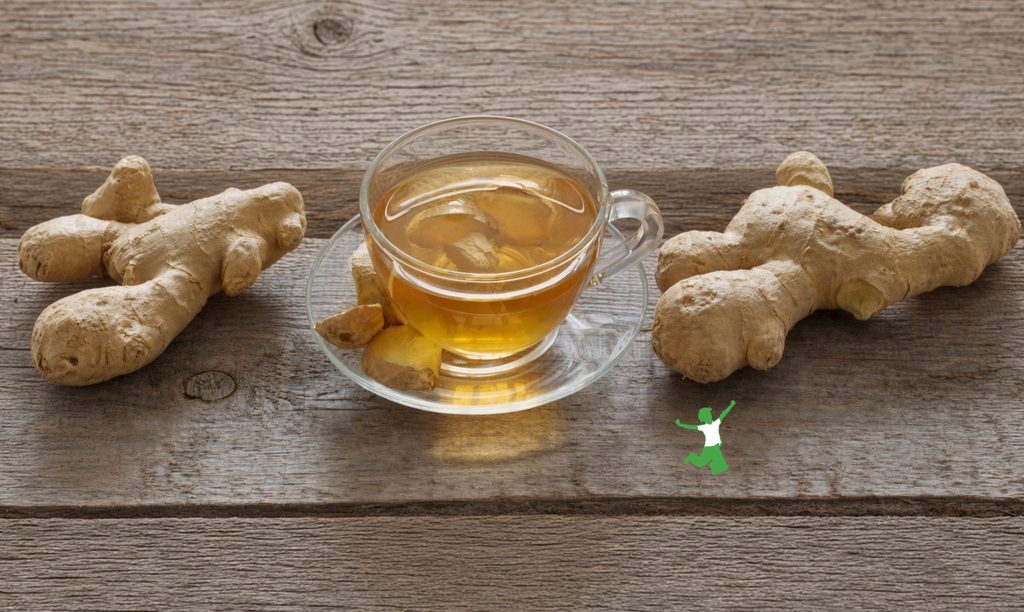
How to properly brew ginger tea for the important therapeutic benefit of improving nutrient absorption. This is an important home remedy for those with digestive ailments that prevent them from getting the most from their healthy diet.
A catchy phrase in the health community is “you are what you eat“. This is not entirely true, however.
The truth is that “you are what you digest“.
If you are one of those people who seem to absorb nutrients very poorly, with health improvements minimal despite an excellent diet, ginger tea can help in a very significant way.
Therapeutic ginger tea is ideally made with fresh organic ginger root that is steeped in a manner that maximizes its amazing benefits to the digestive process.
Fermenting a ginger tea infusion into homemade ginger ale is also very helpful.
Digestive Problems at Epidemic Levels
Antibiotics and other gut flora-altering drugs like the Pill have the potential to decimate the microbial balance in the gut.
This impacts nutrient absorption in a negative way, with persistent digestive problems the inevitable result.
According to Martin Blaser, author of the book Missing Microbes: How Overuse of Antibiotics is Fueling our Modern Plagues, the average child receives 17 courses of antibiotics by age 20. (1)
The problem is not just with children either. Half of adults have used at least one prescription drug in the past 30 days. Nearly 11% have used five or more drugs within the past month!
Is it such a surprise that digestion and nutrient absorption are so impaired in many people today?
Environmental factors such as glyphosate residue on food (Roundup) also insidiously alter the gut environment slowly over time. Even tiny exposures harm beneficial microbial colonies in the gut allowing pathogenic strains like candida, parasites or even viruses to dominate.
And glyphosate residue is everywhere in our food supply and has been for decades! FDA tests have found glyphosate residue in baby oatmeal! (2)
Still think buying organic is such a waste of money?
The bottom line is that we have so many assaults on our gut flora today. Sadly, many of these we have no control over, such as when traveling where we don’t have full control over the menu like when we are at home.
When gut flora is not in beneficial balance for whatever reason, digestion and nutrient absorption suffer even when eating an excellent diet.
Important Sign of Malabsorption
One easily observable physical sign (there are many) that poor nutrient absorption is occurring is manifested in the fingernails.
Vertical lines or ridges in the fingernails are typically indicative of malabsorption of nutrients. (3)
The more pronounced the lines appear to be and the more fingernails that have them, the more extreme the problem.
While conventional medicine suggests that such lines or ridges are normal and occur naturally when a person ages, this is far from the truth.
Something is preventing the nutrition in the food we eat from reaching the nails when this condition presents.
This “something” is typically digestive in nature, ranging from thyroid issues, candida, parasites, and poor, imbalanced intestinal function in general.
Ginger Tea Improves “Digestive Fire”
A single herb is not going to counteract all of the cumulative health effects of exposure to drugs and chemicals which have negatively altered gut function.
Please do not think that ginger tea is a silver bullet of some kind!
However, regular consumption of ginger tea with meals can help in a significant way while healing is occurring.
“Everything good is found in ginger” declares an ancient proverb. (4)
When ginger is made into tea in a therapeutic manner, this most beneficial herb for digestion can be unleashed very effectively.
According to the University of Maryland Medical Center, the highly active, volatile oils and pungent phenol compounds, such as gingerols and shogaols, are what make ginger so powerful. (5)
In Ayurvedic medicine, ginger tea is suggested for treating imbalances of all phases of the digestion, including absorption and elimination issues.
Consuming ginger, especially as a properly prepared herbal infusion, is especially effective. It neutralizes pathogenic microbes that are competing for nutrients in the gut and preventing absorption.
Ayurvedic tradition suggests that everyone should eat fresh ginger or drink ginger tea before meals to enhance digestion.
Ginger increases “digestive fire”, thus improving assimilation and transportation of nutrients. This is likely due to its powerful anti-oxidative and anti-inflammatory effects, according to the International Journal of Preventative Medicine. (6)
Both traditional and modern medicine recognize the benefits of ginger to human physiology.
Ginger tea made into an herbal infusion is the easiest way to experience these benefits on a daily basis, especially if poor nutrient absorption is a problem.
Food sources, such as a few thin slices before a meal, are helpful too. Now you know why sushi restaurants often serve pickled ginger as a condiment (never eat raw fish, though … it’s a parasite risk nonetheless).
Traditionally, the ginger aids digestion and helps neutralize some of the pathogens that might be present in the raw seafood.
Ginger Tea Contraindications
Note that consuming ginger and drinking ginger tea is not advisable in cases where vertigo, chronic skin disease, or excessive bleeding occurs.
It is safe to consume ginger in moderate amounts during pregnancy and breastfeeding.
Some women find it helpful for reducing morning sickness symptoms. Others find it helpful for reducing symptoms of motion sickness.
It is recommended to consume no more than 4 grams of ginger per day from all food sources. Pregnant women should not take more than 1 g per day. (7)
Proper Preparation
If you are experiencing digestive issues, particularly in the area of malabsorption, and would like to try ginger tea as a remedy to help speed the healing process, here’s how to make it properly.
Hint: skip the tea bags, which are not therapeutic and are sometimes toxic.
Ginger Tea Recipe
Makes one quart
Ingredients
2-inch piece of unpeeled whole ginger root, preferably organic. In a pinch, 2 ounces/ 57 grams of bulk dried ginger root may be substituted.
Filtered water
Equipment
1 quart or larger glass jar with lid
Instructions
Chop an unpeeled 2-inch piece of whole ginger into coarse pieces. If you can, source organic ginger as it will be more potent. Remember that ginger is a root; hence, growth in uncontaminated, chemical-free soil is important.
Place ginger pieces or dried ginger root in a 1-quart or larger glass jar. Add one quart of boiling filtered water.
Screw on the lid and leave on the counter for 8 hours.
Strain out the ginger bits and refrigerate the ginger tea liquid. Freshly made ginger tea will spoil rapidly, so use it up quickly.
Prepare a fresh batch within a day or two.
How much to drink?
Drink 2 cups of ginger tea per day (sipped throughout the day) if you weigh between 125 – 150 lbs (57 – 68 kg).
Add an additional one-half cup per day for every 30-40 lbs (14-18 kg) additional weight.
Similarly, if you weigh less than 125 lbs (57 kg), reduce dosage by a quarter cup for every 15-20 lbs (7-9 kg).
Other Ways to Benefit from Ginger
If you would like some other ideas for unleashing the benefits of ginger in your home, try these useful ideas:
- Power Shot (wheatgrass plus fresh ginger juice for clearing congestion)
- Ginger Bath (helps to sweat out the toxins and detoxify)
- Homemade Ginger Ale Recipe (yes, using real ginger!)
- Homemade Ginger Snaps (healthy, grain free cookies that everyone will love)
- The Master Tonic (natural anti-viral remedy)
- 11 Best Natural Antibiotics (using ginger as an antibiotic is discussed)
(1) Missing Microbes. How Antibiotic Overuse is Fueling Our Modern Plagues
(2) FDA Tests Confirm Oatmeal, Baby Foods Contain Residues of Monsanto Weed Killer
(3) The Skin, Tongue and Nails Speak: Observational Signs of Nutritional Deficiencies
(4) Indigenous Culture, Education and Globalization: Critical Perspectives from Asia
(5-7) Anti-oxidative and anti-inflammatory effects of ginger in health and physical activity: review of current evidence



What is the connection with vertigo, and why should one not use ginger if they have vertigo?
I always knew it as a anti-nausea which would be good for vertigo.
What is meant in the article is that in cases where using ginger causes vertigo, its use should be discontinued.
I prefer to drink hot liquids in the winter. Can one warm up the prepared refrigerated ginger tea? Or can one just prepare a hot drink with chopped ginger to have before a meal?
It is best prepared fresh before a meal, but you can make small batches and refrigerate for a day or two, reheating as needed.
For digestion and nutrients absorption is this tea best consumed before of after meals?
Thanks Sarah, made some earlier today and it really perked up my wife who was feeling a bit poorly 🙂
For digestion and nutrients absorption is this tea best consumed before of after meals?
Should it be stored in the fridge to last the two days before spoiling? And are there any issues with drinking it cold from the fridge?
P.s. Thanks for all your awesome articles
Yes … good point! If you make a lot at one go, refrigerate what you don’t use right away. It is fine to use as iced tea 🙂