

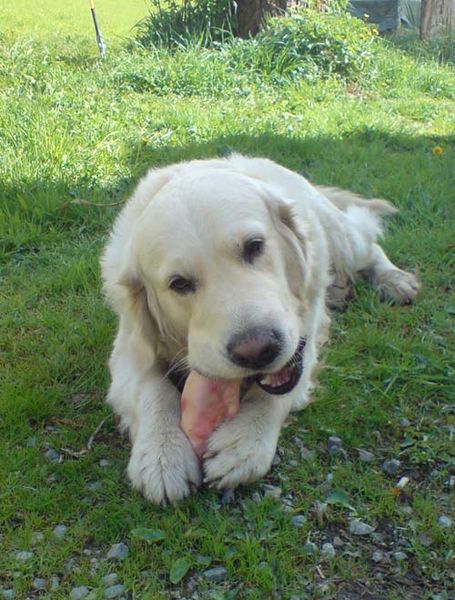
How to Assemble a Healthy Raw Diet for Your Pet

by Sarah, The Healthy Home Economist on September 8, 2012


By Guest Author Linda Zurich

In this article, the reality of implementing a raw diet for your pet is examined in detail.   Going raw with your pet involves much more than just switching from bagged store kibble to raw meat.  The right combination of meat, bones, and organs must be used to ensure your pet’s optimal health and overall adjustment to the change.

In addition, the economics of feeding your pet raw is discussed.  Is it really possible to do this on a tight budget?  What quality of meats need to be purchased and where is the best place to get these items at an affordable price?

If feeding your pet raw is a new concept to you, be sure to first read the previous 4 articles in this series, first and foremost The Top Ten Reasons to Feed Your Pet Raw.

Prey Model Diet

A diet of whole raw foods for pets is sometimes also called a “prey model” diet. This is because it’s modeled on the type of nourishment that’s generally provided to our pets’ wild carnivorous canine or feline cousins in the form of an average prey animal.

There are two ways to feed a prey model diet:

The first way is to feed whole intact prey critters. This means feeding entire, unbutchered animals, complete with such things as fur, feathers, scales, skin, heads, organs, glands and entrails etc.

The second, more common method is affectionately known in raw feeding circles as ‘frankenprey,’ and is comprised of an assemblage of parts and pieces of raw hunks of boneless meat, raw meaty bones, and raw organs. These parts are fed, over the course of time rather than at every meal, in the approximate proportions that are found in a prey critter. These approximate ratios are:

  • 80-85% raw boneless meat.
  • 10% raw meaty bones – aka RMBs.
  • 5-10% raw organ meats, at least half of which consists of raw liver.

** Please note that these ratios are approximate, and as such, are only meant to be used as general guidelines. In other words they are in no way intended to be considered as hard-and-fast-set-in-stone rules. **

It’s also possible to combine the two methods by feeding the occasional intact critter when possible and feeding frankenprey the rest of the time.

Putting the Raw Diet Together

Assembling such a diet for our pets is neither difficult nor complicated, and is actually quite simple and straightforward. All that’s required is a working understanding of the theory behind the prey model diet, some advance planning, and a bit more time and effort than simply opening a can or bag of cooked, processed pet food and putting it into a bowl. Oh, and having ample freezer space makes the whole endeavor infinitely more workable.

The easiest and most convenient way to put this diet together is by:

  • Relying on a freezer for storage of the raw food.
  • Stocking said freezer with a variety of different kinds of boneless meats, raw meaty bones and organs.
  • Thawing out enough food for the pet’s meals as needed prior to feeding times.

Variety is Key

Ideally, it’s best to feed your pet as wide a variety of different raw foods as possible. When feeding frankenprey, choose parts and pieces in the form of boneless meats, RMBs and organs from things like beef, chicken, lamb, pork, rabbit, duck, game hen, goat, bison, venison, ostrich, kangaroo etc.

Cut boneless meats into meal sized portions, and choose RMBs that are appropriately sized for your pet and freeze.

Although ground meat may be fed occasionally, it’s best to feed our pets primarily whole, unground raw foods. That’s because it’s only these minimally processed raw foods, which require the animal to use its teeth and jaws to gnaw, rip and tear them apart, which provide the kind of natural scrubbing, flossing and stimulative actions that are essential to the promotion of optimal oral health.

Economics of Feeding Raw

It’s important to remember that just as choosing better quality food for ourselves and our families may cost us more day to day, but is really an incredibly worthwhile long term investment in our health, likewise feeding our pets a wholesome raw food diet is also an investment in their long term health.

Many health-savvy people today have the understanding that the regular consumption of cheap, low quality food today can cost us dearly later in life.

For such forward thinking folks, it’s easy to see how feeding our pets a quality raw food diet instead of one reliant on cheap, low quality commercial pet food may well result in a significant reduction in vet bills over the course of these animals’ lives.

Here are a few suggestions for feeding raw economically:

  • Buy in bulk whenever possible.
  • Combine your purchasing power with that of others by participating in a buying club.
  • Stock up on quantities of items that are on sale.
  • Shop at ethnic markets, which often carry a wide variety of raw animal based foods at extremely reasonable prices.
  • Make contact with hunters in your area and offer to take their scrap meat and organs which are often discarded.
  • Get to know those who process and butcher animals locally, from whom you may also score scraps, organs and other nourishing raw bits on the cheap or perhaps even for free.
  • Advertise online on sites like Craigslist or Freecycle, offering to take the meaty contents of freezers that are being cleaned out.

Although for many of us it may not seem particularly ideal to purchase regular grocery store meat since we’re aware that pastured/grass fed is of much higher quality, it’s helpful to maintain a perspective of relativity by realizing how much better feeding a diet consisting of conventionally raised meats/RMBs/organs is as compared to feeding our pets a diet of kibble or cooked can food.

Not everyone can afford to feed their pets 100% pastured meats, so it’s good to bear in mind that feeding our furry friends any sort of whole raw foods is infinitely better for them than is feeding them a lifetime of junk commercial pet food, and that we simply do the best we can for our animals as we are able.

Useful Resources

Nature’s Prey Model

http://www.rawfedcats.org/nature.htm

Raw Fed Dogs Starter Guide

http://rawfeddogs.org/rawguide.html

Prey Model Raw

http://preymodelraw.com/how-to-get-started/

Raw Fed Dogs Recipes

http://www.rawfeddogs.net/Recipes/

Carnivore Feed Supplier

http://pets.groups.yahoo.com/group/CarnivoreFeed-Supplier/

BARF Suppliers in CA

http://pets.groups.yahoo.com/group/BARF-SUPPLIERS-IN-CA/

Western NY Raw Feeders

http://pets.groups.yahoo.com/group/WNYRaw/

Washington/Oregon BARF

http://pets.groups.yahoo.com/group/WAzzuOR_BARF/

about the author

Compelled by a passion for both learning as well as sharing about the most effective and natural holistic paths to healing and wellness, Linda Zurich is an ardent independent researcher with a deeply curious mind.

A prodigious writer, herbalist, foodie, educator and perpetual student of health, she is the author of Detoxification: 70 Ways to Cleanse, Clear & Purify Your Body, Space & Life. She has also written an ebook called Raw Fed Cats: Feeding Cats a Diet of Whole Raw Foods Based on Nature’s Model, and is the creator and author of the website http://rawfedcats.org where her ebook is available for sale.

Linda is devoted to empowering people with the knowledge that our bodies are imbued with a profoundly intelligent, natural healing wisdom – a capacity which is actuated by nourishing our bodies deeply and being proactive about detoxification, thereby exponentially strengthening our ability to regain and maintain vibrant health.

Linda’s book along with details on her upcoming speaking engagements can be found by clicking here.  She can be contacted at linzurich (at)yahoo.com

Picture Credit


The Healthy Home Economist by E-mail


{ 43 comments… read them below or add one }

Cathy September 8, 2012 at 6:06 pm

Thank you for this! We are getting ready to ease into raw feeding and this was so helpful.

Reply

Magda September 8, 2012 at 8:16 pm

Thank you!! This is one of the best articles on how to ease into raw feeding that I’ve read in a long time.. So many people get involved with veggies, fruits, grinding, supplements, etc, etc. It’s really fairly simple! I fed my GSD raw for over 7 years and she thrived on the diet. Sadly we lost her to bloat a few years ago. When we get another dog (might be soon) I will do raw right from the start – puppies take to it like nobody’s business!! I was a part of a buying club and I bought chicken, beef, pork, turkey, ostrich, goat, lamb and rabbit. While it was more expensive than kibble, my dog was never sick, needed no supplements or expensive teeth cleaning.
Thanks again for a great guide to raw.

Reply

Linda September 9, 2012 at 10:16 am

Yes thank you so much for this!

Reply

Oliver September 9, 2012 at 10:36 am

This is one of the most encouraging articles i’ve seen on these blogs in forever. The benefits of raw will manifest themselves in so many wonderful ways – starting with their gums and teeth. Dogs and cats, domestic ones (pets) have the highest rate of gum disease more than any and every other species on earth, including humans (this is due to malnutrition – eating foods with zero biologic activity). U can google dental issues as one of the first signs of malnutrition.
Once more and more folk adopt this idea for their pets, vicariously (?), something might eventually be triggered in their brains that registers as WTF, why am I not doing this across the board? – and with our kids and our families we can have blogs about how to ease humans back to the original, most traditional, (the original tradition) way of eating (with the occaisional side of fries:))
One technical note about the topic post; I never recommend freezing anything – freeezing can do cell damage as well (cells can be ruptured by the freezing process – and then the thawing process). Many nutrients are cuccooned in cells for protection – and for some nutrients that is just how they exist – inside cells.
What I do is simply store my fresh products in area of the fridge that is just above freezing. Very cold, 40 degrees F will sustain your food stuff for months. This will still prevent spoilage (decay) and mold (bacteria build up). If you need to store food for longer than that – there is going to be some inherent nutrient damage anyhoo.
Also it is important to note that light and oxygen will rapidify decay dynamics as well. So too for mold. If you can vacum seal your fresh food products and store them in a dry cool, dark space, this can do as well as super cold storage. It’s really oxygen more than the heat that enables decay dynamics.
Vegetables are good as well for your pets. My friends use turkey meat and mix in raw fresh organic vegetables.
Also we need to get away from thinking that dogs and cats need so many calories. They don’t. Just like humans, we have become accustomed to thinking we need to eat all of the time – and a lot of food as well. This is in part to marketing.
In the wild, big cats and canines don’t eat every day – they go for days with out eating – and then share a kill with the whole pack – and that sustains them for weeks on occaision. I say this to say that when we weight the costs of raw meat – we shouldn’t feel we have to serve up a twenty dollar meal each day.

Reply

Celina Davis via Facebook September 9, 2012 at 12:03 pm

Good stuff

Reply

Jennifer Sollecito via Facebook September 9, 2012 at 1:09 pm

I started doing this a few weeks ago. I bought an easy to understand book on my kindle. What I do need is a forum of experienced raw feeders where I can ask questions that weren’t answered in the book, altho the author did a a great job. My one dog still eats everything soooooo fast and I worry it’s bad for her.

Reply

Linda Zurich September 9, 2012 at 9:02 pm

Feed your dog items that are bigger than her head!

That will slow her down big time!

Here’s a link to the best online forum I know of where you can ask questions of 10s of thousands of raw feeders:

http://pets.groups.yahoo.com/group/rawfeeding/

Reply

Sharon September 9, 2012 at 1:11 pm

We want to incorporate raw food into our dog’s diet. How can I copy this post, with all the wonderful links? One cannot click on the links or copy them either. Thanks.

Reply

Oliver September 9, 2012 at 1:26 pm

You can go to “Darwin’s natural pet products” – it’s a website. It has the same good info on transitioning etc and you can cut and paste as you please, or link as you like.

Reply

Linda Zurich September 9, 2012 at 9:04 pm

Feel free to email me and I will send you a copy of the entire article, with links that you can copy and paste into your browser.

linzurich (at) yahoo.com

Reply

Amber Becker via Facebook September 9, 2012 at 1:17 pm

Devan Kirk this might help with Rosie <3

Reply

Bonnie September 9, 2012 at 1:30 pm

How do you keep pets from dragging raw meat, bones, and organs all over the floor inside the house? Could use some guidance here. Thanks!

Reply

Linda Zurich September 9, 2012 at 9:05 pm

Train them by taking the food away from them if/when they drag it away from the designated place and bringing it back to wherever you want them to eat.

Reply

SoCalGT September 11, 2012 at 2:01 am

This is an ongoing battle (many years) with our gang. I am able to block off the opening to our kitchen and keep them in there on the tile. If I get lazy and forget to put up the gate, then turn my back, the family room carpet will look like a murder scene. If it’s nice I’ll also feed outside.

Reply

Megan of RojerThat.com September 11, 2012 at 10:18 am

We contain our cats in a bathroom with tile floor, then cover the bowl area with newspapers, especially the shiny/waxy ads because they don’t absorb the grease as fast.
Megan of RojerThat.com\’s last post: Birthday Memories for Our Girl – September 11, 2012

Reply

jennifer September 14, 2012 at 11:07 am

Hi there,
We trained our guys to eat on a large cookie sheet. it has become their “bowl”. it only took a few tries but we put the food out and each time they tried to take the food off of the tray we picked it up and put it back and said “on your tray”. It’s a nice big flat surface that enables them to get at the food from all angles and it is super easy to clean off. It probably took at most a week to train it (they were puppies at the time).

Reply

Christina Cook Cordon via Facebook September 9, 2012 at 1:58 pm

Wow, this came at the right time for me. I was trying to figure out how I was going to afford feeding my two large dogs a raw diet when we are struggling just to feed ourselves! I hadn’t thought of asking the local butcher for scraps. Thanks so much for posting this!!

Reply

Brenda Beth Whittington-Cook via Facebook September 9, 2012 at 2:07 pm

yahoo has a raw feeders group

Reply

Dea Warskow via Facebook September 9, 2012 at 3:33 pm

Thanks for posting. We have a Rottweiler who is experiencing allergies to gluten. I was thinking of doing this instead of paying 40 dollars a month on “special” dog food.

Reply

Kathy September 9, 2012 at 5:17 pm

Should we freeze the meat for 14 days prior to dog’s consumption as we do when we (people) eat raw liver? I think it’s to kill the parasites? I understand that dog’s stomach acid is stronger & they can handle the bacteria though. If I’m wrong, let me know. ;) Thanks!

Reply

Oliver September 9, 2012 at 5:28 pm

The effectiveness of freezing to kill parasites depends on several factors, including the temperature of the freezing process, the length of time needed to freeze the fish tissue, the length of time the fish is held frozen, the fat content of the fish, and the type of parasite present. The temperature of the freezing process, the length of time the fish is held frozen, and the type of parasite appear to be the most important factors. For example, tapeworms are more susceptible to freezing than are roundworms. Flukes appear to be more resistant than roundworms.
Freezing and storing at -4°F (-20°C) or below for 7 days (total time), or freezing at -31°F (-35°C) or below until solid and storing at -31°F (-35°C) or below for 15 hours, or freezing at -31°F (-35°C) or below until solid and storing at -4°F (-20°C) or below for 24 hours is sufficient to kill parasites. FDA’s Food Code recommends these freezing conditions to retailers who provide fish intended for raw consumption.

Freezing won’t nesscesarily kill parasites. Remember, parasites are organisms like bacteria etc – Whatever we think we are doing to kill organisms which are comprised of proteins etc, we will affect as well the good nutrient molecules in the meat. Many of those microbrials are natural and healthy to all wild animals – so too is many of the stuff we wash off of our fruits and veggies.
That is how many species develope natural immunities – a side note – there is anthrax on many blades of grass that animals graze on – we need to allow ourselves some of this bacteria in order that our immunes systems will develop naturally and gradually.
Personally – if you can find a butcher who slaughters the animal while the animal is in a really cold room and immediatly places the fresh killed beast in an even colder room for processing, and then a colder one for storage – the chances of parsitic development are slim.

Reply

Oliver September 9, 2012 at 5:31 pm

This is apllied to beef as well as fish – my brain is on fish right now but all live stock, fish fowl or beast experience the same dynamics

Reply

Linda Zurich September 9, 2012 at 9:06 pm

In my opinion, unless the liver is from a wild animal, it’s not necessary to freeze it prior to feeding it to dogs or cats.

Reply

Lisa Carpenter via Facebook September 9, 2012 at 5:37 pm

My dog eats fruits and veggies raw. The end of the carrot and such…

Reply

Lauren September 9, 2012 at 9:08 pm

I have been enjoying this series. I agree with Bonnie. Tips on how to feed raw practically… more into preparation, keeping the house clean, etc. would be great. Also, I am concerned about HOW MUCH raw to feed. I have four little dogs under forty pounds and I was figuring between 4oz – 8 oz of meat per day (based on weight and conditioning of course per an online “raw diet” calculator)… of course then there is organ and meaty bones. Some guidance would be helpful. Also, transitioning a dog to raw. What to look for, how to do it, etc. (Maybe I missed that in one of the other posts).
Lauren\’s last post: Farmer’s Market Booth Envy

Reply

Magda September 10, 2012 at 12:27 pm

That seems like too little… I usually fed 2-3% of body weight per day – my 75 lb GSD got about 2 lbs of meat per day. Small dogs usually eat more of their body weight than large ones so even 3-4% would be okay.

Reply

Linda Zurich September 10, 2012 at 12:31 pm

To learn more about the practical aspects of transitioning dogs and feeding them a raw diet day to day, I’d strongly suggest joining the rawfeeding forum on yahoo and reading through the information on these sites:

http://rawfeddogs.org/rawguide.html

http://rawfeddogs.net/FAQs/

http://preymodelraw.com/how-to-get-started/

http://pets.groups.yahoo.com/group/rawfeeding/

Reply

Elizabeth Allison via Facebook September 9, 2012 at 10:09 pm

Jennifer- you can like “raw feeding (RF)” on Facebook. They have several forums you can join. Lisa – Dogs are carnivores and do not have the enzymes to digest the cellulose in fruits or veggies, they have to be puréed or lightly cooked and mashed for them to digest properly. Most raw feeders do not give their dogs or cats any veggies or fruits at all. Every cat and dog needs to be off ALL grains, allergies will cease, ear infections will cease arthritis will cease and weight will fall off. Dea- all dogs are unable to handle gluten and should NEVER consume it or any other grain that is gluten free. Seriously, is there a test the vet makes a client pay for to give out this advice?

Reply

Oliver September 10, 2012 at 12:14 am

J – U are right about not digesting the cellulose part but that will just pass through them. The nutrients that are in many plants will however be retained and absorbed into the digestive and nutrative matrix.
Just like humans not “processing” the cellulose in corn, those parts pass on through our poop.
Believe it or not most species are omnivores. The fact they they hunt and kill animals mostly has led us to think that they are only meat eaters. This is not so. Wild dogs routinely consume grasses, berries, roots and other vegetable matter. The gastrointestinal physiology of dogs is fully capable of digesting and absorbing plant protein sources as well as meat protein sources.
But again, just like humans there are some plants that are harder to break down and parts of a plant that won’t breakdown fully at all.

Reply

Linda Zurich September 10, 2012 at 12:23 pm

Just to be clear here:

All felines on the planet, including house cats, are obligate carnivores.

Dogs, whose taxonomic classification is canis lupus familiarus, are essentially gray wolves, whose classification is canis lupus.

As such dogs are of the taxonomic order Carnivora, sub-order Caniformia, family Canidae.

In other words, DOGS ARE CARNIVORES. Despite what many may erroneously believe, due to the fact that dogs and wolves can and occasionally do consume plant based foods, these animals are NOT, scientifically speaking, omnivorous.

So to summarize, cats are obligate carnivores and dogs are opportunistic carnivores.

Both are essentially predatory creatures whose bodies have evolved over millions of years to thrive on the consumption of the raw meat, raw meaty bones and raw organs derived from the carcasses of other animals.

Reply

Oliver September 10, 2012 at 12:42 pm

Respectfully, You can’t give all of this “fact according to you” “scientifically speaking’ — and then say – “due to the fact” that wild canines can and do eat plant based foods. Why doesn’t my girlfriend just say she’s a little pregnant.
It is mans idea that other species are what they are. It is man and science that takes it upon itself to determine what other things are and label them as such. If one calls themself a vegan – their is no “occaisional” barbecue ribs on there agneda.
So to summarize, as long as one has teeth, a gut with acid, jaws, a mouth – they are omnivores – or forget giving them a name. They eat what they want when they want and when they can get it.
Just because their environment suggests they eat a certain way, it should never imply that that is the only way they can eat. Yes there is plenty a wild animal can offer to those who kill and eat them fresh – but at the end of the day – it all comes down to chemical elements. And every chemical element that exists in a plant can exist in a zebra.
Chemical elements is only what makes fat, proteins, amino acids, vitamins – and of course the singular atoms as nutrients – iron, magnesium etc. Those chemical elements and the combinations thereof exist in all life forms.
At the end of the day all the other species are niether herbivore or carnivores – they are nutrivores or nutritarians – meaning, they seek to ingest those chemical elements I spoke of – that and the other chemical compound, H2O.

Reply

Linda Zurich September 10, 2012 at 1:25 pm

With respect to your opinion, Oliver, whether dogs are actually carnivores or omnivores really comes down to a question of anatomy and physiology.

As far as cats are concerned, there is no question whatsoever, because they are very clearly obligate carnivores.

The anatomy, particularly with regard to the dentition of canines and felines, is what determines that they are indeed carnivorous animals.

Carnivores’ teeth are sharp and designed to come together like the blades of scissors to grab rip, shear and tear apart raw flesh. The jaws move exclusively up and down in a vertical plane. Compared this to the teeth and jaws of an herbivores such as a cow or sheep, that have large flat (not sharp) teeth, and jaws that move horizontally side to side to crush large amounts of cellulose containing plant material.

There are other anatomical and physiological attributes that make carnivores carnivores which are outlined here:

http://rawfed.com/myths/omnivores.html

and here:

http://www.rawfedcats.org/carnivores.htm

If a healthy, strong pack of wolves has an opportunity to hunt, kill and consume a large ungulate, this is their primary and preferred meal, and has been for countless eons. That’s because they are predatory carnivores!

If, on the other hand prey is scarce, or the wolves are too weak or the pack too disorganized to hunt prey animals, this is generally when they begin to rely more on vegetative matter, which is more of a subsistence adaptation they’ve evolved to help them stave off starvation, than it is a strategy for obtaining optimal nourishment.

I’m taking time to respond to this thread because I feel that providing a clear, comprehensive explanation about why dogs and cats are carnivores is extremely important!

The sad truth is that in our modern quest for convenience and economy, we have ignored the fact that cats and dogs are true carnivores by feeding generation upon generation of them a steady diet of junk pet food products that contain vast amounts of plant matter such as corn and soy.

Personally I do not feel it’s overstating the case to say that the result of humanity’s ignorance of these animals’ true nature as carnivores has had a catastrophic effect on the collective health of the domestic pet population.

Oliver September 10, 2012 at 2:12 pm

Linda – Whether dogs are carnivores or omnivores doesn’t come down to their anatomy and physiology – it comes down to what they have been known to eat in the wild. I don’t know why that is such a hard concept to grasp? Again, human science says this or that – not natural science.
And the type of teeth again may determine what you are able to do but not what you need to do. Cows are not a good example – they have been modified over the centuries – by man. Our great grandparents had more teeth in their mouth – and maybe sharper ones. But over time, with all of the processed food our “physical traits” have been altered as well.
Everything is subsistence adaptation – if this works then I’ll eat it. I too prefer burgers and fries because they hit the spot ( and are much more flavorful) way more than a boring old salad. We have options – they have options too (with the exception of 7/11’s).
Gorillas will feast all day on bananas and they will stuff all kinds of plants down the hatch – and they can and do do this for months. If on occasion they fight with each other and one is killed – well heck, look there is some meat – and they have at it. Bears have sharp teeth enabling them to mangle meat, but they too, in the wild can munch on vegetation as well. It’s a about nutrients and every species knows this. Nutrients are the sustenance. Preference comes second. What we evolve with or adapt to comes third.
The only thing that has contributed to the declining health of cats and dogs and humans is cooked processed food. There are many domestic animals that have lived their entire lives on a variety of raw foods, both from plants and animals, and they are vastly healthier than dogs and cats who eat the common food stuffs that are on the market.
Cats and dogs are nutrivores, nutritarians. To say, that as far as cats are concerned, there is no question whatsoever, because they are very clearly obligate carnivores is misleading. ‘Clearly’ would imply that you have observed the big cats – if you did do some Jane Goodall type of study you would know that lions have on occasion consumed plants – now some have said this is done to help with digestion – which for me is a quite dubious analysis – kind of like the wildlife documentaries where the narrator acts as if he or she had a Dr Doolittle type conversation with the species and got the skinny on what’s really going on.
Or kind of like when we stab a fish with a sharp hook and say it doesn’t hurt him cause he can’t feel it…

Oliver September 10, 2012 at 12:55 pm

I’m sorry – I meant that reply for elizabeth not Jennifer

Reply

Linda Zurich September 10, 2012 at 12:51 pm

Elizabeth, thank you for this!

There are a number of very good reasons why most experienced raw feeders do not feed their dogs and cats any fruits or veggies whatsoever.

But one of the main reasons is this: the more we rely on plant based foods in the diet of our carnivorous house pets, the less room there is on the menu for the kind of species appropriate foods they were really meant to eat.

It is the consumption of these raw, animal based foods, which include luscious, raw meaty meats, nourishing, teeth scrubbing RMBs, and nutrient dense organs – upon which our pets’ bodies were designed to thrive – that our furry friends truly require for optimal health.

Reply

Oliver September 10, 2012 at 1:14 pm

“Species appropriate” is man’s way of running things again. We need to get over the idea of “we have dominion over the animals” check your local bible. The only species appropriate food is nutrients – vitamins, fats, minerals, milk and water and oxygen, and so on and so forth. And all of those things exist in every living organism – or they have the ability to enable another organism to create it in their own body. Simple (yet complex) transference of chemical elements and the forming of new ones.
If a wild animal, a dog, can eat wild fruits and other vegetations, as you yourself ackowleged, then technically – or otherwise, it is not a label – I mean a carnivore, or herbavore, or fruititarian or vegan or anything else we are wont to come up with to explain the universe and it’s inhabitants. Forget labels, just make sure it’s raw.

Reply

Lisa C September 10, 2012 at 2:44 pm

It’s my understanding that recipes that call for supplements do so because we are not getting the full array of organ meats from the store. For example, my cat food recipe calls for vitamin E because I do not add eyes to their food. The only organ meat I can get from the store is heart and liver. The health food store I shop at offers raw “pet food” in the form of bones, ligaments, heart, liver and muscle meat, but I found that was not sufficient for my cats and had to follow a recipe that included egg and yolks and supplements to get them feeling better. Just wanted to point that out since this article makes it sound like any assortment of organ meats will do.

Also, I know that commercial pet food is not great, but for those who are not up to the raw feeding, there are now commercial pet foods that are grain-free. Wet food is better than dry.

Reply

SoCalGT September 11, 2012 at 2:20 am

Hi Lisa, If you have an Asian market near you you may want to check them out. I have been able to find all kinds of unusual body parts at them. Fish heads & chicken heads (with eyes), chicken feet, different types of organ meat. My biggest problem is deciding if my dog gets it or my stock pot!

Reply

Michelle Nihiser via Facebook September 10, 2012 at 11:52 pm

I worked for local vet for many years, and he always told the owners that kibble don’t grow in the wild..lol.. So they need real food.. and he never said they couldn’t eat raw fruit or veggies, but they can’t have grapes, onions, chocolate, And in the wild they would eat anything if they didn’t have meat- including uncooked raw food. The vet I worked for was a homeopathic vet ;)

Reply

Lisa Yee Choi September 15, 2012 at 8:55 pm

I like your internet site. The information on the web site I loved. We’ve bookmarked the idea to tell my pals. I favor searching the web and seeking regarding facts about domestic pets as well as wildlife. I am going to return before long with regard to improvements.

Reply

Heather11 November 7, 2012 at 2:32 pm

How about Natures Variety Instinct Raw????

Reply

Linda Zurich November 7, 2012 at 4:09 pm

Those products are less than ideal for several reasons.

a) They’re ground, meaning they’re very processed – therefore they’re not really whole raw foods.

b) Since they’re ground, they don’t offer any of the oral health benefits that feeding whole raw foods does, which includes gum stimulation, teeth scrubbing and jaw strengthening.

c) They contain carbohydrate-rich plant foods such as apples, carrots and winter squash, which is fruit and vegetable matter that has no real place in the diet of carnivores like dogs and cats.

Also, these products are pretty darned pricey! That kind of money would be much better and much more economically spent on purchasing whole raw foods to feed domestic pets – instead of these sorts of overpriced, highly processed, packaged, ground frozen patty type products.

Reply

Heather11 November 8, 2012 at 4:25 pm

Thank you for your insight! I see you have a book about feeding cats raw, do you have a book for dogs?

Reply

Leave a Comment

CommentLuv badge

{ 1 trackback }

Previous post:

Next post: