

Table of Contents[Hide][Show]
The major health risks of unbleached and PFAS-free parchment paper products and why Grandma’s alternative method is the best approach after all.
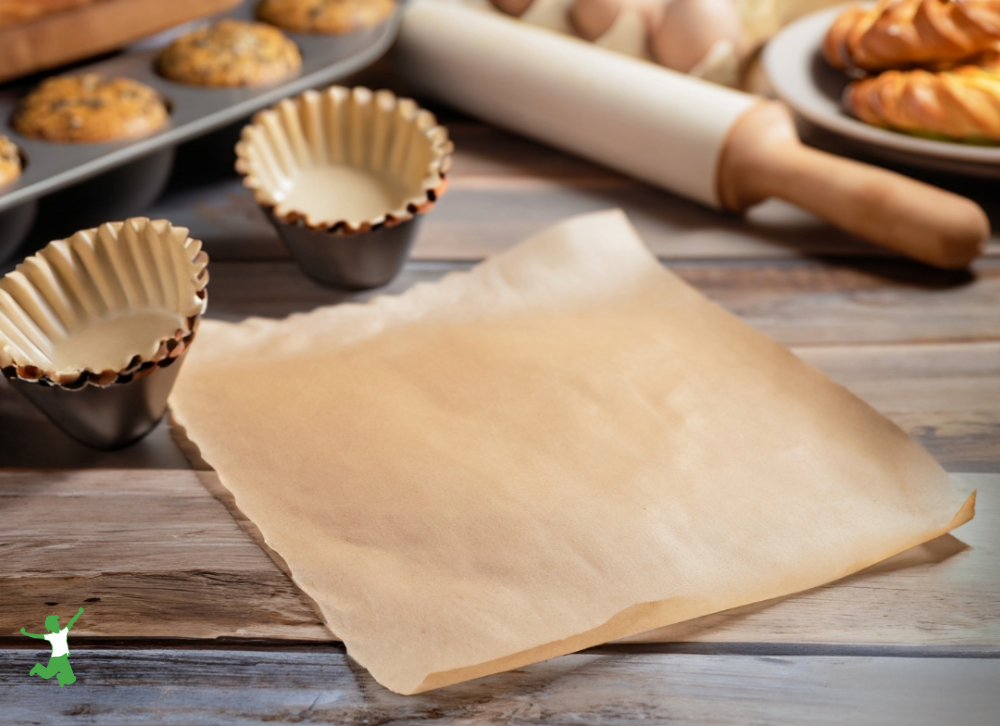
I’ve made a major upgrade over the past few years to my baking routine, and I wanted to share this important change with all of you!
I no longer use parchment paper or baking cups of any size or brand in my baking routine at all.
Those of you who have been reading this blog for a long time will remember that I used to use it to cover my aluminum bakeware to protect the food from heavy metal exposure.
Little did I know at the time that I was swapping one set of toxins for another!
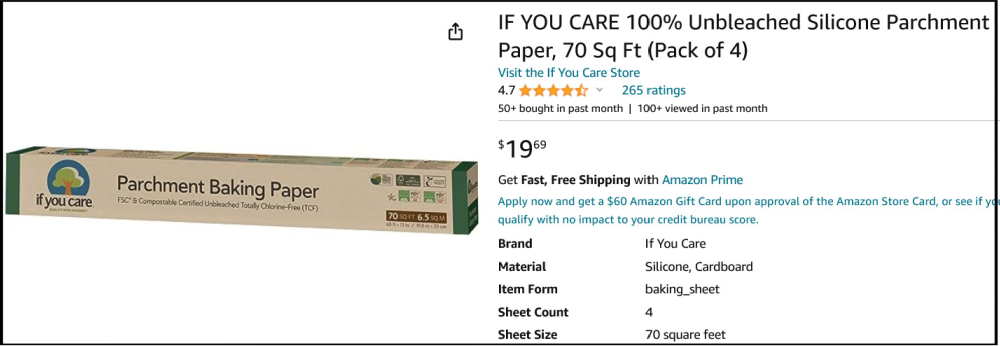
When I suggest ditching ALL brands of parchment paper, this includes unbleached brands such as “If You Care” which consistently receives high accolades for safety and has many “green” certifications such as compostable and biodegradable as well as the coveted EU Ecolabel. (1)
I’ve warned before that “green” products are not necessarily healthy.
Unbleached parchment paper of all sizes and varieties is a prime example!
Unbleached Parchment Paper Isn’t Safe (even if PFAS-free)
While bleached parchment paper is quite obviously best avoided due to the potential for chlorine residues from the bleaching process, the danger from unbleached varieties is more stealthy.
While marketed as “chlorine-free”, unbleached baking paper is actually coated with silicone.
What exactly is silicone anyway? Is it the same thing as silicon, the natural element with the chemical symbol Si and atomic number 14?
They are far from the same thing, as it turns out!
Synthetic Rubber
According to Scientific American, silicone is a synthetic rubber. Its chemical name is siloxane.
Silicone [siloxane], a synthetic rubber made of bonded silicon (a natural element abundant in sand and rock) and oxygen, is increasingly filling this niche. The flexible yet strong material, which has proven popular in muffin pans, cupcake liners, spatulas and other utensils, can go from freezer to oven (up to 428 degrees Fahrenheit), is non-stick and stain-resistant, and unlike conventional cookware, comes in a range of bright and cheery colors. (2)
Sounds so safe, doesn’t it?
Manufacturers know that conflating an artificial material with a natural one by making their names virtually identical makes it so easy to confuse the public!
While manufacturers insist that silicone is safe and inert, I beg to differ.
Silicone Leaches into Food
Studies have shown that silicone can migrate into food at normal cooking and baking temperatures.
Even though silicone elastomers demonstrate a high degree of thermal stability and excellent resistance to aging, high temperatures lead to depolymerization of the elastomer, with subsequent volatilization and migration [into food] of certain substances. (3)
Inflammatory Effects
In addition, medical devices that contain silicone implanted in the body have shown deleterious health effects.
Thus, it would seem that silicone that is ingested may very well pose health risks. This would include an inflammatory response at minimum. (4)
In fact, it seems to me that the FDA has completely dropped the ball on investigating whether siloxanes are as “inert” as claimed especially when it comes to their widespread use in silicone baking molds and kitchenware.
No follow-up studies have ever been done since 1979 to assess this important question with regard to the implications for long-term health. (5)
Endocrine Disruption, Tumors, Cancer
While the FDA hasn’t done much to ensure silicone is safe, the EU has.
The European Union classifies siloxanes as a Class 1 endocrine disruptor. (6)
In addition, silicone, aka siloxanes, can cause uterine tumors and reproductive issues, possibly even leading to infertility. (7)
The final nail in the coffin is that siloxanes are also a carcinogen and can cause liver damage. (8)
Unbleached parchment paper coated with siloxane doesn’t sound so inert and safe anymore, does it?
No wonder they picked the euphemism “silicone” for this toxic substance!
How to Ditch Parchment Paper for GOOD
Since ditching unbleached parchment paper several years ago, I’ve been baking the old-fashioned way.
Just like my Grandma did! Turns out (for the umpteenth time), that she really DID know best!
I grease and flour muffin cups, pizza pans, and cookie sheets before adding the dough and placing it in the oven.
I am also now using stainless steel baking sheets and pans (this brand).
UPDATE: I recently found this safe brand of uncoated cooking parchment which works great for cookies and bread as well as steaming or broiling meat and veggies!
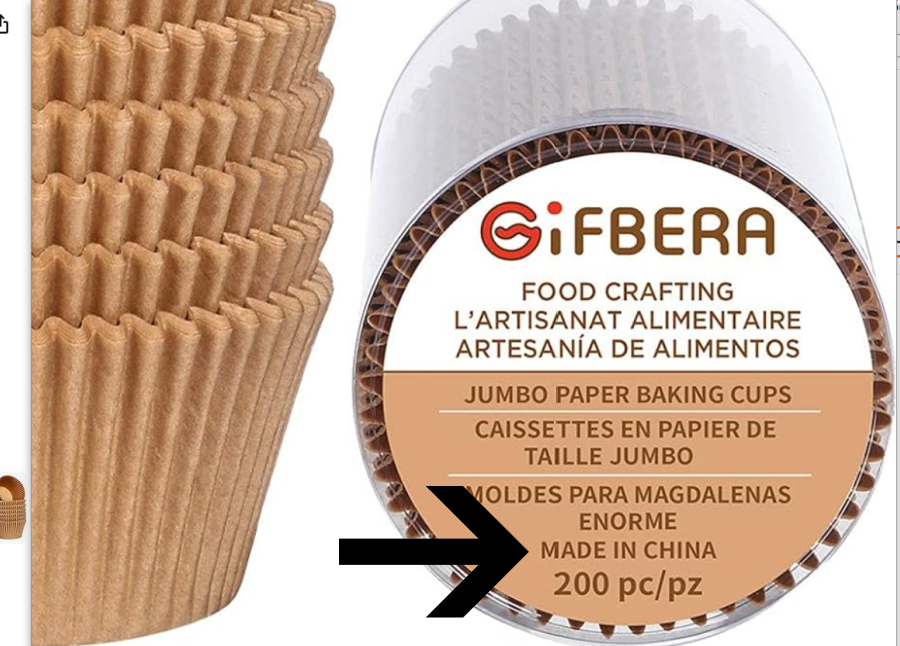
Gifbera Jumbo Cupcake Liners
Please note that the Gifbera Jumbo Cupcake Liners made of “naturally greaseproof” 100% spruce wood pulp are being touted on social media as a safe alternative to parchment paper.
However, I personally would never use this product for a couple of reasons:
First, they are manufactured in China (imported from Germany).
Secondly, in China, spruce wood pulp is almost exclusively a fully chemicalized process. There is a high probability that anything made from the industrialized spruce wood pulp would contain residues of these caustic chemicals.
“Grease and Flour” Approach
There is no magic to greasing and flouring a baking surface.
Simply slather a thin film of healthy, high smokepoint fat on the surface of the pan(s) that will contact the food.
Then, sprinkle a bit of flour over the top. You can use your fingers to do this (a pinch of flour at a time). That’s what I do.
Or, you can use a small strainer.
The flour does not need to totally cover the greased portion of the pan, and you don’t need to mix it into the oil.
That’s all there is to it!
I use expeller-pressed “no taste” coconut oil and a dusting of homemade gluten-free sprouted flour blend for this task.
The good news is that this method works spectacularly well.
Your cupcakes will pop out of those muffin pans just as easily as a toxic unbleached baking cup.
Cookies will slide off the cookie sheet with a spatula quickly and 100% intact.
The downside is…
More Time, Bigger Mess
The extra step to grease and flour baking pans and cookie sheets definitely takes more time.
In addition, it can be a bit messy at first until you get the hang of it.
Soaking or even elbow grease is sometimes necessary to get those muffin tins and cookie sheets clean too.
Even still, I feel so much better doing it this way.
I’ve taken great care to source the ingredients properly, it would be such a shame to wreck the dish with a toxic silicone residue from a greenwashed “chlorine and PFAS-free” product!
What About Unheated Uses?
While the danger of using unbleached, silicone-coated parchment paper for baking is cut and dry, what about uses at room or refrigerated temperature?
The health issues from using unbleached parchment paper are markedly less for this scenario.
However, after careful thought, I’ve chosen not to use it at all. The research coming out about the dangers of siloxanes is just too concerning!
The potential for residue in the food is still present even at room temperature or in the refrigerator/freezer.
Silicone is not something I want in my body even in the tiniest amounts given that it is a persistent toxin in the environment.
Since there are safer products to wrap and store food, I felt most comfortable ditching any and all forms of unbleached parchment paper.
Have you realized the dangers of parchment paper to your long-term health? What steps have you taken to eliminate it from your baking routine?
(1) If You Care Certifications
(2) Silicone Tally: How Hazardous Is the New Post-Teflon Rubberized Cookware
(3) Heat stability and migration from silicone baking molds
(4, 5) Is Silicone a Plastic?
(6, 7) The Dirty Dozen: Siloxanes
(8) What are Siloxanes: Chemical Free Living



How good is Papercheif or Paperchef culinary parchment paper made from lotus leaves?
Have you looked at Whole Foods 365 parchment paper? They don’t coat with silicone or anything else, according to the product description.
It’s coated and toxic. Not sure what semantic tricks they are pulling on the label. The brand mentioned in the article that is uncoated is made with toxic waste produced wood fiber and produced in China … aka “naturally nonstick”.
The patapar paper I list in the article as a safe alternative has to be coated with coconut oil or moistened before use.
Hi Sarah, thank you again.
This company and it’s wording on it’s packaging is so full of nonsense, they Do Not Care.
It is too bad Mamavation is still promoting Silicone and this product as safe to BAKE with.
Here is the reply I just received from If You Care.
Hello,
Thanks for reaching out to us about our parchment paper. Our parchment paper is non-stick due to a very fine misting of food grade, FDA approved silicone. It is non-reactive at high temperatures. Our paper supplier regularly checks that the material is compliant with EU regulation 1935/2004. According to this regulation, any substances at harmful level for human, cannot be released from the food contact material. The If You Care® parchment papers are tested under – and satisfy – rigorous standards set by the FDA and the EU.
Best,
If You Care