

My child’s school class went on a field trip last week to a local, community organic farm. This excursion afforded the children the unique opportunity to plant seeds, weed the rows of vegetables, harvest the crop and even feed the free range chickens! After the children had picked a basketful of lettuce from the rows of carefully tended vegetables, our knowledgeable guides rinsed and prepared a salad with the harvest for everyone to enjoy with lunch.
It was a fantastic learning experience for the children as well as the parents.
As someone who has been “into organic” for almost 20 years, most of what we went over during the field trip was already common knowledge to me. We all have something to learn from just about every experience, however, and this field trip was no exception. During the tour through the farm’s greenhouse, I was shocked to see at least 4 herbs growing that I have seen for years growing wild in my yard!
Imagine that? A veritable garden in my yard without me even knowing it!
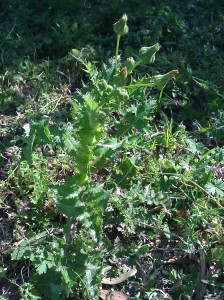
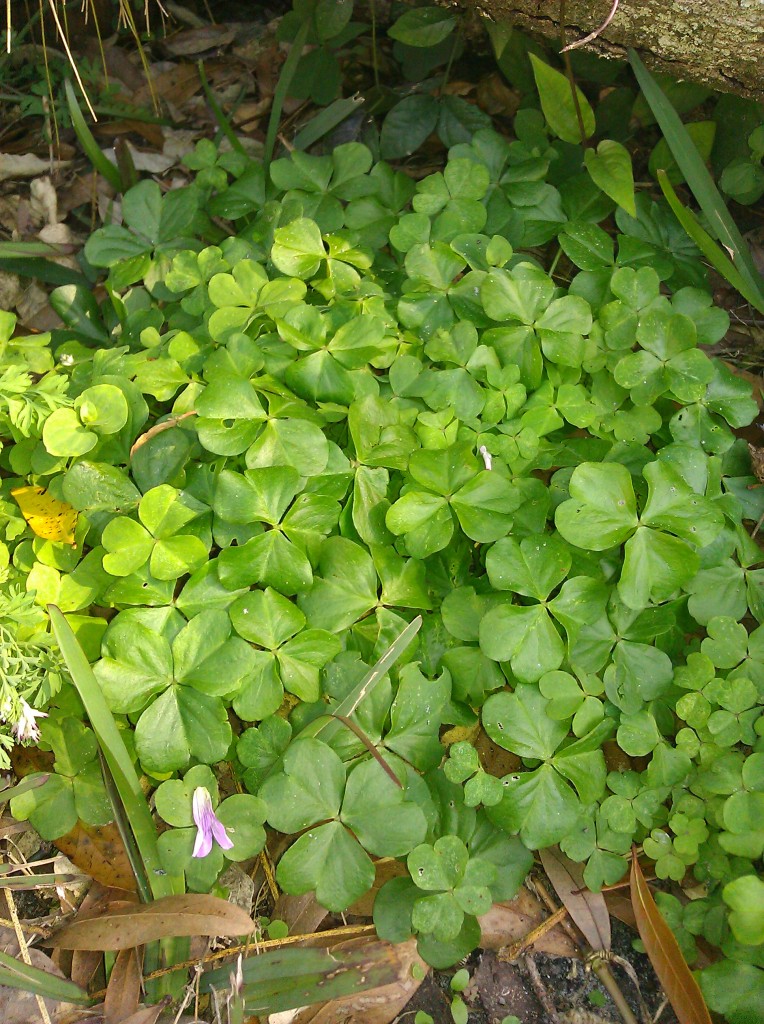
So, what are these lovely plants growing right under my nose that I’ve been ignorantly weed wacking and mowing for the past 18 years? The fab four are: fennel, thyme, oxalis, and nettle! I’ve even blogged about nettle before – it’s one of my all time favorite herbs. There are probably many other plants in my yard that I could use for cooking as well, considering that I have never used pesticides on my yard in the 18 years I’ve lived in this house and the entire 2 acres is full of wild, native Florida flora.
If it’s green and it grows, it’s ok by me. I’m not a “perfect lawn” kind of gal.
My next task is to dry the nettle I picked in my yard and start using it for tea instead of the expensive organic nettle tea I’ve been buying at the store. Don’t worry, I won’t poison myself. I made sure to ask my next door neighbor who happens to be a Doctor of Biology at the University of South Florida, to come and verify these plants that I was about to pick and eat!
Besides making tea with the wild nettle, I’m going to try lightly steaming and eating the oxalis. Oxalis is a plant similar to spinach. Both contain the antinutrient oxalic acid which is very irritating to the mouth and digestive tract and is very much linked to kidney stones if consumed frequently. It is best to slightly steam these types of veggies to eliminate the oxalic acid instead of eating them raw, so I won’t be putting them in a salad as suggested by the folks at the community farm.
My kids were especially excited by the discovery that we already have a garden growing with absolutely no effort on our part to water, fertilize or tend it. Just years of careful avoidance of all things poisonous and application of fish fertilizer on our citrus trees and other desirable plants that has obviously brought in a lot of worms is all that it took.
What edible plants do you have growing in your yard? Do you make use of any of them in your cooking?
Sarah, TheHealthyHomeEconomist.com



The picture at the beginning of the article is showing a thistle, not a nettle. This should be corrected.
I usually enjoy your articles but I am uncomfortable about the labelling of the above plant as nettle. It is important to remember that wild plants’ local names may be interchangeable but their uses are not necessarily so. This is why the latin names are so useful. While many wild plants are as safe as any vegetable , and very nutritious, many are not, and incorrect identification can lead to illness. Sadly, any accidental injury caused by using a plant incorrectly is not only bad for the individual, but deals a blow to the reacceptance of these valuable plants as food and medicine. I’m afraid that although your article is well meaning, instead of introducing folks to the proper use of wild plants it perpetuates errors in judgement by people who want to eat well from the wild, but don’t have the right information to do so safely. If you are unsure of the identification of the plant in the photo, may I suggest putting “nettle” in quotation marks, and perhaps a follow-up article on Urtica? It is a powerhouse of nutrition, high in protein (unusual for a plant) and very easily used calcium, worth a post on its own, readily available all over the world.
Growing wild in my New England yard (and no, I have not used pesticides here since moving in in 1991): dandelions, arugula, onion grass, raspberries, burdock, plantain, garlic mustard (this last an invasive plant, so eat it up fast before it propagates!) . Sassafras (which isn’t really that safe.) Undoubtably things I don’t recognize.
My daughter loves running through the yard eating dandelion flowers. Food, food, everywhere!
I agree with the other posts about it not being true nettle, however, it is great composter, as the main stalk is hollow and decomposes quickly. Be sure to get it before the flower heads fully develope.
Here’s a fun link! Anything look familiar? I marvel at all the things we may have right in our midst.
http://www.google.com/images?client=firefox-a&rls=org.mozilla:en-US:official&channel=s&hl=en&q=edible+weeds&um=1&ie=UTF-8&source=univ&sa=X&ei=vI5uTcm9EMqEtgfux7T-Dg&ved=0CDUQsAQ&biw=1546&bih=805