

A lightly fermented apricot butter recipe that is deliciously sweetened with honey. It can be enjoyed on pancakes, oatmeal, toast and more.
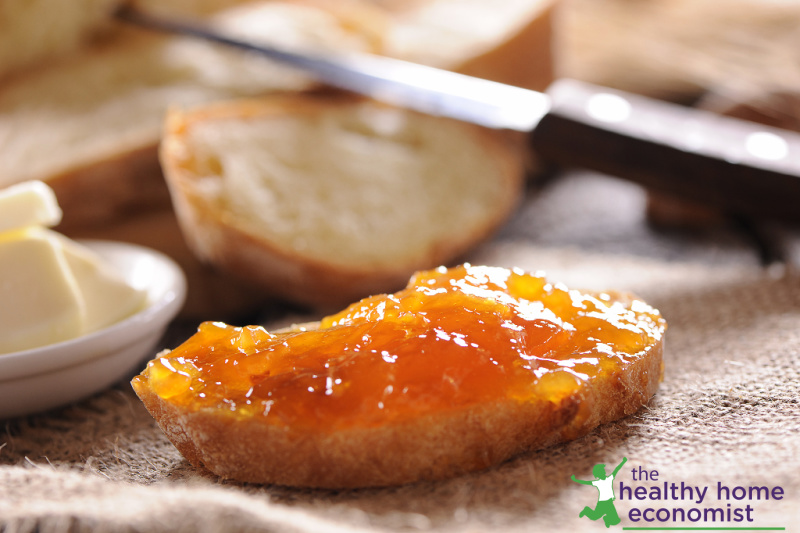
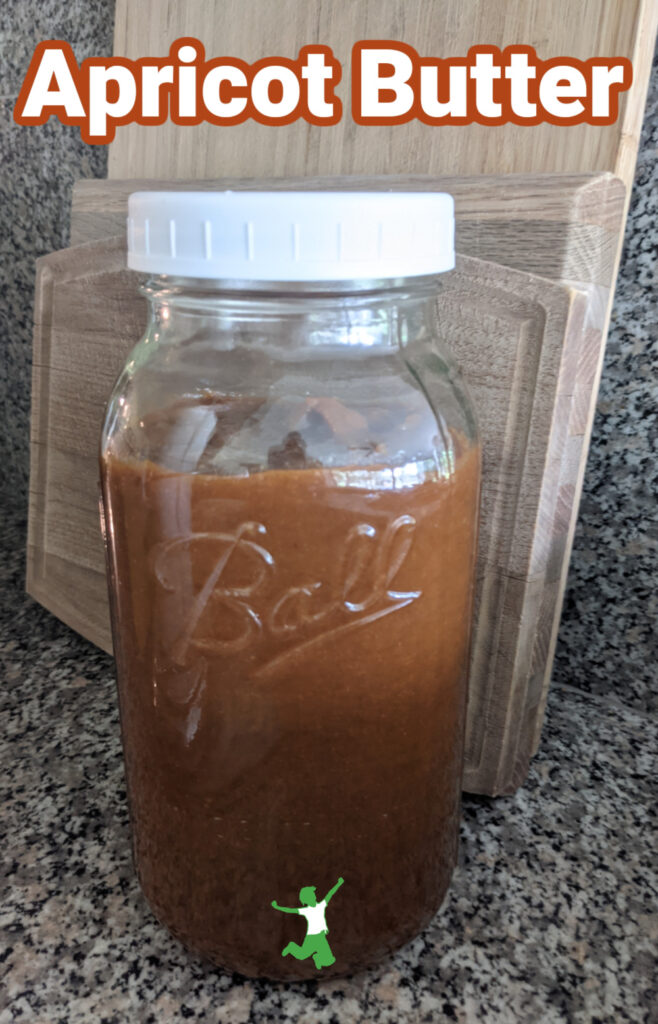
Move over apple butter! Apricot butter is hands-down my husband’s favorite fermented food. The written recipe and video demo below shows you exactly how to make it using the Nourishing Traditions method. You will find innumerable uses for apricot butter in your kitchen.
As with all traditionally fermented foods, this recipe is loaded with probiotics and enzymes. As such, it greatly assists digestion.
In our home, we use apricot butter as a spread on pancakes, in soaked oatmeal, or even just by itself on a big spoon as a sweet, afternoon pick-me-up!
My husband likes it loosely mixed with raw butter and some crushed nuts for a quick, enzyme rich breakfast.
I love it on a slice of real sourdough toast.
Since it is loaded with probiotics and enzymes, it will help cooked foods that are eaten along with to be digested more easily too.

Apricot Butter Recipe
This lightly fermented apricot butter recipe is both delicious and beneficial to your gut health. It can be enjoyed with pancakes, oatmeal and many other foods.
Ingredients
- 4 cups unsulphured dried apricots preferably organic
- 1 Tbsp sea salt
- 1/4 cup liquid whey
- 1/4 – 1/2 cup raw honey preferably local
- vegetable starter optional. Use instead of whey if needed.
Instructions
-
Cook apricots in filtered water until soft for about 20 minutes.
-
Let cool for about 10 minutes and then process in food processor with the rest of the ingredients.
-
Place in a 1 quart glass mason jar and close the lid tightly.
-
Leave on the counter for 2 days and then refrigerate.
-
Use within 2 months.
-
Enjoy as a probiotic rich topping for oatmeal, toast, pancakes, waffles and more!
Recipe Video
Recipe Notes
If you wish to substitute fresh apricots for dried, note that 6 pounds of fresh apricots (with pits) = 1 pound dried apricots.
Other Fermented Food Recipes to Enjoy



Hello Sarah! I am excited to try this recipe but curious if you could give me an idea of how much vegetable culture I would use instead of the whey?? Roughly how much is 1 sachet? Could I empty a few probiotic capsules I have for making yogurt? Thank you,
Alison
Hi Alison, there are few different methods for culturing without whey. Here are my thoughts about it and how to do it: https://www.thehealthyhomeeconomist.com/dairy-free-fermentation-no-whey/
Sorry if I’m going off topic here but I’ve heard that apricot kernels are poisonous, but we use use it in baking in Sweden sparingly in ground form, 2-3 for almond paste and 3-4 for Swedish cheesecake.
This recipe does not include the kernel. Interesting how you use it in Sweden!
Caldwell’s starter is sugar and dairy.
Hello Sarah,
Thank you so much for having your blog and all the yummy fermented recipe. Our family is big on gut health and love all kinds of fermentation. Our little girl just turned 1 year old and I would like to make the Fermented Apricot Butter to add to her diet. I have a couple of questions:
1.) Can I use lacto-fermented kraut juice instead of whey for this recipe?
2.) If yes, would I use the same amount as recommended for WHEY or would you suggest a different amount in this recipe?
3.) I will be skipping HONEY for her diet for now. Would NO HONEY in this recipe shorten the refrigerated lifespan of this Spricot Butter?
Please advise.
Sincerely,
Victoria
I’ve never made those adjustments so I can’t comment one way or the other if they will work. If you try it, let us know how it turns out!
Apricot season now! would it be possible to make fermented apricot butter with fresh, ripe apricots?
I can’t have whey. What would be a good substitute?
Can you freeze the butter once it has fermented?