
How to Remove a Tick

by Sarah, The Healthy Home Economist on May 18, 2012


Warmer weather has arrived and spending more time outside and camping outdoors opens up the possibility of exposure to nasty tick bites.

When one of my children was a fairly young baby and not even mobile yet, a tick lodged itself into the top of his head, so ticks can drop out of trees onto your children too even if they aren’t hiking in the woods or walking in the grass!

If you discover that your child or pet has a tick that has lodged itself into the skin, here is the safest, easiest and quickest way to remove it.

This valuable information was discovered and shared by a School Nurse who has dealt with this type of situation many times before.

Whatever you do, don’t try to remove the tick with your fingers or a pair of tweezers.  Frequently the tick’s head will be left in the skin this way and this scenario leaves the skin vulnerable to infection.

Also, if the tick has a white spot on it’s back it is a Deer Tick, so after you have removed the tick, place it in a bag and go visit the doctor for examination of the tick and yourself.   Deer Ticks can sometimes carry Tick Fever!

How to Remove a Tick Safely and Quickly

Soak a cotton ball in some liquid soap.   Swab the tick with the soapy cotton ball several times and then hold it lightly on top of the tick so that it is touching.  Within 15 seconds or so, the tick will dislodge itself and come away from the skin stuck to the cotton ball.

Voila!

Easy and not at all traumatic even for a very young patient!

This method works particularly well when ticks become lodged in hard to reach areas like between toes or in someone’s hair.

The School Nurse sharing this information (I wish I knew her actual name to give her full credit) has never had this method fail in the many times she has used it!

Method Ineffective According to SNOPES?

SNOPES claims that the liquid soap method is not effective and recommends using a pair of tweezers to pull the tick straight out, but this is not what old time country doctors like my Father recommend.

Trying to pull a tick straight out will almost ALWAYS result in the head staying stuck in the skin.   If you must use tweezers and wish to forgo the liquid soap approach (which I feel is the safest, fastest solution) you must pull the tick out at an angle which will give you the best shot at removing the head along with the body.

Sorry SNOPES, but you aren’t the end all and be all authority that you think you are.


Sarah, The Healthy Home Economist

Picture Credit


The Healthy Home Economist by E-mail


{ 194 comments… read them below or add one }

Gigi May 18, 2012 at 4:18 pm

Definitely going to try this method the next time I find a tick on the dogs, or me!
I have a method that works pretty well – I twirl the tick round & round until it gets annoyed & backs out on its own. Then I take it & smother it in liquid soap. This works pretty well on the dogs. When I found one on myself, I tried it, but didn’t have the patience to let it work, because I was freaking out that there was a tick on me!! So I just yanked that one. Fortunately it wasn’t very deep, so the head came out with it.

Reply

Kelli May 18, 2012 at 4:21 pm

Actually, I’ve never had trouble before with ticks despite living next to the woods. Sounds like a pretty good method to use. Using tweezers is actually a bad idea for other potential outdoors hazards, too, like splinters since the tweezers almost always leave in a little bit of the object or bug.

Reply

kaley May 18, 2012 at 4:36 pm

Thanks so much for this post. I have been really worried about ticks when we are at our farms. Now I know exactly how to deal w/ it if that ever happens. There are great homeopathic remedies (like ledum) for tick bites that we have on hand too. Great post! Thanks again.
kaley\’s last post: Homemade Gatorade

Reply

Teresa May 18, 2012 at 4:56 pm

Would you always recommend taking the spotted tick to dr. Our drs here would think I was crazy. Every year I pull off at least one or two with a spot. We have lots of deer in our woods-never really thought about the chances of getting tick fever.

Reply

Tori L. May 19, 2012 at 1:58 pm

Growing up my mother would always just “save” the dead ticks in a plastic bag for awhile. So if we developed any symptoms, then she would take us and the tick to the doctor (though I don’t remember ever having to do that.)

Reply

Jessica B. May 19, 2012 at 3:02 pm

Another thing that I’ve heard recommended is to put the tick in a ziploc baggy and put it on your refrigerator for a couple of weeks. Should a bullseye show up on the bite location or some other troubling symptom appear, then take both yourself and the tick to the doc immediately. HTH with a possible alternative.

Reply

Our Small Hours May 18, 2012 at 8:57 pm

Awesome tip! We live in an area where having a tick latch on happens to at least one member of my family each summer. It’s great to know this trick.

Reply

Amy G May 18, 2012 at 9:03 pm

Good to know!!!

After having so many ticks on our children, a friend of ours recommended Ticked Off. She hikes the Appalachian Trail every year and deals with ticks frequently herself. It is really easy, too, and supposedly also removes the head too.

http://www.tickedoff.com/

Reply

Judith May 19, 2012 at 1:26 pm

I use Ticked Off and the Tick Key. They both work the same way, more or less, and work well. But in tight spots, like between a dog’s or human’s toes, you need something like tweezers. Fine-pointed tweezers can get down and grasp the head so you can pull the whole tick off. I haven’t left mouthparts attached in years, I believe.

Reply

Rachel May 20, 2012 at 5:01 pm

Or you could try the cotton ball with soap in tight spots like she suggested ;-)

Reply

Kelly May 18, 2012 at 9:39 pm

Hmmm… Seattle Children’s Hospital actually recommends the liquid soap method that you listed, so I think Snopes may be wrong on all accounts.
Kelly\’s last post: Christ is risen! Happy Easter!

Reply

Gina May 18, 2012 at 10:01 pm

Here are two other methods of removing ticks I recently read on a Swiss website: one is cover the tick with a blob of lard, it will suffocate the tick and another method is to soak a cotton ball in iodine tincture, keep it down over the tick until the it falls down.

Reply

Aubrey May 20, 2012 at 10:43 am

Yes! I grew up in the woods with lots of tall grasses, tons of deer and ticks! We always used lard, or if desperate (at a house where they had no lard) petroleum jelly. The tick backs right out within seconds and you wipe it way really easily! I actually did this recently and all that was on my skin was a small indent where the tick had been.

Reply

Judith May 20, 2012 at 10:54 am

Aubrey, please read the comments. You are endangering yourself when you do this, greatly increasing the chance that the tick will transmit disease, because it will regurgitate some of its gut contents in order to detach itself. The disease organisms stay down in the gut several hours after a tick attaches; they are not transmitted right away. Do you want them injected into your body? Please read the comments on how to safely remove a tick, instead of making it detach.

Reply

Phacelia May 18, 2012 at 11:07 pm

Actually, the ticks with the white spots on their backs are Lone Star Ticks (Amblyomma americanum): http://www.tickinfo.com/lonestartick.htm

Deer ticks have a circular dark spot above their mouthparts: http://www.tickinfo.com/deertick.htm

Both can carry Lyme disease, however, and other diseases.

I’ve never heard of the soap method before, but I’ve heard that applying alcohol (or esp. a hot match) can make them regurgitate – which you definitely don’t want! I’ve always gently pulled them straight out. If the head gets left in just treat it with alcohol every day. The body usually works the mouthparts out. You still want to keep a close eye on it though.

Not saying the the old timers are wrong on this one, but they are sometimes! :) Thanks for the article!

Reply

Judith May 19, 2012 at 1:22 pm

Phacelia, you are absolutely right that applying ANYTHING to the tick may make it regurgitate. Please read my post farther down the page. Folks, stop with the alcohol, hot pins, matches, etc. You are making it more likely that the tick will transmit disease. Don’t turn the tick over. Don’t do anything to make it detach itself. You want to remove it yourself, and not make it remove itself. Puking gut contents into the bite wound in order to detach can very well transmit disease.

Reply

Anna May 19, 2012 at 2:35 pm

Yes!!! I have heard this from numerous sources!!! They puke inside of you and then you have a much greater risk of getting a disease!!! Just pull them off you!!!

Reply

Knocked Up and Nursing May 23, 2012 at 12:54 pm

Actually, Ticks only carry Lyme in their Nymphal stages. In this stage, they are about the size of a pinhead and a pale skin toned color. Most time you don’t seen see them if you are bite by a nyphal tick.

Reply

Judith May 23, 2012 at 1:08 pm

Actually, that is not quite correct. Deer ticks (also called black-legged ticks) are very unlikely to carry Lyme disease, or any disease, in the larval stage, which is the first stage of life, when they are about the size of a grain of pepper. They are not light colored, but rather dark. Google for tick identification images and look at photos to see what they look like. They have six legs in the larval stage. They have not fed yet, so are not likely to carry disease, but it’s still good to get any tick off ASAP, without fooling with it. Deer tick larvae almost always feed on mice, which are the main reservoir of Lyme disease. That first feeding can make the tick infective, and it stays infective for life.

The nymphal stage is larger, but still very small, and dark colored. They can be infective. So can adult deer ticks, which tend to feed on deer, humans, and other large animals.

You can see all life stages of deer ticks if you look over every inch of your body, using a mirror or family member to check areas you can’t see directly. They would be harder to see on dark skin, easy to see on light colored skin. You can also feel them with your fingertips, usually. Some of us who are allergic feel tick bites immediately with a strong burning itch, which is nice since the sooner you get them off, the safer you are from infection.

Reply

Nancy DeMarco May 23, 2012 at 4:18 pm

Sorry – you don’t have your facts straight. In my area of New Hampshire, around 30% of nymphal ticks carry Lyme, and about 70% of adult ticks carry it.

You can see the nymphs, but yes, they are harder to spot. That’s why they are often considered more likely to transmit – failure to detect.

Reply

Teresa Richter May 19, 2012 at 10:54 am

I recently tried a method that I read about and it did work. Soak a cotton ball in isopropyl alcohol and it will smother it as well.

Reply

Judith May 19, 2012 at 7:50 pm

Teresa, please read my posts and others that explain why this can make you very sick. It is not the right method for tick removal. I posted links that have great instructions, from tick experts.

Reply

Molly May 19, 2012 at 11:13 am

Sarah, how do you recommend preventing ticks from getting on the kids? I live on a very wooded lot and have two dogs who I believe bring ticks in. This spring has been the worst I’ve seen. I’m finding at least one tick a day on the kids. Yesterday, we found four, including one crawling on the toddler’s head before he had been outside!
I hate to spray chemicals on my kids all the time but I also worry about tick-borne illness.
Thanks!

Reply

Steff May 19, 2012 at 12:56 pm

I love using essential oils to prevent ticks from getting on the kids. Here is a webpage that lists the various ways to use EO’s as bug repellants. http://everythingessential.me/HealthConcerns/InsectRepellant.html#page=page-1. My favorite is the oil blend called Purify. Works for getting tick out as well on animals or on kids/adults.

Reply

Amy May 19, 2012 at 8:44 pm

I don’t see a ‘recipe’ for the purify… Am I missing something?

Reply

Elizabeth May 19, 2012 at 11:37 am

I recently read to soak a cotton ball in tea tree oil to get the tick to dislodge. Have you heard of that method?
Elizabeth\’s last post: The Winner of 1 Quart of Tropical Traditions Coconut Oil is . . . .

Reply

Megan May 20, 2012 at 11:08 am

I have and coconut oil to add to the oils being said

Reply

Janet Bennett May 19, 2012 at 11:38 am

Don’t even need woods.! Several years ago as we were having breakfast in a lovely linen-tablecloth dining room in a nice hotel outside of Boston I saw a tick calmly walking out of my daughter’s hairline and onto her forehead. Don’t know where this one came from though could guess that a guest had a dog. I imagine pet-friendly hotels are likely to harbor such individuals – though in any hotel they may just be visiting the bedbugs. I do like the soap/lard/alcohol defense options.

Reply

Ben May 19, 2012 at 11:45 am

Hi Sara!
Thanks so much for your blog. My wife and I really enjoy it.
One thing though, it I would edit the part about ticks falling from trees.
Yes, it’s not impossible as they use birds, squirrels, raccoons, etc as hosts so they might be ticks in trees, however it is unlikely that they are they waiting for some unlikely person to meander by so they can calculate for wind, distance, and extra to jump and hopefully land on us.

If they did this, they would be extinct. Hanging on you grass and waiting for host to bump them works better, so we should be careful and check after being outdoors. Also, we often pick them up from other animals that we touch, or clothing that they are on.

I know a lot people read your blog and I wouldn’t want them to be miss informed thinking ticks are falling from the sky.

Sincerely,
Ben

Reply

helen May 19, 2012 at 5:22 pm

I got a tick on my shoulder through the open car roof, I believe that fell from above!

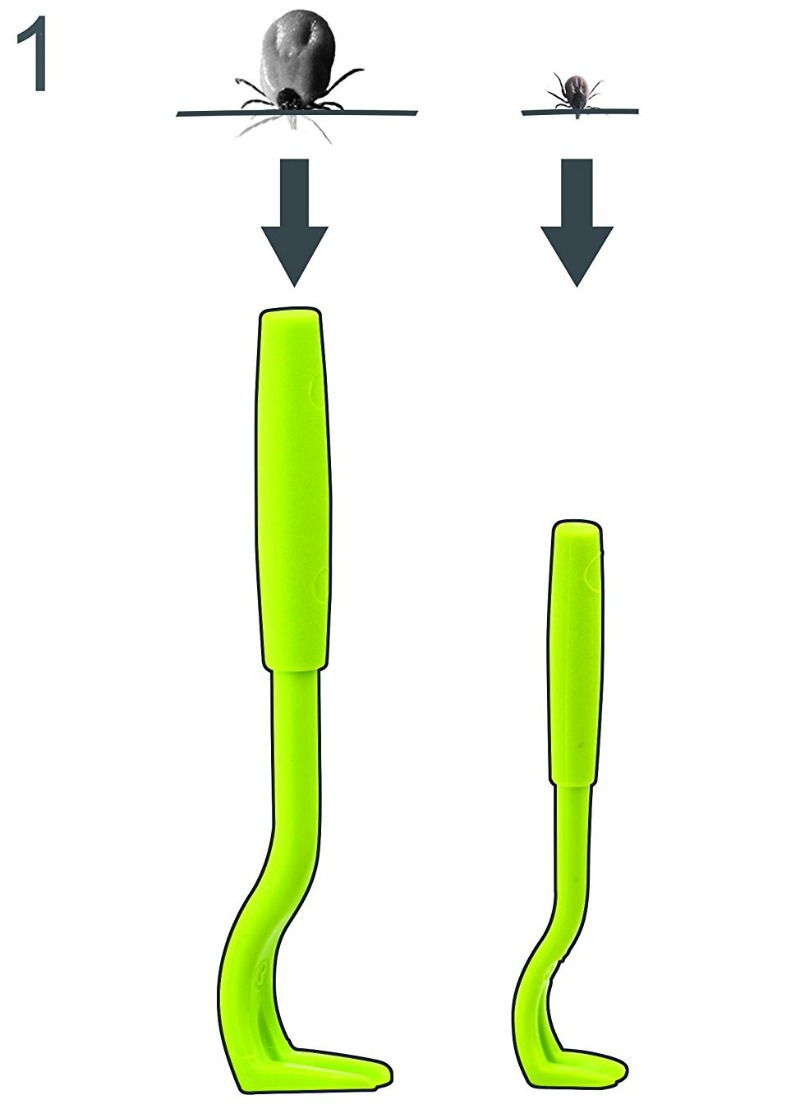
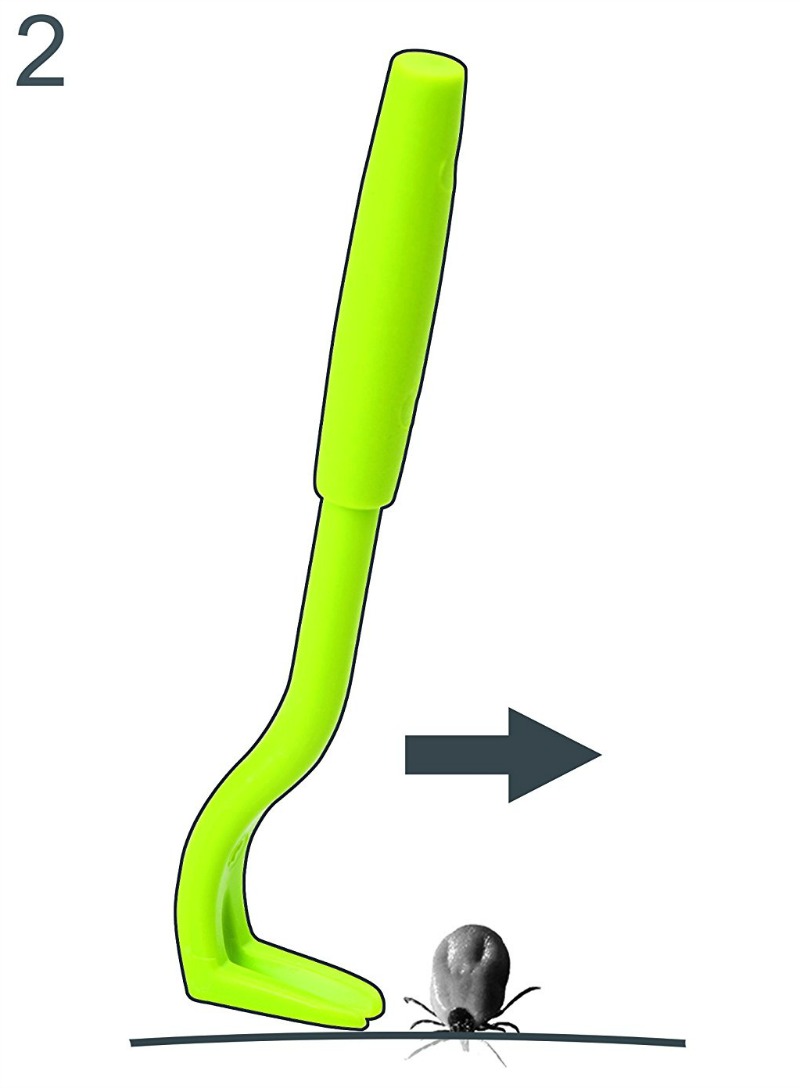
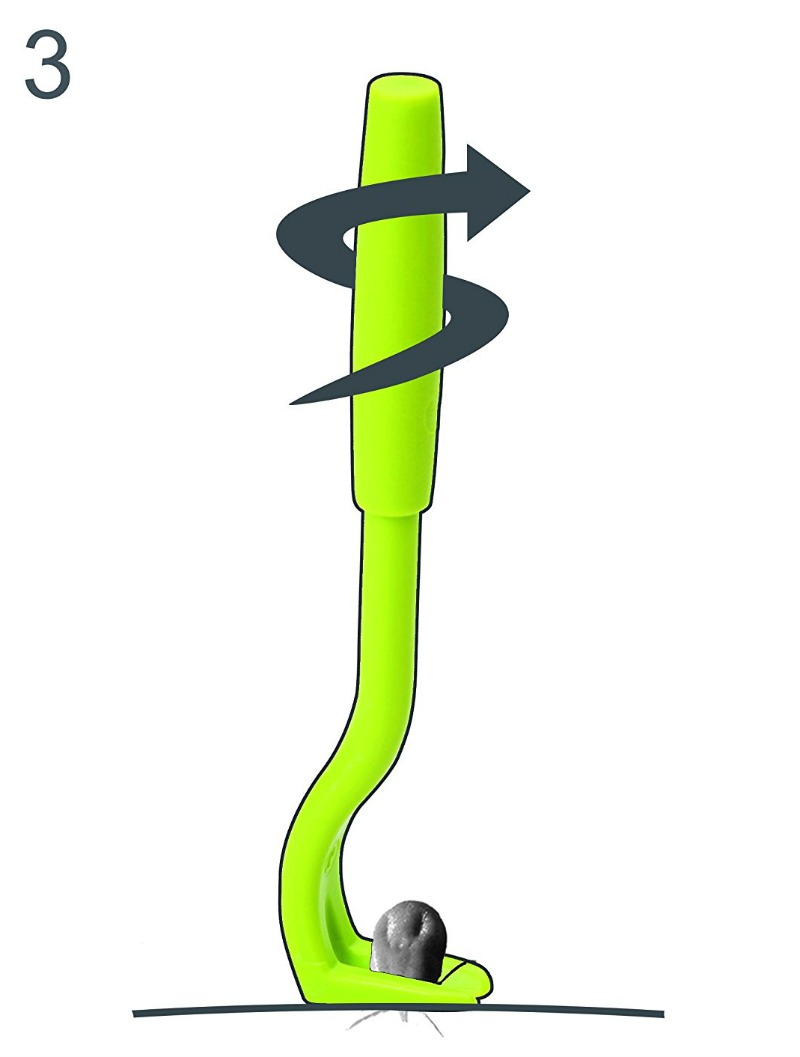
Here in France I just bought these little tick removers that look like hooved hooks. You latch them onto the tick and turn anti-clockwise until the tick comes out. Got one of my cat today that was lodged very deep, came out whole, alive and kicking!

Reply

Renee May 20, 2012 at 7:23 am

In response to ticks falling out of trees, we will see them on shoulders and head after walking under the trees on our property. No bushes, etc. nearby to brush against. They drop.

Reply

DoctorSH May 19, 2012 at 11:55 am

Sounds great.
Here is another way that always works, from My veterinarian.

Ticks almost always imbed their head facing your heart. So their head where they are attached is closer to your heart than their body or legs. Ticks also do not like being upside down.

So grab the tick gently below its head, and turn the body upside down. Think about turning a turtle upside down. Keep tweezers attached just below the head gently and wait for the tick to disengage.

Has worked for me every time over the past few years.

Reply

Judith May 20, 2012 at 1:50 pm

Please read my posts here. Making the tick detach itself is dangerous. In the process of detaching, it has to dissolve the cement it used to attach its mouthparts in the wound and seal the wound up. In dissolving the cement, it is going to regurgitate some of its gut contents into the wound. Unless the tick has already been feeding for several hours, the disease germs are still down in the gut and haven’t been injected into your body yet. But if the tick pukes, it is going to inject disease germs along with some gut contents, and you could be chronically ill all your life, going from ignorant doctor to ignorant doctor, being told it’s all in your head, and possibly even die from the infection. I know people who went through that torture for years until they found a doctor who knew about these diseases. This is not a safe way to remove a tick. Read the posts about just pulling it off with tweezers!

Reply

Kerry May 20, 2012 at 6:19 pm

Now that’s a specific answer instead of a knee jerk one. Thanks.

Reply

Megan LeBlanc via Facebook May 19, 2012 at 12:22 pm

You made me all itchy!!!

Reply

Evie Johnson via Facebook May 19, 2012 at 12:26 pm

Yuck yuck yuck.

Reply

Nancy Lynn 'Topp' Gilbert via Facebook May 19, 2012 at 12:29 pm

My parents always heated a pin with a match & poked the tick, it backed out fast.

Reply

Judith May 19, 2012 at 3:32 pm

You don’t want to make a tick detach itself. This makes disease more likely. Please read my previous posts that explain this. It looks neat, it’s easy, but it is dangerous.

Reply

Melissa Morgan-Oakes via Facebook May 19, 2012 at 12:35 pm

Deer ticks, the ticks that are known for carrying Lyme disease, do not have a white spot. A tick with a white spot is a Lonestar tick. Both can carry the germs that cause a variety of tick-borne diseases.
As a person who’s had Lyme, and as a nurse, the best and safest method I have found for tick removal is a little gadget called a tick twister. You slide the device under the tick, and twist, no pulling, until the tick comes out. No mouthparts get left behind. I have a little jar of vodka (it kills them!) in my fridge containing lots of evidence in the form of dead ticks. http://www.ticktwister.com/

Reply

megan May 19, 2012 at 12:36 pm

So, yesterday I must have jinxed myself. I was just telling a friend that we havent had any ticks in three years….and when I got home, low and behold, there was a tick on my two year olds pant line. Devastated! As our geographical area is heavily affected by Lymes Disease. I had just read another bloggers post covering this exact method. I tried the liquid soap for over 30 mins waiting for the tick to let go…and nothing! Im not sure if more damage was done because I allowed it to remain attached vs pulling it out with tweezers. I think the clear nailpolish method or alcohol works better. Next time I am going to try some essential oil like lavender and see how it compares. Just a tip for others….though its not ideal, it helps. I always grab a pen/marker and circle the spot where the tick was attached, that way I can observe it and watch for signs of Lymes (bulls eye rash or infection). Here’s to a summer of staying safe!

Reply

Judith May 19, 2012 at 1:29 pm

Actually, it is “Lyme” disease, named after Lyme Connecticut.

Please don’t put anything on the tick to make it detach. Just use an appropriate took and pull it off. You don’t want to leave it on, make it detach, or irritate it. See my earlier post that explains the biology behind this.

Reply

Judith May 19, 2012 at 1:49 pm

Agh. That should be “appropriate tool.”

Reply

Lissi May 19, 2012 at 12:36 pm

Can I ask please, my son had a tick in his botto
(the cheek part) and I suffocated it with coconut oil and it came out. It’s been about 6 months and he still has a red itchy spot on his bum,a little raised, not inflamed but a little red coloured. What should I do with it? I don’t know whether something is still in there, it doesn’t look like it,but I don’t know. It doesn’t bother him, he just scratches it a bit when I take his nappy off in the morning…?

Reply

Sonya Nelson May 19, 2012 at 1:05 pm

Lissi,

Please send your son to a doctor immediately. I do not want to seem like an alarmist, but Lyme disease is no easy cure unless you catch it right away. Take photos of the rash. Save for a lifetime. Date the photos. Idoctors are highly uneducated about Akyme disease. I live in California, there are only a handful of doctors in the state that know how to treat it.

If that is a Lyme rash (kind of like a bullseye) I would not try to self treat. I was against antibiotics until I was sickened for the past 3 years with the disease. Nearly took my life. It has been a long road to regaining partial health.

20/20 had a segment on last night with a girl with Lyme. Dr. Phil just had a segment last month.

Fastest growing infectious disease in the US. Faster than AIDS.

LymeDisease.org can help you find a doctor. Do not accept “no” as an answer. Find another doctor.
Sonya Nelson\’s last post: Are you sick?

Reply

Erin May 19, 2012 at 8:38 pm

Listen to her! My daughter had a tick several years ago. We live in KY. We saved the tick and she got a bullseye on her scalp. The doctor told us it was the ‘wrong kind of tick’ and that ‘since we hadn’t been to the New England area, there was no way it was Lyme’ but I knew better!! Our doctor was arrogant and rude. He didn’t even look at her head–just the tick! You can get Lyme from anything that is carrying it–any kind of tick, mosquito…anything that bites. From the research I did, if you have a bullseye, that IS LYME. But it can still by Lyme without the bullseye.
I finally took her to my naturopath who put her on her biofeedback machine, which diagnosed her immediately with Lyme. They treated her on the biofeedback machine and with chinese herbs until the Lyme no longer showed up. It took weeks, but she hasn’t had a symptom since. You really, really need to find a Lyme-literate doctor–someone who knows what they are talking about–which aren’t very easily found unless you are in the New England area. Lyme is a very serious disease and should be treated NOW. Don’t wait to find out. Years down the road there can be neurological damage. Good luck and God bless!

Reply

lissi May 20, 2012 at 5:03 am

Thankyou I will sort this out now.

Reply

Joanna May 19, 2012 at 12:48 pm

We have always used these on the dogs and ourselves and they work very well. http://www.otom.com/how-to-remove-a-tick

Reply

Joanna Runciman via Facebook May 19, 2012 at 12:50 pm
Haley Meek Strahan via Facebook May 19, 2012 at 12:51 pm

Thank you! Any advice to repel fleas from the yard, house and animals without the chemicals?

Reply

Judith May 19, 2012 at 3:17 pm

Beneficial nematodes can be used in the yard to control ticks, fleas and a host of pests, depending on your soil type and climate. Nem’s have to be kept moist, so won’t work well in desert, and you need to be willing to water the yard in a drought. Arbico.com is one source and there is info on their site. (There are other sources but I’ve had good reports about Arbico’s nematodes.) They may not list tick control in the nematode section on their website, but you can call them and get info on which type nematode to use for your yard and soil type. I have heard from several people that they work well for ticks and fleas. They die off in a hard frost, so have to be reapplied every year in most areas. They don’t harm beneficial organisms, pets, people, etc but they reduce many pests. I may try them this year, but I am in the woods and I think I have to clear out all underbrush, leaves, etc. first. That would help reduce the tick population also. Arbico usually has a sale on nematodes late in the season.

Reply

Judith May 19, 2012 at 1:17 pm

Oy. Please don’t do this. Doing anything to the tick besides just pulling it off will put you in serious danger of catching a tick borne disease. I’ve been a member of the tick list for dogs for a decade. The group includes entomologists and vets who are top tick experts. My information is from that list. And if you go to any good public health site, you will find the same information I am going to write here. Don’t fool around with a tick! Just use appropriate tools (including tweezers) and pull that sucker off, grasping as close to the head as possible, and pulling steadily away from the skin.

If you irritate the tick by applying anything to it, or handling it much, in order to “suffocate” it (which won’t happen) or to make it detach itself, you will cause it to regurgitate some of its gut contents into the bite wound in the process of detaching. This information is straight from a person who studies ticks. You don’t want that to happen, because it increases the chance that the tick will transmit disease. For several hours after it attaches, any pathogens the tick carries are still down in the gut, and are not transmitted. After it feeds for several hours (no one knows exactly how long this takes, possibly 12 hours or so, possibly sooner), the pathogens move up into the mouthparts and are transmitted into the bite wound.

If you are removing a tick before the pathogens have moved up from the gut, you really don’t want gut contents puked into the bite wound, because it greatly increases the chance the tick will transmit disease. Any knowledgeable health practitioner will tell you not to irritate the tick. Tweezers are recommended, if they are fine-pointed. You want to grasp down at the head, and avoid squeezing the tick’s body, because you may release infective body fluids. You want to remove the tick with its body intact, rather than broken open. The mouthparts are less of an issue.

The mouthparts are actually not a significant problem if they remain attached. They will act like a splinter, but are no longer able to transmit tick-borne disease once the tick is removed. Treat them as a small splinter; you can dig them out if you want to (I never have), but they can only cause local inflammation or a minor local skin infection. They will not transmit Lyme disease, Ehrlichiosis, RMSF, or other TBDs. Don’t sweat the mouthparts!

If you grasp with a fine-pointed tweezers down at the head, and pull steadily and slowly, you are probably going to remove the whole tick,, including mouthparts. Don’t jerk the tick off. I have removed literally thousands of ticks from myself and dogs over many years, and it’s extremely rare that the mouthparts stay attached. I think it has been years since I observed that happen. I also don’t pay attention to the angle with which I pull, but I do pull very smoothly and rather slowly.

Please, please don’t do anything else. Delaying tick removal is in itself dangerous, as the longer they are attached, the more likely they will transmit disease.

This suggestion from the nurse has been circulating the internet for years. It is dangerous. Please retract the suggestion, look at a few actual public health sites from states where ticks are common, and don’t share it further.

Here is an excellent list of tick sites:

saluqi.home.netcom.com/ticklinks.htm

For some reason, it’s not accessible now but it will be fixed soon, I’m sure. Most of the links listed there are for dogs, but there are some general links from expert sources. I would not go to Snopes for health information. Go to the health experts.

If you don’t want to use a tweezers, try the Tick Scoop or the Tick Key. I just got a tick key and it works very well, but I still use fine-pointed tweezers for most tick removal, especially in tight spots. Some people use hemostats and similar tools. But please don’t fool around with a tick. Just pull that sucker off!

Reply

Nickole@savvyteasandherbs.com May 19, 2012 at 1:49 pm

Thank you so much for this information, Judith! We have also always used the traditional tweezers method and have read over and over that it is the best method, however I did not know about the regurgitation, etc! Another tip I would add is to put Oil of Oregano on the site to help kill any possible infection. I recently had a friend whose son almost died from Rocky Mountain Spotted Fever from a tick. Before this, living in the woods, we did not worry so much about them and neither did they. Now we are more careful about doing tick checks and using essential oils as a bug spray. Ticks sense the warmth of a human approaching and then drop themselves from trees onto you. Heebie-jeebies. They are evil, lol.

Nickole
Nickole@savvyteasandherbs.com\’s last post: Headache Healer Herbal Blend

Reply

Barb May 19, 2012 at 2:20 pm

I’ve never heard they drop from trees, though I suppose it’s possible. I’ve always believed they were in leaf litter, tall grasses and areas that are overgrown with shrubs and other low-lying plants. They’re also frequently on pets and then get transmitted to humans.

Reply

Nicole, The Non-Toxic Nurse May 20, 2012 at 1:30 am

I 100% agree that ticks should be removed with tweezers as close to the skin as possible ASAP! Better to risk a retained tick head than to allow a tick to stay on the animal/person, and increase the chances of transmission of Lyme Disease or other tick-borne infections. Experts do not agree upon much when it comes to Lyme Disease, EXCEPT that ticks should be removed as soon as possible via the tweezer method.

I am from Vermont, where Lyme infected ticks run rampant. I know several people whose lives have been FOREVER changed by Lyme encephalitis, Lyme arthritis, and Lyme coinfections. For many, Lyme and its coinfections are the proverbial gifts that keep on giving, only they are gifts that you ABSOLUTELY DO NOT WANT.

USE TWEEZERS to remove the tick as close to the skin as possible and as quickly as possible, and decrease your chances of being harmed by MANY devastating tick-borne diseases!
Nicole, The Non-Toxic Nurse\’s last post: Smart Meter Concerns Hit National Headlines . . . Finally!

Reply

Tom Miller via Facebook May 19, 2012 at 1:23 pm

In the old days hunters would burn them off with their cigarettes.

Reply

Hilary Jacobson May 19, 2012 at 1:27 pm

This kind of approach has been debunked. When you suffocate the tick in this way, the stress causes the tick to regurgitate its stomach contents into the bloodstream–including all the bacteria and parasites that the tick carries. A tweezers is the best method. The ones that are spread out triangularly and join together in a thin line are best I think, as they get beneath the body of the tick close to the skin. Then you “as gently as possible” and slowly twist it out. You want to avoid shocking the tick.

Reply

Dana May 19, 2012 at 1:31 pm

I ask that this article be removed. It is making the rounds on facebook and twitter and spreading dangerous misinformation!!!

Reply

Judith May 19, 2012 at 1:36 pm

NCSU has one of the top tick labs on the country. Here is a link to some of their tick info:
http://www.ces.ncsu.edu/depts/ent/notes/Urban/ticks.htm

They have directions for tick removal and avoiding ticks there.

Reply

Judith May 19, 2012 at 1:42 pm

http://www.biosci.ohio-state.edu/~acarolog/needham/tickgone.htm

Report on a study comparing tick removal tools, including an explanation of how a tick attaches and why we remove it the way we do. Good, simple directions for removal.

Reply

Carol March 19, 2013 at 9:48 pm

Judith, I have been reading all the comments. Living near a sheep ranch when young, shearing time was a time for everyone to inspect. What do you do when a tick embeds itself under the skin…no way to take it out with tweezers or even reach the head. It has to back out! I am sure I remember seeing an embedded tick and it looked like a reddish round lump…

Reply

Judith March 19, 2013 at 11:07 pm

Carol, what country are you in? I don’t believe there are any ticks in North America that actually burrow under the skin, and I’ve never heard of a tick elsewhere doing this either. Ticks insert their mouthparts into the skin, and the rest of the tick stays above the skin. I’ve been pulling ticks since I was a little kid (off of our dog back then) for more than 50 years, all the tick species in the eastern US and probably a few others, and I have always used fine-pointed tweezers. I have never seen a tick where I couldn’t get a grasp down at the head and get it off. The body of the tick has always been outside the skin. If a tick was under the skin, it couldn’t back out! So I wonder what it was you were seeing. Did you try to remove those ticks? I wonder if you were seeing a fully engorged tick (their color is lighter than a tick that hasn’t fed, and they do look reddish sometimes, and round and lumpy). If you didn’t try removing the tick, I would bet that you would have discovered it was attached only at the mouthparts. Or it was not a tick, but something else. Was this on a human? (“Embedded” is not an accurate word to use, since the only thing inserted is the mouthparts. I prefer “attached.”)

Reply

Fred Fighter March 20, 2013 at 3:35 pm
Nancy DeMarco March 22, 2013 at 8:30 am

The tick doesn’t burrow, though. It attaches with mouthparts only. But the skin will swell around it and can swell enough to hide the tick pretty well. Usually there’s a bit of tick hanging out, but it can appear almost as an abscess with the tick in a depressed area at the center. Like this one: http://ebhavitha.com/koine/embedded-deer-tick-photos-i3.jpg

Judith March 22, 2013 at 10:05 am

That is a misuse of the word “embedded.” Look it up. The tick is not embedded. Its mouthparts are embedded superficially in the skin. Those images show a tick above the skin that would be easy to grasp with fine-pointed tweezers and easy to pull off. It is not firmly fixed in the tissue.

Anna Griffin Kirkland via Facebook May 19, 2012 at 1:46 pm

Hmm, I have tried this several times in the past and it has never worked for me. Maybe others will have better luck. I just make sure to keep a couple hpathic remedies on hand to take if one of us gets a tick bite, to help prevent lyme disease. I’ve also heard about making a tick spray with the same remedies but haven’t learned the details yet.

Reply

Barb May 19, 2012 at 1:48 pm

I agree with Judith. I live in a high-tick area and have removed hundreds from my pets and a few from family members. It’s really not that hard to remove them with tweezers. Grasp as close to the skin as possible and pull out, steadily and slowly. It’s very rare that I don’t get the whole thing out, even on an angry cat who isn’t holding still – lol. I wouldn’t waste my time trying to use anything but tweezers. I do have friends that have lots of success with tick spoons and tick keys.

One of the best methods of dealing with ticks is frequent tick checks. When ticks are bad, we do daily tick checks before bed for the kids and ourselves. They typically don’t latch on immediately, but will crawl around your body for a bit. Even if they have latched on, getting them out asap is important.
Barb\’s last post: Life Well Lived Question of the Week: Kids & Clutter

Reply

Judith May 19, 2012 at 1:53 pm

If you do a thorough tick check every 12 hours, you are very safe from tick borne disease. But it has to include every inch of the body, with no exception. Disease is probably not transmitted for 24 hours or more, but this differs with the pathogen, the life stage of the tick, and many more factors, so the timing is not possible to pin down. Checking every 24 hours is probably safe.

Reply

Barb May 19, 2012 at 2:14 pm

Thank you for clarifying further. It’s an important point that I think a lot of people overlook. We are very thorough and pay special attention to the areas the ticks seem to really like; hair line, behind the ears, groin, buttocks, behind the knees, bellybutton, etc.

We take ticks very seriously in this area. We’ve got high rates of Lyme. My husbands grandmother had anaplasia from a tick bite last year. She was hospitalized for a month with temporary paralysis and then in a nursing home for two months while she continued to recover. Ticks are bad news.

Reply

Judith May 19, 2012 at 2:43 pm

Sorry to hear about your husband’s grandmother. I’ve been slightly disabled for 7 years, and noticed the first symptoms 18 years ago, probably from one tick that I missed. They were classic early Lyme symptoms (and could have been STARI too) but I went to a rheumatologist, who never even considered TBDs, so I got misdirected for years. Be wary of specialists with blinders on!

I take ticks seriously, too. We have ehrlichiosis, babesiosis, bartonella, STARI, a little Lyme, and RMSF, which scares me the most, because I know of a man who died of RMSF in my area, the RMSF capital of the world, in one of the most respected hospitals in the US.. His wife thought he had it, and she begged his doctors to treat him for it. A strong dose of doxycycline probably would have saved him, but for some reason they denied that he could have it, and he died. It is an acute disease, killing faster than most TBDs. So if you have symptoms, get to the doctor fast and insist on treatment.

Very important to look for ticks in areas that are hard to see, such as crotch, lower back, etc. using a mirror or a family member to check for you. We are not used to inspecting these areas. One of the links I posted (I think Ohio State) talked about the time it takes to transmit disease, but there are so many variables that they could not be specific. I like to be cautious, so I check every 12 hours or so if I’ve been outside and it’s not midwinter, or I just stop and think if I have any new itches anywhere. I’m very allergic to tick bites, so I feel them early. I find most ticks behind my knees, other areas on the legs, top of legs and waist where underpants seem to stop them, and sometimes on my rib area. They don’t usually get higher, but I don’t get down on the ground either.

If I pull weeds, I use herbal repellants on my hands and arms. I usually use DEET on my shoes, socks and long pants, and I tuck pants into socks, and tuck shirt into pants with a belt. But I don’t like using DEET on kids. I like strong herbal repellants containing neem, and sometimes I make my own very stinky version. Rose geranium is also supposed to repel ticks specifically. There is much discussion of tick repellants at the tick list.

Reply

Sonya May 19, 2012 at 2:01 pm

I am hoping she will take this post down. I would hate for someone to be misinformed. It can be deadly.
Sonya\’s last post: Are you sick?

Reply

Judith May 19, 2012 at 2:26 pm

Tick removal certainly can be a life or death issue.

I may have STARI, which is a relative of Lyme disease carried by the Lone Star tick, and is prevalent in the Southeast. There is no test for it yet (last time I looked). I believe I first got sick when I moved to this house in the ticky woods, from town. I thought I was tick-savvy, but I wasn’t. Lone Star ticks are common in my yard. I may have missed one on my back. I used to go out in the yard without repellant, but I don’t do that now.

I have been a member of an active Lyme group for years and know people who almost died from Lyme and other TBDs. I know of many dogs who did die from them, and I saved my dog from ehrlichiosis several years ago, only because I knew more than my vet. I’ve been learning about TBDs for a dozen years now, and how to avoid, test and treat them. All that information is at the “saluqi” link I posted.

And proper tick removal can make a big difference. Personally, the idea of making a tick regurgitate its infective gut contents into my skin is more disgusting than having a tick attached. I avoid handling or irritating them, get a removal tool, and just get them off ASAP.

This same post about using soap, supposedly from a nurse, has been circulating for many years, and every time it appears, posted by wonderful people who just want to be helpful, my heart sinks. (I doubt that most nurses know anything about ticks, anyway. Most doctors are woefully ignorant, and you need to go to a Lyme-literate MD to get any help. LLMD’s are rare. ) If something like this turns up in your inbox, and you want to forward it, please check at an expert site first. If it’s about ticks, look at NCSU or one of the links I posted. The link I posted that starts with “saluqi” has a whole list of tick links that will answer most of your questions. It also has directions for joining the tick list, which is mostly about TBDs in dogs, but also discusses humans and other species, and related diseases that are not tick-borne. There are some experts there, many of them laymen who have gone through serious TBDs in their dogs and have learned the hard way. There are also some professionals, including someone who studied ticks and a vet who has studied TBDs for years. Many have lost their dogs despite heroic measures to save them because, like doctors, most vets are clueless about these infections. We have to inform ourselves and not depend on vets and doctors to know enough. Much information about tick control in the yard, etc. is at those tick links and the tick list.

Reply

Anna May 21, 2012 at 8:22 am

Judith,

I would highly recommend you get to a bio-feedback machine like mentioned in another post! The first time our family visited one (an electro-dermal type) we “pulled” a Lyme related disease and the (holistic oriented) nurse said it is very common to have it in our area even if there are no symptoms. The machine generates a customized homeopathic and recommends herbs based on the feedback your body gives the machine. I believe it is one of the best ways to be treated, better and more specific than doctors.

Also, my Essential Oil Desk Reference states that in studies done with Oregano Oil and Cinnamon Oil they do as well as most antibiotics for common pathogens and actually increase in effectiveness when the dose is increased, unlike the antibiotics.

Reply

Judith May 21, 2012 at 10:38 am

Anna, I appreciate your suggestions. However, a few years I did go to a practitioner with one of those machines (QXCI??). I spent several hundred dollars, only to find that her machine was not programmed for all TBDs. I believe STARI and some others were missing. She also was giving me the Nambudripad technique.

After a few months of no improvement, she told me she could not help me. I wanted to ask for a refund!

I will stick with herbal and nutritional approaches. I was following an alternative treatment approach for a few years after the QXCI fiasco, but only noticed a slight improvement, so now I’m looking at a wider protocol. I have been thinking about oregano oil, among other things, so thank you for that information! I have two herbal tinctures that are supposed to wipe out TBDs, and will try them. The tick list has been discussing Samento and Banderol; I have Samento and one other. Some people have had success using Samento and Banderol for their dogs, AFTER antibiotic treatment, as a sort of long-term mop-up strategy. No one there has used the herbal tinctures exclusively. I would consider antibiotics, but this is a very old, established infection (if it is a TBD at all) and would not respond to drugs well. And I don’t respond well to them, either.

Reply

Judith May 19, 2012 at 2:01 pm

This site is excellent for all kinds of tick information. Here is their page on tick removal, with excellent directions and graphics. Note they say NOT to apply a hot match. The reason they say that also applies to anything that might irritate the tick. I highly recommend this site:

http://www.tickencounter.org/prevention/tick_removal

Reply

Judith May 19, 2012 at 2:07 pm

–Although I notice that they say you should disinfect the bite area before and after removing the tick. I would not disinfect before removal. That could irritate the tick, and I think it’s overkill. Personally, I usually don’t disinfect at all unless I have injured the tick’s body and I think some infective body fluids have gotten onto the skin. But with a fine-pointed tweezer, grasping down at the head, and pulling slowly with a firm grasp on the tick, that doesn’t happen.

Reply

Margriet May 19, 2012 at 2:13 pm

Elizabeth, about using tea tree oil, I’ve always used it and it works great!! I just put some drops on the ticks head and it dislodges itself pretty quickly!

Reply

Judith May 19, 2012 at 2:28 pm

Margriet, you really don’t want to do that. Read my earlier posts. It will make disease much more likely.

Reply

Anna Horan via Facebook May 19, 2012 at 2:26 pm

I have heard from numerous sources that applying something to a tick causes them to vomit inside of you so you have a greater risk of getting a disease!!! The very best way is too just pull them off.
http://www.timelessmyths.co.uk/use-a-match-to-remove-a-tick.html

Reply

Anna Horan via Facebook May 19, 2012 at 2:27 pm

From the above article:
“…along the way it will also encourage it to release more saliva and possibly even vomit directly into your blood stream. Considering that the main reason you want the tick gone is that it likely carries harmful diseases like Rocky Mountain Fever, having it disgorge its dinner into you is not an ideal turn of events.

If you don’t want to risk the puking part, another wives tale tells you to smother the tick with oil, sunscreen, petroleum jelly, or any other viscous liquid that is going to cover the tick and clog up it’s airways. The tick, so the story goes, will back out to get a breath. This, as nice as it sounds, is simply not true. The tick has enough air tucked away to continue feeding till it gets its fill; bad news for you, as the longer it is in you, the more chances you are taking with disease….”

Reply

Anna Horan via Facebook May 19, 2012 at 2:46 pm

http://www.nytimes.com/2005/07/05/science/05real.html?_r=2&oref=slogin
“…But while burning a tick into submission is probably the most popular removal method, studies show that it can also be the worst. Getting the tick out as quickly as possible is crucial, since the likelihood of contracting Lyme disease or another infection rises steeply after 24 hours. But traumatizing the insect with heat or too much force also carries the risk of making it regurgitate, further increasing the likelihood of infection.

In 1996, a team of Spanish researchers studied 52 patients who sought treatment at a hospital after extracting a tick. They found that those who accomplished this by squeezing, crushing or burning the insects were far more likely to develop symptoms of Lyme disease or other complications than those who used the proper removal method: grasping the pest as close to the skin as possible with tweezers and then gently pulling it straight up.

Any remaining pieces should be pulled out and the site should be cleaned with a disinfectant.

Smothering Vaseline or nail polish on the tick is also a bad idea, since it can be hours before it dies from suffocation. As a precautionary step, some doctors also recommend taking antibiotics to ward off infection…”

Reply

Lo May 19, 2012 at 2:59 pm

“Trying to pull a tick straight out will almost ALWAYS result in the head staying stuck in the skin.   If you must use tweezers and wish to forgo the liquid soap approach (which I feel is the safest, fastest solution) you must pull the tick out at an angle which will give you the best shot at removing the head along with the body.”

This is absolutely untrue. I have removed at least 50-100 ticks from my family or my pets and I have NEVER had the head remain under the skin. They always pull away cleanly with some skin in their little mouths. I’m not saying it can’t happen but your statement is false. Judith seems like she knows what up. I appreciate your trying to share some tips but in this case please take this post down and re-post after further research now that you have more information.

Reply

Judith May 19, 2012 at 3:25 pm

The trick is to pull very smoothly, and not too fast. It’s almost as if you start pulling, and then just hold the tension for a split second. At that point, the tick is still holding onto a little skin, but the bit of skin detaches, and the whole tick is off. Don’t jerk the tick up. That is more likely to leave the mouthparts in the skin. (It is not the head, usually.)

Reply

Jack Plating via Facebook May 19, 2012 at 3:17 pm

I have removed several by lighting a match, then blowing it out and touching the hot ember and to the ticks rear, they usually come out screaming. Or douse a cotton ball in rubbing alcohol and swab the alcohol all around it until it backs out…completely agree with the never pull with tweezers theory.

Reply

Judith May 19, 2012 at 4:28 pm

You\ don’t want to make a tick uncomfortable, unless you want disease germs injected into your body in the process. Read my posts and others who have posted experts’ links on how to remove a tick. Use the right tool and just pull that sucker off. Anything else will potentially give you a disease. Tweezers are recommended by tick experts, but only if they are fine points, and are used to grasp down at the head. Read my links which are from actual tick researchers. Tweezers with large points are not going to work safely.

Reply

Doug Davenport via Facebook May 19, 2012 at 3:33 pm

We always apply rubbing alcohol do loosen the tick’s hold then use tweezers to pull out, or if the tick was missed and has dug in have someone with very steady hands that you trust very much use an extremely sharp fillet knife to get under the head and dig the tick out if done properly there should be no blood and the tick should come out whole and undamaged.

Reply

Judith May 19, 2012 at 4:25 pm

These are both dangerous methods. Please read my posts here. Look at some of the links I posted for expert information. Others have posted great links. Either approach puts you in danger; cutting a tick out with a knife is totally unnecessary. A find-pointed tweezers or tick removal took is all you need. Do not make the tick loosen!

Reply

Hilary Jacobson May 19, 2012 at 3:51 pm

I agree this post should be pulled and another posted. I wrote “twisted” above but of course the tick should be pulled straight out gently.

I’ll never forget the day my 11 yr old daughter came home from a school excursion of hide and seek in the forest with about 30 ticks of all sizes all over her body. We needed a magnifying glass to find all the ticks and especially the nymphs, which were just the color of her skin. The tiny hole in the tick tweezers was too large to get the nymphs, but a fine tweezers did the trick. She’s been very careful ever since.

Years before, when I had a tick bite and went to a rheumatologist to have it pulled, he twisted it out quickly saying he’d been so quick that it hadn’t had time to regurgitate its contents. I promptly came down with Lyme disease.

Reply

Judith May 19, 2012 at 7:54 pm

Going to a doctor for tick removal is not necessary, and some of us would be there several times a week if we did this! It’s expensive, but it also delays tick removal for a long time, and that can make you sick. The most important thing is to get the tick off before it transmits disease, which means in the first 12-24 hours, possibly even sooner. The second is to get it off safely. Just pulling it off in the recommended way with an appropriate tool will do that. No need to twist. See my link above to Tickencounter, with excellent directions for removal.

Reply

Raluca Schachter May 19, 2012 at 3:57 pm

Ticks became such a serious issue due to the Lyme disease epidemic. All types of ticks carry Lyme in the NE and most carry many other bugs included in the “Lyme” spectrum.
Unfortunately ticks survive baths and much more. If it was engorged for more hours, do not waste any time. Immediately get on Doxycycline for at least 20 days, not the 10 days that most docs might recommend. I never use drugs, and I hate antibiotics but this is one of the very few cases I would accept taking them.

Reply

Raluca Schachter via Facebook May 19, 2012 at 4:01 pm

Ticks became such a serious issue due to the Lyme disease epidemic. All types of ticks carry Lyme in the NE and most carry many other bugs included in the “Lyme” spectrum. Unfortunately ticks survive baths and much more. If it was engorged for more hours, do not waste any time. Immediately get on Doxycycline for at least 20 days, not the 10 days that most docs might recommend. I never use drugs, and I hate antibiotics but this is one of the very few cases I would accept taking them.

Reply

pd May 19, 2012 at 4:09 pm

Sarah – I am appreciating your desire to help, but you are losing credibility with me on this one. I’m with Judith and others about not putting anything on ticks that MIGHT make them regurgitate their gut contents introducing Lyme’s disease, if the tick is a carrier. Lyme’s is serious business. I too have friends who have had major health problems from Lyme’s disease they got from a tick.

Judith – thanks for your persistent comments warning people of the danger of using a topical agent to remove ticks and also sharing your experience about how to use tweezers to effectively remove them. Hopefully I will never need to use it, but glad to know it from someone who has done it so many times!

I was just on a hike last weekend and went to scratch my neck and found a tick. Fortunately it had not dug in yet and I pulled it off with just my fingers like a tiny bit of velcro.

Reply

Judith May 19, 2012 at 6:23 pm

“Lyme” disease is far from the only serious tick disease we have in North America. It is very common in the NE, and less common elsewhere, though it is spreading and should always be kept in mind. There is a fair amount in California, though most people there are not aware of it.

We have a few of the ehrlichias and anaplasmas that affect people, and several that affect dogs. We have Babesia, Bartonella, and RMSF. I’m sure I forgot a few! (All of these affect dogs and can be fatal.) RMSF can be rapidly fatal, and it’s good to know symptoms and get treated ASAP if you think you have it. The others are more chronic and develop somewhat more slowly, but can be fatal, or disabling for life.

New strains and new diseases are being discovered. A new ehrlichia was discovered in Wisconsin recently. And there is STARI, much like Lyme, in the Southeast but spreading, for which I believe there is still no test. It is treated like Lyme.

Go to the tick links I posted for complete info.

Reply

Judith May 19, 2012 at 4:22 pm

It is disheartening to see people continue to post all the ways they have irritated ticks to get them to detach so neatly. People, please read the posts above that explain why this is dangerous to your health. Don’t make ticks detach themselves and don’t injure them or put anything on them. Don’t turn them over or handle them in any way. I sound like a broken record, I know. But doing any of those things puts you in danger. An irritated tick will puke its gut contents into the bite wound in order to detach, potentially giving you a serious disease. The disease organisms stay down in the gut for hours after the tick attaches. Do you want them injected into your body? No? Then don’t fool around with the tick at all! You want to pull the tick out with a tool that grasps it at the head, not breaking open the tick’s body at all. Don’t do anything else. Pull it off, and do it immediately. I hope you will read this and look at my other posts here, and post by other people with quotes that back this up, from real experts. It could save your life.

Reply

Tony May 19, 2012 at 5:50 pm

Thanks Judith for your time here fighting the good fight. I believe this blog post marks an internet first for me: a blogger “debunking” a Snopes article by citing no less an authority than the very email the Snopes article was written to debunk. It’s staggering. Here’s hoping she has the good grace to take it down.

Reply

Adrienne @ Whole New Mom May 19, 2012 at 4:33 pm

Wish I’d seen this 2 weeks ago. My son had a tick embedded in his head then. We didn’t save it. Since then, I’ve heard that tea tree oil will make it back out of the skin as well. Or nail polish remover being the best. But the liquid soap is super easy to find. Thanks!
Adrienne @ Whole New Mom\’s last post: Easy Heartfelt and Handmade Mother’s Day Gifts

Reply

marie May 20, 2012 at 1:58 am

Adrienne, it’s appears the tick backing out on it’s own is dangerous and it should be immediately remove with the least irritation to the tick as possible. There are dozens of comments to that effect on this blog post. It may increase the risk of transmitting disease from the tick to the person with the tick if he is made to back out or release his grip on his own.

Reply

helen May 19, 2012 at 5:42 pm

I disinfect afterwards and put a green clay cataplasm on the wound as I believe it draws out anything foreign (it is used as a post vaccin measure, when avoidance has proved impossible)

Reply

Tony May 19, 2012 at 5:44 pm

Absolutely agree with Judith and the others warning about the misinformation in this post. This post is simply a re-wording of a random unverified email citing a random unnamed “School Nurse” to give credibility to a collection of urban legends about ticks. So it’s no surprise that most of the “facts” given are wrong. The whole thing needs to be taken down.

“Also, if the tick has a white spot on it’s back it is a Deer Tick, so after you have removed the tick, place it in a bag and go visit the doctor for examination of the tick and yourself. Deer Ticks can sometimes carry Tick Fever!”

As others here have mentioned, the tick with a spot is a Lone Star Tick, not a Deer Tick, and neither variety carries anything called Tick Fever, although they can spread several other nasty diseases. Colorado Tick Fever occurs only in the western part of the US, and is carried by the Wood Tick, Dermacentor andersoni.

Frequently the tick’s head will be left in the skin this way and this scenario leaves the skin vulnerable to infection.”
“Trying to pull a tick straight out will almost ALWAYS result in the head staying stuck in the skin.”

We live in a heavily-wooded part of Oklahoma and pull multiple attached ticks off us or our children nearly every day. Should probably use an instrument to pull them off but we pull them straight off by hand, holding near the skin and squeezing as little as possible (easy if they haven’t been attached long), and it’s been years since I’ve seen mouth parts left behind.

“SNOPES claims that the liquid soap method is not effective and recommends using a pair of tweezers to pull the tick straight out, but this is not what old time country doctors recommend.”

The authority of these “old time country doctors” would be a little more convincing if Sarah would cite her sources. I suspect their credentials are about as solid as that elusive “School Nurse” of the unsourced email.

“you must pull the tick out at an angle which will give you the best shot at removing the head along with the body.”

Again, simply nonsense. Don’t do this. I’ve removed hundreds of ticks by gently pulling straight out without any heads left behind.

Finally, Sarah, I’m all for skepticism regarding “official” health information, but if your only alternative is quoting a completely unverified random email full of urban legends that seemed cool… please hire a fact-checker or something so it doesn’t happen again. And please take this post down. It’s seriously damaging your credibility.

For real tick information, try the following links:
For tick-borne diseases:
http://www.columbia-lyme.org/index.html

For tick identification:
http://tickinfo.com/

For tick removal:
http://www.cdc.gov/ticks/removing_a_tick.html
Yes it’s the CDC and yes that technique works perfectly.
They also have information about ticks and tick-borne diseases.

Reply

Jennifer May 19, 2012 at 5:49 pm

We discovered Tick Twisters last year; they make it very easy to remove the ticks. After removal, I seal the tick into a piece of tape (Scotch or surgical, both work equally well), and then then write the date on the tape with a Sharpie, and put it in the Tick box.

I’m wondering about the Tick Twisters now…they come out very easily, but could they be getting irritated by the spinning. The last thing I want is for my family and pets to be a tick’s barf bucket!

Reply

Tony May 19, 2012 at 5:57 pm

Jennifer, if it’s twisting the tick, it’s the wrong thing. Just pull straight out. You’re much more likely to tear off the head or mouthparts by twisting the tick than pulling it gently straight out. It didn’t twist its way in there, so there’s no purpose in twisting it to pull it out. When I first moved to an area with ticks, well-meaning people recommended twisting them, and I remember having occasional problems with heads or mouthparts left behind. Now I pull them straight out and it’s been years since I’ve had anything break off. This is definitely a case where the obvious (and “official”) solution really is the best.

Reply

Laura May 19, 2012 at 6:55 pm

my son had two lodged in his hair but a doctor poured rubbing alcohol and the shimmied right out as for soap i’ll stick with the rubbing alcohol

Reply

Judith May 19, 2012 at 7:58 pm

learn safe tick removal so you can do it at home, immediately. That doctor endangered your son. Making the tick detach itself is dangerous and increases the chance of disease transmission. Please read my posts here, especially the link to Tickencounter with directions for removal. If you go to the doctor for this, you delay tick removal, and that is dangerous. Get those ticks off ASAP!

Reply

Gaby Sweningsen via Facebook May 19, 2012 at 7:00 pm

you have any sugestions for bed bugs :-(

Reply

Judith May 19, 2012 at 8:21 pm

Gaby, google integrated pest management bed bugs. There are several methods. Most take a lot of work. Chemical pesticides don’t work well. You could also google “food grade DE bed bugs”. Heat will kill them, and some companies provide a service where they heat a whole room to kill them off. Sounds interesting. But there are things you can do yourself. If you use DE, be sure only to use food-grade DE. Other grades are not safe. Read all precautions, as food-grade DE, while not toxic, can be irritating to the eyes and breathing passages. Some folks use goggles and a breathing mask while applying it. After a few minutes, the dust settles and it’s safe.

Reply

Jill May 19, 2012 at 7:29 pm

Thank you so much Judith for your comments and links about how to safely remove a tick. I don’t know if people post and do not read the comments but even after you posted the links and told people time and time again not to pour things on, twist, burn or try to suffocate the ticks they still comment about pouring rubbing alcohol or soap on them!
I do not have a pointed pair of tweezers but after reading what you have posted and reading the information from the links you posted, I’m going to buy a pair just in case we ever need them!
Thank you again for your comments, much appreciated!

Reply

Elisssabeth May 19, 2012 at 7:38 pm

You do NOT want to irritate the tick with soap or anything else that makes it back out! This causes it to regurgitate the possible disease into your bloodstream. Lyme disease is a horrible, horrible affliction.

Reply

JoAnne May 19, 2012 at 7:51 pm

If all you have is a tweezer, I have heard twisting counter clockwise while pulling it out will give you higher probability of getting the head out, too. I have done it before and it worked.

Reply

Judith May 19, 2012 at 7:55 pm

Read above posts, especially the link I posted to Tickencounter. No need to twist, and this can actually make it more likely that the mouthparts remain in. Tickencounter has excellent instructions. A fine-pointed tweezer is one of the best tools for removing a tick, because you can grasp it down by the head.

Reply

Stanley Fishman May 19, 2012 at 8:17 pm

Yet another invaluable gem of knowledge.

As you said before, Snopes are dopes!

Reply

Lo May 20, 2012 at 3:19 am

Actually, snopes was right and the entire post is wrong. It doesn’t really work, it increases your chances of contracting a disease, and the alternative method that she claimed almost always fails actually almost always works. Snopes does research, they don’t blindly follow advice with no factual backing. They might not be right 100% of the time but they are about this.

Reply

Stanley Fishman May 20, 2012 at 12:26 pm

Snopes consists of a husband and wife team of journalists. That is the sum of their expertise. Their research always results in their supporting the conventional, establishment position on just about everything. They can be right at times, but that is because the conventional establishment position is not always wrong.

I repeat, Snopes are Dopes!

Reply

Judith May 20, 2012 at 1:38 pm

Whether Snopes are Dopes is totally immaterial here. Whether this method works to get a tick off easily is immaterial, also. The point is whether it is safe, and it is not safe. Getting a tick off on its own steam, all nice and neat, is not what you want to do. It is dangerous and increases your chance of getting a serious or even deadly infection. Anyone who knows tick biology knows this. Anyone who goes to the expert sites of tick researchers knows this. I have posted links to several of those sites.

This is a dangerous way to remove a tick, and so are all the methods mentioned here of smothering, burning, etc. Learn safe tick removal and use it at home. All you need is the appropriate tool. Look at the tickencounters site for instructions. Don’t mess with a tick! Just pull that sucker off safely.

Reply

Tony May 20, 2012 at 7:06 pm

So you don’t trust Snopes.com. Fine. But how is it smarter to accept without verification something you saw in an anonymous email forward?

Of course nobody should accept Snopes.com pronouncements as gospel without critical examination. Like you, I’m wary of “official” information sources. But just as bad or worse is the attitude that results in uncritically accepting any information, no matter how false, as long as it contradicts the “official” position. And that’s what I hear in the touching blend of airy superiority and childlike ignorance exhibited by Sara’s tick post and your comments.

Reply

Karolin May 19, 2012 at 8:42 pm

actually, the hot soap or “butter” method causes this horrible thing to suffocate… this part is true, but while it suffocates, he kind of “vomits” so if he carries any virus, you will get it this way.

There is an effective method of removing. You catch it with tweezers and turn it anti-clockwise three full turns. And it will come out alive, with the head still on, and THEN you can put it into a bag and carry it to the doctor. I actually tested this on my boyfriend and it worked beautifully.
It worked, because Tick bites into the skin and turns like a screw….. so what you need to do is to turn him opposite direction – always anti-clockwise.

One more method – unchecked – to use a large syringe (without needle), cut the top, put it on, and pull. Vacuum will get the Tick out immediately, so he won’t have time to leave any liquids in your body.

Reply

Lo May 20, 2012 at 3:23 am

Don’t twist, pulling straight out is safer. Read some of Judith’s posts above.

Reply

Judith May 20, 2012 at 9:44 am

I have never seen the syringe method mentioned at reputable health sites. You would have to have a syringe that is just the right size for the tick–not too big or too small. And ticks come in a lot of sizes, down to a very tiny speck. I doubt very much that the method would work. If you have fine-pointed tweezers, you can remove any tick, anywhere, even in a tight place.

Ticks do not turn when they attach. That is a myth. I posted one link above that gives details on how they attach. Twisting a tick to remove it is not necessary and may cause the mouthparts to remain attached. It’s interesting that people have posted here that you have to turn counterclockwise, and others have posted that you have to go clockwise. I believe that this works simply because you are pulling the tick off, not because of the twist. It’s important to make the process simple, so you feel confident in doing it. This is an unnecessary complication.

Reply

Ashley May 19, 2012 at 10:41 pm

I have also been told the safest method to remove a tick is a set of sterile tweezers. You do not want to use a hot match or lard or anything suffocate it. This will cause the tick to vomit into your bloodstream and make it more likely to become infected.

Reply

Judith May 20, 2012 at 9:38 am

I wouldn’t worry about tweezers or tick removal tools being sterile! If you pull off one tick and need to pull off another, you don’t want to go sterilize the tweezers first, especially if that delays tick removal a while. My tweezers are not sterile. They don’t touch the skin much, and they don’t touch the bite wound. They touch the tick, and I don’t care if the tick is exposed to a few germs! The important thing is to have very fine-pointed tweezers or a tick removal tool such as Ticked Off, so you can grasp the tick at the head, not on the body. You don’t want to injure the body and release infective body fluids onto the skin or your hands. You can always disinfect the area and wash your hands if you feel it’s necessary, after removing the tick.

Reply

Nicole, The Non-Toxic Nurse May 20, 2012 at 1:17 pm

The tweezers absolutely do NOT have to be sterile. If my tweezers were covered in horse manure, I would still pull the tick out with them ASAP. Then I would thoroughly cleanse my arm. I would probably apply some antiseptic spray or antibiotic ointment too–whether or not my tweezers were covered in horse manure. Normally, I like antibiotic alternatives, but this is a situation where I would not want to mess around. I have seen too many lives ravaged by tick-borne diseases in my native New England.

As for those who say that Lyme is only a concern in particular areas, there have been cases of Lyme reported in all 50 states. It is true that some of these cases may have been travel-related, but, having known several folks who have suffered and been forever changed/disabled by Lyme Disease and coinfections, I refuse to delude myself into believing that a tick in a non-Lyme endemic area is not of concern. Disease-ridden ticks can travel just like people–especially since they hitch rides on people and animals. Besides, when folks talk about a place being or not being a “Lyme endemic area” it has nothing to do with the other devastating, nasty infections you can get from ticks.

Ticks are bad news, period. If you wear a seat-belt when you drive, or have smoke detectors in your home, then you probably also want to do your best to avoid ticks.
Nicole, The Non-Toxic Nurse\’s last post: Smart Meter Concerns Hit National Headlines . . . Finally!

Reply

Cee May 19, 2012 at 10:55 pm

This post about ticks and Lyme disease is freaking me out! My kids and I LOVE to be outside! Should we now stay indoors and away from the woods (which is fun for geocaching!) now to avoid Lymey ticks? Which website can I go to to find out which parts of the US are tick-prone? (Disease-carrying kind). What about Florida? Pacific Northwest?

Thanks!

Reply

Judith May 19, 2012 at 11:37 pm

You could start by checking out the links I posted, especially the Tickencounter link. Also, go here: http://saluqi.home.netcom.com/ticklinks.htm and look there for sites. Most state universities have information about the local tick situation, though some are better than others. Don’t think only in terms of Lyme. Think in terms of all the tick-borne diseases. More info on them at the links. The saluqi links are mostly about dogs, but there are also some about humans, and ticks in general. They should give you a good background.

But the best thing is to use appropriate repellant, stay out of brush and high grass if possible, and do a complete tick check every 12 hours, or at least every 24 hours, including every inch of your body. If you remove a tick early, it can’t transmit disease. learn how to remove a tick (I posted good links on this) and have the right tool with you when you are outside. And don’t do what this original post was about–don’t put anything on the tick to make it detach itself. That makes it much more likely to transmit disease. Remove it yourself, properly. Then you are safe.

Reply

Cee May 20, 2012 at 12:15 am

Thanks Judith. What’s an appropriate repellant? DEET? What’s a safe yet effective alternative for kids?

Reply

Lo May 20, 2012 at 3:28 am

I know that Judith has reason to be more cautious about this, but unless you live in areas that are prone to certain diseases the chances of you catching anything are pretty slim. If you’ve been playing out in the woods, do a tick check at bath time or when you get home and remove any the way Judith outlined above. DO NOT FEAR THE OUTDOORS!!!

Reply

Nicole, The Non-Toxic Nurse May 20, 2012 at 2:00 pm

Actually, we all have reason to be cautious about this. There have been cases of Lyme reported in all 50 states. It is true that some of these cases may have been travel-related, but, having known several folks who have suffered and been forever changed/disabled by Lyme Disease and coinfections, I refuse to delude myself into believing that a tick in a non-Lyme endemic area is not of concern. Disease-ridden ticks can travel just like people–especially since they hitch rides on people and animals.

If you have smoke detectors in your home, or wear a seatbelt when you ride in a car, then you probably will want to take precautions against ticks–wherever you live. Lyme is not the only devastating illness you can get from a tick.
Nicole, The Non-Toxic Nurse\’s last post: Smart Meter Concerns Hit National Headlines . . . Finally!

Reply

Judith May 20, 2012 at 2:22 pm

Nicole is right. Evey state in the US, and parts of Canada, have at least one tick-borne disease. And they are spreading, because of global warming. A friend in Anchorage told me they didn’t use to have ticks, but they do now. Ticks travel on birds, so they can cover vast distances, and if they find a warming climate in a new area, they can settle down. They will continue to spread, and so will the infections they carry.

Areas that may not have much Lyme have other tick diseases. My area has tons of RMSF, STARI which is similar to Lyme, and several other TBDs. We have very little Lyme, but in some ways RMSF is worse. I know that STARI has been spreading from the Southeast outward, and is now found farther north and west.

It’s better to be cautious and educate yourself, and prevent a lot of suffering, rather than go out blithely, not concerned about ticks at all. Preventing a tick disease is not very hard, but you need to learn the facts. Go to the experts, not some anonymous “school nurse” who may not have even existed, advocating dangerous methods. Forget what your parents did and what hunters did. My parents did the wrong thing, too, but there was probably a lot less of these diseases around back then. Suburban development creates the perfect tick habitat, so they are more common than they used to be.

Read the links we have posted here. If you know how to protect yourself, you can go out in the woods without worry.

Reply

Judith May 20, 2012 at 2:26 pm

And another thing, LOL! TBDs are vastly underreported. This is partly because doctors are not savvy about them, and misdiagnose them all the time. I know many people who were diagnosed with MS RA, and many other illnesses including mental illness, when it was Lyme or another TBD. They didn’t get will until they discovered they had a TBD and treated it. Many experts feel there is at least ten times more Lyme in many areas than reported, and that may go for other TBDs. Some doctors are waking up, and these diseases are more in the public eye now. But i believe they are still more common than we think.

leslie May 20, 2012 at 4:51 pm

Judith, thank you so much for all of the comments and for taking all of this time. Because you were so helpful I decided to contact a couple of the other bloggers that hadn’t read the comments to let them know about your accurate information! Hopefully they will come back and read the correct way to remove a tick. Thanks again!

Eliza May 19, 2012 at 11:51 pm

Fantastic information Sarah!

We have ticks in Australia called “paralysis ticks” that can be deadly to cats and dogs and cause some unpleasant symptoms in people too, so their effective removal is vital. Thanks for sharing this pain-free method that I am sure I could even use on my very squirmy poodle if need be :)

Eliza
Eliza\’s last post: Warming carrot, coconut, and ginger soup

Reply

marie May 20, 2012 at 1:55 am

Eliza, see Judith’s comments above. I think it can be dangerous to remove a tick by making it back out on it’s own. There plenty of info about it in the comments on this blog from people who have removed hundreds of ticks and some who have experience with tick diseases.

Reply

Lo May 20, 2012 at 3:31 am

This is NOT fantastic information, it is all incorrect. Read the earlier comments.

Reply

Tony May 20, 2012 at 12:20 pm

Eliza, don’t do this. It’s false, dangerous information. Do the research yourself from sources that actually know. Most of what’s in this post came from an anonymous email that’s been circulating for years.

Reply

Eliza May 20, 2012 at 9:49 pm

Thanks for the clarification, all of you!

Here in Australia, paralysis ticks are a real problem and I would not want to do anything that would cause the tick to deposit more poison into the system as it can be deadly for animals… I always have used a ‘tick stick’ in the past to pull the tick straight out, but the soap approach appealed to me as being possibly pain-free for my wussy dog. He’s just going to have to toughen up though ;)

Love x
Eliza\’s last post: Warming carrot, coconut, and ginger soup

Reply

Julie May 20, 2012 at 2:53 am

My husband is a forest manager in France and he tells me that with this method there’s a real risk of the tick regurgitating some blood and still passing on disease. Over here they use what looks like a mini crow bar called a ‘tire tique’ which hooks behind the head without putting pressure on the body and then turn the tick clockwise to make it come out with no regurgitation.

Reply

Judith May 20, 2012 at 8:59 am

The tick list has had a lot of discussion about repellants. You could join just to ask about this, although the group is mostly about TBDs in dogs. I posted a link for joining, but here it is again, and it also has a list of excellent links on ticks, tick control, TBDs, etc.:

saluqi.home.netcom.com/ticklinks.htm

It has been having some technical difficulties but should be OK soon.

Personally, I would not put DEET on a child’s skin. I grew up using DEET every time we went in the woods, but I’ve read that it can be toxic, especially to kids. I do sometimes use DEET on my shoes, socks and pants, but not on my skin (my yard is very ticky). I use herbal repellants above the waist. There are some repellants that contain neem oil that work fairly well. Neem by itself is an excellent repellant but stinky. Rose geranium essential oil is supposed to repel ticks specifically. With any herbal repellant, you need to renew it more often than with DEET–every few hours, whenever the odor gets weak, especially if you are sweating. Some folks at the tick list have said that REPEL in the lemon eucalyptus scent works well against ticks. I haven’t tried it yet.

I believe that even herbal repellants carry some low amount of risk for some kids. Essential oils can trigger seizures in dogs if the dog is prone to seizures, though some EOs are more likely to do this than others. I have to assume that there is some danger for kids too, but probably a very low probability. I would use EOs on a child before DEET, personally.

I think you have to try a repellant and see if it works well for you, in your area, if it is an herbal repellant. I once tried a new herbal repellant that was tested and supposedly found to work as well as DEET for ticks (except that it needed renewing more often). I went out into a very ticky area and came back with more than 200 ticks attached–these were newly hatched larval ticks of a species that does not disperse for a while after they hatch. We call them “seed ticks” and it’s easy to get a lot of them all at once if you walk through their little pack. This was within an hour or two of applying a lot of the repellant, and it should have worked. Well, I haven’t used that repellant again! It was based on soy oil and a few herbal oils.

I have made my own, rather stinky neem-based repellant that works very well, but neem oil has a strong smell and is not very pleasant. I could post a recipe here if anyone wants it. It is easy to modify and make a bit less stinky by cutting down on the neem and increasing other essential oils, but it may be less effective that way. The neem-based sprays from the store are not as effective as the home recipe, because they are made to smell nice.

There are clothes available that have been treated with permethrin, which repels and kills biting insects and ticks. I am not clear on permethrin’s safety, so you should read the MSDS sheets, etc. and decide for yourself. But apparently, it’s not absorbed through the skin much at all. Folks at the tick list generally feel that it is safer to use these clothes than to put DEET on the skin. Permethrin is deadly to cats, though–so you may not want to use these clothes or another permethrin product if you have a cat. I think you can get socks, pants, shirts, scarves and hats. One brand is Buzz Off, but there are others. The SierraTradingPost.com site often has these clothes at a big discount. (Great place for hugely discounted outdoor wear. I have no connection to them except as a happy customer.)

There are other things that repel ticks but may not be very pleasant–sulfur powder, for one. I have used it on my shoes, socks and pants. It has a very strong smell but ticks hate it. there are nontoxic yard treatments that may work, if you are only concerned about the yard. I am going to try Mosquito Barrier this summer, which is based on garlic, and claims to get ticks out of the yard along with the skeeters. Sulfur can be used in the yard, also. And I wrote about nematodes for the yard earlier–they are a great option for many areas of the country.

There are many ways to reduce ticks in the yard with landscaping techniques. Some of the tick links at the saluqi link will have information on this. Your local Ag. Extension office should have info too.

Someone at one of my groups, perhaps the tick list, said that a simple spray of apple cider vinegar and water, with some garlic cloves soaked in it for a while, worked to keep ticks off her and her dog in a very ticky area. I can’t vouch for this but I may try it. I would probably grate the garlic and let it soak in the frig overnight or longer.

If I remember anything else, I’ll add it. This is all my personal opinion, based on personal experience. I can’t say what will work for others.

Reply

Judith Sookne via Facebook May 20, 2012 at 10:59 am

Sarah, please, please read the comments on this at your blog. This is a dangerous practice. Many of us have asked you to retract the post. From a man who studied ticks, and from many Lyme disease sites, the information that is based on tick biology is that if you do anything at all to make the tick detach itself, in the process of detaching, it will regurgitate some of itsk gut contents into the bite wound. This is dangerous because the pathogens stay down in the gut for hours after the tick attaches. It has to feed for several hours before the pathogens move up into the mouthparts and then into the wound.

Reply

Judith Sookne via Facebook May 20, 2012 at 11:06 am

By irritating, suffocating, or in any way bothering the tick, you make it much more likely to transmit disease through regurgitation. The only safe way to remove a tick is to pull it off with fine-pointed tweezers or a similar tool, or one of the new tick tools such as a Tick Key, Ticked Off, etc., grasping it down at the head, and pulling steadily away from the skin. You don’t want to fool with a tick in any way before removing it.

I have posted links from expert health sites that back this up. They say not to irritate the tick and describe the correct method. Please see my comments at your blog, and others’ comments, that explain this. We have posted some excellent links about ticks.

I absolutely love your blog. This is the first post that raised concern, and it is a life or death issue, really. I know of people who died from tick borne diseases, and others who were partially paralyzed and in pain for years. I know of many dogs who died of these infections. Proper tick removal, ASAP, can save a life. This school nurse post has been circulating the internet for years. It is dangerous.

Reply

Judith Sookne via Facebook May 20, 2012 at 11:11 am

Gaby Sweningsen, I responded to your question at the blog.

Reply

Kerry May 20, 2012 at 12:07 pm

I heard Vaseline on the tick and the surrounding area. They can’t breathe through their abdomen and are forced to extract themselves.

Reply

Judith May 20, 2012 at 7:03 pm

Kerry, please read the posts that explain why this method is dangerous. Doing anything to the tick besides pulling it off in a safe manner with the right tool will put you in danger. You can check out my posts, and several other people who explained this too, with links.

Reply

Debi May 20, 2012 at 12:08 pm

I am hoping, Sarah, that you will take this post down. However, if you do, if there is ANY way to share Judith’s information instead, you will be doing a great service!! I read your post but did not have time to read the comments. My little dog had a tick & I tried the soap… didn’t work. His hair is long so doing it with a tweezers is aggravating to him… I probably should just cut the hair over the tick first (duh….). Anyway, I decided to see if there were comments and — wow. I am very grateful to Judith (and others) for sharing her knowledge.

Reply

jan May 20, 2012 at 1:16 pm

I haven’t read the replies above , so someone may already have mentioned the dangers of removing the tick the way mentioned by Sarah.

Sarah, your post on removing a tick is dangerously wrong! That will irritate the tick and it will spew out all it’s nastiness which includes Lyme disease, the fastest spreading vector borne illness the deer tick carries. (The deer tick can carry many more diseases.) Never, ever cover the tick with petroleum jelly or any such thing, because it will do the same thing as above.

Please go to LymeDiseaseAssociation.org for the proper way to remove a tick.

Reply

leslie May 20, 2012 at 5:01 pm

Sarah, please remove this post it is dangerous to promote removing a tick this way. I, like Judith, have loved all of your other posts and the blog. Just wanting to keep people safe and many people comment but don’t read other peoples comments so may not know the above post is wrong. Thanks

Reply

pd May 20, 2012 at 5:52 pm

Hi again Sarah – Again, I too enjoy your blog and think you provide a good service for many people. But this post is just plain dangerous – it’s like suggesting soy formula for babies!

Please respond to all these retraction requests by updating your post and explaining why you continue to feel this method of tick removal is safe, or retracting the story if you feel it is for the best service to your readers.

If you are a “This American Life” NPR radio show follower, you probably have heard the recent retraction of a story they had to do recently, to save their reputation, because they didn’t do their homework. They retracted the story of Mike Daisey, who did a modified-for-radio version of his monologue, “The Agony and Ecstasy of Steve Jobs”, where Daisey told horrifying stories of his visit to the Chinese factories where Apple products are made. At the time, it was the most listened to/downloaded episode in the 15 or so years of This American Life. They found out after the show was aired that Daisey MADE UP SOME OF HIS STORY, mixing fact and fiction (for “theater”) and the producers of TAL failed to do their fact-checking homework. Ira Glass, host of TAL, went on the air to APOLOGIZE to his listeners, something you almost never hear from news folks, even on NPR.

Reply

Rebecca May 20, 2012 at 6:42 pm

Judith, thank you for caring enough about people to continue warning them over and over. As I was reading this article I was thinking “huh?” because I had heard that it was unsafe to cause a tick to back out. I hope Sarah removes this post soon!

Reply

Judith May 20, 2012 at 7:01 pm

I respect Sarah very much, and I am so grateful for all the important information she shares. This blog has enriched my life. I assume she has not seen our comments yet, but every time someone posts here that they are going to try this soap method, my heart breaks. I’ve known so many people through the Lyme groups who have spent years in hell with tick diseases, and I wonder how many readers of this blog are reading the post and not responding, but will try this method. Some of them are likely to get sick. Luckily, not every tick carries infection, but some carry more than one. Sigh.

I hope Sarah will read our comments soon! Does anyone know how to contact her directly and alert her? I wrote at her FB page.

Reply

Hilary Jacobson via Facebook May 20, 2012 at 11:37 pm

I can’t believe that 110 people have shared this so far. Heart breaking. As someone with Lyme disease, the mere fact that so many people do not yet know how to properly remove a tick, and the dire consequences of doing it incorrectly as described in this post is a tragedy. It’s a societal problem that generally well informed people and PARENTS can be ignorant of these important facts.

Reply

Judith May 21, 2012 at 12:18 am

If people would read most of the comments here, they would learn proper tick removal. But it certainly is a heartbreaking situation. I hope Sarah will read the comments and retract this post in her blog, and instead post the correct information.

Reply

Jan Posch via Facebook May 21, 2012 at 2:57 pm

I am shocked, disappointed and saddened that Sarah is sticking to it since she found a hospital that recommends the same thing. I suggested that she research the recommendations of those who research vector borne illnesses (should said esp. Lyme disease). …As one with Lyme disease I am disappointed and feel bad about those who will take this advice.

Reply

Judith May 21, 2012 at 3:19 pm

I, too, am heartsick over this. I am getting too stressed out, and I may have done all i can to help Sarah get the facts. I wrote to her directly and asked her to read just some of the links we have posted with tick facts, but she insists that this method is safe because many people have used it successfully. And there is the issue–you may get a tick off easily by irritating it or smothering it, applying heat or noxious substances, but that does not make it a safe practice. It is dangerous. The tick is more likely to transmit disease as it leaves. So you get an easy removal, and possibly a deadly disease. Not a good tradeoff.

I asked her to read just a few of our links. I don’t know if she will. I hope others will read the comments and learn safer methods, but I doubt it.

Feeling very upset, may not be back. Carry on, folks–please. I’ve put up more than enough reputable links to educate anyone.–Judith

Reply

Judith May 21, 2012 at 3:37 pm

The vast majority of doctors know little to nothing about these infections, or about tick biology.. You have to go to people who study ticks to get the facts. I’m not surprised to find that a hospital advocates an unsafe removal method. They are not tick experts, and they don’t know tick behavior, anatomy and physiology. That’s why I posted the links I did. Those sources know what they are talking about. A hospital does not, unless they have someone on staff who has made a special study of the subject.

I have been enjoying learning from Sarah. I thought she would be interested in the biological facts. I am surprised to see her response. As someone said, this is like saying that soy formula is great for babies, but it’s really more extreme, because soy formula is not going to give a baby a potentially deadly disease right away. Lyme and RMSF can kill fast, in some cases, and TBDs can create a lifetime of disability. This tick removal method increases the chances of it happening. It is simply a fact of biology, not a prejudice on our part. I’m very much pro-Sarah and her work! Just not this one post.

Reply

Barb May 21, 2012 at 7:02 pm

This saddens me, too. I’ve enjoyed this blog for some time, but, Sarah has lost a lot of credibility here, as far as I’m concerned.

For what it’s worth, my doctor’s office definitely recommends tweezers for tick removal.

Reply

Kari May 22, 2012 at 8:43 am

My 2 yr old woke up this morning with a tick and I remembered that an article was just posted on how to remove them, so I tried the soap method a few minutes ago before reading all the comments. It didn’t work. I still had to pull it out with tweezers.

Reply

Judith May 22, 2012 at 10:55 am

The safest thing is to reach for the tweezers first.

Reply

Janet M Bennett via Facebook May 22, 2012 at 11:54 am

I too am disappointed that the initial post hasn’t come down or that Sarah hasn’t at least commented on it directly. It would certainly help if both sides could be represented, with one of the many posts from Judith included. Judith’s information makes excellent sense to me – and it’s extremly well explained. The loyal followers of the HHE site – of which I am one – deserve to be given all possible information so, as is so often said about other issues, e.g. vaccines, they can make their own decisions. It’s unfortunate that time pressures mean that many people only read the first article and don’t go onward to read the comments and only know of one point of view.

Reply

Nancy DeMarco May 22, 2012 at 2:13 pm

Do not do this. It increases your risk of contracting any diseases the tick might be carrying.

Sure, the tick will let go. But first it starts to suffocate, and when that happens, it often vomits. And when it vomits, it disgorges its stomach contents into its host (you or your pet), including all the pathogens it’s carrying. This increases the chances that you or your pet will become infected.

So don’t do it. Use needle-nosed tweezers or one of those tick removal spoon thingies. Grab it as close to the head as you can and draw it straight out. Even if you break the head off (not ideal), it’s better than having it barf into you. Be careful not to squeeze the abdomen, as this too can disgorge stomach contents.

This also applies to ketchup, peanut butter, bug spray (to an attached tick), Elmer’s Glue … just pull it off already. Don’t increase your risk of infection by making the silly thing hurl.

Reply

Nancy DeMarco via Facebook May 22, 2012 at 2:18 pm

Agree with so many who have posted above. This is a stupid practice designed to increase your chances of contracting Lyme and associated diseases. Spreading this sort of disinformation is irresponsible at best.

Reply

Judith May 22, 2012 at 5:57 pm

As many of you know, Lyme disease treatment has been a hot political issue for many years. Insurance companies carry big clout, and they don’t want any official recognition that Lyme and other tick borne diseases can be a chronic disease, because there are thousands of people suffering from chronic Lyme and other TBDs, and the insurance companies might have to help them. They have suppressed the facts about Lyme and associated diseases and applied political pressure, and as a result, state medical boards have hounded many Lyme-literate doctors and forced them to end their practices, or at least to stop treating Lyme patients long-term. I know of a doctor in my state who had to stop long-term antibiotic treatment and has moved to a neighboring state. He was the best Lyme doctor we had, possibly in the whole Southeast. Hundreds of his patients spoke on his behalf at his hearing, to no avail. This is simply persecution of doctors who are saving lives, so insurance companies can make huge profits.

Dr. Joseph Burruscano is one of these doctors. He is considered in the top group of Lyme doctors in the US, but has had to stop practicing due to this harassment. Here is a quote from one of his articles on Lyme treatment. It is talking about the criteria for treating patients who have had a deer tick bite recently, with no symptoms yet. Notice what he says about improper tick removal in #3:
*******************************************
APPENDIX
RATIONALE FOR TREATING TICK BITES
Prophylactic antibiotic treatment upon a known tick bite is recommended for those who fit the following
categories:
1. People at higher health risk bitten by an unknown type of tick or tick capable of transmitting Borrelia
burgdorferi, e.g., pregnant women, babies and young children, people with serious health problems,
and those who are immunodeficient.
2. Persons bitten in an area highly endemic for Lyme Borreliosis by an unidentified tick or tick capable of
transmitting B. burgdorferi.
3. Persons bitten by a tick capable of transmitting B. burgdorferi, where the tick is engorged, or the
attachment duration of the tick is greater than four hours, and/or the tick was improperly removed. This
means when the body of the tick is squeezed upon removal, irritated with toxic chemicals in an effort to
get it to back out, or disrupted in such a way that its contents were allowed to contact the bite wound.
Such practices increase the risk of disease transmission.
4. A patient, when bitten by a known tick, clearly requests oral prophylaxis and understands the risks.
This is a case-by-case decision.

http://www.ilads.org/lyme_disease/B_guidelines_12_17_08.pdf#search=%22tick%20removal%22
**********************************

ILADS is a good organization that provides real information about Lyme (and associated diseases) treatment, testing, etc. as opposed to other organizations that kowtow to the insurance companies. They are highly respected in the Lyme disease community. Their site:

http://www.ilads.org/

Reply

Judith Sookne via Facebook May 22, 2012 at 6:02 pm

I tried to post a quote from Dr. Jospeh Burruscano at the blog, with some info on how not to remove a tick, which includes the method that this post recommended. I am now on moderation. I am dissapointed in this. I would not have expected something like this from Sarah, who seems so committed to true health information. Dr. Burruscano has been one of the most respected Lyme doctors in the US. If the right information gets out, it will save lives.

Reply

jan May 23, 2012 at 2:55 pm

The fact that you have been put on moderation is shocking to say the least. You have been respectful in every post and doing what you can to educate everybody in order to keep them from getting very ill. I had suffered with Lyme disease and coinfections for over a decade before even being diagnosed.

This erroneous way of tick removal posted by Sarah is indeed much worse than giving a baby soy milk and having all the vaccinations I’ve had as a child never made me as sick as Lyme and co.

I just don’t get it, Sarah, you research everything else thoroughly, but stop at 2 badly informed people for such a serious post. A bad diet would less harmful than Lyme. I hope you realize you may very well be responsible for someone getting Lyme and/or a coinfection if you don’t retract this post.

Reply

William Mahan Patterson via Facebook May 22, 2012 at 6:15 pm

o.k. peeps ..I guarantee I have removed more ticks off of my body than everybody that has commented combined.(I own a tree service).Many animals have fight or flight as a survival technique. A snake or a raptor will puke out its last meal to aid a speedy escape. When you go tinkering around with a tick they dis engorge as much as they can so they can”run”….best thing to do is quickly grab it as close to your skin as possible …try not to squeeze the body but use a finger nail to lift it straight off and destroy the bugger.If it is very small use duct tape to lift it off.

Reply

Judith Sookne via Facebook May 22, 2012 at 6:19 pm

Right on, William. Though it is safer to use fine-pointed tweezers or one of the new tick removal tools. You can expose yourself to a disease if you have even a microscopic cut in your finger, and some of the tick’s body fluids are released. But yes, they regurgitate in order to detach–in the process of dissolving the stuff that they cemented themselves in with. They have to secrete a cement to fix their mouthparts in the wound when they first attach, and have to puke gut contents up in order to get unattached. And those gut contents are likely to contain disease germs.

Reply

William Mahan Patterson via Facebook May 22, 2012 at 6:22 pm

i have already had Rocky Mountain Spotted Tick Fever once about twenty five years ago….i had over three hundred bites when I contracted it…from the really small ones…they leave just as bad a welt.

Reply

Judith Sookne via Facebook May 22, 2012 at 6:23 pm

Well, there is a lot of that in the area. Glad you were OK.

Reply

pd May 22, 2012 at 7:40 pm

If you google Dr. Joseph Burruscano, you will find the first hit to be a page at “lymediseaseresource.com”, click on that page and there is a link to download a PDF by Dr. Joseph Burruscano. Down at the bottom of the PDF he gives tips on how to remove ticks:

“HOW TO REMOVE AN ATTACHED TICK
Using a tweezer (not fingers!), grasp the tick as close to the skin as possible and pull straight out. Then apply an antiseptic. Do not try to irritate them with heat or chemicals, or grasp them by the body, as this may cause the tick to inject more germs into your skin. Tape the tick to a card and record the date and location of the bite. Remember, the sooner the tick is removed, the less likely an infection will result. “

Reply

thehealthyhomeeconomist via Facebook May 22, 2012 at 9:56 pm

@Judith Please stop jumping to conclusions and accusing people of things that is untrue. I have placed no one on moderation. Wordpress automatically puts any comments with multiple links in it into the review folder as it assumes it is spam.

Reply

Judith May 22, 2012 at 10:19 pm

I deleted my post from FB; don’t know how to delete it from the blog. Feel free to delete my post here about being on moderation.

Reply

Judith Sookne via Facebook May 22, 2012 at 10:05 pm

Thank you for clarifying that. It was a natural conclusion, but I retract it now.

Reply

jan May 23, 2012 at 2:59 pm

Oops, sorry I commented on Judith being moderated. I didn’t see this until afterwards.

Seeing that Sarah responded to Judith’s post about moderation she must have read all our comments, but is not going to research and retract her advice. :o (

Reply

Judith May 23, 2012 at 3:12 pm

If I knew how to delete my post where I thought I was on moderation by Sarah, I would. If Sarah wants to delete it, that’s fine with me. I was mistaken. I did delete that post at Facebook.

Reply

Dana May 23, 2012 at 5:16 pm

You are all overly kind and polite toward Sarah. How is it possible to be versed in Traditional Nutrition and be aware of the lacks, bias and pure ignorance of the medical community as per nutrition, and then hold local mainstream hospital opinion over that of those who are impacted by Lyme disease and well-versed in the literature? This stubborn unwillingness to look into something that is tearing into the world population and crippling and killing so many discredits Sarah and her work. SHAME ON YOU Sarah!!! Wake up!

Reply

Nancy DeMarco May 23, 2012 at 5:47 pm

Because her dad is an “old time country doctor.”

Twenty years ago I too tried matches and dish soap and all sorts of creative tick removal options recommended by old time country doctors and adventurous housewives. We didn’t worry much about ticks because they were as common as leaches and we didn’t know any better.

And I too thought the Lyme community was overreacting. I believed my old time country doctor. This trust led me to have an undiagnosed case of Lyme disease for 17 years. Then I learned about the controversy. Then I read every study I could get my hands on, and not just the ones in English. Then I educated myself. I know way more about Lyme and ticks than 99% of old country doctors, but that’s only because I had to learn if I wanted to get better. (And I did get better. So there.)

Give Sarah a break. She’s just parroting what she’s been told by people she trusts. And she’s unlikely to learn better unless someone she loves is affected personally. Aim your anger at the IDSA. They’re the ones putting forth policy, and they have their proverbial noggins up their nether regions.

Reply

Judith May 23, 2012 at 6:00 pm

Doctors can’t be specialized in all subjects, and country doctors have to be generalists. It’s only in the last decade or two that Lyme and TBD specialists have become more common and more knowledgeable. We can’t expect old-time doctors to know much about ticks, and the new discoveries about TBDs. That’s why some of us have posted expert information here.

IDSA have their noggins in their wallets, and the wallets of insurance companies. In order to protect profits, they are denying health care for people with chronic TBDs and causing disability and death. It’s despicable. So we need to educate ourselves.

Nancy, did you recover via conventional treatment, or something alternative?

Reply

Nancy DeMarco May 23, 2012 at 11:25 pm

Both.

I did about 18 months of antibiotics (oral doxycycline most of the time, amoxicillin in the summer) followed by 5 years of a modified Buhner protocol plus heat therapy. Every day for 5 years I drove my body temperature up to between 102F and 103F. This weakens the cell wall of the Bb bacteria and makes them more susceptible to antibiotics, or to herbal antibiotics.

I have to say, heat therapy was a real turning point for me. I started with a hot tub set at 105F. But now I just use a bathtub – I’m small enough to be completely immersed with just my nose above water. To heat more quickly, I shove a 10-gallon plastic container over my head and breathe the steam. (Do not try this alone, and do check with a doctor first. My PCP thought it was a great idea – my Lyme doctor was afraid I’d pass out and drown.)

I also gave up wheat – for that matter, all grains, and severely limited all forms of starch and sugar, including fruits and juices.

Nowadays I still have to do maintenance. I’ll take one dose of those herbal antibiotics daily, and I’ll still drive my temperature up once or twice weekly. I recently went off all maintenance for 6 months, since I’d had no symptoms for over a year. The Lyme came back in the form of migrating joint pain and swelling – first one ankle, then the other, then both wrists… along with mild cognitive impairment and sweats.

So I’m back on the Buhner herbs, and back to daily heat therapy. It’s already helping, and I expect to be back on easy peasy maintenance within a month. Over all I’m still doing well – just not as well as before I quit maintenance.

This too will pass. :)

Reply

Judith May 23, 2012 at 11:41 pm

Nancy, A friend recommended the Buhner herbs and I am going to find out about them. I bought a little portable plastic expanding FIR sauna, but the heat is not evenly distributed. I may try it again, though. I can fit in the tub fairly well, too, so that’s an option. Sounds like Buhner protocol and heat are your main, remaining strategies?

Very glad you have had such good results! I need to get back to doing something–have been sort of coasting lately. Glad to get such good feedback for the Buhner herbs.

jan May 23, 2012 at 6:19 pm

I am not Nancy, but I have come a looong way with integrative Lyme treatment. I did get Bicillin LA injections for 3 yrs. If I could get past the insomnia and fatigue I could live a normal life at this point, and if I can keep the Lyme at bay.

Many with Lyme disease know more than most drs., because we are left to discover what is going on with our bodies by ourselves. Thanks to Lyme communities for passing on info. It was an internet friend who was also misdiagnosed with MS that led me to getting my Lyme diagnosis.

None of my specialists diagnosed me with Lyme, I was even told I was in denial of my MS. Now that I have the Lyme diagnosis they all accept it. *rolling eyes*

*The smiley in my above post was supposed to be a frown.

Reply

Judith May 23, 2012 at 6:29 pm

Well, I’ve given up on doctors. The good ones on TBDs are out of my budget. The majority of doctors I’ve seen never even considered TBDs. One diagnosed me with intestinal candida, which I believe is true, but didn’t have the whole picture when it came to treatment. Most have made me worse so I consult my own sources of info before taking their advice. I will continue to explore alternative approaches. I just have to gather some energy to do that, which isn’t easy. I hope you do get past the insomnia and fatigue, and feel good again.

It’s tragic that the advice in the original post will make some people sick.

Reply

jan May 24, 2012 at 6:19 pm

Judith, you may want to try echinacea/goldenseal combo. My young pastor was wheelchair bound when he was a teen and that is what his mother used to get him well. Here’s a good Lyme forum http://flash.lymenet.org/scripts/ultimatebb.cgi . I hope you find a treatment that works for you. Oh, you may want to try Prima Una de Gato (Cat’s Claw w/o pao (forget the letters)). My LLMD had me on that alone in the beginning, but I got another vector borne illness or reinfection of Lyme and had to go on abx. She still has me on CC. If you would like to email me my email is jpos123 @ Yahoo. com (spaces so it shows up in the post).

Reply

Judith May 24, 2012 at 6:24 pm

Jan, thanks for the recommendations! I have a lot to check out now. I was a member of the Lymestrategies Yahoo group, which discusses all sorts of alternative and conventional treatments. I should get back there. The brain fog is my worst symptom these days, and it’s so easy just to space it all out.

I know that Cat’s Claw is one of the herbs discussed at Lymestrategies. Time to research.

Reply

Judith May 23, 2012 at 8:57 pm

I had skimmed the original post at first, so I went back and read it thoroughly. Aside from the dangerous removal method described, there are other issues. A tick with a bright white spot on its back is a female Lone Star tick, which may be infective but probably not with Lyme. Male Lone Star ticks have no spot. Deer ticks have a dark “shield” above the head. It helps to look at tick identification images, which are numerous on the internet.

The term “tick fever” is archaic and vague. Deer ticks can carry Lyme disease and other TBDs. Each species carries one or more TBD. If you identify the tick that bit you, using the online photos, you can have an idea of what you may have been exposed to.

If you or a loved one has a tick bite, going right to the doctor for testing will not work. It takes a few weeks to build up a reaction, so immediate testing is completely useless, and since you will get a negative result, you may feel that you are safe from an infection, when you are not. I had a few tick bites, went to my family practice doctor, and got tested–and of course the results were negative. My doctor didn’t know that a waiting period is necessary.

The body part that may be left attached is usually the mouthparts, not the head. And of course, tweezers are very good at pulling out the whole tick, if they are fine-pointed and you pull slowly and smoothly. Even if mouthparts are left attached, they can not transmit disease, which is the important point.

These questions really are life and death issues. Misinformation about tick removal can kill or disable people. It is important to have the facts straight.

Reply

Kathy Hennessy via Facebook May 24, 2012 at 1:34 am

I grew up in tick territory and we always knew to get rubbing alcohol and a cotton ball and snuff them out and then remove the body. Always worked, whether on humans or pets.

Reply

Judith May 24, 2012 at 8:28 am

Please read the other comments that explain why it’s dangerous to put anything on a tick before removing it. You need to pull the tick off with a proper tool, not fool with it or apply anything to it.

Reply

Emily August 18, 2012 at 1:30 pm

PLEASE, PLEASE, PLEASE pay attention to what Judith has been saying in the comment section! DO NOT make the tick dislodge itself! This is so very dangerous!

We live in a very high tick prone area. 2 of my 3 children have Lyme Disease. None had the bullseye that so many think you have to have. There are so many ways Lyme comes out, so anything abnormal needs to get checked out. My oldest son’s Lyme presented itself in random high fevers and finally in his knee as arthritis (he was 6 or 7 at the time). My daughter’s presented very differently. She ran a lot of low grade fevers and complained a lot about stomach/chest pains. Anyway, I’m just saying this because if anything abnormal starts in your health and you have had a tick on you at some point, go get tested for Lyme. Go get tested for Lyme even if you don’t recall having a tick on you. You just never know.

Of course, there are issues with the testing, but I won’t go in to all that. All I know is that I’m very thankful for doctors that are aware of Lyme and am so very thankful for them.

This article on “how to remove ticks” NEEDS to be removed.

Thank you Judith for sort of “screaming” about this post and for informing as many people as possible! :)

Reply

Irene August 19, 2012 at 4:14 am

We grew up in a heavily infested tick area, tweezing them off is my least favorite childhood memory. I don’t live in an area with many ticks now but when one of my kids had a tick attached and engorged, I immediately sent it directly to a lab for testing. Doctors don’t know much about Lyme in this area, testing is not very accurate, I feel that knowing if the tick itself is a disease carrier is the best starting point. The results were back in less than a week. (Oh, and I agree with always tweezing!)

Reply

Judith August 19, 2012 at 8:06 am

Irene, there are quite a few other tick borne diseases in the US in addition to Lyme. Most areas have more than one.

During tick season, if you do a complete tick check over every inch, every 12 hours, you are probably going to prevent transmission of disease. Ticks do not transmit disease for the first few hours they are attached. Some sources say it takes 24 hours; some say 12; some say even less. But if you get them off ASAP, they can’t transmit. (I am mentioning this because you indicate that you do find engorged ticks sometimes.) Preventing transmission of disease is the best approach, rather than finding out after the fact, though that is better than not knowing at all.

Reply

Irene August 19, 2012 at 4:12 pm

Oh, of course, I agree prevention is best.
My daughter indicated she had felt the “bump” in the morning (I removed the tick in the evening so it had been there for around 6-8 hours and probably was there before she noticed.) Now she knows to tell me right away but ticks are very infrequent here. This is the second or third I’ve seen in twelve years and the first one that attached.
I wanted to know if the tick itself was infected so I could insist on treatment, most doctors here will not treat without symptoms and I know not everyone gets a rash. I figured a + tick would get her treated immediately.
Now I know to look into what other TB illnesses are in this area, thanks!

Reply

jan August 19, 2012 at 5:36 pm

In our county there is a dept. (sorry, can’t remember name) that will identify the tick. If it is a deer tick they will test it for Lyme disease (I think it was for $5. Lyme has affected my memory really bad , so forgive my forgetfulness.). My husband took one in and they called to tell us it wasn’t a deer tick, they identified it, and told us what kind of diseases that particular type carried.

Reply

Riz August 23, 2012 at 1:50 pm

I got bitten by a tick earlier this summer. I’d never read about this stuff, so I just pulled it out by hand. According to several websites, even if the head does break off, it won’t infect you (if you remove the tick within 24 – 36 hours). The stuff that will get you sick is in the tick’s stomach.

Reply

Judith March 19, 2013 at 10:30 pm

I would never leave a tick attached that long. You need to get it off within 12 hour of when it attaches, or less. Estimates vary on how soon a tick can begin transmitting pathogens, but most are around 6-12 hours. It probably varies depending in the species of pathogen and various other factors.

Reply

Fred Fighter March 11, 2013 at 12:12 am

Snopes is right. This is a dangerous hoax. It doesn’t work. Soap, alcohol, even tincture of iodine don’t make ticks drop off. I HAVE tried this myself.

Has ‘Sarah’ tried it? I daresay ‘she’ has not.

Reply

Judith March 11, 2013 at 12:56 pm

The important point is not whether this method makes a tick drop off or not. The important thing is that this method can give you a tick-borne disease! Irritating an attached tick in any way can make it regurgitate gut contents into the bite wound as it tries to detach. The disease germs stay down in the gut for several hours after the tick attaches, so during that time as the tick begins to feed, it is not transmitting disease. If you make the tick regurgitate during that time, it can bring up the disease germs and inject them into your skin, so you increase your chance of catching a tick-borne disease, from zero chance to a major chance. I got this information from the person who runs the listserve for tick disease in dogs. He spent most of his life studying ticks and insects all over the world–probably 50 years or more.

Your goal should be to pull the tick off, using fine-pointed tweezers or another tick-removal tool, as soon as possible–preferably as soon as you notice the tick. To get the tick off early, when you are in tick country, you should check every inch of your skin at least every 12 hours. Use a mirror or a friend to check areas you can’t see directly. If you use tweezers, grasp down at the head and pull slowly and smoothly so you get the whole tick, although the mouthparts and head can’t transmit disease once the tick’s body is removed.

Don’t do anything to the tick to try to make it detach itself! This is a very dangerous method, and so are all the other old methods to make a tick detach on its own. I love Sarah’s blog and have learned a lot here about food and nutrition, but this one post is wrong in almost everything she writes. Read the other comments that correct her errors. Unfortunately, Sarah didn’t seem willing to read any of the links to tick expert sites that we posted here. I hope at some point she will educate herself about ticks because it can be a life/death issue.

Reply

carol March 22, 2013 at 11:23 am

If we ve learned anything it is that there are differing opinons, from experts, and so called experts. The links have been revealing. Let’s be a little less over the top with patronizing and dogmatic semantics. And another thing we have learned is the medical community is ignorant on a lot of issues, pharma is as well. ( perhaps pharma is smarter than we give them credit, if we all got well, they would be out of business). I have fibro and the medical experts felt surely it was lymes. No tick, no bullseye but all the symptoms, no indication in the blood tests. It was probably caused by pharma and incorrectly prescribing of antibiotics in a third world country while I was there. Sorry some are suffering. I stopped researching lymes when the news came out that the same medicatios to treat malaria, was helping lymnes patients. That was a decade ago and probably not relevant now. I think this ‘comment chain’ has covered the waterfront on ticks. Perhaps we can talk about another blood sucking problem we have, taxation and very poor representation and worse governing for the past decades. Be well, find solutions and d*** the blood sucking ticks of this world.

Reply

JAke April 7, 2013 at 5:18 pm

OMG DONT DO THIS GET THE TICK OUT RIGHT AWAY… BY PUTTING SOAP OF A TICK YOU WILL HAVE A WAY BIGGER CHANCE OF GETTING A DISEASE GET IT OUT WITH TWEEZERS RIGHT AWAY>>> OMG THEY NEED TO TAKE THIS OFF THE INTERNET

As with petroleum jelly, liquid soap is likely to be ineffective because of the tick’s low respiration rate.

And a detailed scientific study by Glen R. Needham, PhD that evaluated six popular methods for removing ticks found that “the application of petroleum jelly, Liquid soap fingernail polish, 70% isopropyl alcohol, or a hot kitchen match failed to induce detachment of adult American dog ticks”.

Experts agree that it is important to remove a tick as soon as possible after it is discovered. Thus, even if applying a substance such as soap does eventually cause the tick to detach, the unnecessary delay in removal could significantly increase the risk of disease transmission. Health authorities note that the preferred method for removing a tick is to use fine-tipped tweezers. The CDC tick removal article notes:
How to remove a tick

1. Use fine-tipped tweezers and protect your fingers with a tissue, paper towel, or latex gloves. Avoid removing ticks with your bare hands.

2. Grasp the tick as close to the skin surface as possible and pull upward with steady, even pressure. Don’t twist or jerk the tick; this can cause the mouth-parts to break off and remain in the skin. If this happens, remove the mouth-parts with tweezers. If you are unable to remove the mouth easily with clean tweezers, leave it alone and let the skin heal.

3. After removing the tick, thoroughly disinfect the bite and your hands with rubbing alcohol, an iodine scrub, or soap and water.

Reply

JAke April 7, 2013 at 5:20 pm

quid soap to remove ticks– not a good idea

Although the liquid soap method of removing ticks does make them drop off, it also may stimulate them to release saliva which may contain harmful diseases that ticks are known to carry. They carry Rocky Mountain Spotted Fever and Lyme Disease which have occurred in many parts of the country. It isn’t worth the risk to use the soap method even if you don’t live in an area of high tick infestation.

The best method is still to use tweezers, grasp the tick close to the body and pull it straight out. Apply antiseptic and keep the tick in an enclosed jar with the date in case symptoms of a disease occur.

Reply

Hachi April 13, 2013 at 4:14 pm

My aunt recently posted the email in the above article. Thank you so much for all your work on getting out the information on proper tick removal, Judith. It would be terrible to find that one my relatives, especially, had tried any of these dangerous methods. Hopefully, my aunt will be more aware of using information from improperly cited articles. I would also like to point out that in the light of all the information given, the OP has lost all journalistic integrity by not at least apologizing for her misinformation.

Reply

Leave a Comment

CommentLuv badge

Previous post:

Next post: